Upgrade & Secure Your Future with DevOps, SRE, DevSecOps, MLOps!
We spend hours scrolling social media and waste money on things we forget, but won’t spend 30 minutes a day earning certifications that can change our lives.
Master in DevOps, SRE, DevSecOps & MLOps by DevOps School!
Learn from Guru Rajesh Kumar and double your salary in just one year.
Are you tired of managing your IT infrastructure manually? Do you want to leverage the power of artificial intelligence to optimize your IT operations? If yes, then you have come to the right place. In this blog post, we will discuss AIOps, a revolutionary technology that can help you automate your IT operations and improve your business efficiency.
Introduction
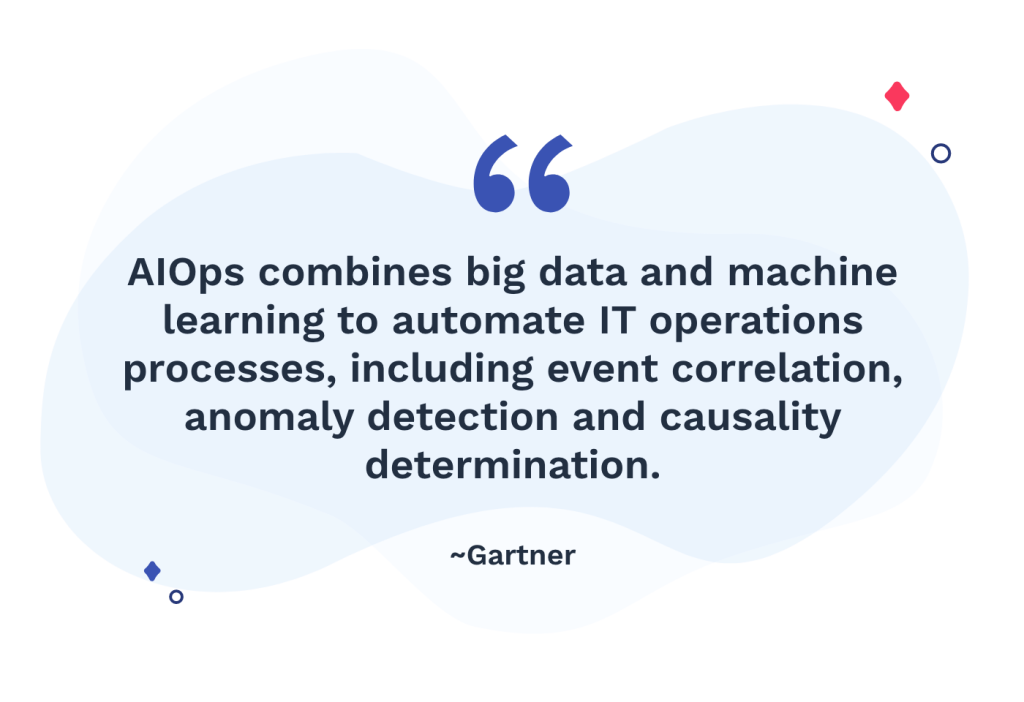
AIOps stands for Artificial Intelligence for IT Operations. It is a technology that combines big data analytics, machine learning, and other advanced techniques to automate IT operations and improve business outcomes. AIOps is designed to help IT teams manage their complex IT infrastructure and applications more efficiently by providing real-time insights into their IT environment.
How Does AIOps Work?
AIOps works by collecting and analyzing large amounts of data from various sources such as logs, metrics, events, and traces. It then applies machine learning algorithms to identify patterns, anomalies, and correlations in the data. Based on this analysis, AIOps can alert IT teams about potential issues, predict future problems, and provide recommendations for remediation.
Benefits of AIOps
AIOps offers several benefits to organizations, including:
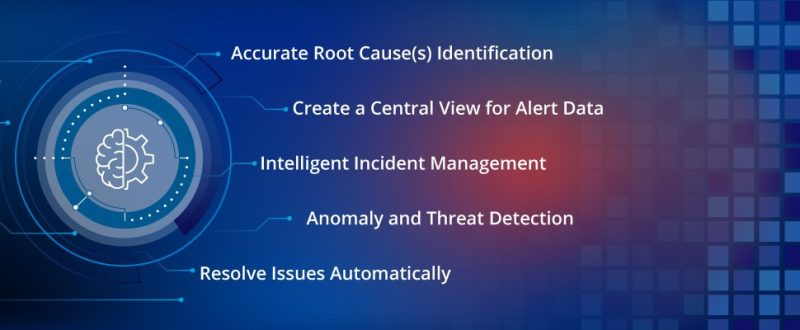
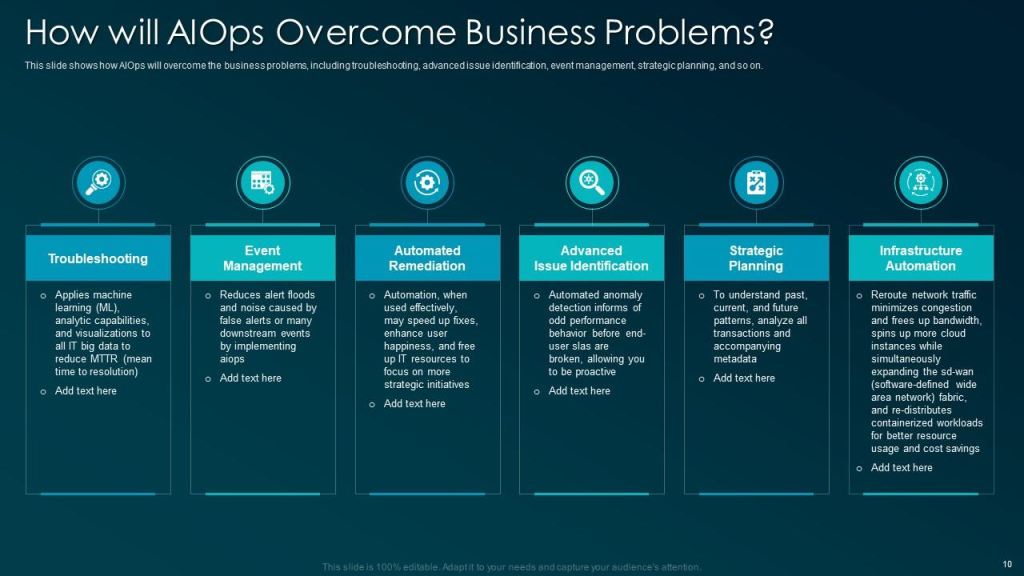
- Improved IT operations efficiency: AIOps can automate routine tasks, reduce manual intervention, and improve incident response times. This can help IT teams focus on more strategic initiatives and improve business outcomes.
- Enhanced customer experience: AIOps can help identify and resolve issues before they impact customers. This can improve customer satisfaction and loyalty.
- Better decision-making: AIOps can provide real-time insights into IT operations, enabling IT teams to make informed decisions about resource allocation, capacity planning, and risk management.
Use Cases of AIOps
AIOps can be applied to several IT use cases, including:
- Application performance monitoring: AIOps can help monitor and optimize the performance of applications by identifying bottlenecks, anomalies, and errors in real-time.
- Infrastructure monitoring: AIOps can help monitor and optimize the performance of infrastructure components such as servers, storage, and network devices.
- Incident management: AIOps can help automate incident management by identifying, triaging, and resolving incidents in real-time.
Challenges of AIOps
While AIOps offers several benefits, it also poses several challenges, including:
- Data complexity: AIOps requires large amounts of data from various sources. Managing and analyzing this data can be complex and time-consuming.
- Integration: AIOps requires integration with various IT systems and tools. This can be challenging, especially in complex IT environments.
- Expertise: AIOps requires expertise in machine learning, data analytics, and IT operations. Finding and retaining skilled professionals can be challenging.
Conclusion
AIOps is a revolutionary technology that can help organizations automate their IT operations and improve business outcomes. It combines big data analytics, machine learning, and other advanced techniques to provide real-time insights into IT operations. While AIOps poses several challenges, its benefits outweigh them. If you want to improve your IT operations efficiency, enhance customer experience, and make better decisions, then consider implementing AIOps in your organization.