Upgrade & Secure Your Future with DevOps, SRE, DevSecOps, MLOps!
We spend hours scrolling social media and waste money on things we forget, but won’t spend 30 minutes a day earning certifications that can change our lives.
Master in DevOps, SRE, DevSecOps & MLOps by DevOps School!
Learn from Guru Rajesh Kumar and double your salary in just one year.
Introduction
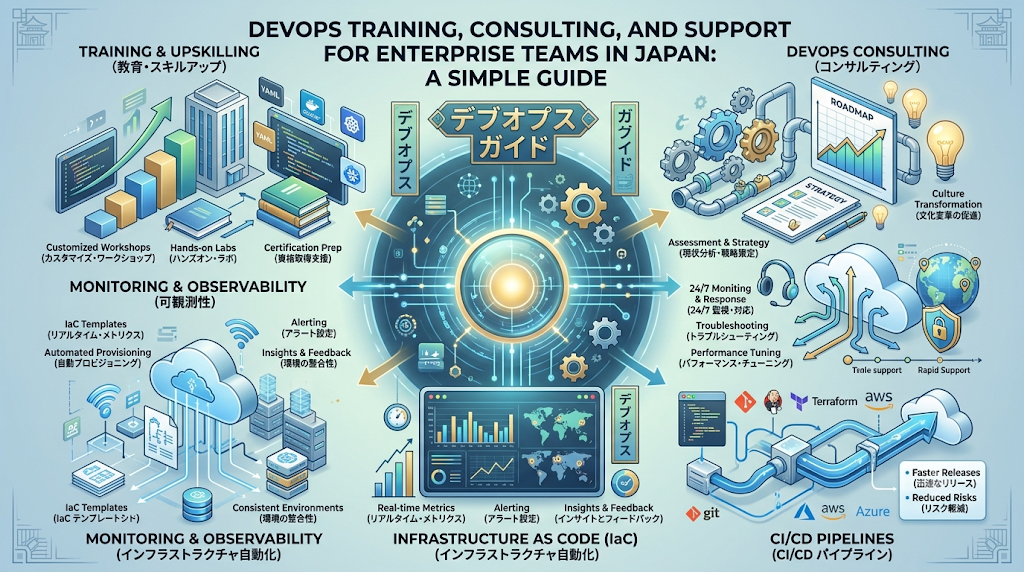
Software must change fast today. Customers want new features every week. But many companies in Japan face a skill gap. Teams know old ways of building and releasing software. New ways feel hard to learn. Cloud setups add more stress. Leaders ask, “Where do we start?” Many teams buy tools first. Then they get stuck, because nobody knows how to use them well. The good news is that a clear plan can help. Teams need hands-on learning, expert guidance, and steady support. This guide explains each part in plain words. It also shows how to pick the right partner. One such partner is DevOpsSchool.jp. It is a technology training and consulting provider in Japan. It helps enterprise teams learn, plan, and grow with less stress.
What Is DevOpsSchool.jp?
DevOpsSchool.jp is a training and consulting provider for technology teams in Japan. It offers three main things. First, it builds skills. Teams join courses made for enterprise needs. Second, it helps with hands-on work. Experts sit with your team and set up real systems. Third, it gives steady help after launch. You can ask questions when problems come up. So your team never learns alone. Also, the lessons focus on real work, not just theory. Teams practice the same tasks they do every day.
Building Strong Internal Engineering Skills
Good tools do not fix weak skills. People fix problems. So skill building comes first. A strong DevOps 研修 program teaches teams to build, test, and release software in small steps. Small steps mean fewer bugs. They also mean faster delivery. Many firms now search for DevOps corporate training Japan to train whole teams at once. Group learning helps everyone use the same words and habits. Also, hands-on labs let people practice safely. They can make mistakes without harming real systems.
Hands-On Expert Guidance for Transformations
Training gives knowledge. But change also needs a guide. Outside experts have seen many teams change. They know what works and what fails. Good DevOps コンサルティング starts with a review of your current workflow. Then the expert builds a plan with your team. Next, they help you set up cloud tools step by step. A local DevOps consultant Japan also understands company culture and language needs. So advice fits your team, not a generic template. This saves time and stops costly errors.
Mastering Cloud-Native Infrastructure Tools
Two tools appear in most modern setups. The first is Kubernetes. It runs containers. A container is a small box that holds an app and everything it needs. Kubernetes starts, stops, and fixes these boxes for you. A good Kubernetes 研修 course shows teams how to run apps this way. The second tool is Terraform. It builds servers and networks from written files. So you do not click buttons by hand. A Terraform 研修 course teaches teams to write these files. Then every setup is the same each time. That means fewer surprises.
Core Technical Training Tracks
| Training Domain | Core Tool/Focus | Business Benefit | Target Team |
|---|---|---|---|
| DevOps basics | CI/CD pipelines | Faster releases | Developers and IT ops |
| Containers | Kubernetes | Apps run steadily | Platform teams |
| Infrastructure | Terraform | Repeatable setups | Cloud engineers |
| Reliability | SRE practices | Less downtime | Operations teams |
| Security | DevSecOps | Safer releases | Security and dev teams |
| Machine learning | MLOps | Trusted AI models | Data teams |
Ensuring System Reliability and Uptime
Users hate slow or broken services. Site reliability engineering, or SRE, fixes this. It treats uptime as a goal you can measure. Uptime means how long a service stays on. Teams watch their systems all day. They set clear targets for speed and errors. When something breaks, they fix it fast and learn from it. An SRE 研修 program teaches these habits. Teams learn to spot problems early. So online services keep running smoothly.
Integrating Security into Daily Delivery
Old teams check security at the end. That is late and risky. DevSecOps moves checks to the start. Each time a developer saves code, tools scan it for weak spots. So problems show up early. Early fixes cost less. A DevSecOps 研修 course teaches teams how to add these checks to the code pipeline. A pipeline is the path code takes from a laptop to a live system. Then every release stays safe.
Scaling AI and Machine Learning Pipelines
Machine learning models do not stay good forever. Data changes, and results get worse. So teams must test models often. They must also watch them after launch. MLOps brings DevOps habits to AI work. It automates testing, release, and monitoring. An MLOps 研修 course shows data and IT teams how to work together. Then models move from lab to real use with less risk.
Continuous Technical Assistance for Enterprise Teams
Training ends, but daily work goes on. Teams still hit problems. So steady help matters. Good DevOps support Japan includes on-demand troubleshooting. It also includes code reviews and backup during busy times. An expert can check your pipeline or fix a failed release. Your team learns from each fix. Over time, they need less help and gain more confidence.
How to Evaluate Training and Consulting Providers in Japan
| Evaluation Factor | What to Look For | Why It Matters for Japanese Enterprises |
|---|---|---|
| Local language support | Japanese and English materials | Teams learn without language barriers |
| Hands-on labs | Real practice environments | People build skills, not just theory |
| Certified instructors | Proven, experienced trainers | Lessons match real work |
| Custom plans | Roadmaps built for your team | Every company has different needs |
| Ongoing support | Help after the course ends | Skills stay strong over time |
Real-Life Team Experiences
- A traditional IT team moves to containers. At first, nobody knows where to begin. After hands-on labs, the team moves one small app first. Then they grow step by step.
- A development group releases software by hand. Each release takes hours and causes errors. They build an automated pipeline. Now releases take minutes.
- An engineering unit faces frequent crashes. They add monitoring and clear reliability goals. Problems now show up before users notice.
Common Mistakes to Avoid in Tech Transformations
Many teams make the same errors. Avoid these:
- Buying tools before training people
- Skipping hands-on practice labs
- Ignoring system monitoring
- Treating security as an afterthought
- Trying to change everything at once
- Leaving managers out of the plan
- Picking a partner without checking past work
- Stopping support after the course ends
- Copying another company’s plan without changes
How DevOpsSchool.jp Can Help
DevOpsSchool.jp builds customized roadmaps for each company. It first learns your goals and skill level. Then it plans lessons that fit. Its certified instructors have real industry experience. They teach with live labs and real examples. Classes come in flexible formats, such as online, on-site, or mixed. So busy teams can learn without stopping work. You can start small and grow at your own pace.
A Simple 7-Step Upskilling and Advisory Roadmap
Follow this path: Goal → Search → Shortlist → Compare → Ask → Verify → Decide
- Goal: Write what your team must achieve.
- Search: Look for training and consulting providers in Japan.
- Shortlist: Pick three to five that fit your needs.
- Compare: Check courses, labs, and support side by side.
- Ask: Talk to each provider. Ask about past work.
- Verify: Check reviews, certificates, and sample lessons.
- Decide: Choose the partner and start with a small pilot.
Frequently Asked Questions (FAQ)
Question 1: What is DevOps 研修 and who needs it?
DevOps 研修 means DevOps training. It teaches teams how to build, test, and release software faster. Developers, IT operations staff, and managers all gain from it. When everyone learns the same methods, teamwork improves. Work moves between teams more easily. Releases become safer. Most companies start with a short course and then add deeper topics later.
Question 2: How long does corporate DevOps training take?
It depends on your goals. A basic course may take a few days. A full program with labs can take several weeks. Many firms mix short live classes with practice time. This way, teams keep up with daily work. A good provider will suggest a schedule after checking your team’s skill level and needs.
Question 3: When should we hire a consultant?
Hire a consultant when your team feels stuck. Maybe releases are slow. Maybe cloud costs keep rising. An expert reviews your workflow and finds the main problems. Then they build a clear plan. They also guide your team through each change. This saves time, and your staff learns new skills during the work.
Question 4: Do we need Kubernetes 研修 before using containers?
Not always, but it helps a lot. Simple container use is easy to learn. Running many containers in production is harder. Kubernetes 研修 teaches you how to scale, update, and repair apps safely. Without it, teams often make costly mistakes. Start with the basics, then move to Kubernetes when your apps grow.
Question 5: Why should teams learn Terraform?
Terraform lets you build cloud systems from written files. You can review, share, and reuse those files. So every environment looks the same. This cuts human error. A Terraform 研修 course teaches these skills with hands-on practice. Teams can then set up test and live systems faster and with more trust.
Question 6: How does SRE help keep services online?
SRE stands for site reliability engineering. It uses code and data to keep services stable. SRE teams set clear goals for speed and errors. They watch systems all day. They fix small problems before users notice. An SRE 研修 program teaches these habits, so your team can respond fast and calmly during an outage.
Question 7: Is security training only for security staff?
No. Everyone who touches code plays a part. DevSecOps means security is shared work. Developers learn to write safer code. Operations staff learn to lock down systems. A DevSecOps 研修 course brings these groups together. Then security checks run automatically in the pipeline, and fewer risks reach your live systems. This is faster and cheaper than late fixes.
Question 8: Why do machine learning teams need MLOps?
A model that works in a test may fail in real life. Data changes over time. MLOps adds automated tests and live monitoring. It tells you when a model starts to slip. An MLOps 研修 course teaches data scientists and engineers to work as one team. Then models stay accurate and easy to update.
Question 9: What does ongoing support include?
Ongoing support often includes on-demand troubleshooting, code reviews, and health checks. Some plans also offer backup during busy launches. You send a question, and an expert replies. Help is usually quick. This is great for teams that cannot hire full-time specialists. Good DevOps support Japan providers also share tips, so your team keeps growing.
Question 10: How do we measure training success?
Pick clear numbers before you start. Track how often you release software. Track how long fixes take. Count failed releases and outages. Also ask your team how confident they feel. If numbers improve after three to six months, the training works. If not, adjust the plan with your provider. This keeps goals clear.
Question 11: Can training fit a busy team’s schedule?
Yes. Many providers offer flexible formats. You can pick online classes, on-site workshops, or a mix. Short weekly sessions work well for busy teams. Recorded lessons let people catch up later. Labs can run at any time. Ask your provider to build a plan around your release dates so work never stops.
Question 12: What should we do first?
Start with your goal. Do you want faster releases, safer systems, or fewer outages? Then check your team’s current skills. Pick one small project as a pilot. Train the team on that project first. Learn from the results. Then grow the effort step by step. A clear start prevents wasted money and time.
Conclusion
Strong DevOps work starts with people. First, focus on hands-on learning so teams can use new tools with confidence. Next, build solid automation, because repeatable setups save time and cut errors. Then adopt reliability habits so services stay online. Also, keep security in every step of delivery. Finally, choose experienced partners who give steady help after the course ends. Change takes time, but small steps add up. Start with one clear goal and one pilot project. DevOpsSchool.jp can support your team with training, expert guidance, and ongoing help across Japan. With the right plan, your team can ship better software with less stress.
