Upgrade & Secure Your Future with DevOps, SRE, DevSecOps, MLOps!
We spend hours scrolling social media and waste money on things we forget, but won’t spend 30 minutes a day earning certifications that can change our lives.
Master in DevOps, SRE, DevSecOps & MLOps by DevOps School!
Learn from Guru Rajesh Kumar and double your salary in just one year.
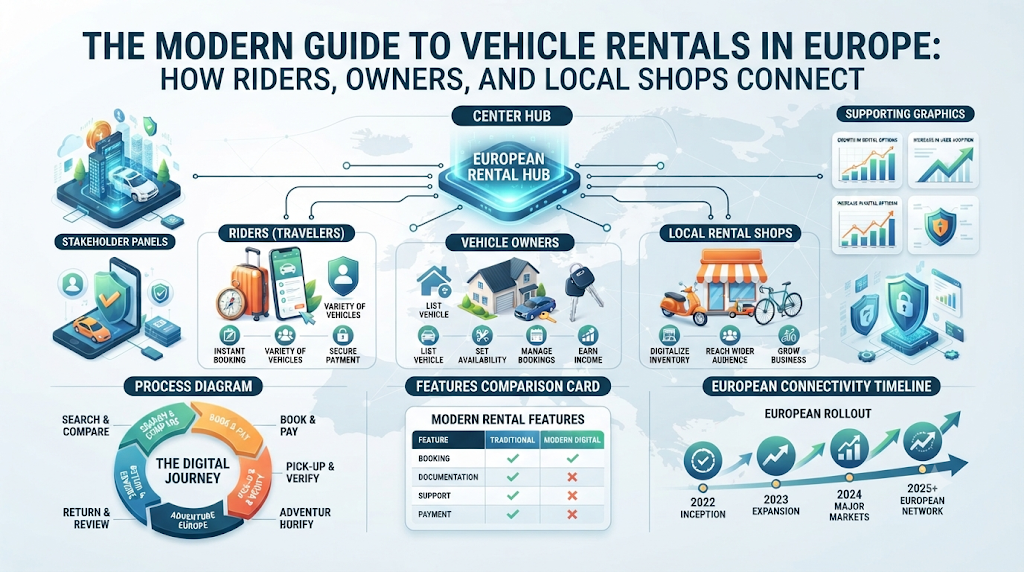
Travel across Europe has changed over the past few years. Tourists no longer want rigid tour buses or long waits at crowded airport counters. Today, travelers want freedom to ride along coastal roads on a scooter, cross mountain passes on a touring bike, or drive a compact car through quiet villages at their own pace. At the same time, private vehicle owners want to earn money from bikes and cars sitting idle in garages, while small rental shops need better tools than paper notebooks. Online platforms like MotoShare Europe bring these three groups together in one simple digital marketplace.
This guide breaks down how European vehicle sharing and rentals work right now. You will learn how travelers compare rental options, what drives daily prices, how owners list vehicles safely, and how digital software helps small shops run smooth daily operations.
How the European Rental Market Works Today
Europe includes more than forty countries with different roads, weather patterns, and local habits. In busy southern cities, two-wheelers beat traffic and fit into small parking spaces. In rural regions and mountain zones, larger motorcycles and cars offer comfort for long distances.
When planning a motorcycle rental Europe trip, travelers usually pick between two paths:
- Local Commercial Rental Shops: Independent storefronts that maintain their own fleet of scooters, bikes, or cars for daily or weekly hire.
- Peer-to-Peer Marketplaces: Online platforms where private owners and small neighborhood operators list vehicles directly for travelers to book.
Both options let you view photos, check prices, and send booking requests online before packing your bags.
Why Peer to Peer Motorcycle Rental Europe Is Growing Fast
In the past, renting a bike meant calling multiple shops, waiting days for email replies, and hoping a suitable model was free. Now, a peer to peer motorcycle rental Europe setup makes the search much faster and more transparent.
Travelers can filter vehicles by city, engine size, and travel dates in seconds. Even better, talking directly to a local owner gives riders real-world advice on scenic routes, safe parking areas, and local road rules.
Comparing Traditional Counters vs. Marketplace Hosts
| Key Factor | Traditional Rental Counter | Peer-to-Peer Marketplace Host |
| Fleet Variety | Limited to standard corporate models | Wide mix of personal bikes, scooters, and local fleets |
| Booking Speed | Often requires phone calls or counter forms | Direct online request with clear upfront pricing |
| Pickup Experience | Fixed shop hours and long queues in summer | Flexible handover times arranged with the host |
| Local Tips | Basic tourist maps | Insider route advice from local enthusiasts |
What Shapes Motorcycle Rental Cost Europe
Knowing what goes into the final price helps travelers plan a realistic budget and avoid hidden fees. Because wages, taxes, and tourist seasons differ across the continent, the motorcycle rental cost Europe range depends on several clear factors:
- Country and Region: Daily rates in Switzerland, Norway, or the Netherlands are typically higher than rates in Spain, Portugal, or Greece.
- Vehicle Power and Style: A light 125cc city scooter costs much less per day than a heavy 1200cc adventure motorcycle built for two-up touring.
- Travel Season: July and August bring peak demand and higher daily prices. Riding in May, June, or September often saves money and avoids heavy crowds.
- Booking Duration: Most hosts and shops discount the daily rate when you book for five, seven, or fourteen days instead of a single weekend.
- Security Deposit: Providers place a temporary, refundable hold on your payment card to cover minor damage, traffic tickets, or late returns.
- Insurance Coverage: Every road vehicle in Europe needs basic third-party liability insurance, while optional packages that lower your damage excess add a daily charge.
- Distance Limits and Fuel: Check if your rental includes unlimited kilometers or a daily cap, and remember that most providers expect a full fuel tank upon return.
Illustrative Example of a 3-Day City Scooter Rental
Note: This scenario is a hypothetical example created to show how costs add up and does not represent a live listing.
Imagine a traveler booking a 125cc scooter in Spain for 3 days in May. The host lists the scooter at €35 per day (€105 total). Adding two helmets and a top box costs €8 per day (€24 total), and an extra damage waiver adds €9 per day (€27 total). The full trip costs €156, plus a refundable €300 security deposit held until the scooter returns safely.
Driving Licences and Cross-Border Rules in Europe
Europe is not one single legal territory. Driving rules change from one country to the next, so checking your documents before booking is essential.
- European Licence Classes: EU motorcycle licences use four standard codes: AM (mopeds up to 50cc), A1 (bikes up to 125cc), A2 (medium bikes up to 35 kW), and A (unrestricted motorcycles). Your licence must cover the exact engine size you plan to ride.
- Car Licence Rules for 125cc Bikes: Some nations—including Italy, Spain, and France—allow drivers who have held a standard Category B car licence for two or three years to ride 125cc scooters inside their own borders. However, this local rule does not automatically apply if you ride across a border into a neighboring country.
- International Driving Permits (IDP): Travelers visiting from outside Europe should carry an IDP along with their original home licence, especially if their home permit is not printed in the Latin alphabet.
- Border Crossing Approval: Always ask the owner or rental shop in writing before riding into another country. Insurance policies often stop working if you cross a national border without prior permission.
How Vehicle Owners Earn Extra Income Safely
Keeping a motorcycle, scooter, or car parked for months still costs money in annual taxes, servicing, and insurance. Sharing your vehicle with checked travelers helps turn those fixed expenses into steady side income.
Practical Checklist to Rent Out My Motorcycle
If you are thinking, “How do I rent out my motorcycle without stress?” follow these five simple steps:
- Verify Local Laws and Insurance: Check national vehicle-sharing rules and ask your insurer whether paid peer-to-peer rentals are covered. Never assume standard personal insurance covers a paying rider.
- Inspect Safety Parts: Check tire tread, brake pads, chain tension, oil levels, and lights before every single handover.
- Upload Honest Photos: Take clear daytime photos of every side of the bike, the odometer, and any existing scratches so expectations stay clear.
- Verify Rider Documents: Inspect the renter’s physical driving licence and passport or ID in person before handing over the keys.
- Complete a Handover Walk-Around: Take timestamped photos together at pickup and return to prevent any misunderstandings.
Simple Steps to List My Car for Rent
If you have a spare family car and want to list my car for rent, follow the exact same routine. Clear out personal belongings, vacuum the seats, check tire pressure and washer fluid, and leave the registration papers in the glovebox. Always tell visiting drivers which fuel type the car takes so they never misfuel at a local station.
Digital Software for Independent Rental Shops
Small rental businesses face a different set of daily tasks. When a shop manages ten scooters, twenty bicycles, or eight cars using paper notebooks or basic spreadsheets, mistakes happen fast. One missed phone note can cause double bookings, angry customers, and lost revenue.
Switching to free vehicle rental management software gives small operators a simple digital system to organize their whole fleet without expensive monthly fees.
Core Software Tools for Different Fleets
Different types of rental shops rely on specific digital features to keep daily work moving:
- Vehicle Rental Booking System: Gives customers a live online calendar to check open dates, see total costs, and submit booking requests while automatically blocking reserved dates.
- Scooter Rental Software: Built for quick city turnovers, helping staff log short daily rentals, track helmet sizes, and store digital ID checks in seconds.
- Bike Rental Software: Helps bicycle and e-bike shops manage frame sizes, battery charging cycles, lock codes, and family group bookings cleanly.
- Free Car Rental Software: Lets small car rental operators track multi-day reservations, record starting and ending mileage, log fuel levels, and store customer agreements digitally.
Manual Tracking vs. Digital Rental Software
Replacing paper logs with one organized dashboard saves hours of admin work every week.
| Daily Shop Task | Paper Logs & Spreadsheets | Digital Rental Management Software |
| Checking Free Vehicles | Flipping through notebooks or searching files | Instant visual calendar showing live availability |
| Avoiding Double Bookings | High risk during busy summer weekends | Automatic date blocking once a booking is confirmed |
| Customer Profiles | Loose paper forms or scattered email threads | Searchable digital records of licences and past trips |
| Tracking Payments | Manual end-of-month calculator work | Clear payment logs and revenue summaries |
| Pickup & Return Logs | Handwritten checklists that easily go missing | Organized digital trip records stored in one place |
Common Mistakes to Avoid
Simple mistakes can cost money and ruin travel plans. Watch out for these common errors:
- Travelers Booking Too Late in Summer: Waiting until July to book a popular touring bike often leads to limited choices and higher prices.
- Owners Skipping Licence Checks: Handing over keys without verifying that the renter’s licence covers the vehicle’s engine size creates serious legal risk.
- Shops Relying on Paper Calendars: Using manual notebooks during peak tourist months almost always causes scheduling overlaps and slow check-ins.
Smart Habits for Every Rental Journey
Keep these four practical tips in mind for smooth trips and smooth operations:
- Confirm Terms in Writing: Agree on pickup hours, daily distance limits, and fuel policies inside your booking messages.
- Match Licence to Engine Size: Double-check local engine rules before confirming any bike or scooter booking.
- Photograph Everything at Handover: Five minutes of photos at pickup and return protects both the renter and the owner.
- Keep Operations Digital: Use a central booking calendar so availability, customer records, and payments stay accurate.
How MotoShare Europe Fits Into the Picture
MotoShare Europe operates as an online vehicle rental marketplace designed to connect travelers, motorcycle enthusiasts, local residents, private vehicle owners, and independent rental shops across Europe. Focused on motorcycles, scooters, bicycles, and cars, the platform lets users compare transparent listings and send booking requests directly to participating local providers.
For independent rental shops and small fleet operators, MotoShare Europe also promotes free vehicle rental management software. Its advertised features are built to help operators organize vehicle listings, reservations, customer records, fleet availability, payments, revenue tracking, and operational reporting from one place. Because local availability and software features can vary by region and business setup, travelers and shop owners should always check current platform details directly before finalizing plans.
Conclusion
Renting or sharing a vehicle in Europe becomes simple when everyone follows clear steps. Travelers get better trips when they understand local licence rules, seasonal pricing, and handover checks. Private owners earn extra income safely when they verify insurance and inspect vehicles before every ride. And independent rental shops save valuable time by replacing paper logs with modern digital booking tools.
Take your next step today by checking your driving licence categories, preparing a clear handover checklist, or exploring transparent online marketplaces that simplify European travel.
Frequently Asked Questions (FAQs)
1. How do I find a trustworthy motorcycle rental Europe provider?
Compare verified local rental shops and peer-to-peer marketplaces online before your trip. Look for clear daily rates, detailed vehicle photos, honest condition notes, and written rules covering security deposits and daily mileage limits.
2. What makes a peer to peer motorcycle rental Europe platform appealing to riders?
Peer-to-peer platforms connect travelers directly with private owners and small neighborhood hosts. This often gives riders more flexible pickup times, unique motorcycle models, and helpful local route advice from fellow enthusiasts.
3. What is the typical motorcycle rental cost Europe travelers should budget for?
Costs vary widely by country, season, and engine size. Small scooters in southern Europe often start around €25 to €45 per day, while large touring bikes in higher-cost countries can range from €80 to €150 or more per day, excluding optional gear or full insurance.
4. Can I use my car driving licence to ride a 125cc scooter in Europe?
Several European countries—such as Spain, Italy, and France—allow drivers who have held a Category B car licence for a set number of years to ride 125cc scooters locally. However, rules vary by nation, and this permission does not automatically let you cross into neighboring countries.
5. Do tourists from outside Europe need an International Driving Permit?
Yes, in many cases. Visitors from outside the EU should carry an International Driving Permit (IDP) alongside their original home driving licence, particularly if the home licence is not written in the Latin alphabet or local language.
6. What steps should I take before I rent out my motorcycle?
Check your local transport laws and confirm with your insurance provider that peer-to-peer rentals are covered. Inspect your tires, brakes, chain, fluids, and lights, take clear photos of the bike, and check the renter’s physical licence at pickup.
7. How can I safely list my car for rent in my city?
Clean the car thoroughly, confirm that your insurance covers rental use, take bright daylight photos inside and out, and set clear rules for mileage and fuel. Always verify the driver’s licence and ID in person before handing over the keys.
8. Who benefits most from free vehicle rental management software?
Independent motorcycle, scooter, bicycle, and car rental shops benefit most. It helps small operators track vehicle availability, manage customer reservations, store driver records, and log payments without paying expensive monthly software subscriptions.
9. How do scooter rental software and bike rental software help city shops?
These tools speed up fast, high-turnover hourly or daily rentals. They help staff check live availability, track helmet sizes or lock codes, monitor e-bike battery levels, and record customer IDs quickly during busy tourist hours.
10. Why should small agencies switch to free car rental software instead of spreadsheets?
Spreadsheets require manual updates and easily lead to double bookings when multiple staff members take reservations. Dedicated car rental software keeps calendars, customer details, mileage logs, and payment statuses updated in one central place.
11. What does a vehicle rental booking system do for a small shop?
A vehicle rental booking system lets customers view open dates online, calculate total trip prices, and submit reservation requests while automatically blocking booked dates on the shop’s calendar.
12. Are security deposits standard across European vehicle rentals?
Yes, nearly all commercial rental shops and many peer-to-peer hosts hold a refundable security deposit on a payment card. The deposit protects against minor damage, missing accessories, or unreturned fuel, and is released once the vehicle returns in good condition.
