Upgrade & Secure Your Future with DevOps, SRE, DevSecOps, MLOps!
We spend hours scrolling social media and waste money on things we forget, but won’t spend 30 minutes a day earning certifications that can change our lives.
Master in DevOps, SRE, DevSecOps & MLOps by DevOps School!
Learn from Guru Rajesh Kumar and double your salary in just one year.
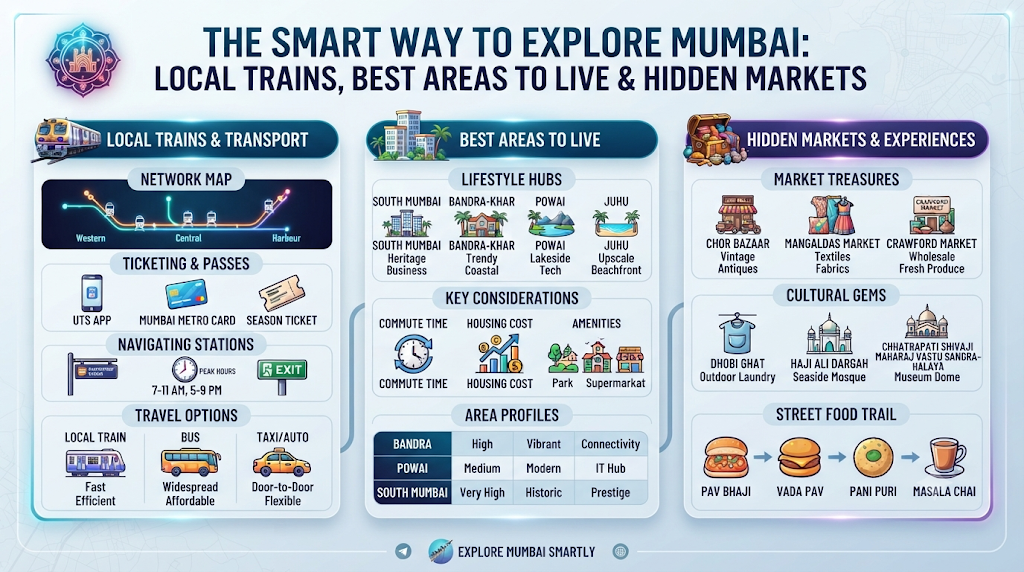
Stepping into Mumbai for the first time feels a bit like joining a moving train. Everything happens quickly—from early-morning commuters crossing foot-overbridges to late-evening crowds gathering near coastal promenades and street-food lanes. Once you understand how the city’s geography, rail lines, and neighbourhoods fit together, Mumbai becomes far easier to navigate.
Written from the perspective of an everyday city researcher and urban lifestyle guide, this handbook walks you through transit basics, residential choices, sightseeing plans, local markets, weekend escapes, and small-business essentials. For local questions, city updates, and peer discussions, visit MumbaiOrbit and connect with fellow readers on the Mumbai community forum.
How Mumbai’s Geography and Transit Lines Shape Daily Life
Mumbai is built on a long north–south peninsula stretching into the wider Mumbai Metropolitan Region (MMR). Historic commercial districts sit in the south around Fort, Colaba, and Nariman Point, while major residential and business hubs extend northward through Dadar, Bandra, Andheri, Borivali, Kurla, Thane, and Navi Mumbai.
Because north–south road traffic can slow down during office hours, rail networks keep the city moving. A reliable Mumbai local train guide starts with three suburban rail corridors plus the expanding metro network:
- Western Line: Connects Churchgate in South Mumbai with Dadar, Bandra, Andheri, Borivali, and northern suburbs up to Virar and Dahanu Road.
- Central Line: Runs from Chhatrapati Shivaji Maharaj Terminus (CSMT) through Dadar and Kurla toward Thane, Kalyan, Kasara, and Khopoli.
- Harbour Line: Links CSMT with Kurla, Vashi, Panvel, and Goregaon, serving eastern waterfront areas and Navi Mumbai.
- Mumbai Metro Network: Adds air-conditioned rail links across busy cross-city and north–south routes, including Mumbai Metro Line 3 (the underground Aqua Line connecting Colaba, Cuffe Parade, BKC, and SEEPZ/Andheri).
| Transit Option | Primary Corridor | Key Interchange Points | Practical Commuter Note |
| Western Suburban Trains | Churchgate to Virar / Dahanu Road | Dadar, Bandra, Andheri | Check whether a train is Fast (skips smaller stops) or Slow before boarding. |
| Central Suburban Trains | CSMT to Thane / Kalyan / beyond | Dadar, Kurla, Thane | Watch platform indicator boards closely during peak hours. |
| Harbour Line Trains | CSMT to Panvel / Goregaon | Kurla, Wadala Road, Vashi | Always confirm the final destination shown on the front coach display. |
| Mumbai Metro (incl. Line 3) | Key urban and business corridors | Airport, BKC, Andheri, Churchgate/CSMT zones | Verify active stations, operating hours, and QR/card ticketing on official portals. |
Before travelling, verify live schedules and station status on official portals from Western Railway, Central Railway, and Mumbai Metro Rail Corporation (MMRC).
Six Simple Steps for Stress-Free Public Transport in Mumbai
Newcomers often feel nervous before their first suburban rail or metro ride. Following six straightforward steps keeps your trip predictable:
- Locate Your Nearest Boarding Point: Identify the closest suburban station, metro station, or BEST bus stop from your starting address.
- Match Your Destination Station: Confirm which rail or metro corridor sits closest to your workplace, hotel, or market.
- Choose the Right Train Service: Board a Fast train only if your stop appears on its halt list; otherwise take a Slow train or a connected metro route.
- Check Current Service Updates: Review official rail or metro alerts before leaving, especially during monsoon weeks or Sunday maintenance blocks.
- Buy Valid Tickets Before Entering Platforms: Purchase single-journey tickets, return tickets, or passes via official counters, vending machines, or authorized mobile apps.
- Plan Your Final Stretch: Check station exit sides (East vs. West) so you step out directly toward your BEST bus, auto-rickshaw stand, or cab pickup point.
Finding the Best Areas to Live in Mumbai
Selecting among the best areas to live in Mumbai comes down to balancing daily travel time, monthly budget in Indian Rupees (INR), and household priorities.
- Bandra & Santacruz: Popular with professionals and families who value vibrant cafes, schools, coastal promenades, and quick access to Bandra-Kurla Complex (BKC). Rents are on the higher side.
- Andheri & Powai: Well suited for tech, media, and corporate workers thanks to rail, metro, and road connectivity alongside active commercial hubs. Peak-hour road bottlenecks near major junctions are common.
- Dadar & Matunga: Central neighbourhoods offering strong rail connectivity to both South Mumbai and northern suburbs, established schools, and traditional markets, though apartments tend to be compact.
- Thane & Navi Mumbai (Vashi, Nerul, Kharghar): Frequently chosen by families looking for planned residential complexes, wider roads, and community amenities within the MMR, traded off against longer commutes into far-south Mumbai.
Practical Housing Tip: Visit shortlisted buildings at both 9:00 AM and 8:00 PM to judge real commute times, street noise, water supply schedules, and society rules before signing a rental agreement.
Sightseeing, Street Food, Shopping, and Weekend Escapes
Beyond work and commutes, Mumbai rewards curious explorers who pace their days wisely.
Top Attractions and a Mumbai 3 Day Itinerary
Classic places to visit in Mumbai include South Mumbai’s heritage precincts around Fort and Colaba, Marine Drive, Bandra’s waterfront and street art lanes, Juhu Beach, museums, and cultural landmarks. When organizing a Mumbai 3 day itinerary, group stops geographically rather than zig-zagging across the city:
- Day 1 — South Mumbai Heritage & Coastline: Walk through historic Fort and Colaba in the morning, visit a nearby museum or gallery at midday, and catch sunset along Marine Drive.
- Day 2 — Bandra & Western Suburbs: Explore Bandra’s lanes, cafes, and seafront forts during the day, then head toward Juhu in the evening.
- Day 3 — Local Markets & Cultural Flavours: Spend the morning at a local cultural site or market, sample regional dishes for lunch, and enjoy a relaxed evening walk.
Check attraction opening hours and entry fees in advance, as weekly closures and seasonal timings vary.
Exploring the Best Street Food in Mumbai and Local Markets
Sampling the best street food in Mumbai is a daily ritual for locals. Staples like vada pav, pav bhaji, bhel puri, sev puri, ragda pattice, and hot cutting chai appear near busy stations, college lanes, and evening khau gallis. Pick stalls with high customer turnover where food is cooked fresh in front of you, and carry bottled drinking water.
When browsing shopping markets in Mumbai, choose your spot based on what you plan to buy:
- Casual Fashion & Accessories: Colaba Causeway, Linking Road (Bandra), and Hill Road offer wide variety and lively street-side bargaining.
- Textiles & Festive Shopping: Dadar, Kalbadevi, and Bhuleshwar/Zaveri Bazaar are well known for traditional wear, fabrics, and jewellery.
- Books & Everyday Essentials: Fort’s pavement bookstalls and local suburban markets cover daily household and academic needs.
Short Breaks and Weekend Getaways from Mumbai
When city noise calls for a change of pace, popular weekend getaways from Mumbai include hill retreats like Lonavala, Khandala, and Matheran, coastal towns such as Alibaug, and heritage or nature spots across Maharashtra. Always check road conditions, ferry or toy-train schedules, and seasonal advisories on Maharashtra Tourism before travelling.
Starting a Small Business in Mumbai: Practical First Steps
Mumbai attracts entrepreneurs across food, retail, digital services, and local logistics. Anyone researching how to start a small business in Mumbai should pair enthusiasm with careful cost and compliance planning:
- Validate Local Demand: Observe footfall, customer habits, and competing shops in your chosen neighbourhood before committing funds.
- Choose Space Wisely: Compare high-street shop rentals, residential delivery kitchens, and shared coworking desks based on how customers reach you.
- Budget Realistically in INR: Account for security deposits, monthly rent, interiors, licenses, staff wages, and at least six months of operating reserves.
- Register Through Official Portals: Check applicable requirements including Udyam registration for MSMEs, GST registration, Maharashtra Shop and Establishment rules, and sector-specific approvals (such as FSSAI licensing for food businesses).
- Follow Local Society & Municipal Rules: Confirm signage guidelines, operating hours, and waste-disposal rules early to avoid avoidable penalties.
Common Mistakes to Avoid and Joining MumbaiOrbit
A few simple habits prevent most everyday headaches in Mumbai:
- Ignoring Rush-Hour Crowds: Between roughly 8:30 AM–11:00 AM and 5:30 PM–8:30 PM, suburban trains and main roads run near full capacity—plan extra travel buffer.
- Trusting Outdated Fares or Timings: Always verify current metro routes, train blocks, and attraction timings on official websites.
- Forgetting Monsoon Preparation: From June to September, heavy rain can slow trains and highways—keep waterproof footwear, an umbrella, and flexible plans handy.
Whenever you want to ask practical questions about a commute route, compare residential pockets, swap food recommendations, or plan regional travel, visit MumbaiOrbit and join discussions across Ask Mumbai, Trains & Transport, Housing, Khau Galli, and Maharashtra Matters on the Mumbai community forum.
Frequently Asked Questions (FAQs)
1. How does a Mumbai local train guide help first-time riders?
It explains the Western, Central, and Harbour corridors, the difference between Fast and Slow trains, key junctions like Dadar and Kurla, and safe ticketing habits so new riders avoid boarding the wrong train.
2. Which places to visit in Mumbai are easiest to cover in one day?
South Mumbai landmarks around Fort, Colaba, and Marine Drive sit close together and can be explored comfortably in a single day without long cross-city travel.
3. What are popular weekend getaways from Mumbai during pleasant weather?
Lonavala, Khandala, Matheran, and Alibaug are widely visited short-trip destinations, each offering distinct hill or coastal scenery within Maharashtra.
4. How should newcomers compare the best areas to live in Mumbai?
Evaluate actual door-to-door commute time to work or college, monthly rent in INR, proximity to rail or metro stations, and essential neighbourhood facilities like clinics and markets.
5. What is Mumbai Metro Line 3 and who benefits from it?
Mumbai Metro Line 3 is an underground corridor linking major business and residential zones between South Mumbai, BKC, and the western suburbs; check MMRC’s official site for active stations and timings.
6. How can visitors organize a balanced Mumbai 3 day itinerary?
Group sightseeing by geography—spending one day in South Mumbai, one day around Bandra and Juhu, and one day exploring cultural spots and local markets.
7. How do I enjoy the best street food in Mumbai safely?
Choose busy, hygienic stalls that prepare snacks fresh to order, eat hot cooked items, and stick to sealed bottled water.
8. Which shopping markets in Mumbai are best for clothes and accessories?
Colaba Causeway in South Mumbai and Linking Road and Hill Road in Bandra are popular destinations for clothing, footwear, and everyday fashion bargains.
9. What registrations are needed when learning how to start a small business in Mumbai?
Depending on business type and turnover, entrepreneurs typically review Udyam registration, GST registration, Shop and Establishment compliance, and industry-specific permits on official government portals.
10. Where can residents and visitors ask everyday questions on a Mumbai community forum?
You can visit MumbaiOrbit to read local guides and participate in community discussions covering transport, housing, food, and Maharashtra travel.
Conclusion
Getting comfortable with Mumbai happens step by step—first learning how suburban rail and metro lines connect, then finding neighbourhoods, markets, and routines that fit your pace. Whether you are visiting for three days, relocating for work, planning a weekend escape, or launching a local venture, practical local research keeps your plans smooth.
Pick one area or route you want to explore next, verify current transit details, and visit MumbaiOrbit to browse city guides and join helpful conversations on the Mumbai community forum.
