Upgrade & Secure Your Future with DevOps, SRE, DevSecOps, MLOps!
We spend hours scrolling social media and waste money on things we forget, but won’t spend 30 minutes a day earning certifications that can change our lives.
Master in DevOps, SRE, DevSecOps & MLOps by DevOps School!
Learn from Guru Rajesh Kumar and double your salary in just one year.
Introduction
Third-Party Risk Management (TPRM) tools help organizations identify, monitor, and mitigate risks posed by external vendors, partners, and service providers. In plain English, these platforms centralize risk data, automate risk assessments, and provide actionable insights to reduce exposure to compliance violations, data breaches, and operational failures.
In and beyond, the reliance on third-party vendors continues to grow, driven by outsourcing, cloud adoption, AI-powered integrations, and global supply chain dependencies. This expansion makes TPRM tools essential for ensuring operational security and regulatory compliance.
Real-world use cases include:
- Monitoring vendor cybersecurity posture for cloud service providers.
- Assessing compliance of marketing agencies managing sensitive consumer data.
- Tracking contractual obligations and SLAs across global suppliers.
- Performing continuous risk scoring for financial institutions.
- Automating vendor onboarding and due diligence in regulated industries.
Key buyer evaluation criteria:
- Ease of vendor onboarding and due diligence automation
- Risk scoring and monitoring capabilities
- Integrations with internal ERP, CRM, and security systems
- Compliance and regulatory reporting support
- AI-driven risk predictions and anomaly detection
- User experience for internal teams and stakeholders
- Scalability for enterprise vs SMB needs
- Data security, encryption, and access controls
- Cost-effectiveness and licensing flexibility
- Support and community resources
Best for: Risk managers, compliance officers, procurement teams, IT security leaders, and organizations across finance, healthcare, technology, and retail sectors.
Not ideal for: Small organizations with minimal vendor reliance, or companies where manual risk monitoring is sufficient; alternatives such as spreadsheets or light SaaS tools may be adequate.
Key Trends in Influencer Marketing Platforms
- AI-driven risk scoring automates vendor assessment.
- Integration with cybersecurity threat intelligence feeds.
- Continuous monitoring with automated alerts for compliance deviations.
- Cloud-native deployment supporting multi-region operations.
- Interoperability with ERP, CRM, and GRC platforms.
- Predictive analytics to anticipate potential supplier failures.
- Enhanced dashboard visualizations for executive reporting.
- Vendor collaboration portals for streamlined communications.
- Modular pricing models tailored to SMB and enterprise scale.
- Emphasis on GDPR, SOC 2, ISO 27001 compliance for global vendors.
How We Selected These Tools (Methodology)
- Evaluated market adoption and global mindshare.
- Analyzed completeness of core risk management features.
- Assessed platform reliability, uptime, and performance signals.
- Reviewed security posture, certifications, and encryption practices.
- Considered ecosystem integrations and API flexibility.
- Examined customer fit across enterprise, mid-market, and SMB segments.
- Factored usability, onboarding simplicity, and internal workflow alignment.
- Considered reporting, analytics, and automation capabilities.
- Reviewed vendor stability, product roadmap, and support infrastructure.
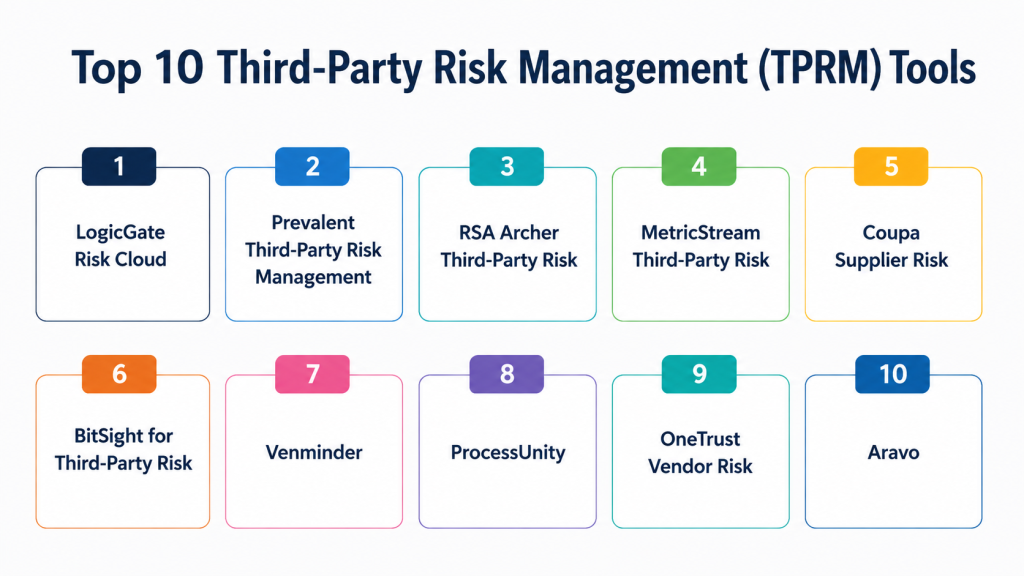
Top 10 Third-Party Risk Management (TPRM) Tools
#1 — LogicGate Risk Cloud
Short description: A workflow-driven TPRM platform that allows organizations to map risks across third-party relationships, automate assessments, and provide real-time dashboards for compliance and risk reporting. Best for enterprise risk teams.
Key Features
- Customizable risk assessment templates
- Automated vendor onboarding workflows
- Real-time risk scoring dashboards
- Integration with ERP and GRC tools
- Centralized vendor data repository
- Compliance reporting for SOC 2, ISO 27001
- AI-powered risk alerts
Pros
- Streamlined risk management automation
- Strong reporting capabilities
Cons
- May require longer setup for small teams
- Advanced features can have a steep learning curve
Platforms / Deployment
- Web
- Cloud / Hybrid
Security & Compliance
- SSO/SAML, MFA, encryption, audit logs, RBAC
- SOC 2, ISO 27001
Integrations & Ecosystem
Robust API support and pre-built connectors enable seamless integration:
- Salesforce, SAP, Workday
- Security monitoring tools
- GRC platforms
Support & Community
- Dedicated onboarding support
- Knowledge base and webinars
- Active user community
#2 — Prevalent Third-Party Risk Management
Short description: Prevalent centralizes vendor risk data and compliance workflows. It helps teams identify, quantify, and mitigate risks while maintaining visibility across the enterprise.
Key Features
- Automated vendor questionnaires
- Risk scoring and remediation workflows
- Continuous monitoring for cyber risk
- Supplier lifecycle tracking
- Regulatory compliance reporting
- Cloud-native platform
- Multi-user collaboration
Pros
- Comprehensive vendor insights
- Scalable for enterprise organizations
Cons
- Pricing may be high for SMBs
- Advanced configuration can be complex
Platforms / Deployment
- Web
- Cloud
Security & Compliance
- Not publicly stated
Integrations & Ecosystem
Connects with ERP, GRC, and cybersecurity platforms:
- SAP, ServiceNow
- Security event feeds
- Reporting dashboards
Support & Community
- Tiered support options
- Knowledge base
- Limited community forums
#3 — RSA Archer Third-Party Risk
Short description: A highly configurable TPRM solution that integrates with the RSA Archer GRC suite. Suitable for enterprises seeking centralized risk visibility and regulatory alignment.
Key Features
- Risk catalog and scoring models
- Third-party lifecycle management
- Audit and compliance reporting
- Automated workflows for assessments
- Policy management
- Vendor collaboration portal
- Metrics and dashboards
Pros
- Deep GRC integration
- Mature reporting and audit trails
Cons
- Enterprise focus may overwhelm SMBs
- Requires RSA suite knowledge
Platforms / Deployment
- Web
- Cloud / Hybrid
Security & Compliance
- SSO, MFA, encryption
- SOC 2, ISO 27001
Integrations & Ecosystem
- Pre-built connectors with enterprise tools
- APIs for custom integration
- Security feed ingestion
Support & Community
- Documentation and training
- RSA support plans
- Active enterprise community
#4 — MetricStream Third-Party Risk
Short description: MetricStream offers enterprise-grade TPRM solutions with advanced analytics, automated risk scoring, and regulatory compliance support. Ideal for regulated industries.
Key Features
- Continuous risk monitoring
- Supplier onboarding automation
- Integrated compliance frameworks
- Risk heatmaps
- Audit-ready documentation
- Policy library
- Cloud or hybrid deployment
Pros
- Comprehensive regulatory coverage
- Strong analytics and dashboards
Cons
- Can be costly for mid-market companies
- Learning curve for advanced modules
Platforms / Deployment
- Web
- Cloud / Hybrid
Security & Compliance
- SSO/SAML, MFA, encryption
- Not publicly stated
Integrations & Ecosystem
- ERP and GRC integrations
- Vendor portals
- APIs for workflow automation
Support & Community
- Extensive documentation
- Dedicated customer success
- Varies / Not publicly stated
#5 — Coupa Supplier Risk
Short description: Focuses on supplier risk intelligence, helping organizations mitigate financial, operational, and reputational risk. Best for procurement-heavy enterprises.
Key Features
- Supplier risk scoring
- Automated assessments and alerts
- Real-time monitoring of public risk sources
- Risk heatmaps
- Integration with procurement tools
- Compliance and audit reports
- Supplier engagement dashboards
Pros
- Real-time supplier insights
- Tight procurement integration
Cons
- May be complex for non-procurement teams
- Limited AI-based predictions
Platforms / Deployment
- Web
- Cloud
Security & Compliance
- Not publicly stated
Integrations & Ecosystem
- ERP and sourcing tools
- API support for workflow integration
- Vendor portals
Support & Community
- Standard customer support
- Knowledge base and guides
#6 — BitSight for Third-Party Risk
Short description: Cybersecurity-focused TPRM tool, providing external risk scoring and continuous monitoring to mitigate vendor cyber threats.
Key Features
- Security rating dashboards
- Continuous monitoring of third-party exposure
- Risk benchmarking
- Alerts for risk changes
- Regulatory compliance insights
- Vendor scorecards
- AI-powered trend analysis
Pros
- Strong cybersecurity focus
- Actionable vendor insights
Cons
- Limited non-cyber risk management
- May require security expertise to interpret data
Platforms / Deployment
- Web
- Cloud
Security & Compliance
- Not publicly stated
Integrations & Ecosystem
- Security platforms
- SIEM tools
- API support
Support & Community
- Dedicated account management
- Knowledge base
- Community webinars
#7 — Venminder
Short description: TPRM platform focused on financial services, helping organizations manage vendor due diligence, risk scoring, and regulatory compliance.
Key Features
- Vendor lifecycle management
- Automated risk assessments
- Continuous monitoring
- Regulatory reporting
- Contract and SLA tracking
- Vendor questionnaires
- Analytics and dashboards
Pros
- Strong financial industry focus
- Easy-to-use dashboards
Cons
- May be less feature-rich for non-financial sectors
- Integration options limited
Platforms / Deployment
- Web
- Cloud
Security & Compliance
- Not publicly stated
Integrations & Ecosystem
- ERP and financial systems
- API access
- Limited ecosystem
Support & Community
- Onboarding support
- Knowledge base
#8 — ProcessUnity
Short description: A SaaS TPRM platform enabling enterprises to streamline vendor risk assessments, automate compliance workflows, and centralize documentation.
Key Features
- Automated vendor assessments
- Risk scoring and reporting
- Compliance framework mapping
- Continuous monitoring
- Document management
- Vendor collaboration portals
- Analytics dashboards
Pros
- Flexible workflow automation
- Scalable for enterprises
Cons
- UI may feel complex initially
- Learning curve for small teams
Platforms / Deployment
- Web
- Cloud
Security & Compliance
- Not publicly stated
Integrations & Ecosystem
- ERP and GRC integrations
- Vendor portals
- API-enabled automation
Support & Community
- Documentation and training resources
- Customer support
#9 — OneTrust Vendor Risk
Short description: A holistic TPRM platform focusing on privacy, compliance, and operational risk management across third-party networks.
Key Features
- Vendor risk assessments
- Continuous monitoring
- Privacy compliance tracking
- Policy and contract management
- Automated workflow alerts
- Risk scoring and analytics
- Integration with GRC and security systems
Pros
- Strong privacy compliance
- Wide enterprise adoption
Cons
- Can be complex to configure
- Premium pricing
Platforms / Deployment
- Web
- Cloud
Security & Compliance
- SSO, encryption
- GDPR, SOC 2 (where applicable)
Integrations & Ecosystem
- GRC and security platforms
- APIs for workflow integration
- Vendor portals
Support & Community
- Knowledge base and tutorials
- Dedicated enterprise support
#10 — Aravo
Short description: Cloud-based TPRM tool focusing on vendor lifecycle management, automated risk assessments, and compliance tracking.
Key Features
- Vendor onboarding automation
- Risk scoring and dashboards
- Contract and policy management
- Regulatory compliance mapping
- Continuous monitoring alerts
- Analytics and reporting
- Vendor collaboration portal
Pros
- Cloud-native and scalable
- Strong automation for workflows
Cons
- Configuration may require dedicated resources
- Limited SMB adoption
Platforms / Deployment
- Web
- Cloud
Security & Compliance
- Not publicly stated
Integrations & Ecosystem
- ERP, GRC, and compliance systems
- API integrations
- Vendor portals
Support & Community
- Customer success teams
- Online documentation
Comparison Table (Top 10)
| Tool Name | Best For | Platform(s) Supported | Deployment | Standout Feature | Public Rating |
|---|---|---|---|---|---|
| LogicGate Risk Cloud | Enterprise risk teams | Web | Cloud / Hybrid | Workflow automation | N/A |
| Prevalent | Enterprise compliance | Web | Cloud | Continuous monitoring | N/A |
| RSA Archer | Enterprise GRC integration | Web | Cloud / Hybrid | Audit & compliance reporting | N/A |
| MetricStream | Regulated industries | Web | Cloud / Hybrid | Advanced analytics | N/A |
| Coupa Supplier Risk | Procurement-heavy orgs | Web | Cloud | Supplier risk intelligence | N/A |
| BitSight | Cybersecurity-focused | Web | Cloud | External risk scoring | N/A |
| Venminder | Financial services | Web | Cloud | Vendor lifecycle management | N/A |
| ProcessUnity | Enterprise automation | Web | Cloud | Workflow automation | N/A |
| OneTrust Vendor Risk | Privacy/compliance | Web | Cloud | Privacy compliance | N/A |
| Aravo | Vendor lifecycle | Web | Cloud | Onboarding automation | N/A |
Evaluation & Scoring of Third-Party Risk Management Tools
| Tool Name | Core (25%) | Ease (15%) | Integrations (15%) | Security (10%) | Performance (10%) | Support (10%) | Value (15%) | Weighted Total (0–10) |
|---|---|---|---|---|---|---|---|---|
| LogicGate Risk Cloud | 9 | 8 | 8 | 8 | 9 | 8 | 7 | 8.5 |
| Prevalent | 8 | 7 | 7 | 7 | 8 | 7 | 7 | 7.5 |
| RSA Archer | 9 | 6 | 9 | 8 | 9 | 7 | 6 | 8.1 |
| MetricStream | 9 | 6 | 8 | 8 | 8 | 7 | 6 | 7.9 |
| Coupa Supplier Risk | 8 | 7 | 7 | 7 | 8 | 7 | 7 | 7.5 |
| BitSight | 8 | 7 | 6 | 9 | 8 | 7 | 6 | 7.6 |
| Venminder | 7 | 8 | 6 | 7 | 7 | 7 | 7 | 7.2 |
| ProcessUnity | 8 | 7 | 8 | 7 | 8 | 7 | 7 | 7.6 |
| OneTrust Vendor Risk | 9 | 6 | 8 | 8 | 8 | 7 | 6 | 7.9 |
| Aravo | 8 | 7 | 7 | 7 | 8 | 7 | 7 | 7.5 |
Interpretation: Scores are comparative, reflecting feature richness, ease of use, integrations, security, performance, support, and value. Higher weighted totals indicate stronger overall suitability for enterprise risk management.
Which TPRM Tool Is Right for You?
Solo / Freelancer
- Simple tools like Venminder or BitSight for monitoring small vendor sets.
SMB
- Prevalent or ProcessUnity offer automation without excessive complexity.
Mid-Market
- LogicGate Risk Cloud or Aravo balance scalability with usability.
Enterprise
- MetricStream, RSA Archer, OneTrust, or Coupa provide comprehensive enterprise-level controls.
Budget vs Premium
- SMBs may prefer cloud-native, cost-efficient options; enterprises should invest in robust automation and compliance features.
Feature Depth vs Ease of Use
- Enterprise tools offer deeper features but require onboarding; SMBs prioritize usability.
Integrations & Scalability
- Choose tools with strong API support and ERP/GRC integrations for future growth.
Security & Compliance Needs
- Focus on tools with SOC 2, ISO 27001, GDPR capabilities if regulatory exposure is high.
Frequently Asked Questions (FAQs)
1. What pricing models do TPRM tools offer?
Most offer subscription-based pricing, often tiered by vendor count or features. Enterprise plans may be customized.
2. How quickly can a new vendor be onboarded?
Onboarding automation varies; simple platforms can onboard within days, enterprise systems may take weeks.
3. Are these tools suitable for small businesses?
Yes, but SMBs may prefer simpler, cloud-native platforms with minimal configuration.
4. How is vendor risk quantified?
Platforms use risk scoring models based on cybersecurity, compliance, operational, and financial factors.
5. Can TPRM tools integrate with existing software?
Most support API-based integrations with ERP, CRM, GRC, and security platforms.
6. What compliance frameworks are supported?
Tools typically support SOC 2, ISO 27001, GDPR, HIPAA, and industry-specific regulations as applicable.
7. How is ongoing monitoring handled?
Continuous monitoring with automated alerts, dashboards, and risk score updates ensures proactive risk management.
8. Can these tools replace manual audits?
They supplement audits by providing automated assessments and centralized reporting, reducing manual effort.
9. How do I switch vendors between platforms?
Most platforms support data import/export, though mappings may require manual adjustments.
10. Are AI features relevant in TPRM tools?
AI can predict vendor risk trends, highlight anomalies, and automate risk scoring, improving efficiency and accuracy.
Conclusion
Selecting a Third-Party Risk Management tool depends heavily on organizational size, risk exposure, and compliance requirements. While enterprise-grade platforms like MetricStream or RSA Archer provide comprehensive coverage, SMBs may benefit from lightweight options such as Prevalent or ProcessUnity. Buyers should evaluate automation, integrations, security posture, and reporting capabilities before selecting a solution. A practical next step is to shortlist, run pilot assessments, and validate integrations and security features to ensure alignment with organizational objectives.
