Upgrade & Secure Your Future with DevOps, SRE, DevSecOps, MLOps!
We spend hours scrolling social media and waste money on things we forget, but won’t spend 30 minutes a day earning certifications that can change our lives.
Master in DevOps, SRE, DevSecOps & MLOps by DevOps School!
Learn from Guru Rajesh Kumar and double your salary in just one year.
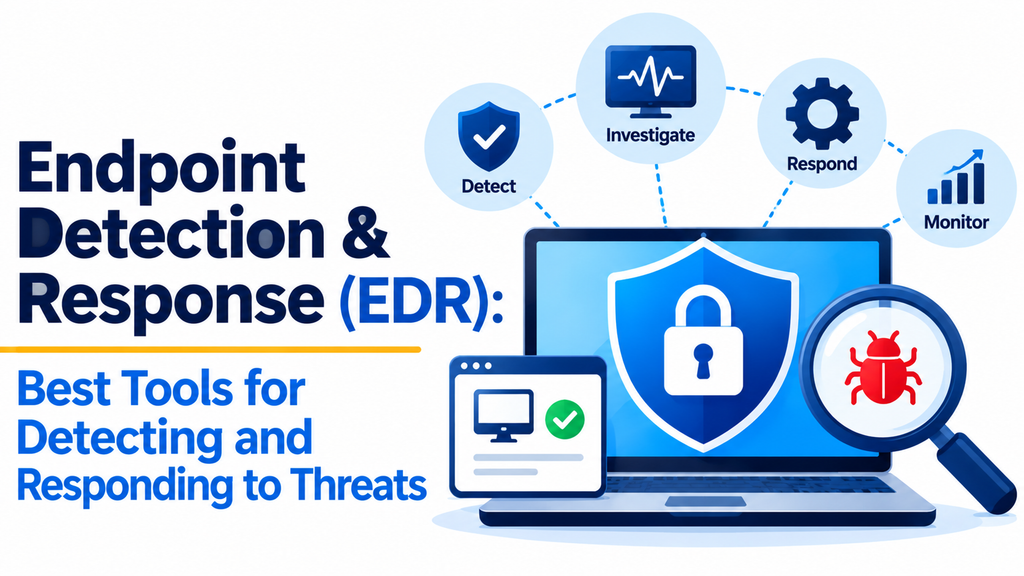
Endpoint Detection and Response (EDR) solutions help organizations monitor endpoint devices, detect suspicious activities, investigate security incidents, and respond to cyber threats. As attackers increasingly use sophisticated techniques such as fileless malware, credential theft, and ransomware, traditional antivirus protection alone may not provide sufficient visibility.
EDR platforms continuously collect and analyze endpoint activity to identify potential attacks. They give security teams the information and response capabilities needed to investigate threats, contain affected devices, and reduce the impact of security incidents.
What Is EDR?
EDR is an endpoint security technology that focuses on continuous monitoring, threat detection, investigation, and incident response. It collects data from computers, laptops, and servers to identify unusual processes, suspicious connections, unauthorized changes, and other indicators of compromise.
Unlike traditional endpoint protection, which primarily focuses on preventing known threats, EDR emphasizes visibility into endpoint activity and the ability to investigate and respond to suspicious behavior.
How EDR Works
EDR platforms use endpoint agents, behavioral analytics, threat intelligence, and centralized management to protect devices.
- Data collection: Endpoint agents collect information about processes, files, network connections, logins, and system activity.
- Continuous monitoring: The platform analyzes endpoint behavior to identify unusual or potentially malicious events.
- Threat detection: Analytics and threat intelligence help identify malware, ransomware, suspicious scripts, and attacker techniques.
- Investigation: Security teams examine event timelines, affected devices, and related activities to understand an incident.
- Threat containment: Administrators can isolate compromised endpoints or terminate malicious processes.
- Remediation: The platform supports recovery actions such as removing malicious files, reversing certain changes, and restoring device security.
Popular EDR Tools and Platforms
Several vendors offer endpoint detection and response solutions for businesses and enterprise security teams.
- CrowdStrike Falcon Insight: Provides endpoint detection, investigation, threat intelligence, and response capabilities.
- Microsoft Defender for Endpoint: Offers endpoint monitoring, threat detection, vulnerability management, and incident response.
- SentinelOne Singularity: Combines behavioral detection, endpoint visibility, and automated response capabilities.
- Palo Alto Networks Cortex XDR: Correlates endpoint and other security data to help detect and investigate threats.
- Sophos Intercept X: Provides endpoint threat detection, ransomware protection, and security response features.
- Trend Micro Vision One: Offers extended detection and response capabilities with endpoint threat visibility.
- Trellix Endpoint Security: Provides endpoint protection and detection capabilities for enterprise environments.
Organizations should compare product editions carefully because detection, investigation, automation, and integration features may vary.
Key Features of EDR Solutions
1. Continuous Endpoint Monitoring
Tracks endpoint processes, files, user activity, and network connections to provide ongoing security visibility.
2. Behavioral Threat Detection
Identifies suspicious activity by analyzing behavior rather than relying only on known malware signatures.
3. Threat Investigation
Provides event timelines, endpoint activity records, and contextual information to help security teams understand attacks.
4. Endpoint Isolation
Allows administrators to disconnect a potentially compromised device from the network while preserving access for investigation.
5. Automated Response
Supports actions such as terminating malicious processes, quarantining files, and blocking suspicious activity.
6. Threat Hunting
Enables security analysts to search endpoint telemetry for indicators of compromise and signs of hidden threats.
7. Threat Intelligence Integration
Uses information about known attack techniques, malicious files, and suspicious infrastructure to improve detection.
8. Centralized Management and Reporting
Provides a unified console for monitoring endpoints, managing incidents, and reviewing security trends.
Benefits of EDR
- Faster threat detection: Helps identify suspicious activity before an attack causes extensive damage.
- Improved incident investigation: Provides detailed endpoint information for understanding security incidents.
- Reduced response time: Enables security teams to contain compromised devices and stop malicious processes.
- Better threat visibility: Reveals activity that traditional antivirus tools may not detect.
- Support for threat hunting: Helps analysts proactively search for hidden attacks.
- Stronger ransomware defense: Helps detect suspicious encryption behavior and contain affected endpoints.
- Improved security operations: Provides useful endpoint telemetry for incident response and security analysis.
How to Choose the Right EDR Platform
Before selecting an EDR solution, organizations should evaluate:
- Detection accuracy: Look for effective detection of malware, fileless attacks, ransomware, and suspicious behavior.
- Operating system support: Confirm compatibility with the organization’s Windows, macOS, and Linux devices.
- Investigation capabilities: Evaluate event timelines, incident context, search functionality, and forensic information.
- Response automation: Check whether the platform supports endpoint isolation and other containment actions.
- Performance: Ensure endpoint monitoring does not significantly affect device performance.
- Integration: Consider compatibility with SIEM, SOAR, identity security, and other cybersecurity platforms.
- Scalability and cost: Compare licensing, deployment requirements, support, and the ability to manage growing endpoint environments.
EDR vs. EPP
Endpoint Protection Platforms primarily focus on preventing threats from reaching or compromising devices. EDR focuses on monitoring endpoint activity, detecting suspicious behavior, investigating incidents, and responding to attacks.
Many modern security platforms combine EPP and EDR capabilities, providing both preventive protection and deeper incident response functionality.
Conclusion
Endpoint Detection and Response is an important technology for organizations that need continuous endpoint visibility and stronger incident response capabilities. By collecting endpoint activity, identifying suspicious behavior, and supporting rapid containment, EDR platforms help security teams manage increasingly sophisticated cyber threats.
Choosing the right solution depends on an organization’s infrastructure, security maturity, operating systems, integration requirements, and response needs.
