Upgrade & Secure Your Future with DevOps, SRE, DevSecOps, MLOps!
We spend hours scrolling social media and waste money on things we forget, but won’t spend 30 minutes a day earning certifications that can change our lives.
Master in DevOps, SRE, DevSecOps & MLOps by DevOps School!
Learn from Guru Rajesh Kumar and double your salary in just one year.
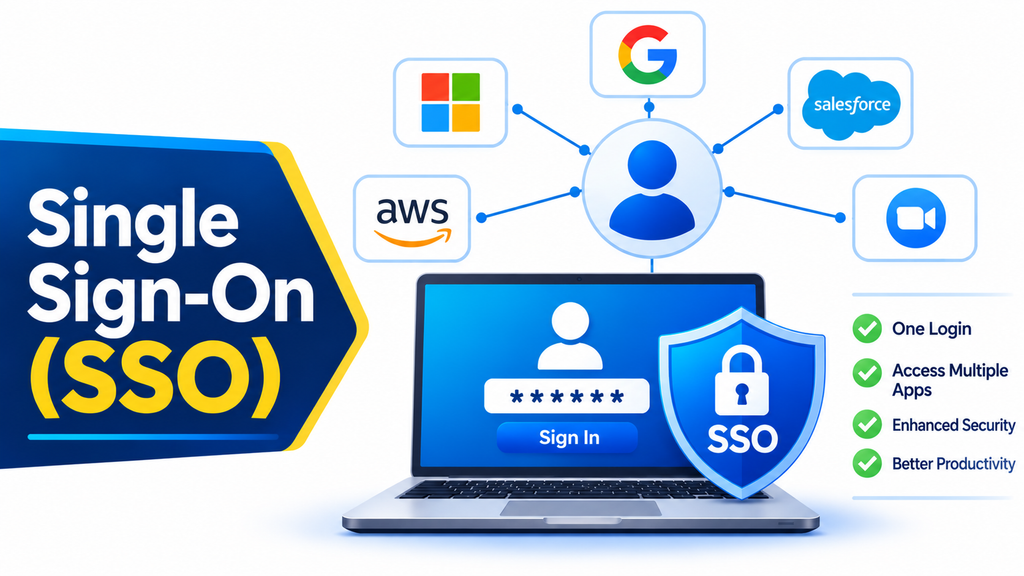
Single Sign-On (SSO) is an authentication technology that allows users to access multiple applications and services using a single set of login credentials. Instead of remembering separate usernames and passwords for every platform, users can authenticate once and securely access connected applications without repeatedly signing in.
As organizations adopt cloud-based software, remote working environments, and interconnected business applications, SSO has become an important part of modern identity and access management. It improves user convenience while helping IT teams maintain centralized control over authentication and access security.
How Single Sign-On Tools Work
SSO platforms act as centralized authentication providers between users and the applications they need to access. When a user attempts to open an integrated application, the SSO system verifies their identity and issues a secure authentication token or assertion.
The connected application validates this information and grants access without requiring another login. Common technologies used in SSO include Security Assertion Markup Language (SAML), OpenID Connect (OIDC), and OAuth 2.0.
Popular Single Sign-On Tools
Several technology providers offer reliable SSO solutions for businesses and enterprise environments:
- Okta Single Sign-On: Provides centralized authentication and access to cloud, mobile, and enterprise applications.
- Microsoft Entra ID: Offers SSO capabilities for Microsoft services and thousands of integrated business applications.
- OneLogin: Provides cloud-based identity management, centralized authentication, and application access controls.
- Ping Identity: Supports enterprise SSO, identity federation, and secure access management.
- JumpCloud: Combines directory services, device management, and SSO capabilities in a centralized platform.
- Cisco Duo: Provides secure access with SSO, multi-factor authentication, and device trust capabilities.
- IBM Security Verify: Offers enterprise identity management and SSO capabilities for workforce and customer access.
Key Features to Consider
When selecting SSO software, organizations should evaluate application integration, authentication protocols, centralized user management, and security policy enforcement.
Support for SAML and OpenID Connect is particularly important for connecting modern applications. Additional features such as multi-factor authentication, adaptive authentication, session management, automated provisioning, access reporting, and directory integration can further improve security and administration.
Benefits of Single Sign-On Tools
SSO solutions reduce password fatigue by allowing users to access multiple applications through one authentication process. This can improve employee productivity, simplify onboarding, and reduce the number of password-related support requests.
From a security perspective, centralized authentication helps organizations enforce consistent access policies, monitor login activity, and quickly revoke access when employees leave or change roles. When combined with multi-factor authentication, SSO can provide stronger protection against unauthorized access.
How to Choose the Right Solution
The ideal SSO platform depends on the number of applications an organization uses, its existing identity infrastructure, security requirements, and deployment model.
Businesses should compare supported authentication protocols, integration capabilities, scalability, administrative controls, pricing, and technical support. Organizations with hybrid environments should also consider compatibility with both cloud-based and on-premises applications.
Conclusion
Single Sign-On Tools simplify authentication by allowing users to access multiple applications through one secure login process. Solutions from Okta, Microsoft, OneLogin, Ping Identity, JumpCloud, Cisco, and IBM provide different capabilities for managing enterprise authentication. Implementing the right SSO platform can improve productivity, strengthen access security, and simplify identity management across an organization.
