Upgrade & Secure Your Future with DevOps, SRE, DevSecOps, MLOps!
We spend hours scrolling social media and waste money on things we forget, but won’t spend 30 minutes a day earning certifications that can change our lives.
Master in DevOps, SRE, DevSecOps & MLOps by DevOps School!
Learn from Guru Rajesh Kumar and double your salary in just one year.
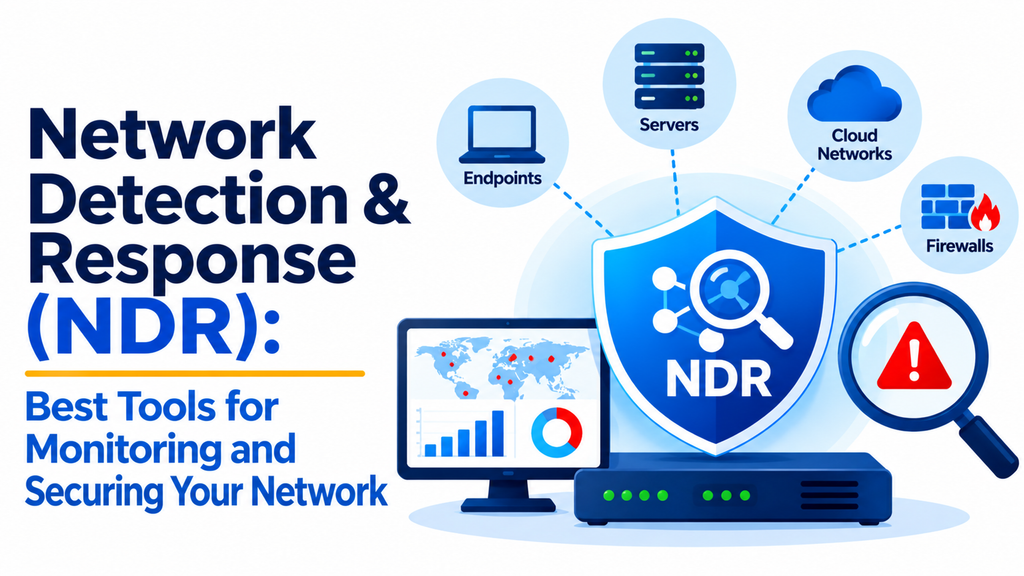
Network Detection and Response (NDR) solutions help organizations monitor network traffic, identify suspicious behavior, investigate cyber threats, and respond to security incidents. As business networks become more complex through cloud services, remote access, connected devices, and distributed infrastructure, maintaining network visibility is increasingly important.
NDR platforms analyze network communications to detect unusual patterns that may indicate malware, unauthorized access, data exfiltration, or lateral movement. They help security teams discover threats that may bypass traditional perimeter defenses and endpoint security tools.
What Is NDR?
Network Detection and Response is a cybersecurity technology that monitors network activity and analyzes traffic to identify potential threats. It uses techniques such as behavioral analytics, machine learning, network metadata analysis, and threat intelligence.
Unlike traditional network monitoring tools that mainly focus on performance and availability, NDR platforms concentrate on identifying malicious activity and supporting security investigations and responses.
How NDR Works
NDR platforms collect and analyze network information to identify suspicious communications and potential attacks.
- Network data collection: Sensors and integrations collect traffic information, flow records, and network metadata.
- Traffic analysis: The platform examines communications between devices, users, applications, and services.
- Behavioral monitoring: Analytics establish normal network patterns and identify unusual activity.
- Threat detection: Suspicious connections, lateral movement, command-and-control communications, and data transfers are flagged.
- Investigation: Security analysts review related events and communication patterns to understand the incident.
- Response: Integrated tools can support actions such as blocking connections, isolating devices, or triggering security workflows.
Popular NDR Tools and Platforms
Several vendors provide network detection and response capabilities for organizations with different security requirements.
- Vectra AI: Uses AI-driven detection to identify suspicious activity across network and identity environments.
- Darktrace: Provides behavioral analysis and threat detection across network and digital environments.
- ExtraHop Reveal(x): Offers network detection, investigation, and visibility into application and device activity.
- Corelight: Provides network security monitoring and detection using rich network telemetry.
- Cisco Secure Network Analytics: Helps identify suspicious network behavior and potential security threats.
- Arista NDR: Provides network threat detection and response capabilities using behavioral analysis.
- Palo Alto Networks Cortex XDR: Correlates network and other security telemetry to support threat detection and investigation.
Capabilities, deployment models, and integrations differ across vendors, so organizations should assess each platform against their network architecture.
Key Features of NDR Solutions
1. Network Traffic Analysis
Examines network communications and metadata to identify suspicious connections, unusual transfers, and potentially malicious activity.
2. Behavioral Analytics
Uses machine learning and statistical analysis to establish normal network behavior and detect deviations that may indicate an attack.
3. Threat Detection
Identifies threats such as command-and-control communications, lateral movement, unauthorized access, and suspicious data transfers.
4. Encrypted Traffic Analysis
Uses available metadata and behavioral signals to identify potential threats in encrypted network communications without necessarily decrypting all traffic.
5. Threat Investigation
Provides network activity timelines, communication details, and related evidence to help analysts understand security incidents.
6. Automated Response
Can integrate with firewalls, endpoint security, and security orchestration platforms to support threat containment and response.
7. Cloud and Hybrid Network Visibility
Helps monitor activity across on-premises infrastructure, cloud environments, and hybrid networks.
8. SIEM and Security Tool Integration
Shares alerts and network intelligence with SIEM, SOAR, EDR, and other security platforms.
Benefits of NDR
- Improved network visibility: Helps security teams understand communications across complex network environments.
- Earlier threat detection: Identifies suspicious behavior that may not be visible through endpoint monitoring alone.
- Detection of lateral movement: Helps reveal attackers moving between systems after gaining initial access.
- Faster investigations: Provides network evidence and context for security analysts.
- Improved incident response: Supports faster containment through integrations and automated workflows.
- Cloud security visibility: Helps monitor traffic across hybrid and cloud-based infrastructure.
- Stronger defense in depth: Complements endpoint, identity, and perimeter security technologies.
How to Choose the Right NDR Platform
Before selecting an NDR solution, organizations should evaluate:
- Network coverage: Ensure the platform can monitor relevant data centers, offices, cloud environments, and remote connections.
- Detection quality: Assess its ability to identify lateral movement, command-and-control activity, and data exfiltration.
- Encrypted traffic analysis: Understand how it detects threats in encrypted environments.
- Deployment requirements: Compare hardware sensors, virtual sensors, cloud-based options, and network configuration needs.
- Investigation tools: Look for clear visualizations, useful alerts, and detailed incident context.
- Integration: Check compatibility with existing SIEM, SOAR, EDR, firewall, and identity security platforms.
- Scalability and cost: Evaluate network throughput, retention requirements, licensing, and long-term operating expenses.
NDR vs. EDR
Endpoint Detection and Response focuses on activity occurring on individual devices, such as laptops, desktops, and servers. Network Detection and Response focuses on communications and behavior across the network.
EDR provides visibility into endpoint processes and system events, while NDR helps identify suspicious communication patterns between systems. Using both technologies together can give security teams a broader view of attacks.
Conclusion
Network Detection and Response is an important part of modern cybersecurity because many attacks involve suspicious network communications, lateral movement, and data transfers. NDR platforms help organizations monitor network behavior, identify potential threats, investigate incidents, and coordinate effective responses.
Selecting a solution that fits the organization’s network architecture and integrates with existing security tools can improve visibility and strengthen its overall threat detection strategy.
