Upgrade & Secure Your Future with DevOps, SRE, DevSecOps, MLOps!
We spend hours scrolling social media and waste money on things we forget, but won’t spend 30 minutes a day earning certifications that can change our lives.
Master in DevOps, SRE, DevSecOps & MLOps by DevOps School!
Learn from Guru Rajesh Kumar and double your salary in just one year.
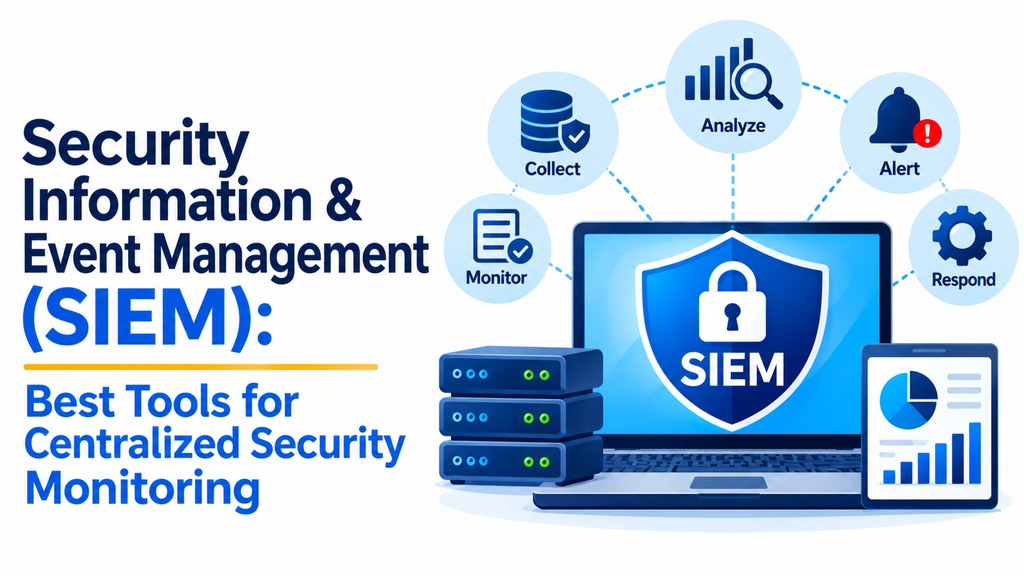
Security Information and Event Management (SIEM) platforms help organizations collect, analyze, and monitor security data from across their IT environments. They provide centralized visibility into activity across networks, servers, applications, endpoints, and cloud services.
Modern organizations generate large volumes of security events every day. Identifying meaningful threats among these events can be challenging without centralized monitoring. SIEM solutions address this challenge by correlating security information, detecting suspicious patterns, generating alerts, and supporting incident investigations.
What Is SIEM?
SIEM is a cybersecurity technology that combines Security Information Management (SIM) and Security Event Management (SEM).
It collects log data and security events from different systems, analyzes the information, and helps security teams identify potential threats. SIEM platforms also support compliance reporting, incident investigation, and centralized security monitoring.
How SIEM Works
SIEM platforms process security information through several stages:
- Data collection: Collects logs and events from endpoints, servers, firewalls, applications, cloud services, and other systems.
- Data normalization: Converts information from different sources into consistent formats for analysis.
- Event correlation: Connects related events to identify suspicious patterns that may indicate an attack.
- Threat detection: Uses detection rules, analytics, and threat intelligence to identify potential security incidents.
- Alert generation: Notifies security teams when activity matches suspicious or predefined risk patterns.
- Investigation and reporting: Provides dashboards, search tools, and reports to support incident response and compliance activities.
Popular SIEM Tools and Platforms
Organizations can choose from several SIEM solutions based on their infrastructure, security requirements, and budget.
- Microsoft Sentinel: A cloud-native SIEM platform that provides security analytics, threat detection, and automation capabilities.
- Splunk Enterprise Security: Offers security monitoring, event analysis, threat detection, and investigation capabilities.
- IBM QRadar SIEM: Helps organizations collect and analyze security events and identify potential threats.
- Google Security Operations: Provides security analytics, threat intelligence, and investigation capabilities.
- LogRhythm SIEM: Supports centralized log management, threat detection, and security operations.
- Exabeam: Provides security analytics and behavioral insights to help identify suspicious activity.
- Elastic Security: Combines security analytics, detection engineering, and investigation capabilities.
- Fortinet FortiSIEM: Offers security event monitoring, analytics, and infrastructure visibility.
Product capabilities, deployment options, and licensing differ, so organizations should evaluate the features available in each edition.
Key Features of SIEM Solutions
1. Centralized Log Management
Collects and stores logs from multiple systems, allowing security teams to monitor events from a unified platform.
2. Real-Time Security Monitoring
Continuously analyzes security events to identify suspicious activity and potential threats.
3. Event Correlation
Connects related events from different sources to uncover attack patterns that may not be obvious when individual alerts are viewed separately.
4. Threat Intelligence Integration
Uses external and internal threat intelligence to improve detection of malicious IP addresses, domains, files, and attack techniques.
5. User and Entity Behavior Analytics
Analyzes user and system behavior to identify unusual activity, account misuse, and potential insider threats.
6. Security Dashboards and Alerts
Provides visual dashboards, customizable alerts, and incident summaries to help analysts prioritize security events.
7. Compliance Reporting
Supports reporting and audit requirements by organizing security logs and providing visibility into relevant activities.
8. SOAR Integration
Connects with Security Orchestration, Automation, and Response tools to automate selected investigation and response workflows.
Benefits of SIEM
- Centralized security visibility: Brings security information from different systems into one monitoring environment.
- Earlier threat detection: Helps identify suspicious patterns and potential attacks across the organization.
- Faster investigations: Makes it easier to search events and understand how an incident developed.
- Improved incident response: Provides actionable alerts and supports coordinated security workflows.
- Compliance support: Helps organizations maintain records and produce reports for applicable regulatory and audit requirements.
- Better threat awareness: Correlates information from multiple sources to reveal broader attack activity.
- Operational efficiency: Reduces the need to review logs manually across separate systems.
How to Choose the Right SIEM Platform
Before selecting a SIEM solution, organizations should consider:
- Data source coverage: Confirm support for the organization’s endpoints, servers, applications, network devices, and cloud platforms.
- Detection capabilities: Evaluate correlation rules, behavioral analytics, threat intelligence, and detection customization.
- Scalability: Ensure the platform can handle current and future log volumes.
- Search and investigation: Look for fast searches, useful event timelines, and clear incident context.
- Automation: Assess integrations with SOAR, EDR, NDR, and ticketing systems.
- Compliance requirements: Check whether reporting and log retention capabilities meet relevant organizational obligations.
- Deployment model: Compare cloud-based, on-premises, and hybrid deployment options.
- Total cost: Consider data ingestion, storage, retention, licensing, maintenance, and staffing requirements.
SIEM vs. SOAR
SIEM focuses on collecting and analyzing security data, detecting suspicious activity, and generating alerts. SOAR focuses on coordinating and automating security workflows, investigations, and response actions.
The two technologies complement each other. SIEM can identify a potential incident, while SOAR can help execute predefined response workflows to investigate and contain it.
Conclusion
Security Information and Event Management is a foundational technology for organizations that need centralized security monitoring and improved threat visibility. SIEM platforms help security teams collect logs, correlate events, detect suspicious behavior, investigate incidents, and support compliance activities.
Choosing a solution that fits the organization’s data environment, security objectives, and operational capacity can strengthen threat detection and improve the effectiveness of security operations.
