Upgrade & Secure Your Future with DevOps, SRE, DevSecOps, MLOps!
We spend hours scrolling social media and waste money on things we forget, but won’t spend 30 minutes a day earning certifications that can change our lives.
Master in DevOps, SRE, DevSecOps & MLOps by DevOps School!
Learn from Guru Rajesh Kumar and double your salary in just one year.
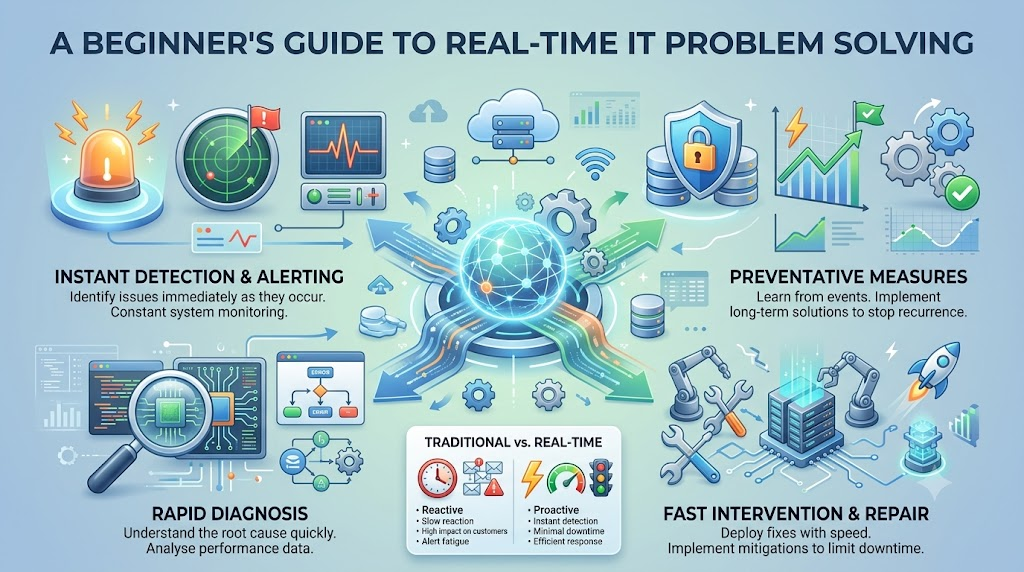
Imagine a busy shopping mall where the front doors suddenly lock by mistake, and no one can get in or out. Every single minute those doors stay closed, the stores lose money, and the shoppers get frustrated and angry. The digital world works in the exact same way. When a company’s website, phone app, or payment system stops working, even for just a few short minutes, it can cost that business millions of dollars and ruin their good reputation forever. In the past, companies usually only found out about these problems after the damage was already done and customers were already complaining.
Today, businesses need to know the very second something goes wrong so they can fix it before anyone even notices. This is where Artificial Intelligence for IT Operations comes in to save the day. By bringing a live, second-by-second view to computer networks, this smart technology helps tech teams watch over massive computer systems without missing a single beat. If you want to explore more about how this technology is helping businesses, you can check out Theaiops.com for some great ideas and tools.
The Danger of Delayed IT Monitoring
Before smart computers came along, keeping an eye on a massive computer system was a lot like trying to find a needle in a huge field of hay. Older computer checking tools were built to simply shout out loud whenever something seemed even a little bit weird or off. This meant that if a machine got slightly warm, or a single picture on a web page took an extra second to load, the system would send an alarm. While it sounds good to be very careful, this created a massive headache for the workers trying to fix things.
This headache is widely known as “alert fatigue.” Imagine your cell phone buzzing with a text message ten thousand times a day, but almost all of those messages are just spam, wrong numbers, or useless information. After a few hours, you would probably get so tired of the noise that you would stop checking your phone altogether. IT workers faced this exact same issue. They were constantly flooded with endless warning emails and flashing red lights on their screens that meant absolutely nothing important.
Because of all this fake and useless noise, the real emergencies would easily slip right through the cracks unnoticed. When an actual digital disaster happened—like the main checkout page breaking down—it was hidden under a mountain of fake alarms. By the time the team dug through the mess and found the real problem, hours might have passed. Customers had already left in frustration to go to a rival website, and the company had lost a massive amount of money. The old way of waiting and seeing was broken, slow, and highly dangerous for modern businesses.
How AIOps Makes Monitoring Truly Real-Time
This smart technology steps in to solve this messy problem by acting like an always-awake, super-smart guard watching the digital doors of a business. It does not just look at one small part of the system; it watches everything all at once. Because it is powered by artificial intelligence, it actually understands what is normal behavior and what is genuinely dangerous.
Instant Data Collection
A modern business generates massive amounts of data every single second of the day. Every time a user clicks a button, sends a chat message, or buys an item, a digital footprint is left behind in the computer system. AIOps gathers all these millions of tiny footprints in real-time, instantly pulling them together into one clear picture. It never needs to sleep, it never takes a coffee break, and it never rests its eyes. It watches the data flow perfectly as it happens.
Silencing the Alarm Noise
The absolute best thing this smart system does is filter out the useless noise. Because it learns how the computers normally behave day after day, it knows that a small jump in website traffic during lunch hour is totally fine. Instead of sending out blind panic alerts for normal daily events, the AI groups together related clues. It silences all the fake warnings and only flags the human tech team when a real, urgent crisis is actually starting to happen.
Smart, Immediate Action
Finding the computer problem fast is great, but fixing it fast is even better. When a real emergency happens, this technology does not just yell for help and walk away. It points out exactly where the fire is, and it often tells the tech team exactly which line of code or wire they need to fix. In some amazing cases, it can even automatically switch network traffic around to keep the website online while the human workers fix the root of the problem in the background.
Comparing Traditional Monitoring vs. Real-Time AIOps
| Feature | Traditional IT Monitoring | Real-Time AIOps |
| Speed of Finding Errors | Very slow; it often takes hours to find the real issue hidden in the system. | Instant; spots the exact broken piece in milliseconds. |
| Number of False Alarms | Thousands per day, leading to highly tired and frustrated workers. | Very low; filters out all the noise and only shows real threats. |
| Customer Impact | Very high frustration; customers often notice the site is broken first. | Zero to low; issues are fixed before the customers even notice a glitch. |
Looking at the table above, the difference between the old way and the new way is like comparing a horse and buggy to a modern sports car. With traditional tools, a company is always playing a stressful game of catch-up. They are reacting to things that have already broken and trying to clean up the mess after the customers have already suffered. It is a slow, painful, and very expensive way to run a digital business.
On the other hand, the new smart technology flips the script completely. It moves a company from playing defense to playing offense. By catching the errors instantly and reducing all those annoying false alarms, the tech team can actually breathe easily and focus on their real work. The most important part is that the people buying things on the website never even know there was a problem behind the scenes, keeping their trust in the brand very strong.
Real-World Scenario: Stopping a Crash Live
To really understand how powerful this is, let us picture a busy Monday morning at a large national bank. Millions of people are logging into their phone apps to check their paychecks, pay their monthly bills, and send money to friends. Suddenly, the main computer database that checks user passwords starts to slow down because a tiny piece of computer code broke overnight.
In the old days, the bank’s computers would start sending out thousands of scattered, confusing warnings to the tech team. The team would be rushing around the office, trying to guess which warning was the real problem. While they spent forty-five minutes digging through emails and charts, the bank’s app would completely freeze up. Thousands of customers would be locked out of their money, angry complaints would pile up on social media, and the bank would end up on the news for all the wrong reasons.
Now, let us replay that exact same morning with real-time AI in place. The millisecond the password system starts to slow down, the smart software spots the change. It ignores the hundreds of tiny side-effects and pinpoints the exact broken code immediately. Within two seconds, it sends one single, clear message to the lead worker: “Password system is slowing down right here, fix this exact line of code.” The worker fixes it in two minutes. The customers checking their bank accounts do not even notice a hiccup. A major disaster is stopped live, right in its tracks.
The Future of Live IT Operations
As we look ahead, the world of running computer systems is going to get even more amazing and hands-off. Right now, this smart technology is like an incredibly helpful assistant that points out the problem and tells the human worker how to fix it fast. But the technology is growing and learning rapidly, and soon it will do much more than just watch, filter, and warn.
In the near future, IT teams might not even need to sit in dark rooms and stare at giant screens full of flashing charts and graphs. Instead, the smart software will become completely self-healing. This means that when a server starts to overheat, or a website gets too much traffic all at once, the system will just fix the problem entirely on its own in the background. It will automatically add more computer power, reroute the internet traffic, and repair the tiny errors without a human being ever having to lift a finger.
This definitely does not mean the human workers will lose their jobs or become useless. Instead, it means they will finally be free from the boring, stressful task of chasing fake alarms all day long. They will be able to spend their time building better software, designing much faster apps, and thinking up fun new ideas for the business. The future of the digital world is not about working harder to keep things running; it is about letting the smartest tools do the heavy lifting so humans can freely create.
FAQs
1. What does AIOps stand for?
It stands for Artificial Intelligence for IT Operations, which simply means using smart computer programs to help run, watch, and fix computer networks.
2. Why is real-time monitoring so important?
It is important because it catches problems the exact second they happen, letting workers fix them before customers get locked out or become frustrated.
3. What is alert fatigue?
Alert fatigue happens when workers get so many fake warning messages that they get tired and start ignoring them, causing them to miss the real emergencies.
4. Does this smart software completely replace human IT workers?
No, it simply acts as a very smart helper that points out the real problems so the human workers can fix them much faster and easier.
5. How does the system know what a real problem is?
The smart software constantly learns how the computer network normally behaves, so it can easily spot when something weird or dangerous is actually happening.
6. Can this technology stop websites from crashing?
Yes, by finding the root cause of a slowdown in milliseconds, it gives human workers the chance to stop a crash before it brings the whole website down.
7. Is this system too hard for small businesses to use?
Not anymore, as many modern software tools are built to be very simple and easy to plug into almost any business setup, no matter the size.
8. What happens to all the fake alarms in this new system?
The smart system groups them together, completely silences the useless noise, and only sends one clear alert about the actual problem.
9. Does this technology help improve customer happiness?
Absolutely, because the software keeps apps and websites running perfectly smooth, so customers never have to deal with broken pages or slow load times.
10. Will self-healing computers be a reality soon?
Yes, the technology is moving very fast toward a future where systems can automatically fix their own minor issues without waiting for human help.
Conclusion
Keeping massive digital systems running smoothly is one of the hardest and most important jobs in the world today. Every single second counts when thousands of people rely on a website or a phone app to work perfectly. Relying on old methods that drown workers in fake alarms is simply no longer an option for businesses that want to stay alive and succeed. Waiting even five minutes to fix a broken page can mean losing customers forever.
Real-time AIOps changes everything by bringing clear vision, instant speed, and very smart actions to the table. It completely filters out the confusing noise, catches the real problems instantly, and allows companies to fix errors before the user even knows something went wrong. By embracing this smart technology, businesses can finally stop putting out daily fires and start building a smoother, safer, and much happier digital future for everyone involved.
