Upgrade & Secure Your Future with DevOps, SRE, DevSecOps, MLOps!
We spend hours scrolling social media and waste money on things we forget, but won’t spend 30 minutes a day earning certifications that can change our lives.
Master in DevOps, SRE, DevSecOps & MLOps by DevOps School!
Learn from Guru Rajesh Kumar and double your salary in just one year.
Introduction
Your train to Lijiang is sold out. The next bus leaves at dawn and stops in every village. Now picture a different plan. You pick up a bike or a car and choose your own route.
China is huge. Its roads cross deserts, rice terraces, snowy passes, and old Silk Road towns. One road trip can feel like visiting five countries.
Renting gives you that freedom. The rules are strict, but they are easy once you know them. MotoShare.com.cn helps travelers find verified rental shops in many Chinese cities. This guide shows you how to pick a vehicle, get the right papers, and travel with confidence.
Why Rent a Motorcycle in China?
Two wheels give you a freedom that trains and tour buses cannot match. You stop when you want. You turn onto a quiet side road when something looks interesting.
A motorcycle also moves well around busy suburbs. It slips through slow traffic that traps a car. You spend less time waiting and more time riding.
Mountain roads are where a motorcycle shines. Every hour brings new curves, fresh air, and wide views. Routes in Sichuan, Yunnan, and Gansu feel made for riders.
But the bike must fit the rider. A small engine is easy to control, but it struggles on steep climbs. A big engine has power, but it is heavy on tight turns.
Match the engine size to your skill and the land you will cross. A new rider should pick a light bike for flat roads. An experienced rider can take a bigger bike into the hills. Be honest about your skill level. It keeps the trip safe and fun.
Choosing Your Ride: Scooters, Touring Bikes, and Cars
China is a big country, so no single vehicle fits every trip. A scooter works well in a crowded city. A car is better in cold rain. A touring bike wins on open mountain roads. Think about three things first: your route, your riding skill, and your luggage. The list below shows how each choice works.
- City Scooter / E-Bike
- Best use: short city trips and sightseeing
- Rider skill needed: beginner
- Luggage space: small, enough for a backpack
- Road comfort: fine on smooth streets, tiring on long rides
- Commuter Motorcycle
- Best use: day trips and small-town travel
- Rider skill needed: beginner to intermediate
- Luggage space: medium, with a rear box or small bags
- Road comfort: good on paved roads
- Adventure Touring Bike
- Best use: mountain passes and long routes
- Rider skill needed: intermediate to expert
- Luggage space: large, with side cases and a top box
- Road comfort: very good, even on rough roads
- Rental Car / SUV
- Best use: families, groups, and bad weather
- Rider skill needed: any licensed driver
- Luggage space: the largest
- Road comfort: the best
Luggage matters more than most people expect. A bike carries one or two bags, and a car carries a whole group’s gear. Passengers ride more comfortably in a car, especially for hours. Fuel range also differs. Check how far one tank or one battery charge goes before you leave.
Motorcycle Rental Beijing and Motorcycle Rental Shanghai
Beijing is a great base for riders who love mountains. The outer districts hold winding roads and quiet villages. Many routes lead toward the Great Wall, where stone towers sit on high ridges. A motorcycle rental Beijing booking lets you reach these spots on your own schedule.
The city center is different. Beijing has several Ring Roads, which are circular roads around the core. Rules for motorcycles inside these rings can be strict. Ask your rental shop which roads and hours are open to your bike.
Shanghai feels very different. It is flat and full of water. Riders enjoy riverfront views and old canal towns outside the center. Highways across the delta connect Shanghai to cities like Suzhou and Hangzhou.
Shanghai also has plate restrictions. In simple words, some central areas only allow vehicles with certain license plates. Many central roads limit motorcycles too. A motorcycle rental Shanghai provider can tell you where you may ride.
So the two cities need two plans. In Beijing, ride out toward the hills. In Shanghai, stay near the edges or take the highways wisely. Always check local rules before you set out. They change by district, and fines are easy to avoid when you ask first.
Scooter Rental China and Urban City Travel
A scooter is the easiest way to learn a Chinese city. It is light and quiet. Most rental scooters here are electric, so you skip the fuel stop. You can reach a market, a park, or a temple in minutes.
Electric scooters and light bikes suit short neighborhood trips. Many shops offer bike rental China deals by the day or week. Weekly rates often cost less per day. A scooter rental China booking works well for expats and long-stay visitors.
Parking has rules. Park only in marked zones. Do not block a sidewalk or a pedestrian area. Many city centers have walking-only streets, and you must push your scooter or avoid them.
Charging is simple but needs planning. Ask your shop how far one charge goes. Ask if they swap batteries or lend a charger. Many hotels and apartments let you charge indoors, but always ask first.
Wear a helmet every time. Many cities require one for scooter riders and passengers. Use the bike lane when one exists. Watch for delivery riders, who move fast and turn without warning. Ride slowly and stay calm. City riding in China is busy, but it feels easy after a day or two.
Adventure Motorcycle Rental China
An adventure motorcycle is a tough, tall bike made for long trips on mixed roads. It has strong suspension, which means springs that soak up bumps. It has dual-sport tires, which grip both pavement and dirt. Its seat is upright, so your back stays comfortable all day.
China offers some of the best adventure roads on Earth. Western Sichuan has high grasslands and winding mountain passes. Shangri-La sits high in Yunnan and gives you snow peaks and deep valleys. Gansu has wide, empty roads and ancient desert towns.
Many passes sit above 4,000 meters. At that height, air is thin and weather changes fast. Plan rest days to let your body adjust. Drink water and go slowly if you feel dizzy. Tibet needs special permits for foreigners, so plan that trip with an agency.
An adventure motorcycle rental China booking should include more than the bike. Ask about luggage cases, tools, and a spare tube. Ask if the shop offers road support. Remote areas have few repair shops.
Pick a bike you can handle. A heavy bike on loose gravel can tire out even a strong rider. Start with an easier route if you are unsure. Build up to harder roads once you feel safe.
Pre-Ride Vehicle Inspection Checklist
A short check before you ride can save your whole trip. Most problems are easy to spot while you are still at the shop. Walk around the vehicle slowly. Touch, look, and test each part. The list below covers six key checks. Do each one before you sign anything or ride away.
- Tires & Tread Depth
- Look for: deep grooves, no cracks, and even wear
- Why it matters: bad tires slip, especially on wet roads
- Front & Rear Brakes
- Look for: firm levers and quick response
- Why it matters: weak brakes are dangerous on steep descents
- Headlight & Indicators
- Look for: working lights, signals, and brake light
- Why it matters: other drivers must see you, especially at dusk
- Chain & Fluid Levels
- Look for: a clean chain with no rust, plus full oil and coolant
- Why it matters: low fluids can wreck an engine fast
- Vehicle Registration & Insurance Card
- Look for: papers that match the vehicle and plate
- Why it matters: police may ask to see them at any stop
- Mirrors & Throttle Cable
- Look for: tight mirrors and a smooth throttle that snaps back
- Why it matters: a sticky throttle can cause a crash
Handover day is your best chance to protect yourself. Take clear photos of every side of the vehicle. Photograph any scratches, dents, or marks. Add a photo of the fuel gauge or battery level. Share the photos with the shop and keep a copy. Photos help settle any damage question at return.
Motorcycle Road Trip China and Scenic Route Planning
A good motorcycle road trip China plan starts with small days. In mountain corridors, ride 200 to 250 kilometers at most. Curves, climbs, and photo stops eat time. Short days leave you fresh and alert.
Choose your roads with care. Most motorcycles cannot use expressways in China, so you will ride national and provincial roads. These roads are scenic but slower. Plan more hours than the map suggests.
Cars and some larger bikes may face toll booths. Tolls are small, but they add up on long trips. Most booths accept mobile payment. Carry some RMB cash too, because remote booths may not take foreign cards.
Weather shapes your trip. Southern and western China have a rainy season in summer. Roads turn slick, and landslides can close routes. Spring and autumn are often the best seasons. Winter snow can close high passes.
Ride only in daylight. Mountain roads have sharp turns, animals, and slow trucks. Darkness hides all of them. Plan to reach your stop before sunset. Book each night’s stay ahead when you can. Then you can enjoy the road without worry.
Car Rental China for Foreigners and Self Drive Options
A car is sometimes the smarter choice. Families with children travel more easily in a car. Heavy rain makes bikes unsafe. Groups with lots of luggage need the space. Long winter trips are also warmer inside a car.
A self drive car rental China booking gives you the same freedom as a bike. You set the pace and the route. You can cross several cities in one trip. Many travelers pick an SUV for mixed roads.
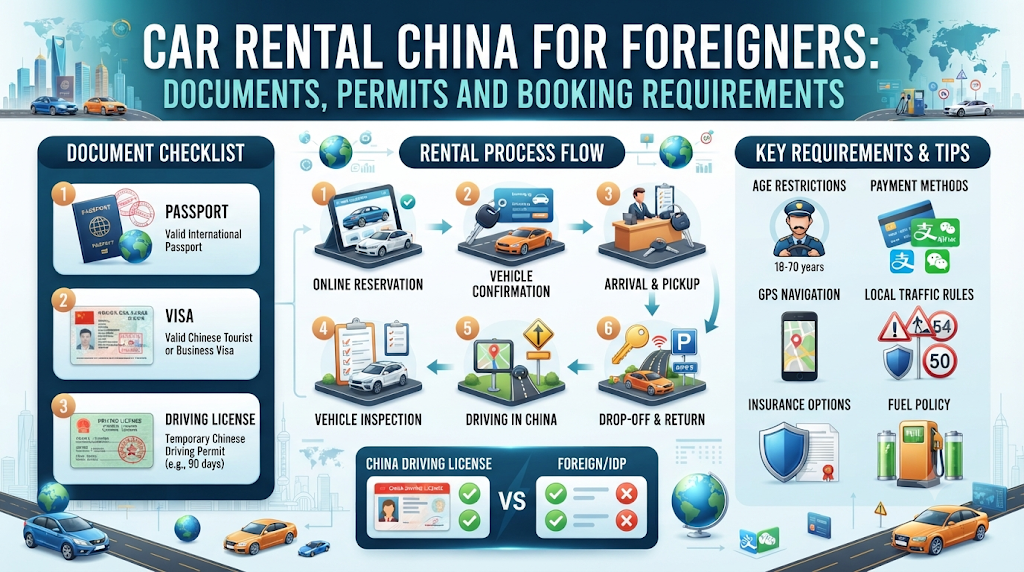
Now the key rule. China does not accept the International Driving Permit, or IDP. This is a common surprise. A foreign traveler must get a Chinese Temporary Driving Permit, called 临时驾驶许可 in Chinese. It is a short-term permit for visitors.
You usually apply at a Vehicle Management Office, called 车辆管理所. Some airports and entry points also offer it. Bring your passport, visa, home license, and a certified Chinese translation of that license.
Rules for car rental China for foreigners can change by city. Ask your rental provider what they need before you book. Some providers also ask for extra proof of your stay. A little planning at home saves a lot of stress at the counter.
Finding Verified Rentals Through MotoShare
MotoShare is a vehicle discovery marketplace. It connects travelers with verified local rental providers across China. You do not need to call shop after shop. You search in one place and compare your options.
Start with your city and your dates. The results show vehicles that are free on those days. You can compare scooters, touring bikes, and cars side by side.
Prices appear in RMB, so you know the real cost. This helps you set a budget with no surprises. MotoShare adds zero hidden platform fees to your booking.
You can also browse popular brands, such as CFMOTO and Benelli. These brands make strong touring bikes for Chinese roads. Look at photos, details, and the provider’s profile before you decide.
Verified providers matter. A trusted shop gives you a clean vehicle, clear papers, and fair terms. That is the base of a good trip. Pick a provider, read the rental terms, and ask questions before you book.
Real-Life Travel Scenarios
- The Shanghai expat. An expat professional rents an electric scooter for one month. She rides in the bike lane to work and parks in marked zones. The shop gives her a helmet and a charger. She skips crowded trains and saves time every day.
- The Yunnan adventurer. An adventure rider books a tough touring bike for Shangri-La. He rides short days and rests at high altitude. He downloads offline maps first. The mountain roads reward him with snow peaks, deep valleys, and almost no traffic.
- The Beijing business traveler. A foreign business traveler gets a Chinese Temporary Driving Permit at a Vehicle Management Office. Then she rents an electric car in Beijing. She charges at public stations and uses the car for meetings in the outer districts.
- The Silk Road duo. Two friends book a mid-size SUV in Lanzhou. They drive scenic sections of the old Silk Road. The car carries their bags with ease. They stop at desert towns, share the driving, and enjoy air conditioning.
Common Mistakes to Avoid When Renting in China
- Assuming an IDP works. China does not accept the International Driving Permit on mainland roads. Get a Chinese Temporary Driving Permit or a full Chinese license first. Ask your rental provider which papers they accept.
- Ignoring city road limits. Many cities ban motorcycles from elevated highways and expressways. Fines apply. Check local city rules and ask your shop which roads you may use before every ride.
- Skipping the license translation. A plain copy of your home license is not enough. You need an official, certified Chinese translation. Order it before you travel, because it can take several days.
- Skipping the vehicle check. Riders who rush away from the shop often miss worn tires or weak lights. Walk around the vehicle, test the brakes and lights, and take photos before you leave.
- Having no local payment method. Remote tolls and fuel stops often take only mobile payment or RMB cash. Foreign cards may fail. Carry some cash and set up a mobile payment app before you go.
- Ignoring mountain weather. Western mountains can go from sun to snow in an hour. Check the forecast each morning. Pack warm layers and rain gear, and be ready to stop early or turn back.
- Riding without offline maps. Phone signal disappears in rural valleys. Download maps for your whole route before you leave. Save key stops and hotel addresses so you never ride lost.
- Renting a bike that is too big. A heavy adventure bike is hard to handle on loose gravel. Without off-road practice, falls happen. Pick a lighter bike, or start with easier roads.
Simple Rental Booking Checklist
- Valid passport with entry visa and stamp. Rental shops check your entry stamp, so keep it clear and easy to find.
- Chinese Temporary Driving Permit or full Chinese driver’s license. This is the main legal proof that you may drive or ride.
- Accepted payment method or credit card for the security deposit. Ask the shop which card or mobile payment it accepts.
- Certified Chinese translation of your home driver’s license. Keep the translation with your original license at all times.
- DOT or CCC certified helmet and protective riding gear. Check that the helmet fits well and has no cracks.
- Fuel and battery return agreement (full-to-full policy). Return the vehicle with a full tank or full battery to avoid extra charges.
Frequently Asked Questions
1. Can foreigners rent a car or motorcycle in China with an International Driving Permit (IDP)?
No. China does not accept the International Driving Permit. You need a Chinese Temporary Driving Permit or a full Chinese license.
Bring your home license, passport, and a certified Chinese translation too. Ask your rental provider which papers they accept before you book.
2. How does a foreign visitor get a Chinese Temporary Driving Permit?
You usually apply at a Vehicle Management Office, called 车辆管理所. Some airports and entry points also offer the service.
Bring your passport with a valid visa, your home license, and a certified Chinese translation. Offices may ask for photos or a health form. Steps differ by city, so call ahead and check.
3. Are motorcycle helmets required by law across China?
Yes. Riders and passengers on motorcycles must wear helmets. Many cities also require them for electric bike riders.
Choose a helmet with CCC certification, which is the Chinese safety mark. A good helmet fits snugly and has a working strap. Police can fine riders who ignore the rule, and a helmet protects you in a fall.
4. Are motorcycles allowed on Chinese highways and expressways?
In most areas, motorcycles cannot use expressways, called 高速公路. They ride on national and provincial roads instead. These roads are slower but very scenic.
Rules can differ by province and city. Cars can use expressways and pay tolls. Always ask your rental shop which roads are open to your bike before you plan a route.
5. What is the mandatory vehicle insurance policy in China?
The required policy is Compulsory Traffic Accident Liability Insurance, called 交强险. It covers injury and damage you cause to other people.
It does not cover your own vehicle or your own injuries. Ask your provider about extra insurance for theft, damage, and personal injury. Get a copy of the insurance card and keep it with the vehicle.
6. Can tourists rent lightweight electric scooters without a driver’s license?
Sometimes. Small electric bikes that meet speed and weight limits may not need a motor vehicle license in some cities. Faster scooters count as motorcycles and need a license.
Rules change by city, so ask the shop before you rent. Wear a helmet in every case. Never assume a scooter is license-free just because it is electric.
7. What documents are needed to pick up a rental car in China?
Bring your passport with a valid visa and entry stamp. Bring your Chinese Temporary Driving Permit or full Chinese license.
Also carry your home license and its certified Chinese translation. You need a payment card or mobile payment for the deposit. Keep your booking confirmation handy. Some providers ask for more, so check first.
8. Which motorcycle models, like CFMOTO, are most popular for road trips in China?
Riders often pick CFMOTO touring bikes, such as the 450MT and 800MT. These bikes are comfortable and built for long days.
Benelli models, like the TRK 502, are also popular for mixed roads. Availability depends on the city and the shop. Choose a size that fits your skill and your route.
9. How do security deposits work for vehicle rentals in China?
A deposit is money the shop holds in case of damage or late return. Many shops take it by card hold or mobile payment. The amount depends on the vehicle.
The shop returns the deposit after it checks the vehicle. This can take a few days. Ask for a written receipt. Your handover photos help prevent disputes.
10. Can I rent a car or motorcycle in Beijing and drop it off in another city?
Sometimes. Some providers offer one-way drop-off for an extra fee. This is more common with cars than with motorcycles.
Many bike shops need the vehicle returned to the same place. Confirm drop-off rules and fees before you book. Get the details in writing, so there are no surprises at the end of your trip.
11. What should riders do if they experience a breakdown or flat tire in rural China?
First, move to a safe spot away from traffic. Turn on your hazard lights. Then call your rental shop for help.
Keep the shop’s number saved on your phone. Know that 110 is police, 120 is an ambulance, and 122 is for traffic accidents. Offline maps help you share your exact spot. Ask the shop about roadside support before you leave.
12. Why should travelers use a marketplace like MotoShare to discover local rentals?
A marketplace saves time. You search one place instead of many shops. You compare vehicles, prices, and dates side by side.
MotoShare lists verified local providers and shows clear prices in RMB. You can read details before you book. This lowers risk, especially if you are new to China and its rules.
Conclusion
The best vehicle depends on your route, your skill, your papers, and the season. Choose a scooter for city streets, a touring bike for mountain passes, and a car for family trips or wet weather. Remember the key rule: China does not accept the International Driving Permit, so plan your Chinese Temporary Driving Permit early. Check your vehicle, wear your helmet, and carry offline maps and RMB. Then plan short days and enjoy the view. With the right papers and a trusted provider, China’s open roads are ready for you. Ride safely, drive legally, and let the road surprise you.
