Upgrade & Secure Your Future with DevOps, SRE, DevSecOps, MLOps!
We spend hours scrolling social media and waste money on things we forget, but won’t spend 30 minutes a day earning certifications that can change our lives.
Master in DevOps, SRE, DevSecOps & MLOps by DevOps School!
Learn from Guru Rajesh Kumar and double your salary in just one year.
Introduction
Capacity planning tools are platforms that help organizations forecast, manage, and optimize resources across IT infrastructure, cloud services, and applications. In simple terms, these tools ensure that businesses have the right amount of compute, storage, and network resources to meet current and future demands without overspending or under-provisioning.
In , as enterprises operate increasingly distributed and cloud-native architectures, accurate capacity planning is crucial to maintain service reliability, reduce operational costs, and support strategic growth. These tools leverage historical usage data, predictive analytics, and AI-driven insights to provide actionable recommendations.
Common real-world use cases include:
- Forecasting server, storage, and network utilization in cloud and on-premises environments
- Predicting demand spikes for applications and services
- Optimizing resource allocation to reduce waste and cost
- Capacity planning for high-traffic events or seasonal workloads
- Integrating with monitoring and observability tools to automate scaling decisions
Buyers should evaluate:
- Predictive analytics and AI capabilities
- Integration with cloud and on-premises monitoring platforms
- Support for multi-cloud and hybrid environments
- Real-time and historical reporting dashboards
- Automated resource provisioning and scaling suggestions
- Alerting for threshold breaches and capacity constraints
- Compliance and audit logging
- Multi-team and multi-role collaboration
- Ease of deployment and configuration
- Cost-effectiveness and scalability
Best for: IT operations, cloud architects, DevOps teams, SREs, enterprises managing complex infrastructure, and organizations aiming to optimize costs while ensuring performance.
Not ideal for: small teams or startups with minimal infrastructure needs, or organizations relying solely on manual capacity planning.
Key Trends in Capacity Planning Tools
AI-driven predictive analytics for resource forecasting and anomaly detection
- Integration with cloud-native platforms like AWS, Azure, GCP
- Automated scaling recommendations to reduce human intervention
- Hybrid and multi-cloud support for distributed architectures
- Workflow automation for provisioning and de-provisioning resources
- Real-time dashboards and reporting for capacity utilization
- Alerting and anomaly detection for overutilization or bottlenecks
- Collaboration features to support multi-team planning
- Compliance and audit-ready reports for governance
- Cost optimization recommendations using predictive and historical data
How We Selected These Tools
The top 10 capacity planning platforms were selected based on:
- Market adoption and recognition among IT and cloud teams
- Feature completeness for forecasting, automation, and analytics
- Reliability, scalability, and performance for enterprise-grade environments
- Security posture, including RBAC, encryption, and compliance
- Integration with monitoring, cloud, and DevOps tools
- Historical and predictive analytics capabilities
- Ease of use and intuitive interfaces
- Reporting and alerting functionality
- Multi-cloud and hybrid environment support
- Vendor support, documentation, and community presence
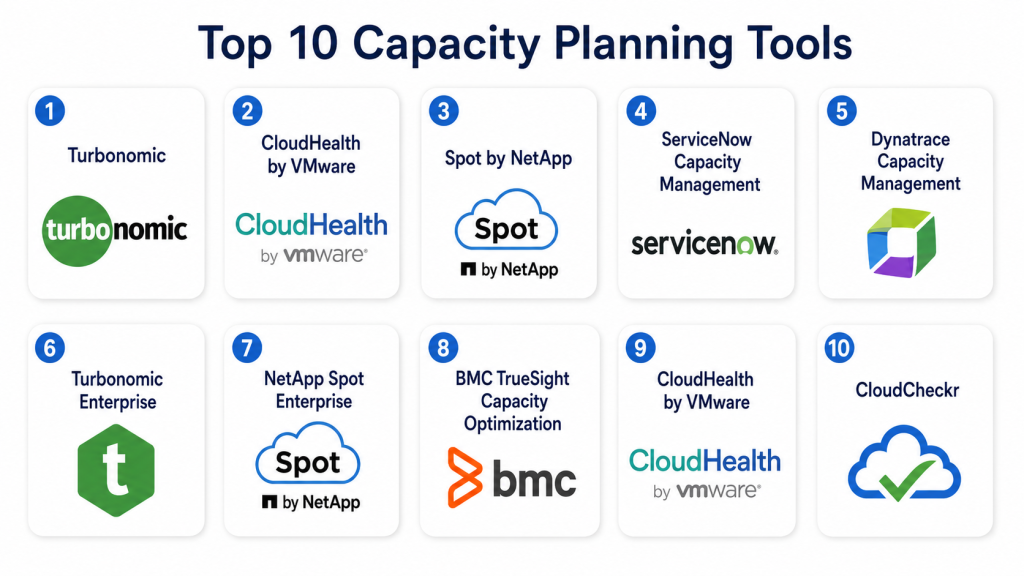
Top 10 Capacity Planning Tools
#1 — Turbonomic
Short description: Turbonomic automates resource management and capacity planning across cloud and on-prem environments, ensuring performance and cost efficiency.
Key Features
- AI-driven resource optimization
- Predictive capacity forecasting
- Automated scaling and provisioning
- Multi-cloud support (AWS, Azure, GCP)
- Real-time monitoring dashboards
- Cost and performance analytics
- Integration with orchestration tools
Pros
- Predictive analytics reduces over-provisioning
- Supports complex hybrid environments
- Automation minimizes manual intervention
Cons
- Premium pricing for enterprise edition
- Setup complexity for large deployments
- Learning curve for advanced features
Platforms / Deployment
Web / Linux / Windows / macOS
Cloud / Self-hosted / Hybrid
Security & Compliance
SSO, RBAC, encryption; SOC 2 and ISO 27001 support.
Integrations & Ecosystem
- VMware, Kubernetes
- Cloud providers (AWS, Azure, GCP)
- CI/CD pipelines
- Monitoring tools (Datadog, Dynatrace)
Support & Community
Enterprise support, documentation, professional services, and community forums.
#2 — CloudHealth by VMware
Short description: CloudHealth provides capacity and cost optimization for cloud infrastructure with analytics and predictive insights for resource planning.
Key Features
- Cloud resource analytics
- Cost optimization recommendations
- Forecasting and trend analysis
- Policy-driven automation
- Multi-cloud support
- Customizable dashboards
- Alerts for overutilization
Pros
- Strong cost and capacity management
- Multi-cloud coverage
- Enterprise reporting and analytics
Cons
- Complex setup for large organizations
- Premium pricing
- Limited on-premises support
Platforms / Deployment
Web / Cloud
Cloud
Security & Compliance
SSO, RBAC, encryption; SOC 2 and GDPR support.
Integrations & Ecosystem
- AWS, Azure, GCP
- ServiceNow
- Monitoring and ITSM tools
- APIs for automation
Support & Community
Documentation, enterprise support, tutorials, and user community.
#3 — Spot by NetApp
Short description: Spot optimizes cloud infrastructure capacity and costs with predictive analytics and automated resource management.
Key Features
- Predictive capacity planning
- Automated scaling and provisioning
- Cost optimization for cloud resources
- Multi-cloud support
- Real-time monitoring dashboards
- Alerts for resource constraints
- Integration with DevOps pipelines
Pros
- Strong AI-driven optimization
- Cost savings on cloud resources
- Multi-cloud and container support
Cons
- Subscription pricing for advanced features
- Learning curve for automation setup
- Limited on-premises coverage
Platforms / Deployment
Web / Cloud
Cloud
Security & Compliance
SSO, encryption, RBAC; SOC 2 compliance supported.
Integrations & Ecosystem
- AWS, Azure, GCP
- Kubernetes and Docker
- Monitoring and alerting tools
- APIs for automation
Support & Community
Enterprise support, documentation, and community forums.
#4 — ServiceNow Capacity Management
Short description: ServiceNow provides ITSM-integrated capacity management for cloud and on-premises infrastructure with predictive planning and reporting.
Key Features
- Resource utilization monitoring
- Capacity forecasting and planning
- Workflow automation
- Integration with ITSM and monitoring tools
- Reporting and dashboards
- Multi-cloud and hybrid support
- Alerts and notifications
Pros
- ITSM-integrated for workflow automation
- Predictive analytics for planning
- Enterprise-grade scalability
Cons
- Premium cost
- Requires ServiceNow ecosystem familiarity
- Setup complexity for multi-cloud
Platforms / Deployment
Web / Linux / Windows / macOS
Cloud
Security & Compliance
SSO, MFA, RBAC, encryption; SOC 2 and ISO 27001 supported.
Integrations & Ecosystem
- Monitoring tools (Nagios, Datadog)
- Cloud platforms (AWS, Azure, GCP)
- ITSM tools
- APIs for custom automation
Support & Community
Enterprise support, documentation, training, and ServiceNow community.
#5 — Dynatrace Capacity Management
Short description: Dynatrace provides capacity and performance insights with predictive analytics and AI-driven optimization across hybrid and cloud environments.
Key Features
- Predictive workload analytics
- Resource utilization dashboards
- AI-based scaling recommendations
- Multi-cloud support
- Automated alerts
- Integration with observability and APM tools
- Cost efficiency analysis
Pros
- AI-driven optimization
- Unified observability and capacity planning
- Real-time dashboards
Cons
- High cost for enterprise plans
- Requires Dynatrace knowledge for setup
- Learning curve for complex analytics
Platforms / Deployment
Web / Linux / Windows / macOS
Cloud / Hybrid
Security & Compliance
SSO, MFA, RBAC, encryption; SOC 2 and GDPR support.
Integrations & Ecosystem
- Cloud providers (AWS, Azure, GCP)
- Kubernetes and Docker
- CI/CD pipelines
- ITSM and monitoring tools
Support & Community
Enterprise support, documentation, tutorials, and community forums.
#6 — Turbonomic Enterprise
Short description: Turbonomic Enterprise extends AI-driven capacity and performance optimization for hybrid and multi-cloud infrastructures.
Key Features
- Predictive capacity planning
- Automated scaling and provisioning
- Multi-cloud analytics
- Cost and performance dashboards
- Alerting and notifications
- Policy-driven automation
- Integration with monitoring and orchestration tools
Pros
- Strong AI-driven optimization
- Multi-cloud and hybrid support
- Enterprise-grade reporting
Cons
- Premium pricing
- Setup complexity
- Learning curve for AI features
Platforms / Deployment
Web / Linux / Windows / macOS
Cloud / Self-hosted / Hybrid
Security & Compliance
SSO, RBAC, MFA, encryption; SOC 2 and ISO 27001 supported.
Integrations & Ecosystem
- VMware, AWS, Azure, GCP
- Kubernetes and container tools
- Monitoring and ITSM tools
- REST API for automation
Support & Community
Enterprise support, documentation, tutorials, and community forums.
#7 — NetApp Spot Enterprise
Short description: Spot Enterprise provides predictive cloud capacity planning with cost optimization and automated remediation.
Key Features
- Predictive analytics for resource utilization
- Automated scaling and provisioning
- Multi-cloud support
- Real-time monitoring and dashboards
- Alerts and notifications
- API-driven automation
- Containerized application support
Pros
- Cost optimization across clouds
- AI-driven capacity recommendations
- Scalable for enterprise workloads
Cons
- Subscription cost
- Limited on-premises focus
- Setup may require technical expertise
Platforms / Deployment
Web / Cloud
Cloud
Security & Compliance
SSO, RBAC, encryption; SOC 2 Not publicly stated.
Integrations & Ecosystem
- Cloud providers
- Kubernetes and Docker
- CI/CD pipelines
- Monitoring tools
Support & Community
Enterprise support, documentation, tutorials, and community forums.
#8 — BMC TrueSight Capacity Optimization
Short description: BMC TrueSight provides predictive capacity planning and optimization for hybrid IT environments with detailed analytics.
Key Features
- Multi-platform monitoring
- Predictive capacity analytics
- Resource optimization recommendations
- Multi-cloud support
- Workflow automation
- Alerts and reporting
- Integration with ITSM and monitoring tools
Pros
- Enterprise-grade analytics
- Scalable for hybrid IT
- Supports automation and workflow integration
Cons
- Setup complexity
- Premium cost
- Learning curve for advanced analytics
Platforms / Deployment
Web / Linux / Windows
Cloud / Hybrid
Security & Compliance
SSO, RBAC, encryption; SOC 2 and ISO 27001 supported.
Integrations & Ecosystem
- Cloud platforms
- Monitoring tools
- ITSM systems
- APIs for automation
Support & Community
Documentation, enterprise support, and community resources.
#9 — CloudHealth by VMware
Short description: CloudHealth provides multi-cloud capacity and cost management with predictive analytics and resource optimization.
Key Features
- Cloud resource analytics
- Forecasting and trend analysis
- Automated recommendations
- Multi-cloud support
- Alerts and notifications
- Compliance and reporting
- Integration with monitoring tools
Pros
- Multi-cloud coverage
- Cost and performance optimization
- Predictive capacity analytics
Cons
- Enterprise pricing
- Limited on-premises support
- Setup complexity
Platforms / Deployment
Web / Cloud
Cloud
Security & Compliance
SSO, RBAC, encryption; SOC 2 and GDPR support.
Integrations & Ecosystem
- AWS, Azure, GCP
- ITSM platforms
- Monitoring tools
- API for automation
Support & Community
Enterprise support, documentation, and tutorials.
#10 — CloudCheckr
Short description: CloudCheckr delivers capacity planning, cost optimization, and governance analytics for cloud environments.
Key Features
- Cloud usage analytics
- Predictive forecasting
- Resource optimization
- Cost management
- Multi-cloud support
- Alerts and dashboards
- Policy compliance
Pros
- Multi-cloud analytics
- Cost and resource optimization
- Scalable for enterprise
Cons
- Enterprise pricing
- Limited on-premises focus
- Learning curve for dashboards
Platforms / Deployment
Web / Cloud
Cloud
Security & Compliance
SSO, RBAC, encryption; SOC 2 and GDPR supported.
Integrations & Ecosystem
- AWS, Azure, GCP
- Monitoring tools
- ITSM platforms
- API integration
Support & Community
Enterprise support, documentation, and community resources.
Comparison Table
| Tool Name | Best For | Platform(s) Supported | Deployment | Standout Feature | Public Rating |
|---|---|---|---|---|---|
| Turbonomic | Enterprise & hybrid | Web / Linux / Windows / macOS | Cloud / Self-hosted / Hybrid | AI-driven optimization | N/A |
| CloudHealth | Multi-cloud management | Web / Cloud | Cloud | Cost & resource forecasting | N/A |
| Spot by NetApp | Cloud optimization | Web / Cloud | Cloud | Predictive capacity analytics | N/A |
| ServiceNow | IT workflow | Web / Linux / Windows / macOS | Cloud | ITSM-integrated capacity | N/A |
| Dynatrace | Hybrid & cloud | Web / Linux / Windows / macOS | Cloud / Hybrid | AI-driven capacity insights | N/A |
| Turbonomic Enterprise | Large-scale operations | Web / Linux / Windows / macOS | Cloud / Self-hosted / Hybrid | Multi-cloud automation | N/A |
| NetApp Spot Enterprise | Cloud & containers | Web / Cloud | Cloud | Automated scaling & provisioning | N/A |
| BMC TrueSight | Enterprise IT | Web / Linux / Windows | Cloud / Hybrid | Predictive analytics & optimization | N/A |
| CloudHealth VMware | Multi-cloud & cost | Web / Cloud | Cloud | Forecasting & cost optimization | N/A |
| CloudCheckr | Cloud governance | Web / Cloud | Cloud | Resource & cost analytics | N/A |
Evaluation & Scoring of Capacity Planning Tools
| Tool Name | Core (25%) | Ease (15%) | Integrations (15%) | Security (10%) | Performance (10%) | Support (10%) | Value (15%) | Weighted Total (0–10) |
|---|---|---|---|---|---|---|---|---|
| Turbonomic | 9 | 7 | 8 | 8 | 9 | 8 | 7 | 8.35 |
| CloudHealth | 8 | 8 | 8 | 8 | 8 | 8 | 7 | 8.00 |
| Spot by NetApp | 8 | 8 | 7 | 7 | 8 | 7 | 7 | 7.70 |
| ServiceNow | 9 | 7 | 8 | 8 | 8 | 8 | 7 | 8.10 |
| Dynatrace | 9 | 7 | 8 | 8 | 9 | 8 | 7 | 8.25 |
| Turbonomic Enterprise | 9 | 7 | 8 | 8 | 9 | 8 | 7 | 8.25 |
| NetApp Spot Enterprise | 8 | 7 | 8 | 7 | 8 | 7 | 7 | 7.75 |
| BMC TrueSight | 9 | 7 | 8 | 8 | 8 | 8 | 7 | 8.10 |
| CloudHealth VMware | 8 | 8 | 8 | 8 | 8 | 8 | 7 | 8.00 |
| CloudCheckr | 8 | 7 | 7 | 7 | 8 | 7 | 7 | 7.60 |
Scores reflect comparative strengths in predictive analytics, integrations, scalability, and enterprise readiness.
Which Capacity Planning Tool Is Right for You?
Solo / Freelancer
Spot by NetApp or CloudCheckr can provide cost-effective predictive insights for small cloud workloads.
SMB
Turbonomic, CloudHealth, and Dynatrace are suitable for mid-size teams needing analytics and forecasting for hybrid and cloud environments.
Mid-Market
ServiceNow, BMC TrueSight, and Turbonomic Enterprise provide workflow automation and multi-cloud predictive capacity planning for growing teams.
Enterprise
Dynatrace, Turbonomic Enterprise, NetApp Spot Enterprise, and ServiceNow deliver enterprise-grade analytics, AI-driven recommendations, and scalable forecasting.
Budget vs Premium
Budget-conscious teams can start with CloudCheckr or Spot by NetApp. Premium users benefit from Turbonomic Enterprise, Dynatrace, or ServiceNow for comprehensive analytics and automation.
Feature Depth vs Ease of Use
CloudCheckr and Spot by NetApp offer simplicity. Turbonomic, Dynatrace, and ServiceNow offer deeper analytics, predictive capabilities, and automation features for enterprise-scale environments.
Integrations & Scalability
Enterprises should prioritize tools with broad cloud, monitoring, and ITSM integrations. Turbonomic, Dynatrace, and ServiceNow excel in this area.
Security & Compliance Needs
SOC 2, ISO 27001, and GDPR compliance are supported by Turbonomic, ServiceNow, and CloudHealth for enterprise deployments.
Frequently Asked Questions
What is capacity planning?
Capacity planning forecasts resource usage and ensures sufficient infrastructure to meet current and future demand without overspending.
Why is capacity planning important?
It prevents service degradation, reduces costs, and ensures scalability for business growth.
Can these tools integrate with cloud platforms?
Yes. Most tools integrate with AWS, Azure, GCP, and on-prem monitoring solutions.
Do these tools provide predictive analytics?
Yes. AI and machine learning models are used to forecast future resource needs and detect potential bottlenecks.
Are open-source capacity planning tools available?
Fewer options exist. Most enterprises prefer commercial tools for analytics, multi-cloud support, and vendor support.
Can they optimize costs?
Yes. Tools provide insights for underutilized resources, over-provisioned infrastructure, and scaling opportunities.
Do they support multi-cloud environments?
Yes. Enterprise tools like Turbonomic, CloudHealth, and Dynatrace handle hybrid and multi-cloud deployments.
How often should capacity planning be updated?
Continuous monitoring and regular forecasting are recommended for dynamic environments.
Are these tools suitable for SMBs?
Yes. Tools like CloudCheckr, Spot by NetApp, and CloudHealth can scale according to organizational needs.
How do I choose the right tool?
Consider team size, cloud complexity, predictive analytics, integration needs, and budget when selecting a platform.
Conclusion
Capacity planning tools are essential for forecasting resource utilization, optimizing costs, and ensuring operational performance. Turbonomic, Dynatrace, ServiceNow, and CloudHealth provide enterprise-grade predictive analytics and automation. CloudCheckr and Spot by NetApp offer cost-effective solutions for SMBs.Teams should shortlist two to three platforms, pilot them with actual workloads, validate cloud and monitoring integrations, review predictive dashboards and alerts, and ensure compliance. This ensures proactive resource management, cost optimization, and scalable operations.
