Upgrade & Secure Your Future with DevOps, SRE, DevSecOps, MLOps!
We spend hours scrolling social media and waste money on things we forget, but won’t spend 30 minutes a day earning certifications that can change our lives.
Master in DevOps, SRE, DevSecOps & MLOps by DevOps School!
Learn from Guru Rajesh Kumar and double your salary in just one year.
Introduction
Data Loss Prevention (DLP) tools are specialized solutions designed to prevent the unauthorized access, sharing, or leakage of sensitive data across an organization’s networks, endpoints, cloud applications, and storage systems. In plain English, DLP tools act as guardians of corporate data, monitoring usage patterns, enforcing policies, and alerting security teams when sensitive information is at risk of exposure.
In and beyond, DLP solutions are increasingly critical due to the rise of remote work, hybrid cloud environments, and growing regulatory requirements such as GDPR, HIPAA, and SOC 2. Organizations are facing a broader attack surface, making automated, intelligent, and integrated DLP tools essential to protect confidential data from accidental leaks or malicious insiders.
Real-world use cases include:
- Preventing unauthorized sharing of confidential customer data or financial records.
- Monitoring sensitive intellectual property in emails, cloud apps, and endpoints.
- Enforcing compliance with regulatory mandates and internal policies.
- Detecting insider threats or unusual access patterns.
- Integrating DLP into DevOps pipelines to secure source code or production secrets.
Key criteria buyers should evaluate:
- Coverage across endpoints, networks, cloud applications, and storage.
- Policy enforcement and automated blocking capabilities.
- Integration with existing security infrastructure like SIEM, IAM, and CASB.
- Ease of deployment and scalability for enterprise environments.
- AI-driven anomaly detection and behavior analytics.
- Reporting and auditing features for compliance purposes.
- Multi-cloud support for hybrid environments.
- Pricing, licensing, and flexibility.
- Support and community resources.
Best for: Security operations teams, compliance officers, IT managers, and enterprises handling sensitive customer, financial, or intellectual property data.
Not ideal for: Small organizations with minimal sensitive data, where basic access control and endpoint security may suffice without a dedicated DLP solution.
Key Trends in Data Loss Prevention (DLP)
- AI and Machine Learning Integration: Using behavior analytics to detect unusual access or data exfiltration attempts.
- Cloud-First DLP Solutions: Native monitoring of SaaS applications like Office 365, Salesforce, and Google Workspace.
- Unified Endpoint and Network Coverage: Consolidated monitoring across laptops, servers, cloud storage, and network traffic.
- Automated Policy Enforcement: Reducing manual intervention by automatically blocking or quarantining sensitive content.
- Real-Time Alerts and Reporting: Immediate notification of data exposure incidents.
- Integration with Security Ecosystem: SIEM, CASB, IAM, and cloud-native security platform integration.
- Regulatory Compliance Templates: Pre-built workflows for GDPR, HIPAA, PCI DSS, and SOC 2 compliance.
- Scalability for Hybrid Environments: Supporting remote workforces, cloud migration, and multi-site deployments.
- Behavioral Analytics: Detecting insider threats by monitoring unusual data access patterns.
- Flexible Licensing Models: Subscription, per-user, or per-endpoint pricing for SMBs and enterprise deployment.
How We Selected These Tools (Methodology)
- Market adoption and mindshare among enterprises and security teams.
- Feature completeness across endpoints, cloud apps, networks, and storage.
- Reliability and performance signals from uptime, deployment, and scanning speed.
- Security posture signals including SSO, MFA, encryption, RBAC, and audit logs.
- Integration capabilities with SIEM, CASB, IAM, and cloud platforms.
- Customer fit across SMB, mid-market, and enterprise organizations.
- Automation, AI, and anomaly detection capabilities.
- Compliance and regulatory enforcement functionality.
- Vendor support, documentation, and community engagement.
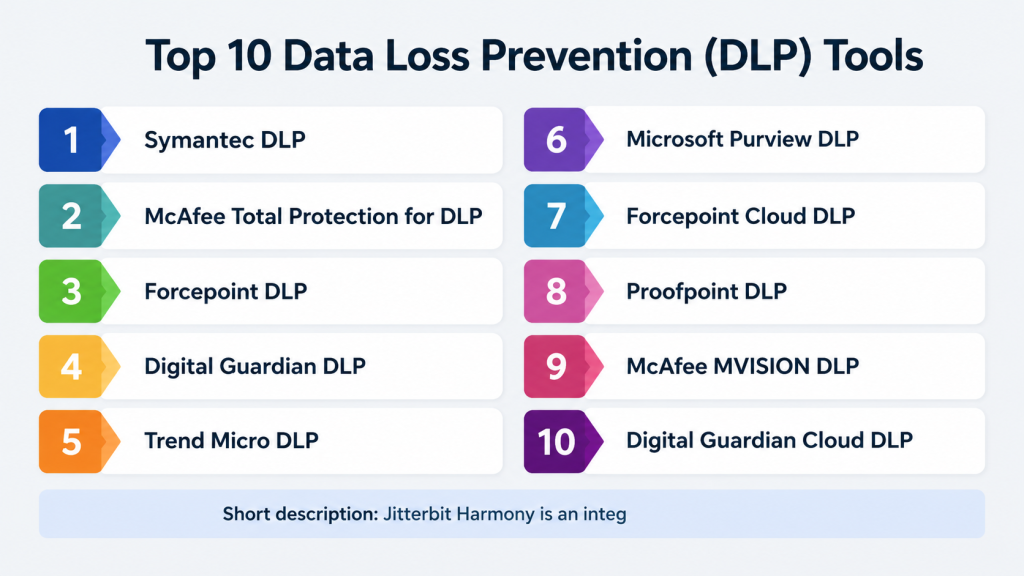
Top 10 Data Loss Prevention (DLP) Tools
#1 — Symantec DLP
Short description: Symantec DLP provides comprehensive protection for sensitive data across endpoints, networks, and cloud services. It is ideal for large enterprises seeking centralized policy management and robust compliance enforcement.
Key Features
- Endpoint and network monitoring for sensitive data.
- Cloud application integration (SaaS monitoring).
- Policy-based blocking and remediation.
- Compliance reporting for GDPR, HIPAA, PCI DSS.
- AI-driven anomaly detection.
Pros
- Strong multi-channel coverage.
- Enterprise-grade compliance features.
Cons
- Premium pricing.
- Complexity requires dedicated security teams.
Platforms / Deployment
- Windows / macOS / Linux / Web.
- Cloud / Self-hosted / Hybrid.
Security & Compliance
- SSO/MFA, encryption, RBAC.
- SOC 2, ISO 27001, GDPR, HIPAA.
Integrations & Ecosystem
- Integrates with SIEM, IAM, CASB.
- API access for automation.
- Supports cloud services like Office 365 and Google Workspace.
Support & Community
- Vendor support available.
- Extensive documentation and training.
#2 — McAfee Total Protection for DLP
Short description: McAfee Total Protection for DLP secures endpoints, email, cloud apps, and networks with policy enforcement, monitoring, and analytics suitable for enterprise and mid-market organizations.
Key Features
- Endpoint and network DLP.
- Cloud application monitoring.
- Email content protection.
- Centralized policy management.
- Reporting and compliance dashboards.
Pros
- Centralized policy enforcement.
- Multi-platform coverage.
Cons
- Requires specialized expertise to configure.
- Advanced features require enterprise licensing.
Platforms / Deployment
- Windows / macOS / Linux / Web.
- Cloud / Self-hosted / Hybrid.
Security & Compliance
- SSO/MFA, encryption.
- GDPR, HIPAA, SOC 2 supported.
Integrations & Ecosystem
- SIEM and CASB integration.
- API support for automation.
- Compatible with cloud apps and endpoints.
Support & Community
- Vendor support included.
- Documentation and online resources.
#3 — Forcepoint DLP
Short description: Forcepoint DLP offers real-time monitoring, behavioral analytics, and adaptive security policies across endpoints, networks, and cloud environments, suitable for enterprise security teams.
Key Features
- Behavioral analytics to detect anomalous activity.
- Endpoint, cloud, and network coverage.
- Policy-based blocking and alerts.
- Compliance reporting.
- Integration with threat intelligence feeds.
Pros
- Advanced analytics and adaptive policies.
- Comprehensive multi-channel coverage.
Cons
- Higher cost for smaller teams.
- Onboarding may require training.
Platforms / Deployment
- Windows / macOS / Linux / Web.
- Cloud / Self-hosted / Hybrid.
Security & Compliance
- SSO/MFA, encryption.
- SOC 2, ISO 27001, HIPAA, GDPR.
Integrations & Ecosystem
- SIEM and CASB integration.
- API access for automation.
- Extensible with cloud applications.
Support & Community
- Vendor support available.
- Knowledge base and training resources.
#4 — Digital Guardian DLP
Short description: Digital Guardian DLP focuses on protecting sensitive data from insider threats and external breaches, with endpoint and network monitoring, cloud integration, and policy-based enforcement.
Key Features
- Endpoint and network monitoring.
- Cloud service integration.
- Policy enforcement and remediation.
- Compliance reporting.
- Threat detection analytics.
Pros
- Strong insider threat detection.
- Supports cloud and on-premises environments.
Cons
- Premium pricing tier.
- Complex deployment for smaller teams.
Platforms / Deployment
- Windows / macOS / Linux / Web.
- Cloud / Self-hosted / Hybrid.
Security & Compliance
- SSO/MFA, encryption.
- GDPR, HIPAA, SOC 2 supported.
Integrations & Ecosystem
- Integrates with SIEM, IAM, CASB.
- API for automation.
- Compatible with cloud applications.
Support & Community
- Vendor support included.
- Documentation and webinars.
#5 — Trend Micro DLP
Short description: Trend Micro DLP protects endpoints, cloud applications, and networks with automated policy enforcement, analytics, and integrated compliance reporting, suitable for mid-market and enterprise organizations.
Key Features
- Endpoint and network protection.
- Cloud application monitoring.
- Automated policy enforcement.
- Compliance reporting and dashboards.
- Integration with SIEM systems.
Pros
- Easy-to-deploy policies.
- Cloud-native application support.
Cons
- Premium licensing.
- Advanced analytics require enterprise plan.
Platforms / Deployment
- Windows / macOS / Linux / Web.
- Cloud / Self-hosted.
Security & Compliance
- SSO/MFA, encryption.
- GDPR, HIPAA templates.
Integrations & Ecosystem
- Integrates with cloud services and SIEM.
- API access for automation.
- Supports endpoint and network monitoring.
Support & Community
- Vendor support available.
- Documentation and training.
#6 — Microsoft Purview DLP
Short description: Microsoft Purview DLP provides endpoint, email, and cloud application data protection with policy enforcement and compliance reporting, ideal for Microsoft-centric enterprises.
Key Features
- Cloud app and email monitoring.
- Endpoint data protection.
- Automated policy enforcement.
- Compliance dashboards and reporting.
- AI-driven anomaly detection.
Pros
- Tight integration with Microsoft ecosystem.
- AI-driven alerts and policy enforcement.
Cons
- Limited non-Microsoft cloud support.
- Advanced policies require licensing.
Platforms / Deployment
- Windows / macOS / Web.
- Cloud.
Security & Compliance
- SSO/MFA, encryption.
- SOC 2, GDPR, HIPAA supported.
Integrations & Ecosystem
- Integrates with Microsoft 365, SIEM.
- API for automation.
- Supports endpoint and cloud security tools.
Support & Community
- Microsoft support channels.
- Documentation and community forums.
#7 — Forcepoint Cloud DLP
Short description: Forcepoint Cloud DLP secures sensitive data in SaaS, IaaS, and cloud storage, offering real-time monitoring, AI-based insights, and compliance enforcement.
Key Features
- Cloud application monitoring.
- Policy enforcement and blocking.
- AI-driven anomaly detection.
- Compliance reporting and dashboards.
- Integration with endpoints and network security.
Pros
- Strong cloud-native coverage.
- Real-time threat detection.
Cons
- Premium pricing for enterprise features.
- Limited on-prem support compared to hybrid DLP.
Platforms / Deployment
- Web / Cloud.
Security & Compliance
- SSO/MFA, encryption.
- SOC 2, GDPR, HIPAA.
Integrations & Ecosystem
- Integrates with cloud apps, SIEM, and endpoints.
- API access for workflow automation.
- Extensible reporting and dashboards.
Support & Community
- Vendor support included.
- Documentation and online resources.
#8 — Proofpoint DLP
Short description: Proofpoint DLP protects email, endpoints, and cloud apps with automated policy enforcement, content inspection, and threat intelligence integration.
Key Features
- Email and cloud monitoring.
- Endpoint protection.
- Policy enforcement and blocking.
- Compliance reporting.
- Threat intelligence integration.
Pros
- Strong email security integration.
- Automated policy enforcement reduces risk.
Cons
- Premium pricing.
- Focused heavily on email and cloud data.
Platforms / Deployment
- Web / Windows / macOS.
- Cloud / Hybrid.
Security & Compliance
- SSO/MFA, encryption.
- GDPR, SOC 2 supported.
Integrations & Ecosystem
- Integrates with cloud services, SIEM.
- API support for automation.
- Supports endpoint and email security tools.
Support & Community
- Vendor support included.
- Documentation and training resources.
#9 — McAfee MVISION DLP
Short description: McAfee MVISION DLP secures endpoints, cloud apps, and networks with automated enforcement, analytics, and integrated compliance monitoring.
Key Features
- Endpoint and cloud monitoring.
- Automated policy enforcement.
- Compliance dashboards.
- Behavior analytics for insider threat detection.
- Multi-cloud support.
Pros
- Centralized policy management.
- Multi-cloud and endpoint coverage.
Cons
- Enterprise pricing.
- Advanced analytics require expertise.
Platforms / Deployment
- Windows / macOS / Linux / Web.
- Cloud / Self-hosted / Hybrid.
Security & Compliance
- SSO/MFA, encryption, RBAC.
- SOC 2, GDPR, HIPAA.
Integrations & Ecosystem
- Integrates with SIEM, CASB, cloud apps.
- API access for automation.
- Supports endpoint and cloud monitoring.
Support & Community
- Vendor support available.
- Documentation and community resources.
#10 — Digital Guardian Cloud DLP
Short description: Digital Guardian Cloud DLP focuses on protecting sensitive cloud data, endpoints, and networks with AI-driven monitoring, policy enforcement, and compliance reporting.
Key Features
- Endpoint and cloud monitoring.
- Policy-based blocking and alerts.
- AI-driven anomaly detection.
- Compliance reporting and dashboards.
- Integration with cloud apps and SaaS platforms.
Pros
- Strong AI-driven protection.
- Supports cloud-native environments.
Cons
- Premium pricing tier.
- Complexity for smaller teams.
Platforms / Deployment
- Web / Windows / macOS / Linux.
- Cloud / Hybrid.
Security & Compliance
- SSO/MFA, encryption, RBAC.
- GDPR, HIPAA, SOC 2 supported.
Integrations & Ecosystem
- Integrates with SIEM, CASB, and cloud apps.
- API access for automation.
- Extensible reporting and dashboards.
Support & Community
- Vendor support included.
- Documentation and training resources.
Comparison Table (Top 10)
| Tool Name | Best For | Platform(s) Supported | Deployment | Standout Feature | Public Rating |
|---|---|---|---|---|---|
| Symantec DLP | Enterprises | Web / Windows / macOS / Linux | Cloud / Self-hosted / Hybrid | Centralized policy management | N/A |
| McAfee Total Protection DLP | Enterprise & mid-market | Web / Windows / macOS / Linux | Cloud / Self-hosted / Hybrid | Multi-channel coverage | N/A |
| Forcepoint DLP | Enterprise | Web / Windows / macOS / Linux | Cloud / Self-hosted / Hybrid | Behavioral analytics | N/A |
| Digital Guardian DLP | Enterprise | Web / Windows / macOS / Linux | Cloud / Hybrid | Insider threat detection | N/A |
| Trend Micro DLP | Mid-market & Enterprise | Web / Windows / macOS / Linux | Cloud / Self-hosted | Cloud-native app monitoring | N/A |
| Microsoft Purview DLP | Microsoft-centric enterprises | Web / Windows / macOS | Cloud | Integrated endpoint & cloud monitoring | N/A |
| Forcepoint Cloud DLP | Enterprise | Web | Cloud | Real-time cloud monitoring | N/A |
| Proofpoint DLP | Enterprise & mid-market | Web / Windows / macOS | Cloud / Hybrid | Email & cloud data protection | N/A |
| McAfee MVISION DLP | Enterprises | Web / Windows / macOS / Linux | Cloud / Self-hosted / Hybrid | Centralized cloud & endpoint DLP | N/A |
| Digital Guardian Cloud DLP | Enterprises | Web / Windows / macOS / Linux | Cloud / Hybrid | AI-driven cloud data protection | N/A |
Evaluation & Scoring of DLP Tools
| Tool Name | Core (25%) | Ease (15%) | Integrations (15%) | Security (10%) | Performance (10%) | Support (10%) | Value (15%) | Weighted Total (0–10) |
|---|---|---|---|---|---|---|---|---|
| Symantec DLP | 9 | 7 | 8 | 9 | 8 | 8 | 7 | 8.2 |
| McAfee Total Protection DLP | 8 | 7 | 8 | 9 | 8 | 7 | 7 | 7.9 |
| Forcepoint DLP | 8 | 7 | 8 | 9 | 8 | 7 | 7 | 7.9 |
| Digital Guardian DLP | 8 | 7 | 8 | 9 | 8 | 7 | 7 | 7.9 |
| Trend Micro DLP | 8 | 7 | 7 | 8 | 8 | 7 | 7 | 7.6 |
| Microsoft Purview DLP | 8 | 8 | 7 | 9 | 8 | 8 | 7 | 7.9 |
| Forcepoint Cloud DLP | 8 | 7 | 8 | 9 | 8 | 7 | 7 | 7.9 |
| Proofpoint DLP | 8 | 7 | 8 | 8 | 8 | 7 | 7 | 7.8 |
| McAfee MVISION DLP | 8 | 7 | 8 | 9 | 8 | 7 | 7 | 7.9 |
| Digital Guardian Cloud DLP | 8 | 7 | 8 | 9 | 8 | 7 | 7 | 7.9 |
Interpretation: Higher weighted totals indicate better overall balance across core features, usability, integration, security, performance, and value. Scores are comparative; organizations should prioritize criteria that align with their data protection and compliance needs.
Which DLP Tool Is Right for You?
Solo / Freelancer
- Tools like Snyk, Trivy, or lightweight endpoint solutions can provide simple data protection for small deployments.
SMB
- Trend Micro DLP, Microsoft Purview DLP, and Proofpoint DLP offer manageable multi-channel monitoring and compliance features.
Mid-Market
- McAfee Total Protection DLP, Forcepoint DLP, and Digital Guardian DLP provide enterprise-grade monitoring, policy enforcement, and analytics.
Enterprise
- Large organizations require Symantec DLP, Forcepoint Cloud DLP, and Digital Guardian Cloud DLP for comprehensive coverage, AI-driven insights, and multi-cloud support.
Budget vs Premium
- SMBs may leverage lightweight or endpoint-focused DLP solutions.
- Premium platforms provide advanced compliance reporting, cloud monitoring, and AI analytics.
Feature Depth vs Ease of Use
- Tools like Symantec DLP and Digital Guardian DLP offer deep functionality but require onboarding.
- Cloud-native solutions like Microsoft Purview DLP balance usability and feature depth.
Integrations & Scalability
- Enterprises should choose platforms with SIEM, CASB, IAM, and cloud application integrations for scalable protection.
Security & Compliance Needs
- Regulated industries should prioritize SOC 2, ISO 27001, HIPAA, and GDPR support with policy enforcement and reporting.
Frequently Asked Questions (FAQs)
What pricing models do DLP tools use?
Pricing ranges from subscription-based SaaS to enterprise licensing based on endpoints, users, or workloads.
Can these tools monitor cloud applications?
Yes, leading DLP solutions monitor Office 365, Google Workspace, Salesforce, and other SaaS apps.
How long does deployment take?
Lightweight tools can deploy in hours, while enterprise platforms may require several days to weeks.
Do these platforms support hybrid and multi-cloud environments?
Yes, most enterprise DLP tools provide coverage for multi-cloud and hybrid deployments.
Are AI and behavior analytics included?
Enterprise DLP solutions now include AI to detect unusual behavior and potential insider threats.
Can DLP prevent insider threats?
Yes, by monitoring access patterns, data usage, and anomalous behavior.
Are compliance reports available?
Most tools provide templates for GDPR, HIPAA, SOC 2, PCI DSS, and internal policies.
Is DLP suitable for SMBs?
Yes, cloud-native or lightweight DLP solutions provide adequate protection for smaller teams.
Can DLP tools integrate with SIEM or CASB?
Yes, most enterprise solutions provide API-based integrations with security ecosystems.
What alternatives exist to DLP tools?
Manual auditing, access controls, encryption, and endpoint security may supplement or partially replace DLP in small environments.
Conclusion
Data Loss Prevention (DLP) tools are essential for protecting sensitive data across endpoints, networks, and cloud environments. Selection depends on organizational size, regulatory requirements, and operational complexity. Small teams may leverage lightweight DLP solutions or cloud-native tools, while enterprises benefit from full-featured platforms like Symantec DLP, Forcepoint Cloud DLP, or Digital Guardian Cloud DLP. The next step is to shortlist 2–3 tools aligned with your environment, conduct a pilot to evaluate usability and integration, and validate compliance enforcement to ensure comprehensive data protection.
