Upgrade & Secure Your Future with DevOps, SRE, DevSecOps, MLOps!
We spend hours scrolling social media and waste money on things we forget, but won’t spend 30 minutes a day earning certifications that can change our lives.
Master in DevOps, SRE, DevSecOps & MLOps by DevOps School!
Learn from Guru Rajesh Kumar and double your salary in just one year.
Introduction
Public Key Infrastructure (PKI) Tools are critical cybersecurity solutions that enable organizations to manage digital certificates, cryptographic keys, and secure communications. In simple terms, PKI tools authenticate users, devices, and applications while ensuring sensitive data remains encrypted and protected from unauthorized access. PKI forms the foundation for secure digital communications, encrypted email, VPNs, and digital signatures.
In , PKI remains more essential than ever. With the proliferation of cloud services, remote work, and Internet of Things (IoT) devices, organizations face increasing complexity in managing identities and securing data. Modern PKI tools integrate AI-assisted certificate lifecycle management, automated compliance reporting, and centralized dashboards for visibility, enabling organizations to streamline operations while maintaining robust security.
Real-world use cases include:
- Issuing and managing SSL/TLS certificates for websites and web applications.
- Securing internal and external email communications.
- Managing IoT device identities and secure connections.
- Enabling VPN and zero-trust network access.
- Supporting regulatory compliance, audits, and governance frameworks.
Key evaluation criteria:
- Certificate lifecycle management and automated renewal.
- Key management and encryption algorithm support.
- Integration with identity and access management (IAM) systems.
- Deployment flexibility across cloud, on-premises, and hybrid environments.
- Compliance with SOC 2, ISO 27001, GDPR, HIPAA, and other standards.
- User-friendly dashboards and reporting capabilities.
- API access and DevOps pipeline integration.
- Role-based access control (RBAC) and multi-factor authentication (MFA).
- Monitoring and alerting for certificate expiry and vulnerabilities.
Best for: IT security teams, enterprises managing large-scale digital infrastructures, financial institutions, and cloud-native organizations.
Not ideal for: Small companies with minimal certificate management needs or relying solely on basic OS-level encryption.
Key Trends in PKI Tools
- AI-Powered Lifecycle Management: Predictive analytics for certificate renewal and risk mitigation.
- Automation: End-to-end certificate issuance, renewal, and revocation processes.
- Cloud-Native Integration: Seamless support for AWS, Azure, Google Cloud, and multi-cloud deployments.
- IoT and Device PKI Management: Certificate management for millions of connected devices.
- Zero-Trust Security Alignment: Integrating PKI with identity verification and access controls.
- Cross-Platform Deployment: Support for Windows, Linux, macOS, and mobile platforms.
- Regulatory Compliance Automation: Built-in reporting for GDPR, HIPAA, and other regulations.
- Certificate Transparency & Monitoring: Real-time tracking of certificate issuance and revocation.
- Hybrid & Multi-Cloud Support: Unified PKI management across cloud and on-premises environments.
- API & DevOps Integration: Automation in CI/CD pipelines for secure application delivery.
How We Selected These Tools (Methodology)
- Evaluated adoption and enterprise presence.
- Reviewed encryption standards and certificate lifecycle capabilities.
- Assessed reliability, uptime, and operational performance.
- Checked integration with IAM, cloud platforms, and DevOps workflows.
- Verified compliance with SOC 2, ISO 27001, GDPR, and HIPAA.
- Considered AI-driven features and automation support.
- Evaluated scalability for hybrid, multi-cloud, and IoT environments.
- Analyzed security posture including RBAC, MFA, audit logging, and encryption strength.
- Assessed vendor support, training, and community engagement.
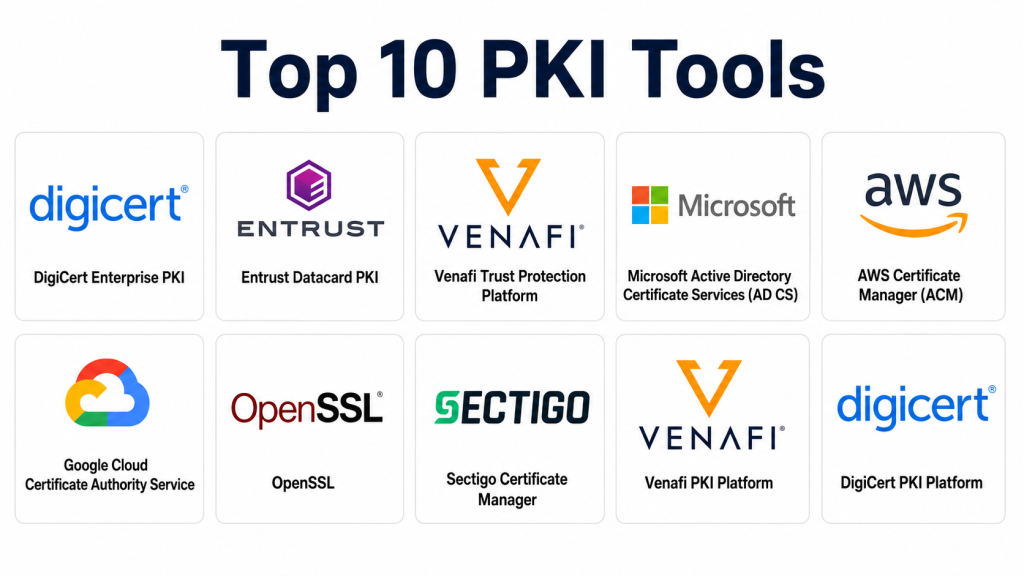
Top 10 PKI Tools
#1 — DigiCert Enterprise PKI
Short description: DigiCert Enterprise PKI provides advanced certificate management, encryption, and key lifecycle automation. It’s ideal for global enterprises requiring high compliance and multi-cloud PKI operations.
Key Features
- Centralized certificate and key management.
- Automated issuance, renewal, and revocation.
- Multi-cloud deployment support.
- Policy enforcement and audit reporting.
- Integration with IAM and DevOps pipelines.
Pros
- Scalable for large enterprises.
- Strong compliance and reporting features.
Cons
- Higher cost for SMBs.
- Requires technical expertise for setup.
Platforms / Deployment
- Web / Windows / Linux / Cloud / Hybrid
Security & Compliance
- SOC 2, ISO 27001, GDPR, HIPAA
- MFA, RBAC, audit logs
Integrations & Ecosystem
- Cloud platforms (AWS, Azure, GCP)
- IAM systems
- DevOps pipeline integration
Support & Community
- Vendor support and professional services
- Documentation and enterprise community
#2 — Entrust Datacard PKI
Short description: Entrust Datacard PKI is a secure certificate management platform offering encryption, digital signatures, and key lifecycle automation for enterprises.
Key Features
- Certificate issuance and revocation automation
- Identity-based encryption
- Centralized dashboards and monitoring
- Compliance reporting tools
- Device and application certificate management
Pros
- Comprehensive enterprise-grade PKI
- Strong regulatory compliance
Cons
- Complex deployment for SMBs
- Advanced features may require professional services
Platforms / Deployment
- Web / Cloud / Windows / Linux / Hybrid
Security & Compliance
- SOC 2, ISO 27001, GDPR, HIPAA
- Encryption, MFA, audit logs
Integrations & Ecosystem
- IAM and Active Directory
- DevOps pipelines
- Cloud provider integrations
Support & Community
- Vendor support and training
- Documentation and knowledge base
#3 — Venafi Trust Protection Platform
Short description: Venafi offers enterprise-grade PKI with certificate and key lifecycle management, enabling visibility, compliance, and secure digital operations.
Key Features
- Certificate discovery and inventory
- Key rotation automation
- PKI policy enforcement
- Risk analytics and compliance reporting
- Multi-cloud and hybrid support
Pros
- Strong enterprise visibility
- Comprehensive audit and compliance
Cons
- Premium pricing
- Learning curve for advanced features
Platforms / Deployment
- Web / Cloud / Windows / Linux / Hybrid
Security & Compliance
- SOC 2, ISO 27001, GDPR
- Encryption, RBAC, audit logs
Integrations & Ecosystem
- IAM, cloud platforms, DevOps
- API integration
- Compliance dashboards
Support & Community
- Vendor support and consulting
- Enterprise community
#4 — Microsoft Active Directory Certificate Services (AD CS)
Short description: AD CS enables PKI certificate issuance and management integrated with Windows environments for enterprises needing secure communications and identity verification.
Key Features
- Certificate issuance and revocation
- Active Directory integration
- Automated templates and policies
- Monitoring dashboards
- Hybrid deployment support
Pros
- Seamless Windows integration
- Cost-effective for Microsoft-heavy environments
Cons
- Limited cross-platform capabilities
- Less advanced reporting compared to enterprise PKI
Platforms / Deployment
- Windows / Cloud / Hybrid
Security & Compliance
- SOC 2, ISO 27001, GDPR
- MFA, audit logs
Integrations & Ecosystem
- Active Directory, LDAP
- Windows Server environments
- APIs for automation
Support & Community
- Microsoft support
- IT admin community
#5 — AWS Certificate Manager (ACM)
Short description: AWS Certificate Manager automates certificate provisioning and management for AWS workloads, providing secure TLS/SSL communications.
Key Features
- Automated issuance and renewal
- Integration with AWS services
- Private PKI support
- Monitoring and logging
- Policy-based management
Pros
- Fully managed
- Seamless AWS integration
Cons
- AWS-only ecosystem
- Limited enterprise features
Platforms / Deployment
- Web / Cloud (AWS)
Security & Compliance
- SOC 2, ISO 27001, GDPR
- MFA, audit logs
Integrations & Ecosystem
- AWS services (S3, ELB, CloudFront)
- CI/CD pipeline integration
- API support
Support & Community
- AWS support plans
- Documentation and forums
#6 — Google Cloud Certificate Authority Service
Short description: Google Cloud CA Service provides centralized certificate management, key lifecycle automation, and compliance for Google Cloud workloads.
Key Features
- Private and public PKI support
- Automated key rotation
- Audit logging
- Cloud service integration
- Policy-based access control
Pros
- Cloud-native
- Highly scalable
Cons
- Limited to Google Cloud
- Advanced policy setup may be complex
Platforms / Deployment
- Web / Cloud (Google Cloud)
Security & Compliance
- SOC 2, ISO 27001, GDPR
- MFA, RBAC
Integrations & Ecosystem
- Google Cloud services (Compute, Storage)
- CI/CD pipelines
- Monitoring dashboards
Support & Community
- Vendor support and documentation
- Active developer community
#7 — OpenSSL
Short description: OpenSSL is an open-source PKI toolkit for generating keys, certificates, and supporting encrypted communications across platforms.
Key Features
- SSL/TLS certificate generation
- Cryptographic key management
- Open-source API
- Multi-platform support
- Manual and automated deployment
Pros
- Free and widely used
- Flexible for custom workflows
Cons
- Requires technical expertise
- Limited enterprise support
Platforms / Deployment
- Windows / Linux / macOS
Security & Compliance
- Encryption standards only
- Not fully enterprise-compliant
Integrations & Ecosystem
- APIs for custom applications
- DevOps pipelines
- Open-source extensions
Support & Community
- Community support
- Extensive online documentation
#8 — Sectigo Certificate Manager
Short description: Sectigo offers certificate lifecycle management, SSL/TLS automation, and enterprise PKI management.
Key Features
- Certificate issuance and renewal
- Centralized dashboards
- Compliance reporting
- Policy enforcement
- Cloud and hybrid support
Pros
- Comprehensive lifecycle management
- Supports multiple environments
Cons
- Subscription required
- Advanced features need IT support
Platforms / Deployment
- Web / Cloud / Windows / Linux / Hybrid
Security & Compliance
- SOC 2, ISO 27001, GDPR, HIPAA
- MFA, audit logs
Integrations & Ecosystem
- Active Directory
- Cloud and DevOps integrations
- API access
Support & Community
- Vendor support and documentation
#9 — Venafi PKI Platform
Short description: Venafi provides enterprise-grade certificate and key lifecycle automation, focusing on global-scale deployments.
Key Features
- Certificate discovery
- Key rotation and revocation
- Risk analytics
- Multi-cloud support
- Policy enforcement
Pros
- Scalable for large enterprises
- Strong audit and compliance features
Cons
- Premium pricing
- Complex setup
Platforms / Deployment
- Web / Cloud / Windows / Linux / Hybrid
Security & Compliance
- SOC 2, ISO 27001, GDPR, HIPAA
- MFA, RBAC, audit logs
Integrations & Ecosystem
- IAM systems, cloud platforms, DevOps
- APIs for automation
- Monitoring dashboards
Support & Community
- Vendor support and professional services
#10 — DigiCert PKI Platform
Short description: DigiCert PKI Platform delivers centralized certificate and key management, enabling secure communications and identity management for global enterprises.
Key Features
- Automated lifecycle management
- Multi-cloud PKI support
- Policy enforcement
- Audit reporting
- IAM and DevOps integration
Pros
- Enterprise-grade security
- Scalable and reliable
Cons
- High cost for SMBs
- Requires setup expertise
Platforms / Deployment
- Web / Windows / Linux / Cloud / Hybrid
Security & Compliance
- SOC 2, ISO 27001, GDPR, HIPAA
- MFA, RBAC, audit logs
Integrations & Ecosystem
- Cloud providers, IAM systems, DevOps pipelines
- API automation
- Compliance dashboards
Support & Community
- Vendor support, documentation, training
Comparison Table (Top 10)
| Tool Name | Best For | Platform(s) Supported | Deployment | Standout Feature | Public Rating |
|---|---|---|---|---|---|
| DigiCert Enterprise PKI | Enterprise | Web / Windows / Linux / Cloud | Cloud / Hybrid | Automated lifecycle management | N/A |
| Entrust Datacard PKI | Enterprise | Web / Windows / Linux / Cloud | Cloud / Hybrid | Certificate issuance & revocation | N/A |
| Venafi Trust Protection | Enterprise | Web / Cloud / Windows / Linux | Cloud / Hybrid | Certificate & key discovery | N/A |
| AD CS | Windows environments | Windows / Cloud | Hybrid | Active Directory integration | N/A |
| AWS Certificate Manager | AWS workloads | Web / Cloud | Cloud | Auto issuance & renewal | N/A |
| Google Cloud CA Service | Google Cloud workloads | Web / Cloud | Cloud | Multi-region PKI | N/A |
| OpenSSL | DevOps / Developers | Windows / Linux / macOS | On-prem | Open-source flexibility | N/A |
| Sectigo Certificate Manager | Enterprise / Mid-market | Web / Cloud / Windows / Linux | Hybrid | Centralized dashboard | N/A |
| Venafi PKI Platform | Global enterprises | Web / Cloud / Windows / Linux | Hybrid | Risk analytics & reporting | N/A |
| DigiCert PKI Platform | Enterprise | Web / Windows / Linux / Cloud | Cloud / Hybrid | Centralized key management | N/A |
Evaluation & Scoring of PKI Tools
| Tool Name | Core (25%) | Ease (15%) | Integrations (15%) | Security (10%) | Performance (10%) | Support (10%) | Value (15%) | Weighted Total |
|---|---|---|---|---|---|---|---|---|
| DigiCert Enterprise PKI | 9 | 8 | 9 | 9 | 9 | 8 | 7 | 8.4 |
| Entrust Datacard PKI | 8 | 7 | 8 | 9 | 8 | 7 | 7 | 7.8 |
| Venafi Trust Protection | 9 | 8 | 8 | 9 | 8 | 7 | 7 | 8.0 |
| AD CS | 7 | 8 | 7 | 8 | 7 | 7 | 7 | 7.3 |
| AWS Certificate Manager | 8 | 8 | 7 | 9 | 8 | 7 | 7 | 7.8 |
| Google Cloud CA Service | 8 | 8 | 7 | 9 | 8 | 7 | 7 | 7.8 |
| OpenSSL | 7 | 7 | 7 | 8 | 7 | 6 | 8 | 7.2 |
| Sectigo Certificate Manager | 8 | 8 | 8 | 9 | 8 | 7 | 7 | 7.9 |
| Venafi PKI Platform | 9 | 7 | 8 | 9 | 8 | 7 | 7 | 7.9 |
| DigiCert PKI Platform | 9 | 8 | 9 | 9 | 9 | 8 | 7 | 8.4 |
Interpretation: These scores provide a comparative view of certificate lifecycle management, security compliance, integrations, ease of deployment, and value. Organizations should choose tools based on environment, scale, and compliance needs.
Which PKI Tool Is Right for You?
Solo / Freelancer
- Open-source tools like OpenSSL provide flexibility and low cost for individual projects.
SMB
- Sectigo Certificate Manager or AWS Certificate Manager provides manageable PKI for growing businesses.
Mid-Market
- AD CS or Google Cloud CA Service offers enterprise-grade security with moderate complexity.
Enterprise
- DigiCert Enterprise PKI, Venafi, or Entrust Datacard PKI provide advanced lifecycle management, automation, and global scalability.
Budget vs Premium
- SMBs benefit from cloud-native solutions with essential PKI capabilities.
- Enterprises require full-featured solutions with AI-assisted management, HSM support, and compliance analytics.
Feature Depth vs Ease of Use
- Enterprises prioritize deep functionality even if configuration is complex.
- Smaller organizations prefer simple yet secure certificate and key management.
Integrations & Scalability
- Integration with IAM, DevOps pipelines, and cloud services is critical for enterprise PKI success.
Security & Compliance Needs
- Enterprises in regulated industries must ensure SOC 2, ISO 27001, GDPR, and HIPAA compliance.
Frequently Asked Questions (FAQs)
What is PKI used for?
PKI is used to authenticate users, devices, and applications, enabling encrypted communication and secure digital transactions.
Can PKI manage multi-cloud environments?
Yes, modern PKI platforms support hybrid and multi-cloud deployments.
Are PKI tools suitable for small businesses?
Yes, cloud-native solutions like AWS Certificate Manager or Sectigo provide SMB-friendly options.
Do PKI tools automate certificate renewals?
Yes, most enterprise-grade PKI tools include automated issuance and renewal.
Can PKI help with regulatory compliance?
Yes, they provide audit-ready logs and reporting to satisfy compliance requirements.
Which platforms do PKI tools support?
Most support Windows, Linux, macOS, and cloud services.
Can PKI integrate with DevOps pipelines?
Yes, APIs and CI/CD integration allow automated certificate management.
How secure are these PKI platforms?
Enterprise-grade PKI tools include encryption, MFA, RBAC, and audit logging for strong security.
Can PKI manage IoT devices?
Yes, modern PKI solutions support device identity and certificate management for IoT ecosystems.
What is the difference between open-source and enterprise PKI tools?
Open-source tools offer flexibility and lower cost but require expertise. Enterprise solutions provide automation, support, and compliance features.
Conclusion
GRC PKI Tools are essential for securing communications, managing digital identities, and maintaining compliance. Small organizations can leverage OpenSSL for flexibility, mid-market enterprises can adopt AD CS or Google Cloud CA Service, and large enterprises require comprehensive platforms like DigiCert Enterprise PKI, Venafi, or Entrust Datacard PKI. Organizations should shortlist 2–3 tools, pilot certificate workflows, and ensure seamless integration with IT systems to optimize PKI security and compliance in 2026 and beyond.
