Upgrade & Secure Your Future with DevOps, SRE, DevSecOps, MLOps!
We spend hours scrolling social media and waste money on things we forget, but won’t spend 30 minutes a day earning certifications that can change our lives.
Master in DevOps, SRE, DevSecOps & MLOps by DevOps School!
Learn from Guru Rajesh Kumar and double your salary in just one year.
Introduction
Inventory Management Systems (IMS) toolkits are software solutions designed to help businesses efficiently track, manage, and optimize inventory levels across warehouses, retail outlets, and supply chains. They provide real-time insights into stock levels, order fulfillment, procurement, and demand forecasting, enabling companies to reduce costs, avoid stockouts, and improve operational efficiency.
In , the adoption of modern IMS platforms has grown due to increasing e-commerce demand, global supply chain complexity, and the need for data-driven decision-making. Advanced inventory management solutions integrate AI, automation, and analytics to predict demand, optimize replenishment, and streamline operations, improving both profitability and customer satisfaction.
Real-world use cases:
- Retailers managing multi-location warehouses and e-commerce inventory.
- Manufacturers tracking raw materials and finished goods in real time.
- Logistics and distribution companies optimizing stock across regional centers.
- Healthcare providers managing medical supplies and pharmaceuticals.
- Wholesale businesses integrating IMS with ERP for accurate procurement and stock control.
Evaluation criteria buyers should consider:
- Real-time inventory tracking and reporting
- Demand forecasting and replenishment automation
- Integration with ERP, POS, and e-commerce platforms
- Barcode, RFID, or IoT-enabled inventory tracking
- Multi-location management and warehouse optimization
- Order fulfillment and shipping management
- Security and role-based access control
- Cloud or on-premises deployment
- Analytics dashboards and KPIs
- Ease of use and scalability
Best for: Inventory managers, warehouse supervisors, operations teams, and procurement officers in retail, manufacturing, distribution, healthcare, and wholesale businesses.
Not ideal for: Small businesses with minimal inventory or low SKU complexity where manual tracking or spreadsheets suffice.
Key Trends in Inventory Management Systems Toolkits
- AI-driven demand forecasting and automated replenishment.
- Cloud-native platforms enabling real-time multi-site inventory visibility.
- Integration with ERP, POS, e-commerce, and logistics systems.
- Automation for order fulfillment, shipping, and returns management.
- IoT-enabled inventory tracking with barcode or RFID support.
- Real-time dashboards with KPIs and alerts.
- Multi-location and multi-warehouse optimization.
- Predictive analytics for stockout prevention and overstock reduction.
- Flexible subscription and SaaS deployment models.
- Enhanced security and compliance features, including audit trails and RBAC.
How We Selected These Tools (Methodology)
- Market adoption and reputation across industries.
- Completeness of inventory management features and workflows.
- Reliability, performance, and uptime signals.
- Security and regulatory compliance posture.
- Integration capabilities with ERP, POS, e-commerce, and logistics platforms.
- Support for automation, AI, and IoT-enabled tracking.
- Scalability for multi-location and multi-channel operations.
- Quality of vendor support, documentation, and onboarding.
- Flexibility in deployment (cloud, on-premises, hybrid).
- Customer feedback and case study validation.
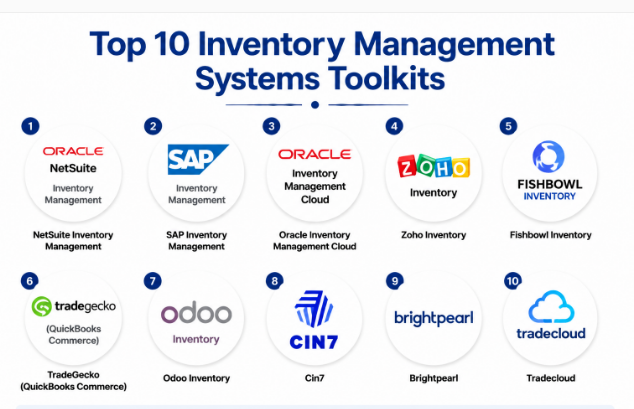
Top 10 Inventory Management Systems Toolkits
#1 — NetSuite Inventory Management
Short description: NetSuite Inventory Management provides a cloud-based platform for real-time inventory tracking, demand forecasting, and multi-location warehouse management. Ideal for medium to large enterprises with complex supply chains.
Key Features
- Real-time inventory tracking and reporting
- Automated replenishment and order fulfillment
- Multi-warehouse management
- Demand forecasting and analytics
- Integration with ERP and e-commerce platforms
- Lot and serial number tracking
- Cloud-based dashboards with KPIs
Pros
- Scalable for enterprise operations
- Strong integration with NetSuite ERP
- Cloud-native and accessible from anywhere
Cons
- Higher cost for smaller businesses
- Implementation requires expertise
- Learning curve for advanced analytics
Platforms / Deployment
- Web / Windows / macOS
- Cloud
Security & Compliance
- SSO/SAML, encryption, RBAC
- SOC 2, ISO 27001, GDPR (Varies / N/A)
Integrations & Ecosystem
- NetSuite ERP and CRM
- E-commerce and POS systems
- API support for custom workflows
- Analytics platforms
Support & Community
- Vendor onboarding and support
- Documentation and training
- Online user community
#2 — SAP Inventory Management
Short description: SAP Inventory Management offers enterprise-grade inventory control, tracking, and optimization. It is suited for large organizations seeking integrated solutions across manufacturing, distribution, and retail.
Key Features
- Centralized inventory management
- Integration with SAP ERP
- Batch and lot tracking
- Automated replenishment
- Multi-location warehouse support
- Reporting and analytics dashboards
- IoT and barcode integration
Pros
- Strong ERP and supply chain integration
- Scalable for global operations
- Advanced reporting and analytics
Cons
- Complex implementation
- Licensing costs
- Requires specialized training
Platforms / Deployment
- Web / Windows
- Cloud / Hybrid
Security & Compliance
- Encryption, SSO, RBAC
- ISO 9001, ISO 13485 (Varies / N/A)
Integrations & Ecosystem
- SAP ERP and CRM
- POS and e-commerce systems
- API for workflow automation
- IoT-enabled warehouse devices
Support & Community
- Vendor support and training
- Documentation and knowledge base
- Industry-focused user community
#3 — Oracle Inventory Management Cloud
Short description: Oracle Inventory Management Cloud provides a cloud-based platform for real-time inventory visibility, order management, and automated replenishment. It is suitable for large, multi-site enterprises.
Key Features
- Real-time inventory tracking
- Multi-site and multi-warehouse management
- Automated replenishment and order routing
- Integration with ERP and e-commerce systems
- Reporting and analytics dashboards
- Lot, serial, and expiration tracking
- Mobile-enabled inventory management
Pros
- Cloud-native and scalable
- Multi-location visibility
- Integration with Oracle ERP
Cons
- Enterprise-focused pricing
- Implementation can be complex
- Learning curve for advanced features
Platforms / Deployment
- Web / Windows / macOS
- Cloud
Security & Compliance
- SSO, encryption, RBAC
- SOC 2, ISO 27001 (Varies / N/A)
Integrations & Ecosystem
- Oracle ERP and CRM
- API for custom workflows
- IoT devices for warehouse tracking
- Analytics platforms
Support & Community
- Vendor onboarding and support
- Online documentation and tutorials
- User community forums
#4 — Zoho Inventory
Short description: Zoho Inventory is a cloud-based inventory management system for SMBs and growing enterprises, offering multi-channel sales integration, real-time stock tracking, and automated order fulfillment.
Key Features
- Inventory tracking across locations
- Automated order management
- Multi-channel integration (e-commerce, POS)
- Batch and serial number tracking
- Reporting and dashboards
- Integration with CRM and accounting software
- Mobile app for inventory updates
Pros
- Affordable for SMBs
- Easy to implement
- Multi-channel integration
Cons
- Limited advanced analytics
- Less suitable for complex global operations
- Subscription-based pricing
Platforms / Deployment
- Web / Windows / macOS / iOS / Android
- Cloud
Security & Compliance
- Encryption, SSO, RBAC
- GDPR compliance (Varies / N/A)
Integrations & Ecosystem
- Zoho CRM and Books
- E-commerce platforms (Shopify, Amazon)
- API support for custom workflows
- Mobile inventory management
Support & Community
- Vendor support and onboarding
- Documentation and tutorials
- Online community and forums
#5 — Fishbowl Inventory
Short description: Fishbowl Inventory offers robust warehouse and manufacturing inventory management for SMBs, integrating with QuickBooks and Xero for accounting and financial operations.
Key Features
- Warehouse and inventory control
- Manufacturing and order management
- Barcode and serial number tracking
- Multi-location support
- Integration with QuickBooks and Xero
- Reporting dashboards
- Automated replenishment
Pros
- Strong accounting integrations
- Suitable for SMB manufacturers
- Flexible deployment options
Cons
- Limited enterprise functionality
- Learning curve for complex workflows
- Less advanced analytics
Platforms / Deployment
- Windows / Web
- Cloud / Self-hosted
Security & Compliance
- Encryption, RBAC
- Not publicly stated
Integrations & Ecosystem
- QuickBooks and Xero
- API for custom workflow integration
- Barcode and scanning devices
Support & Community
- Vendor support and training
- Online documentation
- User forums
#6 — TradeGecko (QuickBooks Commerce)
Short description: TradeGecko, now QuickBooks Commerce, is a cloud-based inventory management system for SMBs, providing multi-channel sales management, real-time stock tracking, and order automation.
Key Features
- Multi-channel inventory tracking
- Order management and fulfillment
- Automated stock alerts
- Integration with QuickBooks and e-commerce platforms
- Reporting dashboards
- Batch and serial number tracking
- Mobile access for inventory updates
Pros
- Cloud-native and user-friendly
- Multi-channel sales integration
- Affordable for SMBs
Cons
- Limited advanced features
- Best suited for SMBs, not large enterprises
- Subscription-based pricing
Platforms / Deployment
- Web / Windows / macOS / iOS / Android
- Cloud
Security & Compliance
- Encryption, SSO, RBAC
- GDPR compliance (Varies / N/A)
Integrations & Ecosystem
- QuickBooks accounting
- Shopify, Amazon, WooCommerce
- API for custom workflows
Support & Community
- Vendor support
- Online tutorials and guides
- User community
#7 — Odoo Inventory
Short description: Odoo Inventory is part of the Odoo ERP suite, offering integrated inventory, warehouse, and order management for SMBs and mid-market businesses.
Key Features
- Multi-warehouse inventory management
- Automated order replenishment
- Barcode and RFID support
- Integration with Odoo ERP modules
- Reporting dashboards
- Batch and serial number tracking
- Multi-channel sales integration
Pros
- Part of integrated ERP
- Flexible for SMBs and mid-market
- Open-source options
Cons
- Advanced ERP features require setup
- May be complex for small teams
- Subscription costs for cloud hosting
Platforms / Deployment
- Web / Windows / Linux / macOS / iOS / Android
- Cloud / Self-hosted
Security & Compliance
- Encryption, RBAC
- GDPR (Varies / N/A)
Integrations & Ecosystem
- Odoo ERP and CRM
- API for custom workflows
- E-commerce platforms
Support & Community
- Vendor support and documentation
- Community forums and tutorials
- Open-source community contributions
#8 — Cin7
Short description: Cin7 is a cloud-based inventory management system with integrated POS, B2B e-commerce, and warehouse management capabilities for multi-channel businesses.
Key Features
- Multi-location inventory management
- Automated order and stock management
- B2B and B2C sales integration
- Barcode and RFID support
- Analytics dashboards
- Integration with accounting and ERP systems
- Mobile access for warehouse staff
Pros
- Multi-channel sales support
- Cloud-native and scalable
- Strong analytics and reporting
Cons
- Subscription pricing
- Learning curve for complex configurations
- Enterprise-scale features may be limited
Platforms / Deployment
- Web / Windows / macOS / iOS / Android
- Cloud
Security & Compliance
- Encryption, RBAC, SSO
- SOC 2 (Varies / N/A)
Integrations & Ecosystem
- ERP and accounting software
- POS systems
- API for workflow automation
Support & Community
- Vendor support and onboarding
- Online documentation
- Active user community
#9 — Brightpearl
Short description: Brightpearl is an inventory and order management platform designed for retail and wholesale businesses, providing real-time inventory visibility and automated workflows.
Key Features
- Multi-channel inventory tracking
- Order management and fulfillment
- Automated stock replenishment
- Integration with e-commerce and accounting platforms
- Reporting dashboards
- Barcode scanning and serial tracking
- Mobile access
Pros
- Retail-focused features
- Cloud-native and scalable
- Multi-channel sales integration
Cons
- Less suitable for manufacturing-focused inventory
- Subscription-based pricing
- Learning curve for advanced features
Platforms / Deployment
- Web / Windows / macOS / iOS / Android
- Cloud
Security & Compliance
- Encryption, RBAC
- GDPR compliance (Varies / N/A)
Integrations & Ecosystem
- Shopify, Amazon, Magento
- QuickBooks and Xero
- API for custom workflows
Support & Community
- Vendor support and training
- Documentation and tutorials
- User community
#10 — Tradecloud
Short description: Tradecloud is a B2B inventory and supply chain management platform, providing real-time stock visibility, order management, and collaboration tools for manufacturers and distributors.
Key Features
- Multi-party inventory visibility
- Automated order and replenishment workflows
- Integration with ERP and supplier systems
- Analytics dashboards
- Multi-location and multi-channel support
- Real-time notifications and alerts
Pros
- Designed for B2B supply chain
- Cloud-native and collaborative
- Real-time stock and order tracking
Cons
- Enterprise-focused pricing
- May be complex for small SMBs
- Cloud-only deployment
Platforms / Deployment
- Web / Windows / macOS / iOS / Android
- Cloud
Security & Compliance
- Encryption, SSO, RBAC
- ISO 27001 (Varies / N/A)
Integrations & Ecosystem
- ERP and supplier platforms
- API for workflow automation
- Analytics tools
- Mobile access
Support & Community
- Vendor support
- Documentation and tutorials
- Online user community
Comparison Table (Top 10)
| Tool Name | Best For | Platform(s) Supported | Deployment | Standout Feature | Public Rating |
|---|---|---|---|---|---|
| NetSuite Inventory | Medium to large enterprises | Web / Windows / macOS | Cloud | Multi-location tracking | N/A |
| SAP Inventory Management | Global enterprise operations | Web / Windows | Cloud / Hybrid | ERP integration | N/A |
| Oracle Inventory Cloud | Multi-site enterprises | Web / Windows / macOS | Cloud | Real-time visibility | N/A |
| Zoho Inventory | SMBs and e-commerce retailers | Web / Windows / macOS / iOS / Android | Cloud | Multi-channel integration | N/A |
| Fishbowl Inventory | SMB manufacturing | Windows / Web | Cloud / Self-hosted | Manufacturing-focused features | N/A |
| TradeGecko / QuickBooks Commerce | SMBs & growing enterprises | Web / Windows / macOS / iOS / Android | Cloud | Multi-channel stock management | N/A |
| Odoo Inventory | SMBs and mid-market | Web / Windows / Linux / macOS / iOS / Android | Cloud / Self-hosted | Integrated ERP solution | N/A |
| Cin7 | Multi-channel retail & wholesale | Web / Windows / macOS / iOS / Android | Cloud | POS & B2B e-commerce integration | N/A |
| Brightpearl | Retail & wholesale | Web / Windows / macOS / iOS / Android | Cloud | Real-time inventory dashboards | N/A |
| Tradecloud | B2B supply chain | Web / Windows / macOS / iOS / Android | Cloud | Multi-party stock visibility | N/A |
Evaluation & Scoring of Inventory Management Tools
| Tool Name | Core (25%) | Ease (15%) | Integrations (15%) | Security (10%) | Performance (10%) | Support (10%) | Value (15%) | Weighted Total (0–10) |
|---|---|---|---|---|---|---|---|---|
| NetSuite Inventory | 9 | 7 | 9 | 8 | 9 | 8 | 7 | 8.1 |
| SAP Inventory Management | 9 | 6 | 9 | 8 | 9 | 7 | 7 | 7.9 |
| Oracle Inventory Cloud | 9 | 7 | 9 | 8 | 9 | 8 | 7 | 8.0 |
| Zoho Inventory | 8 | 8 | 7 | 7 | 8 | 7 | 8 | 7.6 |
| Fishbowl Inventory | 8 | 7 | 7 | 7 | 8 | 7 | 7 | 7.3 |
| TradeGecko / QB Commerce | 8 | 8 | 7 | 7 | 7 | 7 | 7 | 7.4 |
| Odoo Inventory | 8 | 7 | 8 | 7 | 8 | 7 | 7 | 7.5 |
| Cin7 | 8 | 7 | 8 | 7 | 8 | 7 | 7 | 7.5 |
| Brightpearl | 8 | 7 | 7 | 7 | 7 | 7 | 7 | 7.3 |
| Tradecloud | 8 | 7 | 8 | 7 | 8 | 7 | 7 | 7.5 |
Interpretation: Weighted totals provide a comparative assessment of inventory management tools across core features, ease of use, integrations, security, performance, support, and value. Higher scores indicate stronger overall capability.
Which Inventory Management Tool Is Right for You?
Solo / Freelancer
- Cloud-based tools like Zoho Inventory or TradeGecko simplify stock management and multi-channel integration for small teams.
SMB
- Fishbowl Inventory, Odoo Inventory, and Cin7 provide flexible workflows, integrations, and reporting suitable for growing businesses.
Mid-Market
- NetSuite Inventory, Brightpearl, and Tradecloud offer advanced analytics, multi-location support, and automation for mid-market operations.
Enterprise
- SAP Inventory Management, Oracle Inventory Cloud, and NetSuite Inventory deliver enterprise-grade scalability, ERP integration, and multi-site visibility.
Budget vs Premium
- SMBs may opt for affordable, subscription-based cloud solutions (Zoho, TradeGecko).
- Enterprise-scale IMS platforms (SAP, Oracle, NetSuite) offer advanced features and scalability at a premium cost.
Feature Depth vs Ease of Use
- Beginner-friendly: Zoho Inventory, TradeGecko
- Advanced functionality: NetSuite Inventory, SAP Inventory, Oracle Inventory Cloud
Integrations & Scalability
- Assess compatibility with ERP, POS, e-commerce, and IoT systems.
- Enterprise operations may require multi-site and multi-channel scalability.
Security & Compliance Needs
- Ensure encryption, RBAC, audit logs, and regulatory compliance for GDPR, SOC 2, and industry-specific standards.
Frequently Asked Questions (FAQs)
1. What are the pricing models for IMS software?
IMS tools typically use subscription or enterprise licensing. Costs depend on user count, deployment model, and feature set.
2. How complex is IMS implementation?
Small deployments may take a few days to weeks; enterprise-scale implementations may require months for configuration and integration.
3. Can IMS integrate with ERP, POS, and e-commerce platforms?
Yes, most platforms provide pre-built integrations with popular ERP, POS, and e-commerce systems to automate stock and order data.
4. Are cloud-based IMS tools secure?
Leading IMS platforms offer encryption, SSO, RBAC, and audit logging, with enterprise-grade compliance certifications.
5. Which industries benefit most from IMS?
Retail, wholesale, e-commerce, manufacturing, healthcare, and distribution industries gain significant operational efficiency.
6. Can IMS handle multi-location inventory tracking?
Yes, enterprise-grade IMS solutions provide centralized control across warehouses, stores, and distribution centers.
7. Are IMS platforms easy to use?
Ease of use varies. Platforms like Zoho Inventory and TradeGecko are intuitive, while SAP or Oracle IMS require training.
8. How do IMS tools improve operational efficiency?
By automating inventory tracking, order fulfillment, and replenishment, IMS tools reduce errors, optimize stock, and improve customer service.
9. Can IMS tools predict demand and optimize stock levels?
Advanced IMS platforms include AI-driven analytics and forecasting tools to anticipate demand and prevent stockouts.
10. Are there alternatives to IMS software?
Small businesses with minimal inventory can manage stock using spreadsheets or basic ERP modules, though automation and analytics are limited.
Conclusion
Inventory Management Systems are critical for businesses aiming to optimize stock levels, streamline order fulfillment, and improve operational visibility. Small teams may benefit from cloud-native, SMB-focused platforms like Zoho Inventory or TradeGecko, while mid-market and enterprise operations require advanced systems such as NetSuite Inventory, SAP Inventory Management, or Oracle Inventory Cloud. Organizations should evaluate integrations, scalability, analytics capabilities, and compliance, shortlist, and conduct pilot implementations to determine the best-fit IMS solution.
