Upgrade & Secure Your Future with DevOps, SRE, DevSecOps, MLOps!
We spend hours scrolling social media and waste money on things we forget, but won’t spend 30 minutes a day earning certifications that can change our lives.
Master in DevOps, SRE, DevSecOps & MLOps by DevOps School!
Learn from Guru Rajesh Kumar and double your salary in just one year.
Introduction
Warehouse Management Systems (WMS) are specialized software platforms designed to optimize warehouse operations, streamline inventory management, and enhance fulfillment processes. WMS platforms provide real-time visibility into inventory, automate workflows, manage labor, and ensure accurate order fulfillment. In, with the rise of e-commerce, omnichannel fulfillment, and complex supply chains, having a robust WMS is critical for efficiency, cost reduction, and improved customer satisfaction.
Real-world use cases include:
- Real-time tracking of stock levels and inventory locations across warehouses.
- Automating picking, packing, and shipping processes for faster order fulfillment.
- Managing labor and resource allocation to optimize productivity.
- Ensuring compliance with safety and regulatory standards.
- Analyzing warehouse performance metrics to identify bottlenecks and improve throughput.
When evaluating WMS platforms, buyers should consider:
- Inventory management and real-time tracking
- Workflow automation and labor management
- Order fulfillment and shipping optimization
- Returns and reverse logistics
- Analytics and reporting dashboards
- Multi-site warehouse coordination
- Integration with ERP, OMS, and transportation systems
- Cloud, on-premises, or hybrid deployment
- Security and compliance features
- Vendor support and community presence
Best for: Warehouse managers, operations teams, logistics professionals, and enterprises with high-volume distribution or complex fulfillment requirements.
Not ideal for: Small businesses with limited inventory or manual operations, teams relying on basic spreadsheets or ERP modules, or organizations with simple storage and fulfillment needs.
Key Trends in Warehouse Management Systems (WMS) Toolkits
- AI-driven inventory optimization: Automated recommendations for stocking levels and replenishment.
- Cloud-native WMS: Real-time visibility across multiple facilities and geographic regions.
- IoT integration: Smart sensors for tracking inventory, temperature, and handling.
- Robotics and automation: Integration with automated picking, packing, and sorting systems.
- Omnichannel fulfillment: Centralized management for e-commerce, retail, and B2B orders.
- Analytics and dashboards: Insights into labor productivity, order accuracy, and warehouse KPIs.
- Mobile-first access: Real-time scanning, updates, and approvals from handheld devices.
- Hybrid deployment options: Flexibility for on-premises, cloud, or hybrid environments.
- Enhanced security & compliance: Encryption, SSO, MFA, and adherence to ISO and SOC 2 standards.
- Subscription and modular pricing: Scalable models based on warehouse size and features needed.
How We Selected These Tools (Methodology)
- Evaluated market adoption and reputation within logistics and fulfillment industries.
- Assessed feature completeness including inventory management, order fulfillment, and labor tracking.
- Reviewed reliability, performance, and scalability in high-volume operations.
- Examined security and compliance features.
- Checked integrations with ERP, OMS, transportation management, and IoT systems.
- Evaluated suitability across SMB, mid-market, and enterprise warehouses.
- Analyzed vendor support, training, and community presence.
- Balanced enterprise-grade and SMB-friendly WMS solutions for top 10 selection.
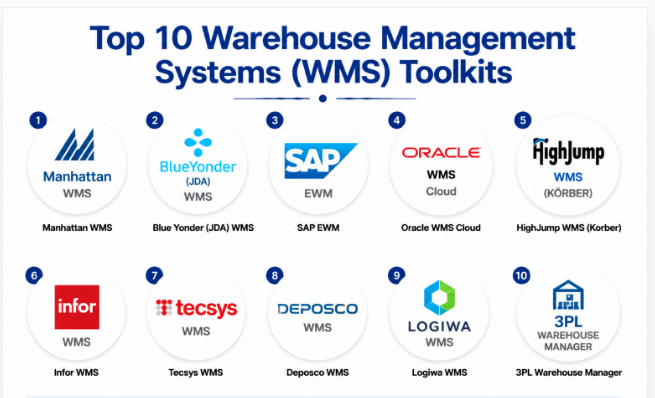
Top 10 Warehouse Management Systems (WMS) Toolkits
#1 — Manhattan WMS
Short description: Manhattan WMS provides comprehensive warehouse management for high-volume operations, offering inventory visibility, fulfillment optimization, and labor management. Ideal for large enterprises with complex supply chains.
Key Features
- Real-time inventory tracking
- Automated order fulfillment
- Labor management and optimization
- Slotting and picking optimization
- Returns and reverse logistics
- Analytics dashboards
Pros
- Enterprise scalability and performance
- Deep integration with ERP and transportation systems
Cons
- High implementation cost
- Complexity for small warehouses
Platforms / Deployment
- Web / Windows
- Cloud / On-premises / Hybrid
Security & Compliance
- ISO 27001, SOC 2
- SSO/MFA, encryption, audit logs
Integrations & Ecosystem
Integrates with ERP, OMS, TMS, and IoT systems.
- API access for custom workflows
- Transportation and logistics providers
- Analytics platforms
Support & Community
- Vendor support and training
- Enterprise user community
#2 — Blue Yonder (JDA) WMS
Short description: Blue Yonder WMS offers advanced warehouse and fulfillment management for multi-site operations, focusing on automation and real-time visibility. Suitable for mid-market to enterprise logistics teams.
Key Features
- Multi-site warehouse management
- Inventory optimization
- Robotics and automation integration
- Order and labor management
- Reporting and analytics dashboards
Pros
- Strong automation and robotics support
- Scalable across multiple warehouses
Cons
- Premium pricing
- Implementation requires consulting
Platforms / Deployment
- Web / Windows
- Cloud / On-premises
Security & Compliance
- Not publicly stated
Integrations & Ecosystem
- ERP and TMS integration
- IoT and automation systems
- API access
Support & Community
- Vendor support and documentation
- Active user forums
#3 — SAP EWM
Short description: SAP Extended Warehouse Management (EWM) provides enterprise-grade WMS for complex supply chains, including inventory management, warehouse automation, and order fulfillment optimization.
Key Features
- Advanced inventory tracking
- Automated order processing
- Labor and resource management
- Slotting, picking, and packing optimization
- Analytics and KPI dashboards
Pros
- Enterprise-level scalability
- Deep integration with SAP ecosystem
Cons
- High cost
- Complexity for SMBs
Platforms / Deployment
- Web / Windows
- Cloud / On-premises
Security & Compliance
- ISO 27001, SOC 2
- SSO/MFA, encryption
Integrations & Ecosystem
- SAP ERP integration
- Transportation management systems
- IoT-enabled warehouse devices
Support & Community
- Vendor support and training
- SAP community forums
#4 — Oracle WMS Cloud
Short description: Oracle WMS Cloud provides cloud-native warehouse management with real-time visibility, automation, and analytics, suitable for large-scale enterprises.
Key Features
- Multi-channel order management
- Inventory and fulfillment optimization
- Automation integration
- Returns and reverse logistics
- Analytics and dashboards
Pros
- Cloud-native and scalable
- Strong analytics capabilities
Cons
- Higher cost for small operations
- Complexity for new users
Platforms / Deployment
- Web / Windows
- Cloud
Security & Compliance
- ISO 27001, SOC 2
- SSO/MFA, encryption
Integrations & Ecosystem
- ERP and OMS integration
- IoT devices and robotics
- Transportation systems
Support & Community
- Vendor support
- Enterprise forums
#5 — HighJump WMS (Korber)
Short description: HighJump WMS delivers flexible warehouse management, integrating automation, analytics, and labor optimization. Ideal for SMBs and mid-market warehouses looking for scalable solutions.
Key Features
- Inventory tracking and replenishment
- Order processing and fulfillment
- Labor management and optimization
- Returns management
- Analytics dashboards
Pros
- Flexible and scalable
- Strong automation features
Cons
- Implementation may require technical support
- Limited enterprise-scale features
Platforms / Deployment
- Web / Windows
- Cloud / On-premises
Security & Compliance
- Not publicly stated
Integrations & Ecosystem
- ERP and OMS integration
- TMS connectors
- API access
Support & Community
- Vendor support and documentation
- User forums
#6 — Infor WMS
Short description: Infor WMS centralizes inventory, fulfillment, and labor management with real-time visibility, automation, and analytics. Suitable for multi-site and high-volume operations.
Key Features
- Inventory management and tracking
- Fulfillment and order processing
- Labor and resource optimization
- Slotting and picking automation
- Reporting and analytics
Pros
- Cloud-native and flexible
- Strong workflow automation
Cons
- Learning curve for complex warehouses
- Premium pricing
Platforms / Deployment
- Web / Windows
- Cloud / Hybrid
Security & Compliance
- ISO 27001, SOC 2
- Encryption, SSO/MFA
Integrations & Ecosystem
- ERP and OMS integration
- Robotics and IoT systems
- API support
Support & Community
- Vendor support and training
- User forums
#7 — Tecsys WMS
Short description: Tecsys WMS offers inventory, fulfillment, and labor management for healthcare, retail, and distribution warehouses, emphasizing accuracy and operational efficiency.
Key Features
- Inventory tracking and control
- Order fulfillment optimization
- Labor management
- Returns and reverse logistics
- Analytics dashboards
Pros
- Industry-specific solutions for healthcare and retail
- Cloud and hybrid deployment
Cons
- Limited integration with some ERPs
- Advanced features require premium subscription
Platforms / Deployment
- Web / Windows
- Cloud / Hybrid
Security & Compliance
- Not publicly stated
Integrations & Ecosystem
- ERP and OMS integration
- API for custom workflows
- Analytics tools
Support & Community
- Vendor support
- User forums
#8 — Deposco WMS
Short description: Deposco WMS delivers cloud-based warehouse management for distribution and e-commerce, providing inventory visibility, automation, and labor optimization.
Key Features
- Real-time inventory tracking
- Fulfillment and order management
- Labor management and productivity tracking
- Returns processing
- Analytics dashboards
Pros
- Cloud-native and scalable
- Easy deployment for mid-market warehouses
Cons
- Limited enterprise features
- Premium pricing for large-scale operations
Platforms / Deployment
- Web / Windows
- Cloud
Security & Compliance
- Not publicly stated
Integrations & Ecosystem
- ERP and OMS integration
- API support
- Analytics tools
Support & Community
- Vendor support
- Knowledge base
#9 — Logiwa WMS
Short description: Logiwa WMS is a cloud-first platform for e-commerce and 3PL warehouses, focusing on real-time inventory, fulfillment automation, and order accuracy.
Key Features
- Multi-channel order processing
- Inventory management and control
- Automation integration
- Returns management
- Analytics dashboards
Pros
- Optimized for 3PL and e-commerce
- Cloud-native and easy to deploy
Cons
- Limited on-premises options
- Smaller enterprise scalability
Platforms / Deployment
- Web / Windows
- Cloud
Security & Compliance
- Not publicly stated
Integrations & Ecosystem
- ERP, OMS, marketplaces
- API access
- Analytics tools
Support & Community
- Vendor support
- User community
#10 — 3PL Warehouse Manager
Short description: 3PL Warehouse Manager centralizes inventory, order processing, and fulfillment for third-party logistics providers, offering real-time visibility and operational efficiency.
Key Features
- Inventory tracking and management
- Order and fulfillment automation
- Returns and reverse logistics
- Reporting and analytics
- Labor optimization
Pros
- Designed for 3PL providers
- Real-time multi-client management
Cons
- Limited customization for unique workflows
- Premium pricing
Platforms / Deployment
- Web / Windows
- Cloud
Security & Compliance
- Not publicly stated
Integrations & Ecosystem
- ERP and OMS integration
- API for custom workflows
- Analytics and reporting tools
Support & Community
- Vendor support
- User forums
Comparison Table (Top 10)
| Tool Name | Best For | Platform(s) Supported | Deployment | Standout Feature | Public Rating |
|---|---|---|---|---|---|
| Manhattan WMS | Enterprise | Web / Windows | Cloud / On-premises / Hybrid | Fulfillment optimization | N/A |
| Blue Yonder WMS | Mid-market & Enterprise | Web / Windows | Cloud / On-premises | Robotics & automation | N/A |
| SAP EWM | Enterprise | Web / Windows | Cloud / On-premises | Complex supply chain | N/A |
| Oracle WMS Cloud | Global Enterprise | Web / Windows | Cloud | Cloud-native visibility | N/A |
| HighJump WMS | SMB & Mid-market | Web / Windows | Cloud / On-premises | Flexible automation | N/A |
| Infor WMS | Multi-site Operations | Web / Windows | Cloud / Hybrid | Workflow automation | N/A |
| Tecsys WMS | Healthcare & Retail | Web / Windows | Cloud / Hybrid | Industry-specific solutions | N/A |
| Deposco WMS | Distribution & E-commerce | Web / Windows | Cloud | Cloud-native scalability | N/A |
| Logiwa WMS | 3PL & E-commerce | Web / Windows | Cloud | Multi-channel inventory | N/A |
| 3PL Warehouse Manager | 3PL Providers | Web / Windows | Cloud | Real-time multi-client visibility | N/A |
Evaluation & Scoring of WMS Tools
| Tool Name | Core (25%) | Ease (15%) | Integrations (15%) | Security (10%) | Performance (10%) | Support (10%) | Value (15%) | Weighted Total (0–10) |
|---|---|---|---|---|---|---|---|---|
| Manhattan WMS | 9 | 7 | 8 | 8 | 9 | 8 | 8 | 8.3 |
| Blue Yonder WMS | 8 | 7 | 8 | 7 | 8 | 8 | 7 | 7.8 |
| SAP EWM | 9 | 7 | 8 | 8 | 9 | 8 | 8 | 8.3 |
| Oracle WMS Cloud | 9 | 8 | 8 | 8 | 9 | 8 | 8 | 8.4 |
| HighJump WMS | 8 | 8 | 7 | 7 | 8 | 8 | 7 | 7.7 |
| Infor WMS | 8 | 7 | 8 | 8 | 8 | 8 | 7 | 7.9 |
| Tecsys WMS | 8 | 7 | 7 | 7 | 8 | 8 | 7 | 7.7 |
| Deposco WMS | 8 | 8 | 7 | 7 | 8 | 8 | 7 | 7.8 |
| Logiwa WMS | 8 | 8 | 7 | 7 | 8 | 8 | 7 | 7.8 |
| 3PL Warehouse Manager | 8 | 7 | 7 | 7 | 8 | 8 | 7 | 7.7 |
Interpretation: Higher scores indicate strong core functionality, usability, integrations, and value. Comparative scoring helps organizations identify the best WMS based on warehouse size, complexity, and fulfillment needs.
Which Warehouse Management System Tool Is Right for You?
Solo / Freelancer
HighJump WMS or Logiwa WMS are suitable for small warehouses or 3PL e-commerce operations seeking cloud-native management.
SMB
Deposco WMS, Tecsys WMS, or HighJump WMS provide workflow automation and inventory control for mid-sized warehouses.
Mid-Market
Blue Yonder WMS or Infor WMS offer multi-site coordination, labor optimization, and analytics dashboards.
Enterprise
Manhattan WMS, SAP EWM, or Oracle WMS Cloud are ideal for large enterprises with high-volume operations, robotics integration, and complex supply chains.
Budget vs Premium
Budget-friendly: HighJump WMS, Logiwa WMS
Premium: Manhattan WMS, SAP EWM, Oracle WMS Cloud
Feature Depth vs Ease of Use
- Advanced warehouse automation: Manhattan WMS, SAP EWM
- Ease of adoption and SMB-friendly: HighJump WMS, Logiwa WMS
Integrations & Scalability
Enterprise WMS offers extensive ERP, OMS, and TMS integrations; SMB solutions prioritize ease of deployment and basic automation.
Security & Compliance Needs
Select platforms offering encryption, SSO/MFA, ISO 27001, SOC 2, and regulatory compliance features.
Frequently Asked Questions (FAQs)
1. What are typical pricing models for WMS software?
Pricing generally includes subscription-based SaaS, modular feature licensing, or enterprise contracts depending on warehouse size and volume.
2. How long does onboarding take?
Small warehouses may onboard within days; enterprise implementations with multiple sites can take weeks.
3. Can WMS platforms handle multiple sales channels?
Yes, leading WMS solutions support e-commerce, retail POS, and direct-to-consumer orders.
4. Are these platforms suitable for global warehouse operations?
Yes, enterprise-grade WMS platforms support multi-site, multi-country warehouses with real-time visibility.
5. How secure are WMS platforms?
Security varies; top tools offer encryption, multi-factor authentication, and ISO/SOC 2 compliance.
6. Can WMS integrate with ERP, OMS, or TMS?
Yes, APIs and native connectors allow integration with ERP, order management, and transportation systems.
7. What support options are offered?
Vendors provide documentation, email/phone support, training, and enterprise account management.
8. Are WMS platforms suitable for small warehouses?
Yes, cloud-native WMS like HighJump or Logiwa are designed for small to mid-sized operations.
9. How often are updates released?
Cloud platforms typically receive continuous updates; on-premises systems follow scheduled upgrade cycles.
10. Are AI and robotics integration necessary?
AI and robotics improve picking, packing, and inventory optimization, especially in high-volume or automated warehouses.
Conclusion
Selecting the right WMS depends on warehouse size, fulfillment complexity, and integration needs. Small operations benefit from HighJump WMS or Logiwa WMS for ease of deployment and cloud-native flexibility. Mid-market warehouses can leverage Deposco WMS, Tecsys WMS, or Infor WMS for multi-site coordination and analytics. Enterprises with high-volume operations should consider Manhattan WMS, SAP EWM, or Oracle WMS Cloud for robotics integration, advanced automation, and enterprise-scale visibility. Organizations are advised to shortlist run pilot programs, and validate integration, security, and scalability before full deployment.
