Upgrade & Secure Your Future with DevOps, SRE, DevSecOps, MLOps!
We spend hours scrolling social media and waste money on things we forget, but won’t spend 30 minutes a day earning certifications that can change our lives.
Master in DevOps, SRE, DevSecOps & MLOps by DevOps School!
Learn from Guru Rajesh Kumar and double your salary in just one year.
Introduction
Procurement Software) Toolkits are specialized platforms designed to help businesses automate and streamline the process of sourcing, purchasing, and managing suppliers. These tools provide end-to-end solutions for requisition approvals, purchase orders, supplier management, invoicing, contract tracking, and spend analytics.
In and beyond, procurement software has become crucial as organizations face increasing complexity in global supply chains, digital transformation initiatives, and demands for cost optimization. Automation and AI-powered insights enable teams to make faster, more informed decisions while ensuring compliance and operational efficiency.
Real-world use cases include:
- Automating purchase approvals and invoice processing in large organizations.
- Centralizing supplier information to improve contract compliance and performance tracking.
- Optimizing procurement spend by analyzing historical purchasing patterns.
- Enhancing collaboration between procurement teams and other departments.
- Managing risk and regulatory compliance in multi-country operations.
Buyers should evaluate:
- Supplier management and onboarding capabilities
- Purchase order and invoice automation
- Contract lifecycle management
- Spend analytics and reporting
- Integration with ERP, finance, and inventory systems
- AI-driven recommendations and predictive insights
- Compliance and audit tracking
- Mobile access and workflow automation
- Security and data privacy
- Ease of use and user adoption
Best for: Procurement managers, finance teams, supply chain coordinators, enterprises with high-volume purchasing, and organizations with multi-supplier ecosystems.
Not ideal for: Small businesses with limited purchasing complexity or teams that rely on simple spreadsheet-based procurement, where full-featured software may be overkill.
Key Trends in Procurement Software) Toolkits
- AI and machine learning for predictive spend analytics and supplier recommendations.
- Automation of requisition, purchase order, and invoicing workflows.
- Cloud-native solutions enabling multi-location, real-time procurement management.
- Integration with ERP, CRM, inventory, and financial systems.
- Supplier risk monitoring and compliance automation.
- Real-time spend visibility and reporting dashboards.
- Mobile-first platforms supporting approvals and workflows on-the-go.
- Sustainable procurement insights to optimize carbon footprint and sourcing decisions.
- Flexible pricing models: subscription, per-user, or per-transaction.
- Advanced contract lifecycle management with automated alerts and renewals.
How We Selected These Tools (Methodology)
- Evaluated market adoption and mindshare among procurement professionals.
- Reviewed feature completeness across supplier management, procurement automation, and analytics.
- Analyzed platform reliability, performance, and uptime.
- Assessed security measures and compliance certifications.
- Considered integrations with ERP, finance, and inventory systems.
- Evaluated customer fit across SMBs, mid-market, and enterprise organizations.
- Prioritized AI-enabled and automation-focused solutions.
- Reviewed usability, mobile app quality, and onboarding experience.
- Assessed vendor support, documentation, and community engagement.
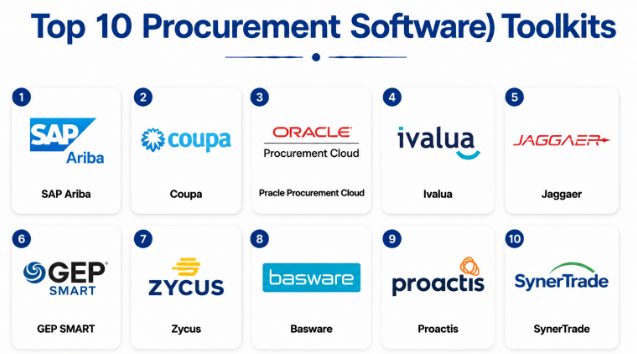
Top 10 Procurement Software) Toolkits
#1 — SAP Ariba
Short description: SAP Ariba provides a cloud-based procurement platform for large enterprises, offering sourcing, procurement, and supplier management solutions. It is designed to optimize spend, streamline supplier collaboration, and ensure compliance.
Key Features
- Supplier lifecycle management
- Sourcing and contract management
- Purchase order and invoice automation
- Spend analysis and reporting
- Integration with SAP ERP
- Compliance monitoring
- AI-driven insights for supplier selection
Pros
- Robust enterprise-level capabilities
- Comprehensive compliance and reporting
Cons
- High implementation cost
- Complexity may require dedicated training
Platforms / Deployment
- Web / iOS / Android
- Cloud
Security & Compliance
- SSO/SAML, MFA, encryption
- SOC 2, ISO 27001, GDPR
Integrations & Ecosystem
Integrates seamlessly with ERP systems and financial platforms:
- SAP ERP
- Finance and accounting tools
- Supplier networks
Support & Community
Comprehensive documentation, enterprise onboarding programs, and global support. Large active user community.
#2 — Coupa
Short description: Coupa offers a cloud-based spend management and procurement platform for organizations of all sizes. It emphasizes visibility, compliance, and efficiency in sourcing and purchasing operations.
Key Features
- Purchase requisition and approval workflow
- Supplier management and onboarding
- Invoice and payment automation
- Spend analytics and dashboards
- Contract lifecycle management
- Integration with finance and ERP systems
Pros
- Strong analytics and visibility
- User-friendly interface for procurement teams
Cons
- Premium features may increase cost
- Integrations may require technical setup
Platforms / Deployment
- Web / iOS / Android
- Cloud
Security & Compliance
- Not publicly stated
Integrations & Ecosystem
- ERP and finance systems
- Supplier portals
- API access for custom integrations
Support & Community
Online support, training resources, and community forums. Active global user base.
#3 — Oracle Procurement Cloud
Short description: Oracle Procurement Cloud is an enterprise-grade procurement solution providing sourcing, supplier management, purchasing, and analytics. It is designed for complex, multi-site organizations.
Key Features
- Supplier lifecycle management
- Sourcing and procurement workflows
- Purchase order and invoice automation
- Spend analytics and reporting
- Contract management and compliance
- AI-driven supplier recommendations
Pros
- Comprehensive enterprise functionality
- Advanced analytics and reporting capabilities
Cons
- Requires significant setup and configuration
- Higher learning curve for new users
Platforms / Deployment
- Web / iOS / Android
- Cloud
Security & Compliance
- SSO/SAML, encryption, audit logs
- SOC 2, ISO 27001, GDPR
Integrations & Ecosystem
- Oracle ERP and finance systems
- Supplier networks
- API integration for third-party tools
Support & Community
Global support, documentation, training programs, and active enterprise community.
#4 — Ivalua
Short description: Ivalua offers a procurement platform focused on source-to-pay processes. It provides visibility into spend, supplier performance, and compliance while supporting complex global procurement needs.
Key Features
- Source-to-pay automation
- Supplier lifecycle and performance management
- Contract and compliance tracking
- Purchase requisition and invoice processing
- Analytics dashboards
- AI-driven spend recommendations
Pros
- Flexible configuration for global organizations
- Strong supplier management features
Cons
- Implementation can be complex
- Cost may be high for SMBs
Platforms / Deployment
- Web / iOS / Android
- Cloud
Security & Compliance
- Not publicly stated
Integrations & Ecosystem
- ERP and financial systems
- Supplier portals
- APIs for automation
Support & Community
Documentation, training, and customer support provided. Community moderate.
#5 — Jaggaer
Short description: Jaggaer provides a comprehensive procurement solution for sourcing, supplier management, contract compliance, and spend analytics. It serves mid-market and enterprise organizations.
Key Features
- Sourcing and supplier management
- Contract lifecycle management
- Purchase order and invoice automation
- Spend analytics and reporting
- Compliance monitoring
- Integration with ERP systems
Pros
- End-to-end procurement management
- Strong analytics and compliance features
Cons
- Setup may be resource-intensive
- Higher learning curve for teams
Platforms / Deployment
- Web / iOS / Android
- Cloud
Security & Compliance
- Not publicly stated
Integrations & Ecosystem
- ERP and financial systems
- Supplier networks
- API integration options
Support & Community
Training, documentation, and online support. Active professional community.
#6 — GEP SMART
Short description: GEP SMART provides an AI-enabled procurement platform for sourcing, procurement, and supplier management. It is designed to streamline global procurement operations.
Key Features
- Source-to-pay automation
- Supplier management and performance tracking
- Contract and compliance management
- Spend analytics and AI insights
- Purchase order and invoicing
Pros
- Advanced AI-driven insights
- Scalable for large organizations
Cons
- Complex implementation
- Premium pricing
Platforms / Deployment
- Web / iOS / Android
- Cloud
Security & Compliance
- Not publicly stated
Integrations & Ecosystem
- ERP integration
- Supplier networks
- API access
Support & Community
Documentation, training, and enterprise-level support. Moderate community.
#7 — Zycus
Short description: Zycus delivers end-to-end procurement solutions including sourcing, contract management, procurement, and supplier performance management.
Key Features
- Supplier lifecycle management
- Contract lifecycle automation
- Purchase requisition and invoice processing
- Spend analytics and dashboards
- Compliance tracking
- AI recommendations for sourcing
Pros
- Comprehensive procurement platform
- Strong supplier management capabilities
Cons
- Implementation can be lengthy
- Cost can be high for smaller organizations
Platforms / Deployment
- Web / iOS / Android
- Cloud
Security & Compliance
- Not publicly stated
Integrations & Ecosystem
- ERP and finance systems
- Supplier networks
- API for third-party integrations
Support & Community
Documentation, email support, and training programs. Moderate user community.
#8 — Basware
Short description: Basware provides cloud-based procurement automation for purchase-to-pay processes, invoicing, and supplier collaboration, suitable for global enterprises.
Key Features
- Purchase-to-pay automation
- Supplier management
- Invoice processing and approvals
- Spend visibility and analytics
- Compliance monitoring
- Workflow automation
Pros
- Robust automation capabilities
- Strong global supplier network
Cons
- May be complex for smaller teams
- Premium pricing for full functionality
Platforms / Deployment
- Web / iOS / Android
- Cloud
Security & Compliance
- Not publicly stated
Integrations & Ecosystem
- ERP and financial systems
- Supplier portals
- API integration
Support & Community
Training, documentation, and support available. Active enterprise community.
#9 — Proactis
Short description: Proactis offers procurement automation, spend management, and supplier management solutions for mid-market and enterprise organizations.
Key Features
- Purchase requisition and order automation
- Supplier management
- Invoice and payment processing
- Spend analytics
- Contract management
- Compliance tracking
Pros
- Streamlines procurement operations
- Supports spend visibility
Cons
- Setup may require IT resources
- Smaller features limited in basic plans
Platforms / Deployment
- Web / iOS / Android
- Cloud
Security & Compliance
- Not publicly stated
Integrations & Ecosystem
- ERP and financial systems
- Supplier networks
- API support
Support & Community
Documentation and training available. Moderate community.
#10 — SynerTrade
Short description: SynerTrade provides digital procurement solutions for sourcing, supplier management, and spend analytics. It serves mid-market and global enterprises.
Key Features
- Supplier lifecycle management
- E-sourcing and procurement workflows
- Spend analytics
- Contract and compliance management
- AI-driven recommendations
Pros
- Flexible platform for global organizations
- Strong analytics and compliance features
Cons
- Implementation can be resource-intensive
- Cost may be high for SMBs
Platforms / Deployment
- Web / iOS / Android
- Cloud
Security & Compliance
- Not publicly stated
Integrations & Ecosystem
- ERP and finance systems
- Supplier portals
- APIs for integrations
Support & Community
Documentation, training, and online support. Moderate user community.
Comparison Table (Top 10)
| Tool Name | Best For | Platform(s) Supported | Deployment | Standout Feature | Public Rating |
|---|---|---|---|---|---|
| SAP Ariba | Large enterprises | Web/iOS/Android | Cloud | End-to-end procurement | N/A |
| Coupa | SMB to enterprise | Web/iOS/Android | Cloud | Spend visibility and analytics | N/A |
| Oracle Procurement Cloud | Enterprise organizations | Web/iOS/Android | Cloud | Advanced analytics & compliance | N/A |
| Ivalua | Global procurement | Web/iOS/Android | Cloud | Supplier lifecycle management | N/A |
| Jaggaer | Mid-market & enterprise | Web/iOS/Android | Cloud | Source-to-pay automation | N/A |
| GEP SMART | Large organizations | Web/iOS/Android | Cloud | AI-driven procurement insights | N/A |
| Zycus | End-to-end procurement | Web/iOS/Android | Cloud | Supplier performance tracking | N/A |
| Basware | Global enterprises | Web/iOS/Android | Cloud | Purchase-to-pay automation | N/A |
| Proactis | Mid-market organizations | Web/iOS/Android | Cloud | Spend visibility | N/A |
| SynerTrade | Mid-market & global | Web/iOS/Android | Cloud | E-sourcing & analytics | N/A |
Evaluation & Scoring of Procurement Tools
| Tool Name | Core (25%) | Ease (15%) | Integrations (15%) | Security (10%) | Performance (10%) | Support (10%) | Value (15%) | Weighted Total (0–10) |
|---|---|---|---|---|---|---|---|---|
| SAP Ariba | 9 | 7 | 8 | 9 | 9 | 8 | 7 | 8.4 |
| Coupa | 8 | 8 | 8 | 7 | 8 | 8 | 8 | 8.0 |
| Oracle Procurement | 9 | 7 | 8 | 9 | 9 | 7 | 7 | 8.3 |
| Ivalua | 8 | 7 | 7 | 8 | 8 | 7 | 8 | 7.9 |
| Jaggaer | 8 | 7 | 7 | 8 | 8 | 7 | 7 | 7.8 |
| GEP SMART | 9 | 7 | 8 | 8 | 8 | 7 | 7 | 8.0 |
| Zycus | 8 | 7 | 7 | 8 | 8 | 7 | 7 | 7.8 |
| Basware | 8 | 7 | 7 | 7 | 8 | 7 | 8 | 7.9 |
| Proactis | 7 | 7 | 6 | 7 | 7 | 6 | 7 | 7.0 |
| SynerTrade | 8 | 7 | 7 | 7 | 8 | 7 | 7 | 7.7 |
Interpretation: Weighted totals provide a comparative benchmark to assess which platform balances core features, ease of use, integration potential, security, and overall value for your procurement operations.
Which Procurement Tool Is Right for You?
Solo / Freelancer
- Coupa or Proactis for small-scale operations with moderate purchasing needs.
SMB
- Jaggaer or Basware for mid-market businesses seeking automation and spend visibility.
Mid-Market
- Ivalua or SynerTrade for robust supplier management and analytics.
Enterprise
- SAP Ariba, Oracle Procurement Cloud, or GEP SMART for end-to-end procurement, compliance, and AI insights.
Budget vs Premium
- Budget: Proactis, SynerTrade
- Premium: SAP Ariba, Oracle Procurement Cloud, GEP SMART
Feature Depth vs Ease of Use
- Depth: SAP Ariba, Oracle Procurement Cloud, GEP SMART
- Ease: Coupa, Proactis
Integrations & Scalability
- Enterprise-level: SAP Ariba, Oracle Procurement Cloud, GEP SMART
- SMB-friendly: Coupa, Jaggaer
Security & Compliance Needs
- High compliance: SAP Ariba, Oracle Procurement Cloud
- Standard compliance: Coupa, Proactis
Frequently Asked Questions (FAQs)
1. How is pricing structured for procurement software?
Pricing is typically subscription-based per user, per transaction, or per organization tier, with add-ons for advanced analytics or AI features.
2. What is required to onboard a procurement system?
Configuration of supplier data, user roles, workflow approvals, and integration with ERP or financial systems is generally required.
3. Can these tools integrate with existing ERP or finance platforms?
Yes, most provide built-in connectors or APIs for ERP, accounting, and inventory systems.
4. How do these platforms improve compliance?
They automate approvals, track contracts, monitor supplier compliance, and provide audit-ready reports.
5. Are AI features available for spend analysis?
Leading platforms offer AI-driven recommendations for cost savings, supplier selection, and predictive insights.
6. Can small teams benefit from these platforms?
Yes, SMB-oriented platforms like Coupa or Proactis provide simplified features suitable for smaller procurement teams.
7. How scalable are enterprise solutions?
Enterprise platforms can manage global procurement operations, thousands of suppliers, and complex approval workflows.
8. Are mobile apps available for approvals and workflow management?
Yes, most top platforms provide mobile applications for approvals, notifications, and dashboards on-the-go.
9. How long does implementation take?
Implementation varies from a few weeks for SMB solutions to several months for enterprise-scale deployment.
10. Can procurement data be exported for analysis?
Most platforms support CSV, Excel, or API-based export for integration with reporting tools and analytics systems.
Conclusion
Procurement Software) Toolkits are essential for organizations seeking to streamline sourcing, purchasing, and supplier management while improving compliance and cost efficiency. The “best” platform depends on company size, complexity, and budget. Smaller teams may benefit from Coupa or Proactis, while large enterprises gain value from SAP Ariba, Oracle Procurement Cloud, or GEP SMART. The next step is to shortlist, run a pilot, and validate workflow automation, AI insights, and integration capabilities before full deployment.
