Upgrade & Secure Your Future with DevOps, SRE, DevSecOps, MLOps!
We spend hours scrolling social media and waste money on things we forget, but won’t spend 30 minutes a day earning certifications that can change our lives.
Master in DevOps, SRE, DevSecOps & MLOps by DevOps School!
Learn from Guru Rajesh Kumar and double your salary in just one year.
Introduction
Marketplace Platforms are software solutions that enable businesses to create, manage, and scale multi-vendor online marketplaces. In simple terms, these platforms allow sellers to list products or services, while buyers can discover, compare, and purchase items from multiple vendors on a single site or app. Marketplace platforms handle essential functions such as payment processing, vendor management, order fulfillment, and analytics.
In and beyond, digital commerce is rapidly expanding, and marketplaces are becoming a critical channel for businesses to reach new customers efficiently. With AI-driven insights, real-time analytics, and integrated logistics, marketplace platforms offer businesses the ability to manage hundreds or thousands of vendors seamlessly while providing customers with personalized shopping experiences.
Real-world use cases:
- Launching multi-vendor e-commerce marketplaces like fashion, electronics, or grocery
- Connecting service providers with clients in niches such as freelance work or tutoring
- Aggregating products from multiple suppliers in a single online storefront
- Managing vendor onboarding, compliance, and payouts efficiently
- Providing analytics and reporting for sales, vendor performance, and customer behavior
Key evaluation criteria for buyers:
- Vendor management and onboarding
- Payment and commission handling
- Product catalog management
- Inventory and order tracking
- Marketing and promotional tools
- Customer experience and personalization
- Analytics and reporting dashboards
- Security and compliance
- Mobile and multi-channel support
- Pricing and scalability
Best for: Online marketplace operators, e-commerce managers, multi-vendor platform owners, and entrepreneurs
Not ideal for: Single-vendor e-commerce stores; simpler online storefronts may not require full marketplace functionality
Key Trends in Marketplace Platforms
- AI-driven product recommendations and personalized shopping experiences
- Automated vendor onboarding, verification, and compliance management
- Integration with payment gateways, shipping providers, and POS systems
- Real-time inventory and order tracking for multi-vendor operations
- Mobile-first and progressive web applications for buyers and sellers
- Advanced analytics and reporting dashboards for platform owners
- Subscription-based and commission-based pricing models
- Automated marketing campaigns, promotions, and discounts
- Scalable cloud deployments for global operations
- Security-first architecture with encryption, MFA, and PCI DSS compliance
How We Selected These Tools (Methodology)
- Evaluated market adoption and credibility in the marketplace software industry
- Assessed completeness of vendor and product management features
- Reviewed reliability, scalability, and performance metrics
- Checked security certifications and compliance standards
- Evaluated integrations with payments, ERP, logistics, and marketing tools
- Considered usability, onboarding, and vendor self-service capabilities
- Assessed analytics, reporting dashboards, and AI-driven insights
- Reviewed mobile accessibility for buyers and vendors
- Analyzed pricing flexibility and total cost of ownership
- Verified support, documentation, and community engagement
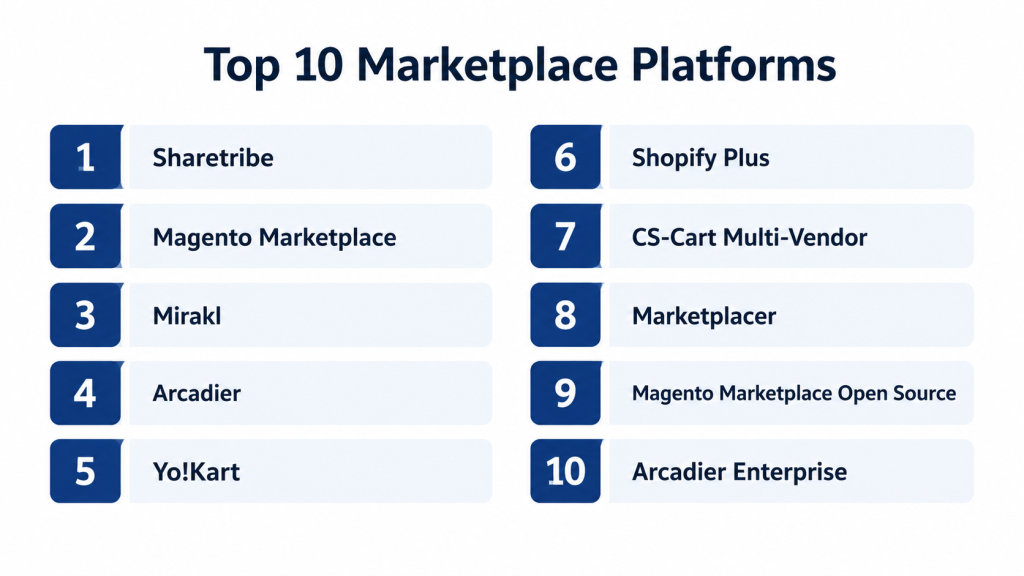
Top 10 Marketplace Platforms
#1 — Sharetribe
Short description: Sharetribe is a cloud-based platform that allows businesses to launch multi-vendor marketplaces quickly, with features for product listing, payment processing, and vendor management.
Key Features
- Multi-vendor marketplace management
- Payment and commission handling
- Product catalog management
- Customizable storefronts
- Analytics and reporting dashboards
- Mobile-responsive design
- Integration with payment gateways
Pros
- Quick to launch and easy to use
- Scalable for growing marketplaces
Cons
- Limited advanced analytics for enterprise
- Fewer customization options
Platforms / Deployment
- Web / iOS / Android
- Cloud
Security & Compliance
- SSL encryption
- Not publicly stated
Integrations & Ecosystem
- Payment gateways (Stripe, PayPal)
- Third-party analytics tools
- APIs for custom features
Support & Community
- Email support
- Knowledge base and tutorials
#2 — Magento Marketplace
Short description: Magento Marketplace (Adobe Commerce) allows enterprises to build highly customizable marketplaces with multi-vendor support and robust e-commerce capabilities.
Key Features
- Product catalog management
- Vendor onboarding and management
- Inventory and order tracking
- Payment processing and commission management
- Marketing and SEO tools
- Advanced reporting dashboards
- Customizable workflows
Pros
- Enterprise-level customization
- Strong analytics and reporting
Cons
- Requires technical expertise
- Higher operational cost
Platforms / Deployment
- Web / Windows / Linux
- Cloud / Self-hosted
Security & Compliance
- SSL, PCI DSS
- Not publicly stated
Integrations & Ecosystem
- ERP and POS systems
- CRM integration
- Marketing automation tools
Support & Community
- Adobe enterprise support
- Developer community forums
#3 — Mirakl
Short description: Mirakl provides SaaS solutions for creating B2B and B2C marketplaces, enabling large enterprises to onboard vendors and scale marketplace operations efficiently.
Key Features
- Vendor management and onboarding
- Catalog and inventory management
- Automated payouts and commissions
- Analytics dashboards
- Multi-language and multi-currency support
- Integration with ERP and POS systems
- Customizable storefronts
Pros
- Enterprise-grade scalability
- AI-driven analytics and insights
Cons
- Premium pricing
- Complex onboarding process
Platforms / Deployment
- Web / Cloud
- Cloud
Security & Compliance
- SSL encryption, MFA
- SOC 2, ISO 27001
Integrations & Ecosystem
- ERP and CRM systems
- Payment gateways
- Analytics and BI platforms
Support & Community
- Enterprise support
- Documentation and onboarding guides
#4 — Arcadier
Short description: Arcadier is a marketplace platform enabling SMEs to launch multi-vendor marketplaces for goods, services, and rental offerings with minimal technical setup.
Key Features
- Multi-vendor management
- Payment and commission processing
- Product and service listings
- Customizable marketplace themes
- Analytics dashboards
- Integration with payment gateways
- Mobile-responsive design
Pros
- Quick and easy deployment
- Supports multiple marketplace types
Cons
- Limited enterprise features
- Basic analytics for advanced operations
Platforms / Deployment
- Web / iOS / Android
- Cloud
Security & Compliance
- SSL, PCI DSS
- Not publicly stated
Integrations & Ecosystem
- Payment gateways
- Third-party analytics
- API support
Support & Community
- Email support
- Knowledge base
#5 — Yo!Kart
Short description: Yo!Kart is a marketplace solution designed for SMBs and startups, offering multi-vendor support, product management, and integrated payments.
Key Features
- Vendor management
- Product catalog and inventory
- Payment gateway integration
- Commission and payout management
- Analytics dashboards
- Multi-language and currency support
- Mobile-friendly interface
Pros
- Affordable for SMBs
- Quick deployment
Cons
- Limited enterprise scalability
- Customization requires developer support
Platforms / Deployment
- Web / iOS / Android
- Cloud / Self-hosted
Security & Compliance
- SSL encryption
- Not publicly stated
Integrations & Ecosystem
- Payment gateways (Stripe, PayPal)
- Analytics tools
- APIs for custom integrations
Support & Community
- Email support
- Documentation and forums
#6 — Shopify Plus
Short description: Shopify Plus enables brands to create multi-vendor marketplaces at scale, with robust integrations and enterprise-grade performance.
Key Features
- Multi-channel vendor management
- Payment processing and commissions
- Product catalog management
- Analytics and reporting dashboards
- API and app ecosystem
- Marketing automation
- Mobile-responsive design
Pros
- Enterprise-grade support
- Scalable for large marketplaces
Cons
- Premium subscription cost
- Limited backend customization
Platforms / Deployment
- Web / iOS / Android
- Cloud
Security & Compliance
- SSL, PCI DSS
- Not publicly stated
Integrations & Ecosystem
- Payment gateways
- POS and ERP integration
- Marketing tools
Support & Community
- 24/7 enterprise support
- Documentation and forums
#7 — CS-Cart Multi-Vendor
Short description: CS-Cart Multi-Vendor allows retailers to create marketplaces with multiple sellers, handling product management, payments, and vendor commissions efficiently.
Key Features
- Vendor onboarding and management
- Product catalog and inventory
- Payment and commission management
- Analytics dashboards
- Marketing and promotions
- Multi-language support
- Customizable storefront
Pros
- Affordable for SMBs
- Flexible configuration
Cons
- Less suitable for very large marketplaces
- Technical knowledge recommended
Platforms / Deployment
- Web / Windows / Linux
- Cloud / Self-hosted
Security & Compliance
- SSL
- Not publicly stated
Integrations & Ecosystem
- Payment gateways
- Analytics and marketing tools
Support & Community
- Email support
- Community forums
#8 — Marketplacer
Short description: Marketplacer helps businesses launch B2B and B2C marketplaces with multi-vendor management, product listings, and built-in payments.
Key Features
- Vendor management
- Product catalog and inventory
- Payment processing and commission rules
- Analytics and reporting
- Mobile-friendly design
- Multi-currency support
Pros
- Flexible marketplace types
- Scalable for growing businesses
Cons
- Premium pricing
- Requires technical setup for complex workflows
Platforms / Deployment
- Web / Cloud
- Cloud
Security & Compliance
- SSL, MFA
- SOC 2
Integrations & Ecosystem
- ERP and CRM systems
- Payment gateways
- Analytics tools
Support & Community
- Enterprise support
- Knowledge base
#9 — Magento Marketplace Open Source
Short description: Magento Open Source supports multi-vendor marketplaces for developers and enterprises, offering flexible customization and complete control.
Key Features
- Product catalog management
- Vendor onboarding and commissions
- Inventory and order management
- Analytics dashboards
- Payment gateway integration
- Customizable storefront
- Multi-store support
Pros
- Highly customizable
- Strong developer ecosystem
Cons
- Requires technical expertise
- Maintenance and hosting needed
Platforms / Deployment
- Web / Linux / Windows
- Self-hosted
Security & Compliance
- SSL
- Not publicly stated
Integrations & Ecosystem
- ERP and POS
- Payment gateways
- APIs for extensions
Support & Community
- Community forums
- Documentation
#10 — Arcadier Enterprise
Short description: Arcadier Enterprise enables large-scale marketplace deployments with multi-vendor support, analytics, and customizable workflows.
Key Features
- Vendor onboarding and management
- Product catalog and inventory
- Payment and commission management
- Analytics dashboards
- Multi-language and currency support
- API and custom integrations
Pros
- Enterprise scalability
- Flexible marketplace types
Cons
- Premium pricing
- Technical setup required
Platforms / Deployment
- Web / iOS / Android
- Cloud
Security & Compliance
- SSL, PCI DSS
- Not publicly stated
Integrations & Ecosystem
- ERP and CRM systems
- Payment gateways
- Marketing and analytics tools
Support & Community
- Enterprise support
- Knowledge base
Comparison Table (Top 10)
| Tool Name | Best For | Platform(s) Supported | Deployment | Standout Feature | Public Rating |
|---|---|---|---|---|---|
| Sharetribe | SMB marketplaces | Web / iOS / Android | Cloud | Quick launch and ease of use | N/A |
| Magento Marketplace | Enterprise marketplaces | Web / Windows / Linux | Cloud / Self-hosted | Highly customizable | N/A |
| Mirakl | Large enterprises | Web / Cloud | Cloud | AI-driven insights | N/A |
| Arcadier | SMB & regional marketplaces | Web / iOS / Android | Cloud | Multi-type marketplaces | N/A |
| Yo!Kart | SMB marketplaces | Web / iOS / Android | Cloud / Self-hosted | Affordable and scalable | N/A |
| Shopify Plus | Enterprise brands | Web / iOS / Android | Cloud | Multi-vendor enterprise support | N/A |
| CS-Cart Multi-Vendor | SMB marketplaces | Web / Windows / Linux | Cloud / Self-hosted | Flexible and configurable | N/A |
| Marketplacer | B2B & B2C marketplaces | Web / Cloud | Cloud | Scalable for multiple vendors | N/A |
| Magento Open Source Marketplace | Developers & enterprises | Web / Linux / Windows | Self-hosted | Full customization control | N/A |
| Arcadier Enterprise | Large-scale marketplaces | Web / iOS / Android | Cloud | Enterprise scalability | N/A |
Evaluation & Scoring of Marketplace Platforms
| Tool Name | Core (25%) | Ease (15%) | Integrations (15%) | Security (10%) | Performance (10%) | Support (10%) | Value (15%) | Weighted Total (0–10) |
|---|---|---|---|---|---|---|---|---|
| Sharetribe | 8 | 9 | 7 | 8 | 8 | 8 | 8 | 8.2 |
| Magento Marketplace | 9 | 7 | 8 | 9 | 9 | 8 | 7 | 8.1 |
| Mirakl | 9 | 7 | 8 | 9 | 9 | 8 | 7 | 8.1 |
| Arcadier | 8 | 8 | 7 | 8 | 8 | 8 | 7 | 7.8 |
| Yo!Kart | 8 | 8 | 7 | 8 | 8 | 7 | 7 | 7.7 |
| Shopify Plus | 9 | 8 | 8 | 9 | 9 | 8 | 7 | 8.2 |
| CS-Cart Multi-Vendor | 8 | 8 | 7 | 8 | 8 | 7 | 7 | 7.7 |
| Marketplacer | 9 | 7 | 8 | 9 | 9 | 8 | 7 | 8.1 |
| Magento Open Source Marketplace | 9 | 7 | 8 | 8 | 8 | 7 | 7 | 7.8 |
| Arcadier Enterprise | 9 | 7 | 8 | 9 | 9 | 8 | 7 | 8.1 |
Interpretation: Weighted totals provide comparative insight across core features, ease of use, integrations, security, performance, support, and value. Higher scores indicate stronger overall suitability for marketplace operations.
Which Marketplace Platform Is Right for You?
Solo / Freelancer
Sharetribe or Yo!Kart provide simple setups and ease of use for small-scale marketplaces.
SMB
Arcadier, CS-Cart Multi-Vendor, or Marketplacer offer scalability, vendor management, and multi-channel support for growing marketplaces.
Mid-Market
Shopify Plus, Mirakl, and Arcadier Enterprise deliver robust analytics, AI features, and operational efficiency for medium-sized marketplaces.
Enterprise
Magento Marketplace, Mirakl, and Shopify Plus are ideal for enterprise-scale operations with complex workflows and multiple vendors.
Budget vs Premium
Entry-level platforms provide cost-effective deployment; premium solutions offer advanced features, AI insights, and enterprise integrations.
Feature Depth vs Ease of Use
Sharetribe and Arcadier are intuitive; Magento and Mirakl provide advanced functionality but require technical expertise.
Integrations & Scalability
Platforms supporting payment gateways, ERP, POS, and analytics integrations ensure seamless multi-vendor and multi-region scalability.
Security & Compliance Needs
Platforms with SSL, PCI DSS, MFA, and SOC 2 or GDPR compliance are recommended for secure transactions and data protection.
Frequently Asked Questions (FAQs)
1. How are pricing models structured?
Most platforms offer subscription-based pricing, with tiers based on vendor count, features, and transaction volume. Enterprise pricing is customized.
2. What is the onboarding process?
Includes account setup, vendor onboarding, product catalog configuration, and staff training.
3. Can data be migrated from other marketplaces?
Yes, through CSV import, APIs, or vendor-assisted migration services.
4. Are these platforms mobile-friendly?
Yes, all platforms provide mobile-responsive design and apps for buyers and vendors.
5. What integrations are commonly available?
Payment gateways, ERP, POS, CRM, analytics, and marketing automation tools.
6. How scalable are these platforms?
Enterprise platforms support hundreds of vendors, multiple product categories, and global operations.
7. Can these platforms manage promotions?
Yes, tools allow discounts, promotional campaigns, and automated pricing strategies.
8. How are analytics and reporting handled?
Dashboards provide insights on vendor performance, sales, commissions, and customer behavior.
9. How do AI features assist?
AI can recommend products, optimize pricing, forecast demand, and monitor vendor performance.
10. What common mistakes should marketplace operators avoid?
Neglecting vendor onboarding, ignoring analytics, poor product categorization, and lack of integration planning.
Conclusion
Marketplace Platforms enable businesses to connect multiple vendors with buyers, manage product catalogs, and scale online operations efficiently. The “best” platform depends on vendor count, business size, and operational complexity. Small operators may adopt Sharetribe or Yo!Kart, mid-market Arcadier or CS-Cart, and enterprises Magento or Mirakl. Evaluate features, AI capabilities, integrations, and security before implementation. Next steps: shortlistplatforms, run pilot deployments, and monitor marketplace performance to optimize vendor and buyer experiences.
