Upgrade & Secure Your Future with DevOps, SRE, DevSecOps, MLOps!
We spend hours scrolling social media and waste money on things we forget, but won’t spend 30 minutes a day earning certifications that can change our lives.
Master in DevOps, SRE, DevSecOps & MLOps by DevOps School!
Learn from Guru Rajesh Kumar and double your salary in just one year.
Introduction
Restaurant Reservation & Table Management tools help restaurants manage bookings, walk-ins, waitlists, table layouts, guest notes, seating plans, and guest communication from one system. In simple terms, these tools help restaurants fill tables better, reduce waiting time, avoid booking mistakes, and improve the guest experience.
They matter now because restaurants are handling more digital bookings, online discovery, guest expectations, no-shows, private dining requests, and multi-channel reservations. A strong reservation system helps teams manage capacity, improve table turnover, and create a smoother front-of-house workflow.
Common use cases include:
- Taking online reservations from guests.
- Managing waitlists and walk-ins.
- Assigning tables based on party size and availability.
- Sending confirmation and reminder messages.
- Tracking guest history, preferences, and special requests.
Buyers should evaluate:
- Online booking experience
- Waitlist management
- Table layout and floor plan tools
- Guest CRM features
- POS integrations
- Deposit and cancellation controls
- No-show prevention
- Reporting and analytics
- Multi-location support
- Pricing and commission model
Best for: restaurants, cafes, bars, fine-dining venues, hotel restaurants, hospitality groups, multi-location restaurants, and operators that rely on reservations, waitlists, or table planning.
Not ideal for: very small food stalls, quick-service restaurants with no seating, delivery-only kitchens, or businesses that only need simple phone-based bookings.
Key Trends in Restaurant Reservation & Table Management Tools
- AI-assisted table optimization: Reservation platforms are becoming smarter at suggesting seating plans, predicting demand, and improving table turnover.
- No-show reduction tools: Deposits, cancellation policies, automated reminders, and guest confirmations are becoming more important.
- Guest CRM expansion: Restaurants want guest history, preferences, allergies, anniversaries, VIP tags, and visit notes inside the booking system.
- Integrated waitlist management: Walk-ins and reservations are being managed together to improve seating accuracy and reduce guest frustration.
- Omnichannel booking: Guests expect to book through websites, search platforms, social pages, apps, and partner channels.
- Dynamic availability control: Restaurants need better control over booking slots, pacing, covers, party sizes, and private dining availability.
- POS and payment integration: Reservation systems are connecting more closely with POS, payment deposits, loyalty, marketing, and guest spending data.
- Multi-location control: Restaurant groups need centralized reporting, brand-level controls, and location-specific booking rules.
- Guest communication automation: SMS, email, confirmations, reminders, waitlist updates, and post-visit messages are now essential.
- Data-led hospitality: Operators are using reservation data to understand busy periods, repeat guests, table performance, and booking source quality.
How We Selected These Tools
The following tools were selected using practical restaurant technology evaluation criteria:
- Market adoption and recognition in restaurant reservations and table management.
- Strength of online booking, table planning, waitlist, and guest management features.
- Suitability for independent restaurants, hospitality groups, and enterprise operators.
- Support for guest CRM, notes, preferences, and communication.
- Integration ecosystem with POS, payments, marketing, websites, and hospitality systems.
- Ability to reduce no-shows and improve table utilization.
- Reporting and analytics depth for front-of-house decisions.
- Ease of use for hosts, managers, and service teams.
- Multi-location and brand-level management capabilities.
- Overall fit across casual dining, fine dining, bars, cafes, and hotel restaurants.
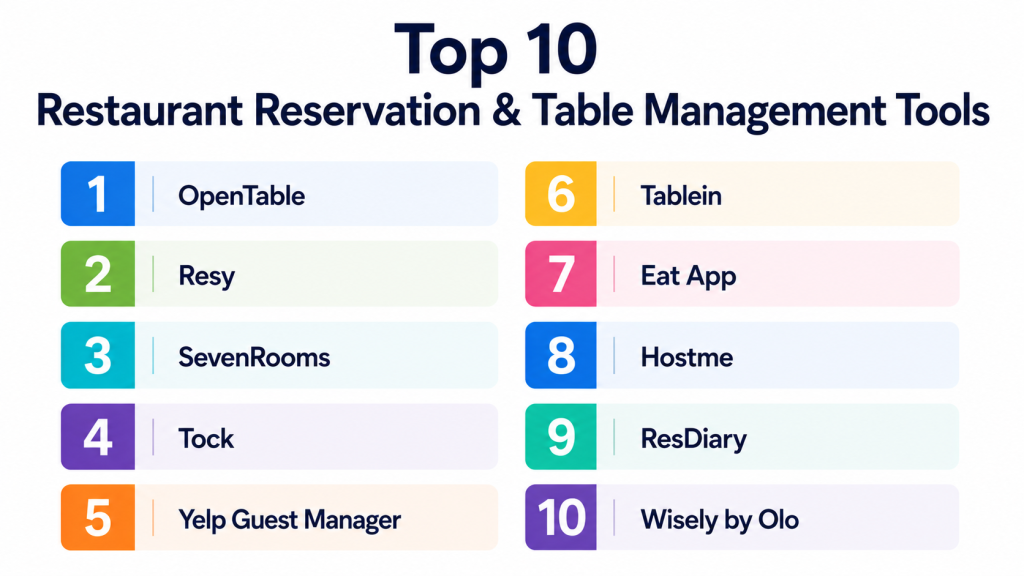
Top 10 Restaurant Reservation & Table Management Tools
#1 — OpenTable
Short description:
OpenTable is one of the most widely recognized restaurant reservation and table management platforms. It helps restaurants accept online bookings, manage table availability, handle guest profiles, and reach diners through a large discovery network. It is useful for restaurants that want visibility, reservations, guest management, and front-of-house control in one platform. OpenTable is especially relevant for restaurants that rely heavily on online discovery and guest booking convenience. It fits independent restaurants, fine-dining venues, and multi-location hospitality groups.
Key Features
- Online reservation management.
- Table and floor plan management.
- Guest profiles and visit history.
- Waitlist support.
- Automated guest communication.
- Restaurant discovery network.
- Reporting and booking analytics.
Pros
- Strong diner discovery and reservation network.
- Good fit for restaurants that want online visibility.
- Useful guest management and table planning tools.
Cons
- Pricing and cover-based costs should be reviewed carefully.
- Restaurants may depend on marketplace visibility.
- Smaller venues may not need the full platform.
Platforms / Deployment
Web / iOS / Android; Cloud deployment.
Security & Compliance
SSO/SAML, MFA, encryption, audit logs, RBAC, SOC 2, ISO 27001, GDPR, HIPAA: Not publicly stated.
Integrations & Ecosystem
OpenTable connects reservation workflows with restaurant operations and guest engagement.
- POS integrations
- Website booking widgets
- Guest communication tools
- Payment and deposit workflows
- Marketing tools
- Restaurant discovery channels
Support & Community
OpenTable provides documentation, onboarding resources, and support. Community strength is high due to broad restaurant and diner adoption.
#2 — Resy
Short description:
Resy is a restaurant reservation and table management platform popular with modern restaurants, hospitality groups, and dining-focused brands. It helps restaurants manage reservations, table inventory, guest profiles, waitlists, and communication. Resy is often used by restaurants that want a polished booking experience and strong guest relationship management. It is suitable for casual dining, premium dining, and restaurant groups. The platform is especially useful for teams that want better control over reservation availability and guest experience.
Key Features
- Online reservation management.
- Table inventory control.
- Guest profiles and notes.
- Waitlist management.
- Automated confirmations and reminders.
- Restaurant discovery support.
- Reporting and performance insights.
Pros
- Strong guest-facing booking experience.
- Good fit for restaurants focused on hospitality and guest relationships.
- Useful for managing demand and table inventory.
Cons
- May not be necessary for very small restaurants.
- Pricing and marketplace model should be reviewed.
- Advanced configuration may require onboarding.
Platforms / Deployment
Web / iOS / Android; Cloud deployment.
Security & Compliance
SSO/SAML, MFA, encryption, audit logs, RBAC, SOC 2, ISO 27001, GDPR, HIPAA: Not publicly stated.
Integrations & Ecosystem
Resy supports reservation, guest management, and restaurant discovery workflows.
- POS integrations
- Guest CRM workflows
- Website booking tools
- Email and SMS communication
- Payment or deposit workflows
- Hospitality reporting
Support & Community
Support and onboarding resources are available. Community strength is strong among modern restaurants and hospitality groups.
#3 — SevenRooms
Short description:
SevenRooms is a guest experience, reservation, waitlist, and CRM platform for restaurants, hotels, nightlife venues, and hospitality groups. It helps businesses manage reservations, guest profiles, marketing, loyalty, and service personalization. SevenRooms is especially useful for operators that want to own guest data and create personalized hospitality experiences. It fits multi-location restaurants, hotels, fine-dining venues, and groups that need deeper guest intelligence. The platform goes beyond basic reservations by connecting table management with customer relationship management.
Key Features
- Reservation and table management.
- Guest CRM and profile enrichment.
- Waitlist management.
- Automated guest communication.
- Marketing and loyalty tools.
- Multi-location reporting.
- POS and hospitality integrations.
Pros
- Strong guest CRM and personalization features.
- Good for hospitality groups and multi-location restaurants.
- Helps restaurants own and use guest data.
Cons
- May be more advanced than small restaurants need.
- Implementation requires thoughtful setup.
- Pricing and modules should be reviewed carefully.
Platforms / Deployment
Web / iOS / Android; Cloud deployment.
Security & Compliance
SSO/SAML, MFA, encryption, audit logs, RBAC, SOC 2, ISO 27001, GDPR, HIPAA: Not publicly stated.
Integrations & Ecosystem
SevenRooms connects reservations with guest data and hospitality operations.
- POS systems
- CRM workflows
- Email marketing
- SMS communication
- Hotel and hospitality systems
- Loyalty and guest engagement tools
Support & Community
SevenRooms provides onboarding, documentation, and support. Community strength is strong among hospitality-focused operators.
#4 — Tock
Short description:
Tock is a reservation, event, deposit, and guest management platform for restaurants, wineries, pop-ups, private dining, and experience-led hospitality businesses. It is useful for restaurants that need prepaid reservations, deposits, tasting menus, event bookings, and special experiences. Tock is especially strong for restaurants that want to reduce no-shows and manage paid reservations or ticketed dining events. It fits fine dining, chef-led restaurants, wineries, and venues with premium guest experiences. The platform helps operators manage both regular bookings and special hospitality experiences.
Key Features
- Reservation management.
- Prepaid bookings and deposits.
- Event and experience booking.
- Guest profiles and communication.
- Table and availability control.
- Waitlist support.
- Reporting and booking insights.
Pros
- Strong for deposits, prepaid dining, and events.
- Useful for fine dining and experience-led restaurants.
- Helps reduce no-shows through payment workflows.
Cons
- May not be ideal for simple casual dining operations.
- Paid booking workflows may not suit every guest base.
- Setup requires clear booking policy planning.
Platforms / Deployment
Web / iOS; Cloud deployment.
Security & Compliance
SSO/SAML, MFA, encryption, audit logs, RBAC, SOC 2, ISO 27001, GDPR, HIPAA: Not publicly stated.
Integrations & Ecosystem
Tock supports hospitality, events, and reservation workflows.
- POS integrations
- Website booking pages
- Payment workflows
- Event management
- Guest communication
- Hospitality reporting
Support & Community
Tock provides support and onboarding resources. Community strength is high among fine dining, wineries, and experience-based hospitality businesses.
#5 — Yelp Guest Manager
Short description:
Yelp Guest Manager helps restaurants manage reservations, waitlists, guest communication, and front-of-house seating workflows. It is useful for restaurants that want booking and waitlist tools connected with Yelp’s consumer discovery ecosystem. The platform can help restaurants manage table flow, reduce guest wait uncertainty, and improve host stand operations. It fits casual dining, local restaurants, and businesses that receive customer traffic through Yelp. Yelp Guest Manager is practical for restaurants that want both discovery and front-of-house management.
Key Features
- Online reservations.
- Waitlist management.
- Table management tools.
- Guest messaging.
- Yelp discovery connection.
- Host stand workflow support.
- Guest and booking insights.
Pros
- Useful for restaurants visible on Yelp.
- Good waitlist and guest communication features.
- Helps manage walk-ins and reservations together.
Cons
- Best value depends on Yelp presence and market.
- May not fit restaurants needing advanced CRM depth.
- Enterprise customization may be limited.
Platforms / Deployment
Web / iOS / Android; Cloud deployment.
Security & Compliance
SSO/SAML, MFA, encryption, audit logs, RBAC, SOC 2, ISO 27001, GDPR, HIPAA: Not publicly stated.
Integrations & Ecosystem
Yelp Guest Manager supports discovery and restaurant front-of-house workflows.
- Yelp restaurant profiles
- Website booking options
- Guest messaging
- Waitlist workflows
- POS integrations where available
- Review and guest discovery ecosystem
Support & Community
Support resources are available. Community strength is strong among local restaurants and businesses using Yelp for visibility.
#6 — Tablein
Short description:
Tablein is a restaurant reservation system designed for small and mid-sized restaurants that need simple online booking and table management. It helps restaurants accept reservations, control availability, reduce phone calls, and manage booking confirmations. Tablein is useful for independent restaurants that want reservation software without heavy enterprise complexity. It supports online booking widgets, guest communication, table planning, and booking rules. The platform is a practical fit for restaurants moving from manual reservations to digital booking.
Key Features
- Online reservation booking.
- Table management.
- Booking widget for websites.
- Guest confirmation messages.
- Booking rules and availability control.
- Customer database.
- Basic reporting.
Pros
- Simple and practical for independent restaurants.
- Easier setup than many enterprise tools.
- Helps reduce manual reservation handling.
Cons
- May not fit large restaurant groups.
- Advanced CRM and marketing depth may be limited.
- Integration ecosystem may be smaller than larger platforms.
Platforms / Deployment
Web-based platform; Cloud deployment.
Security & Compliance
SSO/SAML, MFA, encryption, audit logs, RBAC, SOC 2, ISO 27001, GDPR, HIPAA: Not publicly stated.
Integrations & Ecosystem
Tablein is focused on reservation workflows for smaller restaurants.
- Website booking widgets
- Email communication
- SMS communication where available
- Basic guest database
- Calendar-style workflows
- Restaurant reporting
Support & Community
Support and help resources are available. Community strength is stronger among small and independent restaurants.
#7 — Eat App
Short description:
Eat App is a restaurant reservation and table management platform for restaurants, hotels, and hospitality groups. It supports reservations, waitlists, table management, guest profiles, deposits, and reporting. Eat App is useful for restaurants that need flexible front-of-house operations and guest communication. It can support independent venues as well as multi-location hospitality businesses. The platform is a good fit for operators looking for a clean reservation workflow with guest data and table planning features.
Key Features
- Online reservation management.
- Table and floor plan management.
- Guest profiles and notes.
- Waitlist support.
- Deposits and payment workflows where available.
- Guest communication.
- Reporting and analytics.
Pros
- Good balance of reservation and table tools.
- Useful for hospitality groups and restaurants.
- Guest profiles help improve service quality.
Cons
- Feature availability may vary by plan.
- Some advanced workflows may need setup support.
- Smaller restaurants may only need basic booking tools.
Platforms / Deployment
Web / iOS / Android; Cloud deployment.
Security & Compliance
SSO/SAML, MFA, encryption, audit logs, RBAC, SOC 2, ISO 27001, GDPR, HIPAA: Not publicly stated.
Integrations & Ecosystem
Eat App supports front-of-house and guest management workflows.
- POS integrations
- Website booking widgets
- Guest communication
- Deposit workflows
- Marketing tools
- Hospitality reporting
Support & Community
Documentation and support resources are available. Community strength is growing among restaurants and hospitality teams.
#8 — Hostme
Short description:
Hostme is a restaurant reservation, waitlist, and table management platform built for restaurants that want practical front-of-house control. It supports online reservations, waitlist management, floor plans, guest notifications, and table status tracking. Hostme is useful for independent restaurants, busy casual dining venues, and teams that need to manage walk-ins and reservations together. It can help hosts make faster seating decisions and keep guests informed. The platform is a good option for restaurants that want accessible reservation management without heavy complexity.
Key Features
- Reservation management.
- Waitlist management.
- Table and floor plan tools.
- Guest SMS notifications.
- Host stand dashboard.
- Booking rules and availability.
- Basic analytics.
Pros
- Strong waitlist and host stand workflow.
- Good fit for casual dining and independent restaurants.
- Helps reduce front-of-house confusion.
Cons
- May not offer the deepest enterprise CRM tools.
- Integration options may vary.
- Advanced reporting may be limited compared with larger platforms.
Platforms / Deployment
Web / iOS / Android; Cloud deployment.
Security & Compliance
SSO/SAML, MFA, encryption, audit logs, RBAC, SOC 2, ISO 27001, GDPR, HIPAA: Not publicly stated.
Integrations & Ecosystem
Hostme focuses on front-of-house operations.
- Website reservation widgets
- SMS guest communication
- Table management workflows
- Waitlist tools
- Guest database
- Basic reporting
Support & Community
Support resources are available. Community strength is moderate among small and mid-sized restaurant operators.
#9 — ResDiary
Short description:
ResDiary is a restaurant reservation and table management platform used by restaurants, hotels, pubs, and hospitality businesses. It helps operators manage online bookings, table plans, deposits, booking rules, and guest communication. ResDiary is useful for restaurants that want stronger control over booking channels, availability, and customer data. It is also relevant for hospitality businesses that manage multiple venues or private dining. The platform is a practical choice for restaurants that want booking control without relying only on consumer marketplaces.
Key Features
- Online reservation management.
- Table planning and availability control.
- Deposits and booking policies.
- Guest database.
- Automated guest communication.
- Multi-venue support.
- Reporting and analytics.
Pros
- Good booking control for restaurants and hospitality businesses.
- Useful deposit and no-show management features.
- Supports multi-venue operations.
Cons
- Interface and setup should be evaluated by the team.
- Marketplace discovery may be less central than some competitors.
- Advanced integrations may vary by region and plan.
Platforms / Deployment
Web-based platform; Cloud deployment.
Security & Compliance
SSO/SAML, MFA, encryption, audit logs, RBAC, SOC 2, ISO 27001, GDPR, HIPAA: Not publicly stated.
Integrations & Ecosystem
ResDiary supports restaurant and hospitality reservation workflows.
- Website booking widgets
- Payment and deposit workflows
- Guest communication
- Hospitality venue management
- POS integrations where available
- Reporting tools
Support & Community
Support and onboarding resources are available. Community strength is good among restaurants, pubs, and hospitality venues.
#10 — Wisely by Olo
Short description:
Wisely by Olo is a guest engagement and restaurant intelligence platform that supports waitlist, reservations, guest profiles, marketing, and customer data workflows. It is useful for restaurant brands that want to connect guest experience with digital ordering, loyalty, and customer insights. Wisely is especially relevant for restaurant groups looking beyond simple booking toward data-led guest engagement. It helps teams understand guests, manage front-of-house interactions, and improve repeat visits. The platform is a stronger fit for growth-oriented restaurant brands than very small venues.
Key Features
- Reservation and waitlist support.
- Guest CRM and profiles.
- Customer engagement tools.
- Marketing and personalization workflows.
- Restaurant guest analytics.
- Integration with restaurant technology stacks.
- Multi-location guest data support.
Pros
- Strong guest data and engagement focus.
- Good fit for restaurant groups and brands.
- Useful when reservations connect with loyalty and marketing.
Cons
- May be more advanced than small restaurants need.
- Best value depends on broader restaurant tech stack.
- Setup may require strategy and integration planning.
Platforms / Deployment
Web-based platform; Cloud deployment.
Security & Compliance
SSO/SAML, MFA, encryption, audit logs, RBAC, SOC 2, ISO 27001, GDPR, HIPAA: Not publicly stated.
Integrations & Ecosystem
Wisely by Olo fits broader restaurant guest engagement workflows.
- Digital ordering systems
- Guest CRM
- Marketing tools
- Loyalty programs
- Restaurant analytics
- Multi-location restaurant systems
Support & Community
Support and onboarding resources are available. Community strength is stronger among restaurant brands focused on customer engagement.
Comparison Table
| Tool Name | Best For | Platform(s) Supported | Deployment | Standout Feature | Public Rating |
|---|---|---|---|---|---|
| OpenTable | Restaurants needing discovery and reservations | Web / iOS / Android | Cloud | Large diner reservation network | N/A |
| Resy | Hospitality-focused restaurants | Web / iOS / Android | Cloud | Polished booking and guest experience | N/A |
| SevenRooms | Guest CRM and hospitality groups | Web / iOS / Android | Cloud | Deep guest profiles and personalization | N/A |
| Tock | Fine dining, events, and prepaid bookings | Web / iOS | Cloud | Deposits, prepaid dining, and experiences | N/A |
| Yelp Guest Manager | Local restaurants with Yelp visibility | Web / iOS / Android | Cloud | Reservations plus waitlist and discovery | N/A |
| Tablein | Small independent restaurants | Web | Cloud | Simple online booking setup | N/A |
| Eat App | Restaurants and hospitality groups | Web / iOS / Android | Cloud | Table management with guest data | N/A |
| Hostme | Waitlist-heavy restaurants | Web / iOS / Android | Cloud | Host stand and waitlist workflows | N/A |
| ResDiary | Restaurants, pubs, and venues | Web | Cloud | Booking rules and deposit control | N/A |
| Wisely by Olo | Restaurant groups focused on guest data | Web | Cloud | Guest engagement and customer intelligence | N/A |
Evaluation & Scoring of Restaurant Reservation & Table Management Tools
| Tool Name | Core (25%) | Ease (15%) | Integrations (15%) | Security (10%) | Performance (10%) | Support (10%) | Value (15%) | Weighted Total (0–10) |
|---|---|---|---|---|---|---|---|---|
| OpenTable | 9 | 8 | 9 | 7 | 8 | 8 | 7 | 8.15 |
| Resy | 8 | 8 | 8 | 7 | 8 | 8 | 7 | 7.85 |
| SevenRooms | 9 | 7 | 9 | 8 | 8 | 8 | 7 | 8.10 |
| Tock | 8 | 7 | 8 | 7 | 8 | 8 | 7 | 7.65 |
| Yelp Guest Manager | 7 | 8 | 7 | 7 | 8 | 7 | 8 | 7.45 |
| Tablein | 6 | 9 | 6 | 6 | 7 | 7 | 8 | 7.00 |
| Eat App | 8 | 8 | 7 | 7 | 8 | 7 | 8 | 7.70 |
| Hostme | 7 | 8 | 6 | 6 | 7 | 7 | 8 | 7.05 |
| ResDiary | 8 | 7 | 7 | 7 | 8 | 7 | 8 | 7.55 |
| Wisely by Olo | 8 | 7 | 8 | 7 | 8 | 8 | 7 | 7.65 |
These scores are comparative and should be used as a decision support tool, not a final ranking. A small restaurant may prefer Tablein or Hostme because they are easier to manage. A fine-dining venue may choose Tock because deposits and experiences matter more. A restaurant group may prefer SevenRooms or Wisely by Olo because guest data and multi-location insights are more valuable. Always compare platforms against your own reservation flow, guest volume, budget, and integration needs.
Which Restaurant Reservation & Table Management Tool Is Right for You?
Solo / Freelancer
Solo food entrepreneurs, pop-up chefs, supper clubs, and small private dining operators should keep reservation workflows simple. Tablein, Hostme, or Tock can be practical depending on whether the business needs basic bookings, waitlists, or prepaid experiences.
The main priority should be easy booking, clear guest communication, and simple availability control. Avoid complex enterprise systems unless guest data, multiple venues, or advanced automation are truly needed.
SMB
Small and mid-sized restaurants should look for tools that balance ease of use, guest communication, waitlist management, and table planning. OpenTable, Resy, Yelp Guest Manager, Eat App, and ResDiary can be strong choices depending on the restaurant’s market and guest acquisition strategy.
SMBs should focus on booking visibility, host stand usability, reminder messages, table turnover, guest profiles, and no-show prevention.
Mid-Market
Mid-market restaurant groups need stronger guest data, integrations, reporting, deposits, multi-location controls, and brand-level visibility. SevenRooms, Resy, OpenTable, Tock, Eat App, and Wisely by Olo are worth evaluating.
At this stage, reservation software should support operations and marketing. The system should help teams understand repeat guests, improve service, reduce no-shows, and manage capacity across locations.
Enterprise
Enterprise hospitality groups, hotel restaurants, large restaurant groups, and premium dining brands need advanced guest CRM, multi-location reporting, integrations, permissions, and reliable support. SevenRooms, OpenTable, Wisely by Olo, and Tock may fit larger-scale needs.
Enterprises should review API access, data ownership, guest profile structure, integration partners, role permissions, reporting, and support model before implementation.
Budget vs Premium
Budget-focused restaurants should prioritize simple booking, waitlist tools, and basic guest communication. Premium platforms are better when the restaurant needs guest CRM, discovery, deposits, multi-location reporting, and advanced integrations.
Do not choose only by monthly fee. Also consider cover fees, commission model, guest acquisition value, no-show reduction, staff time saved, and marketing impact.
Feature Depth vs Ease of Use
A simple reservation tool is easier for hosts and managers to learn. A deeper platform provides better guest data, marketing, deposits, and analytics but needs more setup and process discipline.
Choose ease of use if your restaurant is small and mostly needs basic bookings. Choose feature depth if reservations are central to revenue, guest experience, and repeat visits.
Integrations & Scalability
Reservation tools become more powerful when they connect with POS, payments, websites, loyalty, email, SMS, guest CRM, hotel systems, and marketing platforms. Poor integrations can create duplicate guest records and manual work.
Before choosing a platform, list your current restaurant systems and confirm how data will flow between them.
Security & Compliance Needs
Reservation systems store guest names, phone numbers, emails, preferences, visit history, and sometimes payment or deposit data. Restaurants should take privacy and access control seriously.
Ask vendors about encryption, role-based permissions, MFA, SSO, audit logs, data export, data retention, and privacy controls. If a detail is not clearly confirmed, treat it as not publicly stated.
Frequently Asked Questions
1. What is Restaurant Reservation & Table Management software?
Restaurant Reservation & Table Management software helps restaurants accept bookings, manage tables, handle waitlists, send guest messages, and track guest preferences. It supports smoother front-of-house operations and better guest experiences.
2. How is table management different from reservations?
Reservations focus on booking a date and time, while table management focuses on where and when guests are seated. A strong platform combines both so hosts can manage floor plans, walk-ins, waitlists, and table turnover.
3. What pricing models are common?
Common pricing models include monthly subscriptions, per-cover fees, marketplace fees, setup fees, add-on modules, and custom enterprise pricing. Restaurants should review total cost, not only the base subscription.
4. How long does implementation take?
A small restaurant can often launch basic online reservations quickly. More complex setups involving deposits, floor plans, POS integrations, guest CRM, multi-location rules, and staff training may require more planning.
5. What are common mistakes when choosing a reservation tool?
Common mistakes include ignoring no-show controls, choosing only by price, not testing the host stand workflow, overlooking guest data ownership, and failing to connect the system with POS or marketing tools.
6. Can reservation tools reduce no-shows?
Yes, many tools reduce no-shows through reminders, confirmations, deposits, cancellation policies, waitlists, and guest history tracking. However, the restaurant must set clear rules and communicate them properly.
7. Do these tools support walk-ins and waitlists?
Many modern reservation tools support walk-ins and waitlists. This helps restaurants manage real-time demand, quote wait times, notify guests, and fill tables more efficiently when reservations cancel or finish early.
8. Are restaurant reservation platforms secure?
Security varies by vendor. Restaurants should ask about encryption, MFA, role-based access, data privacy, payment security for deposits, audit logs, and compliance documentation before choosing a platform.
9. Can I switch reservation systems later?
Yes, but switching needs planning. Restaurants may need to migrate guest records, booking history, notes, deposits, floor plans, integrations, and website booking widgets. A controlled transition reduces guest disruption.
10. What are alternatives to dedicated reservation tools?
Alternatives include phone bookings, spreadsheets, basic website forms, POS booking modules, social media messages, or manual waitlists. Dedicated tools are better when booking volume, guest expectations, and table turnover become harder to manage manually.
Conclusion
Restaurant Reservation & Table Management tools help restaurants improve booking accuracy, reduce no-shows, manage waitlists, optimize table usage, and deliver better guest experiences. The best platform depends on your restaurant type, booking volume, guest expectations, service style, budget, and integration needs. Small restaurants may prefer Tablein, Hostme, or Yelp Guest Manager for simple workflows. Fine-dining and experience-led venues may benefit from Tock. Guest-focused restaurants and hospitality groups may prefer SevenRooms, OpenTable, Resy, Eat App, ResDiary, or Wisely by Olo. There is no single best tool for every restaurant. .
