Upgrade & Secure Your Future with DevOps, SRE, DevSecOps, MLOps!
We spend hours scrolling social media and waste money on things we forget, but won’t spend 30 minutes a day earning certifications that can change our lives.
Master in DevOps, SRE, DevSecOps & MLOps by DevOps School!
Learn from Guru Rajesh Kumar and double your salary in just one year.
Introduction
Credit scoring platforms are specialized tools designed to assess, track, and analyze the creditworthiness of individuals, businesses, or organizations. They aggregate financial data, payment history, and other risk indicators to generate scores that help lenders, financial institutions, and businesses make informed decisions. In today’s data-driven world, credit scoring has become critical for minimizing risk, streamlining lending processes, and ensuring regulatory compliance.
In , these platforms increasingly incorporate AI-driven insights, predictive analytics, and integration with broader fintech ecosystems. Modern platforms are not just about assigning a number—they provide actionable insights, fraud detection, and credit monitoring.
Real-world use cases include:
- Lenders assessing risk before issuing personal or business loans.
- Banks automating mortgage and credit card approvals.
- Fintech platforms providing instant loan offers based on credit health.
- HR and B2B organizations evaluating financial stability of partners.
- Government or regulatory agencies monitoring systemic credit risks.
Key evaluation criteria for buyers:
- Accuracy and transparency of credit scoring models
- Integration with existing systems (ERP, CRM, core banking)
- Real-time data processing and reporting
- Regulatory compliance (PCI, GDPR, SOC 2)
- Security features (encryption, MFA, audit trails)
- AI and analytics capabilities for predictive scoring
- Platform scalability and deployment flexibility
- Ease of use and support resources
Best for: Financial institutions, lenders, fintech companies, SMBs managing credit risk, and analytics teams in banking or financial services.
Not ideal for: Businesses that do not evaluate credit or lend money, or organizations seeking only manual or offline credit evaluation methods.
Key Trends in Credit Scoring Platforms
- AI-driven predictive scoring to anticipate future risk patterns.
- Integration with alternative data sources, including social, transactional, and behavioral data.
- Real-time scoring and automated decision workflows.
- Cloud-first deployment models for scalability and lower maintenance costs.
- Enhanced fraud detection using machine learning and anomaly detection.
- API-first platforms for seamless integration with fintech and banking apps.
- Increased regulatory compliance tracking for GDPR, SOC 2, and ISO standards.
- Subscription and usage-based pricing models replacing flat licensing.
- Improved visualization and dashboards for easy interpretation of credit trends.
- Expansion of small-business and gig-economy credit assessments.
How We Selected These Tools (Methodology)
- Evaluated market adoption, including enterprise and SMB usage.
- Assessed feature completeness and AI-driven analytics capabilities.
- Reviewed reliability and performance indicators from user feedback.
- Considered security posture and compliance certifications.
- Examined integration capabilities and ecosystem compatibility.
- Checked applicability across multiple sectors and use cases.
- Evaluated platform deployment options: cloud, hybrid, or on-premise.
- Considered ease of use and learning curve for operational teams.
- Balanced enterprise vs SMB suitability for credit assessment.
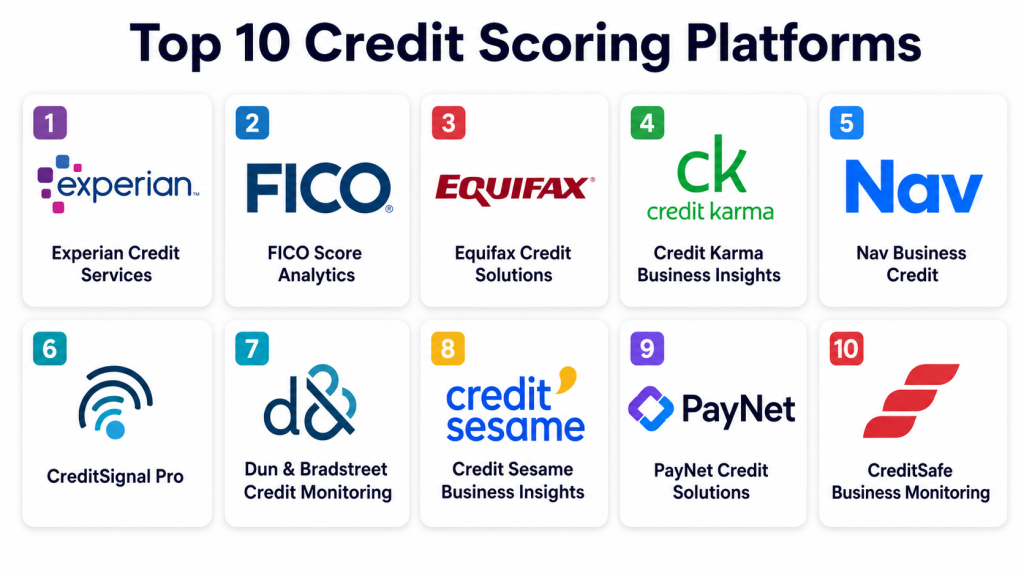
Top 10 Credit Scoring Platforms
#1 — Experian Credit Services
Short description :
Experian provides robust credit scoring and monitoring tools for both individuals and businesses. It offers comprehensive reporting, AI-driven insights, and risk management tools to help lenders make informed decisions.
Key Features
- Detailed credit reports and scoring models
- Predictive analytics for credit risk
- Fraud detection and monitoring
- Real-time alerts and notifications
- Business and consumer credit solutions
- Customizable dashboards
Pros
- Comprehensive coverage across multiple sectors
- Strong analytics and reporting capabilities
Cons
- Pricing can be high for small businesses
- Complexity may require training for new users
Platforms / Deployment
- Web / Windows / macOS / iOS / Android
- Cloud
Security & Compliance
- SOC 2, ISO 27001, GDPR compliance
- Encryption, SSO/SAML, audit logs, RBAC
Integrations & Ecosystem
Experian integrates widely with fintech apps, lending platforms, and ERP systems.
- APIs for credit data retrieval
- CRM and banking system integration
- Customizable data feeds
Support & Community
- Documentation and onboarding resources available
- Dedicated account managers for enterprise clients
- Active customer support and community forums
#2 — FICO Score Analytics
Short description :
FICO offers advanced credit scoring and predictive analytics tools, widely used by banks and lenders. The platform specializes in providing a reliable risk assessment framework and customizable scoring models.
Key Features
- FICO Score calculation and reporting
- Predictive risk modeling
- Automated decision rules
- Portfolio monitoring and analytics
- Custom scoring models
- Fraud and identity monitoring
Pros
- Widely recognized and trusted scoring methodology
- Strong analytics and risk management features
Cons
- Enterprise-focused pricing
- May require technical expertise for setup
Platforms / Deployment
- Web / Windows / macOS
- Cloud / Hybrid
Security & Compliance
- SOC 2, GDPR
- MFA, encryption, audit logging
Integrations & Ecosystem
- Banking and loan origination systems
- CRM and ERP integrations
- API support for custom workflows
Support & Community
- Enterprise support tiers
- Extensive documentation and training materials
#3 — Equifax Credit Solutions
Short description :
Equifax provides comprehensive credit scoring and reporting tools for individuals and businesses. It combines traditional credit data with alternative sources to enhance risk assessment accuracy.
Key Features
- Real-time credit score updates
- Fraud detection and alerts
- Alternative credit data integration
- Portfolio and lending analytics
- Customizable reporting dashboards
Pros
- Broad data coverage and analytics
- Reliable and scalable for enterprise use
Cons
- Limited SMB-focused features
- Some advanced features may require professional services
Platforms / Deployment
- Web / Windows / macOS / iOS / Android
- Cloud
Security & Compliance
- SOC 2, ISO 27001, GDPR
- Encryption, MFA, SSO/SAML
Integrations & Ecosystem
- API access for banking and lending apps
- CRM and ERP integrations
- Third-party analytics tools
Support & Community
- 24/7 enterprise support
- Documentation and online resources available
#4 — Credit Karma Business Insights
Short description:
Credit Karma focuses on consumer-friendly credit insights and business credit monitoring. It provides intuitive dashboards and alerts to help both individuals and small businesses manage credit effectively.
Key Features
- Free credit monitoring and reporting
- Personalized recommendations
- Real-time credit alerts
- Small business credit insights
- Educational content for credit management
Pros
- User-friendly interface
- Free basic credit tools for individuals
Cons
- Less suitable for large enterprises
- Limited advanced analytics
Platforms / Deployment
- Web / iOS / Android
- Cloud
Security & Compliance
- Encryption, MFA
- GDPR compliant
Integrations & Ecosystem
- Basic API access
- Integration with fintech budgeting apps
- Dashboard exports for reporting
Support & Community
- Online help center
- Community forums for peer support
#5 — Nav Business Credit
Short description:
Nav provides small business credit scores and financing options. It aggregates business credit data, financial transactions, and payment history to generate actionable insights for SMBs.
Key Features
- Business credit scores and reports
- Financing recommendations
- Real-time credit monitoring
- Multi-source data aggregation
- Risk and fraud detection
Pros
- Focused on SMBs and startups
- Actionable financing insights
Cons
- Enterprise functionality limited
- Advanced analytics less comprehensive
Platforms / Deployment
- Web / iOS / Android
- Cloud
Security & Compliance
- Encryption, MFA
- Not publicly stated
Integrations & Ecosystem
- API access for small business apps
- Integration with accounting software
- Data export for reporting
Support & Community
- Online support and resources
- Email and chat support
#6 — CreditSignal Pro
Short description :
CreditSignal Pro offers enterprise-focused credit monitoring and scoring for high-volume lenders and financial institutions. It emphasizes risk mitigation and automated workflows.
Key Features
- Automated credit score tracking
- Portfolio risk analytics
- Fraud detection and alerts
- Multi-entity reporting
- Customizable dashboards
Pros
- Strong automation capabilities
- Designed for enterprise-scale use
Cons
- Less accessible for small businesses
- Higher pricing tiers
Platforms / Deployment
- Web / Windows
- Cloud / Hybrid
Security & Compliance
- SOC 2, encryption, SSO
- GDPR compliant
Integrations & Ecosystem
- API integration with banking systems
- CRM integration
- Enterprise workflow connectors
Support & Community
- Dedicated account managers
- Documentation and onboarding guides
#7 — Dun & Bradstreet Credit Monitoring
Short description :
D&B provides credit insights, monitoring, and scoring for both small businesses and large enterprises. It emphasizes predictive analytics and global data coverage.
Key Features
- Business credit scores
- Predictive risk models
- Payment behavior insights
- Fraud and identity monitoring
- Global data coverage
Pros
- Extensive business data
- Trusted in enterprise lending
Cons
- Pricing may be high for SMBs
- Dashboard can be complex
Platforms / Deployment
- Web / Windows / macOS / iOS / Android
- Cloud
Security & Compliance
- SOC 2, ISO 27001
- MFA, encryption
Integrations & Ecosystem
- ERP and CRM integration
- API access for analytics
- Third-party data integrations
Support & Community
- Enterprise support tiers
- Online documentation and training
#8 — Credit Sesame Business Insights
Short description :
Credit Sesame provides consumer and small business credit scoring, monitoring, and insights with a focus on accessibility and user-friendliness.
Key Features
- Credit monitoring and alerts
- Identity protection
- Business credit insights
- Financial recommendations
- Dashboard for credit performance
Pros
- Intuitive interface
- Free options for individuals
Cons
- Limited advanced analytics for enterprises
- SMB-focused rather than enterprise-ready
Platforms / Deployment
- Web / iOS / Android
- Cloud
Security & Compliance
- Encryption, MFA
- Not publicly stated
Integrations & Ecosystem
- Integrates with fintech and budgeting apps
- Basic API support
- Reporting exports
Support & Community
- Help center and online resources
- Email and chat support
#9 — PayNet Credit Solutions
Short description:
PayNet focuses on commercial credit data, risk scoring, and portfolio analytics for lenders and financial institutions, helping them monitor business credit performance.
Key Features
- Business credit scoring
- Portfolio monitoring
- Risk alerts and predictive analytics
- Fraud detection
- Reporting and dashboards
Pros
- Commercial credit specialization
- Enterprise-grade data analytics
Cons
- Not designed for consumer credit
- Requires training to utilize full features
Platforms / Deployment
- Web / Windows
- Cloud / Hybrid
Security & Compliance
- SOC 2, encryption
- MFA, SSO
Integrations & Ecosystem
- ERP and CRM integration
- API access for analytics
- Portfolio management tools
Support & Community
- Dedicated enterprise support
- Documentation and onboarding
#10 — CreditSafe Business Monitoring
Short description :
CreditSafe provides real-time business credit monitoring, predictive analytics, and risk insights, targeting SMBs and large organizations alike.
Key Features
- Business credit scoring
- Risk alerts and monitoring
- Predictive analytics
- Payment behavior tracking
- Customizable dashboards
Pros
- Global business coverage
- Actionable credit insights
Cons
- Enterprise pricing may be high for SMBs
- Advanced analytics require professional services
Platforms / Deployment
- Web / Windows / macOS / iOS / Android
- Cloud
Security & Compliance
- SOC 2, ISO 27001
- Encryption and MFA
Integrations & Ecosystem
- API integrations with fintech and ERP
- CRM integration
- Dashboard exports
Support & Community
- Enterprise support available
- Online resources and documentation
Comparison Table (Top 10)
| Tool Name | Best For | Platform(s) Supported | Deployment | Standout Feature | Public Rating |
|---|---|---|---|---|---|
| Experian Credit Services | Lenders, SMBs, Enterprises | Web / Windows / macOS / iOS / Android | Cloud | Comprehensive credit reports | N/A |
| FICO Score Analytics | Banks, Enterprises | Web / Windows / macOS | Cloud / Hybrid | Predictive risk modeling | N/A |
| Equifax Credit Solutions | Financial institutions | Web / Windows / macOS / iOS / Android | Cloud | Alternative data integration | N/A |
| Credit Karma Business Insights | Consumers, SMBs | Web / iOS / Android | Cloud | Free consumer insights | N/A |
| Nav Business Credit | SMBs, Startups | Web / iOS / Android | Cloud | Actionable financing insights | N/A |
| CreditSignal Pro | Enterprise lenders | Web / Windows | Cloud / Hybrid | Automated workflows | N/A |
| Dun & Bradstreet Credit Monitoring | Enterprises, Lenders | Web / Windows / macOS / iOS / Android | Cloud | Global data coverage | N/A |
| Credit Sesame Business Insights | Consumers, SMBs | Web / iOS / Android | Cloud | Intuitive dashboards | N/A |
| PayNet Credit Solutions | Commercial lenders | Web / Windows | Cloud / Hybrid | Portfolio analytics | N/A |
| CreditSafe Business Monitoring | SMBs, Enterprises | Web / Windows / macOS / iOS / Android | Cloud | Real-time monitoring | N/A |
Evaluation & Scoring of Credit Scoring Platforms
| Tool Name | Core (25%) | Ease (15%) | Integrations (15%) | Security (10%) | Performance (10%) | Support (10%) | Value (15%) | Weighted Total (0–10) |
|---|---|---|---|---|---|---|---|---|
| Experian | 9 | 7 | 8 | 9 | 9 | 8 | 7 | 8.5 |
| FICO | 9 | 6 | 8 | 9 | 9 | 7 | 7 | 8.3 |
| Equifax | 8 | 7 | 7 | 9 | 8 | 8 | 7 | 8.0 |
| Credit Karma | 6 | 9 | 6 | 8 | 7 | 7 | 9 | 7.4 |
| Nav | 7 | 8 | 6 | 8 | 7 | 7 | 8 | 7.5 |
| CreditSignal | 8 | 6 | 7 | 9 | 8 | 8 | 7 | 7.9 |
| Dun & Bradstreet | 9 | 7 | 8 | 9 | 9 | 8 | 6 | 8.4 |
| Credit Sesame | 6 | 9 | 6 | 8 | 7 | 7 | 8 | 7.4 |
| PayNet | 8 | 7 | 7 | 9 | 8 | 8 | 7 | 7.9 |
| CreditSafe | 8 | 7 | 8 | 9 | 8 | 8 | 7 | 8.0 |
Interpretation: Weighted totals are comparative. Higher scores indicate stronger overall feature sets, usability, integrations, security, and value. Choose based on specific organizational needs.
Which Credit Scoring Tool Is Right for You?
Solo / Freelancer
- Credit Karma or Credit Sesame for free, intuitive credit tracking.
SMB
- Nav or CreditSafe for actionable insights and moderate cost.
Mid-Market
- Experian, Equifax, or PayNet for robust scoring, analytics, and reporting.
Enterprise
- FICO, Dun & Bradstreet, or CreditSignal Pro for predictive risk management and compliance-focused workflows.
Budget vs Premium
- Free or lower-cost tools for basic monitoring; premium platforms for comprehensive scoring, analytics, and integrations.
Feature Depth vs Ease of Use
- Consumer-focused tools prioritize ease; enterprise tools prioritize depth and advanced analytics.
Integrations & Scalability
- Ensure API support, CRM/ERP integration, and cloud deployment for long-term scalability.
Security & Compliance Needs
- SOC 2, ISO 27001, GDPR compliance essential for enterprise financial operations.
Frequently Asked Questions (FAQs)
1. How do credit scoring platforms calculate scores?
Credit scoring platforms combine financial history, payment behavior, public records, and other relevant data using proprietary algorithms. AI-driven platforms may also incorporate alternative data sources for predictive risk scoring.
2. What pricing models are common?
Models include subscription-based, per-query, or usage-based pricing. Enterprise plans often offer tiered pricing based on volume, features, and support.
3. How quickly can I onboard a platform?
Onboarding varies; consumer-focused platforms may take hours, while enterprise deployments can take weeks, depending on integration complexity.
4. Are these platforms secure?
Most enterprise platforms follow SOC 2, ISO 27001, and GDPR compliance standards. They typically offer encryption, MFA, SSO/SAML, and audit logs.
5. Can I integrate with my existing systems?
Yes, most platforms offer API access, connectors for CRM, ERP, and lending platforms, and some support custom workflows.
6. How accurate are the credit scores?
Accuracy depends on data completeness, algorithm transparency, and the inclusion of alternative data sources. Predictive AI features enhance reliability.
7. What are common mistakes using these platforms?
Mistakes include relying solely on the score without understanding context, neglecting compliance, and skipping integration testing.
8. Can these tools handle international credit data?
Enterprise platforms like Dun & Bradstreet and Experian have global coverage; smaller tools may be limited to local markets.
9. Is switching platforms difficult?
Migration requires careful mapping of data, scoring models, and integration points. Enterprise support can ease the process.
10. Are free platforms suitable for business decisions?
Free platforms provide basic monitoring and insights but are generally unsuitable for critical business lending decisions.
Conclusion
Choosing a credit scoring platform requires balancing accuracy, scalability, integrations, and security. SMBs may prioritize affordability and ease of use, while enterprises need predictive analytics, regulatory compliance, and robust support. Start by shortlisting platforms, test integrations and workflows, and validate security before full deployment. This ensures the platform aligns
