Upgrade & Secure Your Future with DevOps, SRE, DevSecOps, MLOps!
We spend hours scrolling social media and waste money on things we forget, but won’t spend 30 minutes a day earning certifications that can change our lives.
Master in DevOps, SRE, DevSecOps & MLOps by DevOps School!
Learn from Guru Rajesh Kumar and double your salary in just one year.
Introduction
Modern healthcare systems frequently present patients with a frustrating paradox: the absolute highest tier of clinical intervention exists, yet it is often rendered inaccessible by multi-month waiting queues or prohibitive private pricing models. For an individual managing a deteriorating joint condition or a progressive cardiovascular issue, time is just as valuable a resource as capital. As a result, modern healthcare consumers look beyond local borders, treating medical care as a global service. Driven by necessity, this shift has transformed India’s private healthcare infrastructure into a premier destination for complex, specialized medical procedures. When families look at overseas treatment options, they are not just looking for lower prices; they are looking for a seamless blend of clinical excellence, absolute safety, and predictable logistics. Navigating a foreign healthcare system requires moving past marketing claims and focusing on verifiable data, such as international safety accreditations, surgeon case volumes, and transparent pricing structures. Using an independent digital directory like MyMedicPlus simplifies this evaluation process, providing patients with the verified clinical data and cost structures needed to make objective, confident decisions.
What Is Medical Tourism in India?
Medical tourism in India is the strategic travel of international citizens to access accredited private healthcare facilities for complex surgical interventions. This ecosystem thrives by delivering clinical outcomes, advanced robotic technology, and globally trained specialists that match Western standards, while reducing overall medical expenditures by 60% to 80%.
Understanding Medical Tourism in India
What Is Medical Tourism?
At its core, global medical travel is a proactive decision by healthcare consumers to seek diagnostic, surgical, or rehabilitative care outside their home country. While historical trends saw patients moving from developing regions to Western medical centers, modern medical travel utilizes highly efficient, specialized hubs across Asia and Europe. Patients move strategically to bypass system delays, avoid extreme out-of-pocket costs, and access elite medical technology.
Why India Has Become a Leading Medical Tourism Destination
India’s prominence in the global medical landscape is built on continuous investment in its private medical infrastructure. Tier-1 metropolitan areas function as centralized medical hubs, featuring corporate healthcare networks that operate on a massive scale. These institutions prioritize rapid scheduling, high case volumes, and advanced technology, matching the safety standards of Western institutions while maintaining excellent accessibility.
Growth of International Patient Care
The infrastructure dedicated to international patients has evolved from basic administrative support into a highly specialized hospitality and navigation ecosystem. Modern corporate hospitals operate dedicated international pavilions completely separate from local outpatient workflows. These divisions employ multi-lingual case managers, handle international insurance verification, manage diplomatic visa communications, and coordinate continuity of care via telemedicine long after the patient returns home.
Key Advantages of Seeking Treatment in India
| Strategic Factor | India Private Care Infrastructure | High-Cost Western Alternatives |
| Scheduling Efficiency | Immediate access; open scheduling for major surgeries | Prolonged queues for elective or non-acute procedures |
| Clinical Compliance | Widespread JCI and premium national accreditations | Domestically regulated; high premium entry cost |
| Technological Parity | Universal availability of next-gen robotics and diagnostics | High asset-utilization friction; restricted regional access |
| Operational Costs | Optimized local cost structures and favorable exchange rates | High labor overheads and complex insurance administration |
In Simple Terms
Medical travel to India allows patients to access top-tier surgical care and modern hospital technology without waiting in line, while saving substantial amounts of money due to optimized local operational costs.
Real-World Example
An independent contractor facing severe spinal issues cannot afford the out-of-pocket costs of domestic private care, nor can they afford to wait months in a public health queue. By traveling to an accredited spinal center in Delhi, they undergo an advanced, minimally invasive microdiscectomy within days of arrival, saving over 70% compared to domestic options and returning to work months ahead of schedule.
Why It Matters
Understanding that India’s cost advantage is driven by lower local operational expenses and favorable currency exchange rates—rather than a compromise in clinical quality—gives families peace of mind. It allows them to focus on the quality of the care itself, knowing that safety and technology remain uncompromised.
Key Takeaways
- India’s clinical infrastructure balances high-end surgical precision with optimized cost structures.
- Dedicated international divisions prevent administrative delays and simplify logistics.
- Rapid clinical scheduling prevents conditions from worsening during long wait times.
- Widespread English fluency across medical teams ensures clear, direct clinical communication.
Best Hospitals in India for International Patients
What Makes a Hospital Suitable for International Patients?
Not every medical facility is equipped to handle the unique logistical and emotional pressures experienced by an international patient. Truly prepared institutions differentiate themselves by establishing dedicated clinical pathways designed to streamline care for overseas visitors, ensuring seamless treatment from pre-admission to discharge.
Accreditation Standards
Accreditation serves as a patient’s primary guarantee of quality and safety. The Joint Commission International (JCI) represents the global standard for healthcare quality auditing. When a facility in India maintains JCI accreditation, it means the operating theaters, infection control practices, and patient safety protocols follow the exact same guidelines as top-tier centers in New York or London.
Simultaneously, the National Accreditation Board for Hospitals & Healthcare Providers (NABH) enforces strict national operational benchmarks across Indian facilities.
International Patient Departments
A dedicated International Patient Service department operates as an on-site concierge and navigation team. These professionals manage all non-clinical details, removing administrative friction by:
- Issuing official visa invitation letters to streamline immigration approvals.
- Arranging dedicated airport tarmac or ambulance transfers.
- Providing continuous, real-time language interpretation across all medical shifts.
- Facilitating international wire transfers, currency exchange, and corporate insurance claims.
[International Patient Division]
       │
       ├──► Regulatory Visa Invitation Management
       ├──► Dedicated Airport Logistics & Tarmac Pickups
       ├──► Multi-Lingual Clinical Translation Services
       └──► Cross-Border Financial & Insurance Navigation
Specialist Availability
Top-tier hospitals maintain large, full-time faculties of senior consultants rather than relying on visiting doctors. A high percentage of these department heads have spent decades training or practicing in premier institutions across Europe and North America. This concentration of expertise allows hospitals to form multi-disciplinary medical boards that collaborate seamlessly on complex, multi-system cases.
Technology and Infrastructure
Leading Indian private medical centers prioritize investing in modern healthcare technology. Patients gain access to cutting-edge diagnostic and surgical platforms, including:
- Next-generation robotic surgical systems (such as the Da Vinci Xi) for highly precise, minimally invasive interventions.
- Dedicated oncology technologies like Proton Beam Therapy and the CyberKnife system for precise tumor targeting.
- Advanced hybrid operating rooms that combine high-resolution diagnostic imaging with real-time surgical capability.
Patient Support Services
Beyond clinical care, premier facilities focus heavily on patient comfort. This includes offering private suites with attached accommodations for family members, customizable international menus, and dedicated lounges for traveling companions.
Hospital Evaluation Checklist:
▢ Does the facility hold an active JCI or premium NABH accreditation?
▢ Is there a dedicated, full-time International Patient Service desk?
▢ Does the medical staff speak your preferred language fluently (or provide translators)?
▢ Are the specialized surgeons board-certified with verifiable international experience?
▢ Does the facility house modern intensive care units (ICUs) and diagnostic infrastructure?
In Simple Terms
The best hospitals for international patients combine rigorous global safety certifications with specialized guest services, ensuring that traveling patients are cared for both medically and logistically.
Real-World Example
A French-speaking patient from West Africa travels to New Delhi for complex spinal surgery. The chosen hospital assigns a dedicated French-speaking coordinator who meets them at the airport, translates every consultation with the neurosurgeon, manages their medical records, and organizes local accommodation for their spouse.
Why It Matters
Verifying a hospital’s specific international infrastructure ensures you will not face communication gaps, administrative delays, or unexpected logistical hurdles during your medical stay.
Key Takeaways
- Look for JCI and NABH accreditations to guarantee international safety standards.
- Dedicated international desks eliminate administrative friction for foreign citizens.
- High-end medical technology in India matches or exceeds standard Western hospital equipment.
- Seamless communication with your care team prevents clinical misunderstandings.
Treatment Cost in India Explained
Why Treatment Costs Vary
Medical pricing is not uniform across all facilities or regions. Rates fluctuate based on the hospital’s tier, the location of the city, the type of room selected, and the specific medical supplies used during the procedure. Understanding how these factors influence costs helps patients build practical, accurate medical budgets.
Factors Affecting Medical Expenses
Several variables contribute to the final hospital bill. The overall complexity of the patient’s condition dictates the length of their stay in the Intensive Care Unit (ICU) and general wards.
Furthermore, choice of materials—such as selecting a premium, long-lasting orthopedic implant versus a standard model—directly shifts the final price. The operating surgeon’s professional experience and seniority also influence the procedural fees.
Understanding Cost Transparency
Leading medical travel destinations focus heavily on transparent, all-inclusive pricing packages. These packages typically bundle the surgeon’s fees, operating theater charges, standard nursing fees, routine laboratory tests, and essential medications for a set number of days.
However, patients must always ask what is excluded from these quotes, such as extended ICU stays, unexpected complications, or take-home medications.
Planning Healthcare Budgets
| Cost Factor | Impact on Treatment Cost |
| Hospital Location | Tier-1 metropolitan cities (Mumbai/Delhi) generally have higher operational overheads than Tier-2 cities. |
| Implant/Prosthetic Origin | US-FDA approved imported implants cost significantly more than high-quality domestically manufactured alternatives. |
| Room Classification | Choosing a twin-sharing economy room over a luxury private suite drastically reduces daily accommodation expenses. |
| Comorbidities | Pre-existing conditions like diabetes or kidney issues require extra specialist consultations and monitoring. |
In Simple Terms
Treatment costs in India are highly affordable due to lower local operational expenses and favorable currency exchange rates. However, the final price depends on your specific health needs, room preference, and the exact medical materials used.
Real-World Example
A patient receives a medical quote of $6,000 for a procedure in India. They carefully read the breakdown and realize the package covers a 4-day stay. They sensibly budget an extra $1,500 to cover potential extra diagnostic tests, take-home prescriptions, and emergency reserve funds, ensuring they face zero financial surprises.
Why It Matters
Recognizing the components of a medical quote prevents unexpected financial stress, allowing patients to focus entirely on their physical recovery.
Key Takeaways
- Package prices offer excellent predictability but require careful reading of inclusions and exclusions.
- Favorable currency exchange rates are a major reason for India’s cost advantage.
- Always maintain an emergency financial buffer beyond the base medical quote.
- Pre-existing health conditions can change your treatment timeline and overall budget.
Knee Replacement Surgery Cost in India
Understanding Knee Replacement Procedures
Total or partial knee replacement surgery involves replacing a damaged, arthritic joint with a durable artificial implant. This surgery is highly effective at restoring mobility and eliminating chronic pain for individuals suffering from severe osteoarthritis. India’s leading orthopedic centers perform thousands of these procedures every year, utilizing advanced, minimally invasive surgical techniques.
[Damaged, Arthritic Joint] ──► [Minimally Invasive Surgery] ──► [Durable Artificial Implant]
Cost Factors
The total expense for a knee replacement in India generally ranges from $4,000 to $7,500 per knee, depending on the specific hospital and surgical approach. Key cost drivers include:
- The choice of implant material (such as highly durable Oxinium or Cobalt-Chromium alloys).
- Use of advanced computer-aided navigation or robotic-assisted surgical systems.
- The length of post-operative physical rehabilitation required in the hospital.
Hospital Selection Considerations
When planning orthopedic surgery, look for institutions that feature dedicated joint replacement pavilions. These specialized units maintain exceptionally low infection rates and employ physical therapy teams focused exclusively on getting joint replacement patients moving safely right after surgery.
Recovery and Rehabilitation Planning
Successful joint surgery depends heavily on early, structured physical therapy. Most international packages include daily physical therapy sessions during your hospital stay. Patients should plan to remain in India for roughly 10 to 14 days after discharge to complete initial recovery and attend essential follow-up checks before flying home.
In Simple Terms
Knee replacement in India offers a highly affordable way to restore your mobility using top-quality, internationally certified joint implants under the care of specialist orthopedic surgeons.
Real-World Example
An active senior citizen from Canada faces a year-long wait for a knee replacement while living in constant pain. They choose a top orthopedic hospital in Bengaluru, paying $5,500 for the procedure using a premium US-FDA approved implant. Within two weeks, they are walking comfortably and can safely board their flight home.
Why It Matters
Knowing the true costs and recovery timelines helps orthopedic patients arrange the necessary post-operative support and time off work for a smooth return home.
Key Takeaways
- Knee replacement costs in India are significantly lower than Western private care rates.
- Leading hospitals use the exact same premium, imported implants found in Western clinics.
- Specialized post-operative physical therapy is built directly into the care plan.
- Plan for a 2-week post-surgery stay to ensure safe travel clearance.
Heart Bypass Surgery Cost in India
Understanding Cardiac Surgery
Heart Bypass Surgery, or Coronary Artery Bypass Grafting (CABG), is a major surgical procedure used to treat severe coronary heart disease. It improves blood flow to the heart muscle by creating a detour around blocked arteries using healthy vessels harvested from other parts of the body. Indian cardiac centers are global leaders in “off-pump” or beating-heart bypass surgery, a technique that reduces surgical stress and speeds up recovery times.
Cost Components
A typical heart bypass surgery package in India ranges from $5,500 to $9,000, representing enormous savings compared to Western healthcare pricing. This comprehensive cost structure includes:
- Time spent in the specialized Cardiothoracic Intensive Care Unit (CT-ICU).
- Use of advanced heart-lung bypass machinery and specialized surgical consumables.
- Round-the-clock monitoring by cardiac intensivists and specialized nursing teams.
- Comprehensive post-operative diagnostic imaging, including echocardiograms and chest X-rays.
Choosing Cardiac Specialists
Given the complexity of open-heart surgery, selecting an elite cardiothoracic surgeon is vital. Focus on consultants who hold advanced fellowships from international boards and possess a documented track record of performing hundreds of successful bypass procedures annually, ensuring high success rates and minimized complication risks.
Recovery and Follow-Up Care
Cardiac recovery requires careful medical supervision. Patients typically spend 7 to 9 days inside the hospital, moving from the ICU to a private room. After discharge, staying nearby for another 2 weeks allows the surgical team to monitor wound healing, track heart rhythms, and safely adjust medications before approving international travel.
In Simple Terms
Heart bypass surgery in India provides access to elite cardiac surgeons and highly advanced intensive care units at a fraction of standard international costs, backed by comprehensive monitoring.
Real-World Example
A patient from the Middle East requires an urgent heart bypass. To avoid long waiting lists, they travel to a premier cardiac hospital in Mumbai. They undergo a successful beating-heart bypass surgery overseen by an expert team, recover in a specialized cardiac wing, and return home healthy within three weeks.
Why It Matters
Understanding the detailed steps of cardiac care helps families realize that affordable pricing still includes highly sophisticated intensive care monitoring and geographic safety protocols.
Key Takeaways
- Indian cardiac centers excel in advanced, minimally invasive beating-heart surgeries.
- Comprehensive cardiac packages cover intensive care, diagnostic imaging, and specialist monitoring.
- Surgeons often bring decades of valuable global clinical experience.
- Expect to spend 3 to 4 weeks in India for complete surgical monitoring and travel clearance.
Comparing India with Other Medical Tourism Destinations
While India is a major healthcare destination, patients often evaluate several options globally. Each medical travel hub presents distinct strengths regarding cost structures, regional specialties, and geographic accessibility.
| Destination | Cost Advantage | Treatment Availability | International Patient Support |
| India | Highest (60%–80% savings) | Exceptionally Broad (Cardiac, Ortho, Oncology, Transplants) | Excellent (Dedicated departments, English fluency) |
| Thailand | Moderate (50%–70% savings) | High (Cosmetic, Dental, Orthopedics, IVF) | Superb (Hospitality focused, strong translation support) |
| Turkey | Moderate (50%–65% savings) | Strong (Hair Transplants, Aesthetics, Bariatrics) | Good (Mainly caters to European and Euro-Asian markets) |
| Singapore | Low (10%–30% savings) | Extremely High (Complex Oncology, Neurology) | Excellent (Premium costs, highly regulated infrastructure) |
| UAE | Very Low (Premium pricing) | Growing (Specialized regional hubs) | Luxury Focus (Caters primarily to premium regional travelers) |
India vs Thailand
Thailand is famous for its hospitality-driven care and excels in cosmetic, dental, and wellness procedures. However, India holds a clear advantage for complex, life-saving interventions like open-heart surgeries, neurosurgery, and organ transplants, offering lower pricing for highly complex medical treatments.
India vs Turkey
Turkey is a popular hub for European patients seeking hair transplants, dental work, and bariatric care due to its close geography. India remains the preferred choice for major orthopedic reconstructions, complex cancer treatments, and advanced multi-organ transplants, drawing patients globally with its deep bench of senior clinical specialists.
India vs Singapore
Singapore delivers exceptional medical care but operates at a premium price point, offering modest savings compared to Western nations. India provides matching clinical technology and comparable success rates for highly complex surgeries at a fraction of Singapore’s overall cost.
India vs UAE
The UAE has built impressive, ultra-modern medical centers, primarily appealing to regional travelers in the Middle East. However, India offers a much larger pool of highly experienced senior doctors and significantly lower treatment costs, making it the practical choice for budget-conscious families.
How to Choose the Right Hospital
Selecting the ideal hospital requires analyzing verifiable data rather than relying on marketing claims. Using a structured evaluation framework helps ensure your chosen facility matches your specific medical needs.
[Verify Accreditation] ──► [Evaluate Surgeon] ──► [Analyze Package] ──► [Assess Support]
Evaluate Accreditation
Always verify active certifications from international bodies like JCI or national frameworks like NABH. These accreditations guarantee that the hospital adheres to strict infection control, patient privacy, and clinical safety standards.
Review Specialist Experience
Research the specific department handling your procedure. Ensure the hospital features a dedicated team of senior consultants who specialize in your exact condition, rather than general practitioners.
Compare Treatment Costs
Request a clear, itemized cost estimate. Compare packages across multiple accredited hospitals to ensure the pricing is competitive and clearly details all included services, routine medications, and ward charges.
Understand Support Services
Inquire about the hospital’s international patient infrastructure. Ensure they provide dedicated coordinators, seamless airport logistics, and reliable assistance with visa renewals or emergency extensions.
Verify Patient Care Standards
Look into the hospital’s documented clinical outcomes, such as certified success rates and post-surgical infection statistics. This data provides a clear picture of the facility’s day-to-day operational quality.
How to Choose the Right Doctor
Your choice of surgeon directly impacts your treatment outcome. Take the time to carefully evaluate your specialist’s professional credentials and clinical background before finalizing your travel plans.
Doctor Evaluation Checklist:
▢ Does the physician hold recognized board certifications and advanced clinical degrees?
▢ Has the doctor completed international fellowships or practiced in Western healthcare systems?
▢ How many times does the specialist perform this exact procedure each year?
▢ Can the doctor communicate clearly in your language during video consultations?
▢ Are there positive, independent reviews from past international patients?
▢ Does their overall treatment philosophy match your personal comfort and recovery goals?
Planning Your Medical Journey
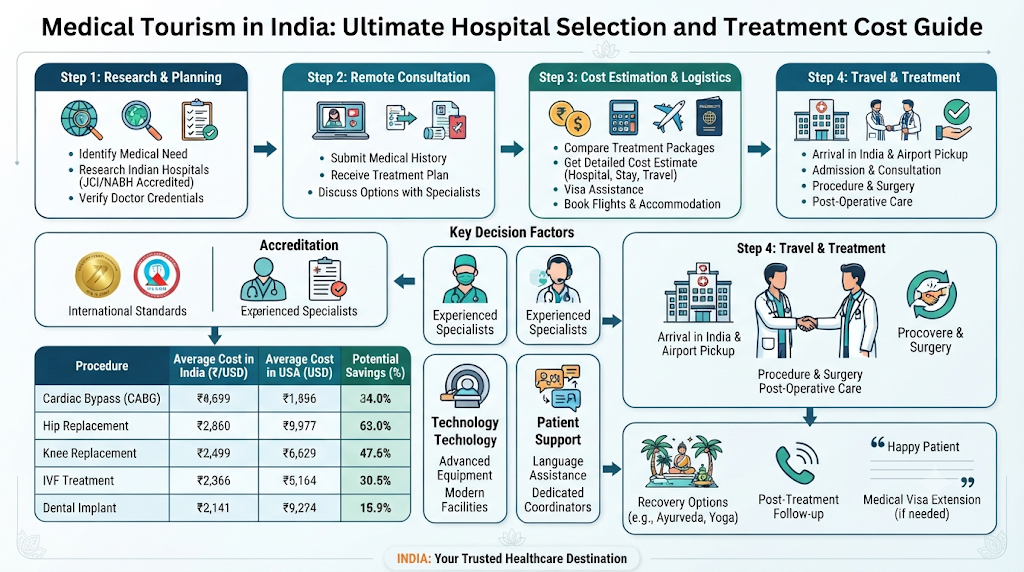
A successful medical trip requires systematic planning. Following a structured roadmap ensures every step—from initial research to returning home—is managed safely and efficiently.
  [1. Research & Consult]
            │
            ▼
  [2. Cost & Logistics]
            │
            ▼
  [3. Travel & Treatment]
            │
            ▼
  [4. Recovery & Follow-Up]
1. Initial Research & Treatment Consultation
Begin by gathering your complete medical history, diagnostic images, and current prescriptions. Share these files securely with your chosen hospital or advisory platform to arrange an initial video consultation with the attending specialist. This conversation confirms your diagnosis and establishes a preliminary care plan.
2. Cost Estimation & Travel Preparation
Request a detailed, binding medical cost estimate based on your consultations. Once you accept the terms, the hospital issues an official medical visa invitation letter. Secure your Medical Visa (e-Medical Visa), book flexible round-trip flights, and arrange nearby accommodations for your accompanying family members.
3. Treatment, Recovery, & Follow-Up Care
Upon arrival, you will undergo final pre-operative testing before checking into the hospital for your procedure. Following surgery and the initial ward recovery, you will transition to a nearby hotel for outpatient follow-up checks.
Before flying home, ensure your medical team provides a detailed discharge summary, complete post-operative prescriptions, and an official “fit-to-fly” certificate.
How MyMedicPlus Helps Patients
Navigating medical systems in a foreign country can be intimidating. The MyMedicPlus platform simplifies this journey by acting as a digital guide, offering independent information to help international patients plan their care with confidence.
Hospital Discovery & Treatment Research
The platform lets users browse and evaluate accredited Indian hospitals based on location, specialization, and independent quality ratings. This eliminates guesswork, allowing families to easily find facilities equipped to handle their specific medical conditions.
Cost Awareness & Healthcare Guidance
MyMedicPlus promotes clear, reliable pricing by offering accurate data on treatment costs in India. By outlining typical package inclusions and exclusions, the platform helps patients plan reliable medical budgets and avoid unexpected out-of-pocket expenses.
Medical Tourism Support & Better Decision-Making
By providing independent information on hospital credentials and specialist backgrounds, the platform bridges the gap between distant patients and local healthcare systems. This comprehensive approach empowers families to make informed, confident choices for their medical travel.
Real-World Patient Scenarios
International Patient Seeking Knee Replacement
- Challenge: A 62-year-old independent contractor in New Zealand faces severe knee pain from osteoarthritis. Local private surgery costs are too high, and public waiting lists stretch past 14 months, threatening their livelihood.
- Research Process: The patient uses independent online resources to compare accredited orthopedic departments in India, focusing on JCI certifications and robotic-assisted surgery options.
- Decision Factors: They select a specialized joint replacement hospital in Hyderabad that offers a transparent package price of $5,200, featuring a high-end, internationally certified implant and built-in physical therapy.
- Outcome: The surgery is successful, and intensive physical therapy begins on day one. The patient returns home within two weeks, experiences a full recovery, and returns to work pain-free months ahead of their original domestic schedule.
Cardiac Surgery Patient
- Challenge: A 45-year-old expat living in East Africa requires an urgent heart bypass due to multiple arterial blockages, but local specialized cardiac facilities are limited.
- Research Process: The family gathers medical records and searches for top cardiothoracic surgeons in India who specialize in advanced, off-pump beating-heart surgery.
- Decision Factors: They choose an elite cardiac institute in Chennai based on its low post-operative infection rates and the senior surgeon’s extensive fellowship training in the UK.
- Outcome: The patient undergoes a smooth, beating-heart bypass procedure. Following a scheduled 8-day hospital stay and a 2-week local recovery period, they receive full clearance to fly home with restored heart health.
Family Researching Treatment Options
- Challenge: A family in Bangladesh needs to find advanced pediatric neurosurgery for their young child, requiring a facility that combines high-end surgical technology with affordable accommodations.
- Research Process: The parents compare multi-specialty private hospitals in Kolkata and New Delhi, focusing on dedicated pediatric intensive care units (PICUs) and translation support.
- Decision Factors: They choose a prominent hospital group in Delhi that provides a dedicated international coordinator, an all-inclusive care package, and affordable long-stay guest housing near the clinic.
- Outcome: The complex neurosurgery is completed successfully. The family stays in comfortable nearby accommodations during outpatient check-ups, receiving continuous support from the hospital’s dedicated international desk throughout their stay.
Budget-Conscious Medical Tourist
- Challenge: An uninsured individual in the United Kingdom requires a complex bariatric procedure to manage severe health complications, but domestic private fees are financially out of reach.
- Research Process: The patient researches affordable global healthcare options, comparing treatment packages, hospital accreditations, and total travel costs across Europe and Asia.
- Decision Factors: They select a highly rated, NABH-accredited metabolic health center in Ahmedabad, India, which offers a clear package at roughly 25% of the cost of UK private clinics.
- Outcome: The procedure goes smoothly with no complications. By choosing a high-quality Tier-2 city, the patient minimizes non-medical living expenses while receiving world-class clinical care, returning home safely within their target budget.
Benefits of Using MyMedicPlus
- Access to Trusted Information: Browse a curated list of accredited hospitals and verified medical specialists across India.
- Better Cost Awareness: Review transparent cost guidelines to plan accurate, realistic medical travel budgets.
- Simplified Research Process: Compare multiple world-class facilities on a single platform, saving hours of independent research.
- Improved Treatment Planning: Access structured timelines and checklists that make organizing your medical trip simple and organized.
- Greater Patient Confidence: Travel with peace of mind, knowing your chosen hospital meets strict global quality and safety standards.
Common Mistakes Patients Make
Choosing Based Only on Price
Selecting a hospital or doctor solely because they offer the lowest quote can lead to major issues. Strikingly cheap rates may indicate a lack of proper accreditations, outdated technology, or hidden, unquoted medical fees.
Ignoring Hospital Quality
Failing to confirm international accreditations like JCI or premium NABH statuses leaves patients exposed to varying safety standards and poor infection control protocols.
Not Understanding Full Costs
Assuming your initial medical quote covers every possible expense often leads to budgeting issues. Patients must clarify if take-home medications, specialized implants, or extra recovery days are excluded from the base price.
Skipping Follow-Up Planning
Many travelers focus completely on the surgery itself while failing to organize local rehabilitation or find a doctor at home willing to manage their long-term post-operative care.
Failing to Compare Options
Booking the very first medical facility you find prevents you from discovering better-equipped departments, more experienced specialists, or more competitive care packages.
Common Mistakes Checklist:
▢ Did you prioritize verified clinical accreditations over simply choosing the lowest price?
▢ Have you confirmed exactly what is excluded from your hospital package quote?
▢ Do you have a clear plan for your post-operative rehabilitation and local recovery stay?
▢ Have you arranged for a doctor in your home country to handle your long-term follow-up care?
▢ Did you compare multiple accredited facilities to find the best match for your surgery?
Medical Tourism Planning Checklist
Before Choosing a Hospital
- Verify the facility holds an active JCI or premium national NABH accreditation.
- Confirm the hospital features a full-time, dedicated International Patient Service department.
- Check that the department specializes in your specific procedure and holds high success rates.
Before Choosing a Doctor
- Review the specialist’s medical board certifications and international fellowship history.
- Confirm how many times the surgeon performs your specific procedure each year.
- Arrange an initial video consultation to discuss your treatment plan and expectations.
Before Traveling
- Secure your official Indian Medical Visa (e-Medical Visa) and print all confirmation documents.
- Book flexible round-trip flights that easily accommodate unexpected changes in your recovery timeline.
- Pack organized hard copies of your complete medical history, diagnostic scans, and current prescriptions.
During Treatment
- Clearly communicate all pre-existing allergies and current medications to your admitting nursing team.
- Clarify daily progress reports and planned medication adjustments with your attending consultant.
- Keep your dedicated international patient coordinator updated on any administrative or logistical needs.
During Recovery
- Adhere strictly to your customized physical therapy and post-operative recovery schedule.
- Secure your comprehensive discharge summary, itemized bills, and an official “fit-to-fly” certificate.
- Coordinate your long-term follow-up schedule and prescription details before heading to the airport.
Future of Medical Tourism in India
The landscape of international healthcare travel is evolving rapidly, driven by major technological advancements and a strong focus on the patient experience. Digital healthcare platforms are leading this change, transforming how international patients research, evaluate, and select overseas medical treatments. These tools replace confusing, scattered searches with clear, centralized information on clinical quality and treatment costs.
At the same time, specialized research tools and digital communication networks make connecting with global medical experts seamless. Patients can now securely share diagnostic images, receive detailed secondary opinions, and arrange comprehensive video consultations long before booking a flight. This early digital connection ensures treatment plans are well-established before travel begins.
Furthermore, modern healthcare travel providers focus heavily on personalized patient support and cost transparency. By delivering accurate, all-inclusive pricing data and clear insights into hospital performance, the industry eliminates unexpected costs.
As these technologies advance alongside enhanced international patient support systems, India’s medical travel sector will continue to provide an accessible, safe, and highly efficient option for families seeking top-tier healthcare worldwide.
Why Patients Trust MyMedicPlus
Patient-Centered Information
MyMedicPlus prioritizes the patient’s needs by providing independent, practical data on international healthcare options, ensuring families can research medical solutions clearly and without bias.
Healthcare Transparency
The platform stands for clarity in medical pricing by offering reliable insights into treatment costs in India, helping travelers understand package details and build practical budgets with confidence.
Treatment Research Support
By centralizing verified details on hospital credentials and doctor experience, the platform simplifies complex healthcare research, turning an overwhelming journey into a manageable process.
Medical Tourism Guidance & Healthcare Decision Assistance
MyMedicPlus helps bridge the gap between global patients and accredited medical centers. By offering reliable resources and clear planning tools, it helps users make informed, safe, and logical healthcare decisions.
FAQ Section
What is medical tourism in India?
Medical tourism in India describes the intentional travel of global citizens to utilize accredited Indian private medical centers for specialized surgical interventions. This segment thrives because it offers cutting-edge clinical technology and globally certified doctors at rates significantly more accessible than Western private clinics.
Why do international patients choose India?
Overseas patients prioritize India to eliminate long waiting lines for essential surgeries and avoid high domestic healthcare bills. The country features extensive networks of JCI-accredited facilities, highly advanced diagnostic tools, and comprehensive international support departments that remove administrative hassle.
How much does treatment cost in India?
Treatment pricing fluctuates based on the procedural complexity, hospital tier, and chosen room category, but typically delivers a 60% to 80% reduction compared to Western financial models. Most centers utilize structured, predictable care packages that cover standard surgical, nursing, and basic pharmaceutical costs.
What is the knee replacement surgery cost in India?
A typical knee replacement procedure in India scales between $4,000 and $7,500 per joint. This cost range is influenced by the specific implant material chosen, the integration of robotic navigation systems, and the volume of post-operative physical therapy required during your hospital stay.
What is the heart bypass surgery cost in India?
Cardiovascular bypass packages generally range from $5,500 to $9,000. This fixed rate encompasses the primary open-heart or beating-heart surgical intervention, localized intensive care (CT-ICU) residency, continuous specialized monitoring, and necessary post-operative diagnostic scanning.
How do I choose the best hospital in India?
Focus your research on facilities maintaining active certifications from recognized auditing groups like JCI or the national NABH framework. Furthermore, ensure the facility provides a full-time international patient department, utilizes modern intensive care infrastructure, and maintains an experienced team specializing in your exact condition.
How can I compare treatment costs?
Request formal, written medical quotes from several accredited facilities based on your up-to-date diagnostic records. Review these files closely to determine which services are covered by the package pricing, and ask explicitly about potential exclusions like extended ICU monitoring or take-home supplies.
Is India safe for medical tourism?
Yes, traveling to India for medical procedures is safe, provided you choose an elite, JCI or NABH-accredited private institution. These top-tier networks strictly follow international patient safety, sterilization, and infection control benchmarks that match standard Western hospital protocols.
How does MyMedicPlus help patients?
MyMedicPlus functions as an independent digital reference platform, helping users browse, research, and evaluate accredited Indian hospitals and verified specialists. By organizing clear data on credentials and pricing structures, it helps families streamline their research and make objective choices.
What should I consider before traveling for treatment?
Ensure your e-Medical Visa is finalized, and secure flexible flights that easily adjust to your recovery rate. Organize physical copies of your complete medical history, and maintain an emergency financial buffer to cover local living and post-operative accommodation expenses comfortably.
Final Summary
Global medical travel to India offers a highly effective, dependable path for individuals navigating system wait times or unaffordable private care rates in their home countries. By combining highly advanced clinical infrastructure, JCI-accredited safety environments, and globally trained surgical experts with optimized local pricing, India allows international patients to access critical treatments with complete peace of mind. However, achieving an optimal outcome requires a methodical approach. True success relies on verifying active hospital accreditations, analyzing surgeon case histories, understanding full package cost structures, and setting aside adequate time for local post-operative recovery before traveling back home.
