Upgrade & Secure Your Future with DevOps, SRE, DevSecOps, MLOps!
We spend hours scrolling social media and waste money on things we forget, but won’t spend 30 minutes a day earning certifications that can change our lives.
Master in DevOps, SRE, DevSecOps & MLOps by DevOps School!
Learn from Guru Rajesh Kumar and double your salary in just one year.
Introduction
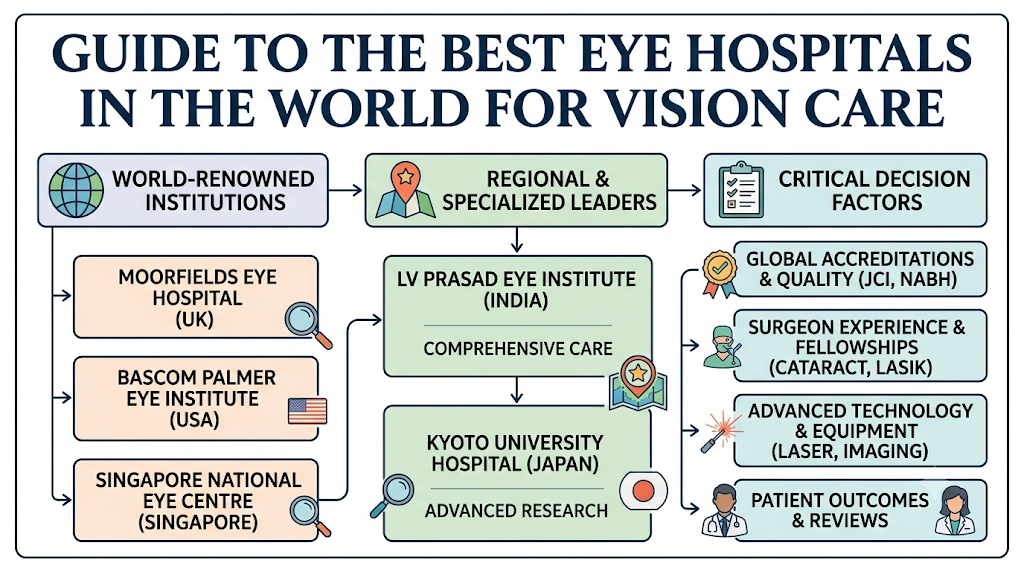
Navigating the complexities of vision care can be overwhelming, especially when faced with serious eye diseases or life-changing procedures. Finding premier clinical centers is crucial for protecting your sight. Selecting the right facility ensures access to advanced diagnostic imaging, leading retina specialist teams, and high clinical standards. By exploring patient-focused platforms like best eye hospitals, individuals can easily compare medical facilities, verify hospital accreditation, and evaluate treatment costs. This comprehensive educational guide helps you understand what defines the best eye hospitals in the world, compares popular treatment pathways, and outlines practical steps for choosing the right ophthalmology clinic for your unique visual needs.
Why Choosing the Right Eye Hospital Matters
Selecting an eye clinic is not just about proximity; it is about protecting your precious sense of sight. The best ophthalmology hospitals combine state-of-the-art diagnostic imaging with the clinical expertise of renowned specialists. Whether you are dealing with a common refractive error or a complex condition requiring a retina specialist or cornea specialist, the caliber of the institution directly influences your care journey.
Superior institutions place a heavy emphasis on patient safety, low infection rates, and optimized clinical workflows. Additionally, top-tier clinical settings provide comprehensive pre-operative evaluations and structured recovery protocols. By choosing highly rated eye surgery hospitals, patients gain access to multidisciplinary medical teams who collaborate on challenging cases, offer second medical opinion services, and follow international healthcare quality protocols.
Key Factors to Compare Eye Hospitals
Hospital Accreditation and Patient Safety
When comparing global medical providers, international accreditations such as Joint Commission International (JCI) or national standards like India’s NABH are critical markers of healthcare quality. These external validations confirm that the facility strictly adheres to rigorous patient safety standards, utilizes sterile surgical environments, and maintains highly trained clinical staff.
Technological Advancements and Vision Care Technology
The best eye surgery hospitals invest heavily in modern laser eye surgery systems, advanced diagnostic imaging, and micro-incision tools. Whether it is femtosecond lasers for cataract extraction or topography-guided systems for custom refractive surgery, advanced technology ensures higher precision and smoother recovery times for patients.
Comprehensive Specialization
A well-rounded eye hospital should feature dedicated departments for various eye diseases. Look for centers that house sub-specialties under one roof, including glaucoma treatment, pediatric ophthalmology, oculoplastics, and cornea services. Having a dedicated eye surgeon for each specific branch guarantees highly targeted and specialized care.
Understanding Popular Vision Correction Surgeries
To help you understand different vision care options, we have structured clear comparisons of common surgical paths, provider roles, and technological options.
Cataract Surgery vs. LASIK Surgery
| Feature | Cataract Surgery | LASIK Surgery |
| Primary Purpose | Replacing a cloudy natural lens with a clear artificial intraocular lens (IOL). | Reshaping the cornea to correct refractive errors like myopia, hyperopia, and astigmatism. |
| Suitable Patients | Individuals suffering from age-related lens clouding or visual impairment. | Adults with stable vision seeking freedom from glasses or contact lenses. |
| Advantages | Restores clear vision; can correct presbyopia with premium multifocal lenses. | Rapid visual recovery, minimal discomfort, and highly precise visual correction. |
| Limitations | Requires a healing period; potential minor side effects like halos or glare. | Not suitable for patients with thin corneas, severe dry eyes, or high refractive errors. |
| Cost Considerations | Moderate; often covered by health insurance depending on the choice of IOL. | Generally considered an elective cosmetic procedure, requiring self-funding. |
Ophthalmologist vs. Optometrist
| Feature | Ophthalmologist | Optometrist |
| Training & Education | Medical Doctor (MD or DO) with specialized residency in ophthalmology. | Doctor of Optometry (OD) degree from an accredited optometry school. |
| Primary Scope | Diagnosing eye diseases, performing complex eye surgery, prescribing medications. | Performing eye examinations, prescribing corrective lenses, managing basic vision issues. |
| Surgical Capability | Fully licensed to perform laser eye surgery, cataract removal, and retina treatments. | Non-surgical; limited in some regions to minor minor laser procedures or office treatments. |
| Suitable Patients | Patients requiring specialized surgical interventions or chronic disease management. | Patients needing routine vision screenings, contact lenses, or glasses updates. |
| Cost Considerations | Generally higher consultation fees due to advanced medical specialization. | More budget-friendly for primary eye examinations and routine wellness care. |
Traditional Cataract Surgery vs. Laser-Assisted Cataract Surgery
| Feature | Traditional Cataract Surgery | Laser-Assisted Cataract Surgery (FLACS) |
| Surgical Technique | Manual incisions made using a micro-keratome blade by the surgeon. | Computer-guided femtosecond laser makes precise incisions and softens the cataract. |
| Astigmatism Correction | Limited manual correction; relies mostly on post-operative corrective lenses. | Highly precise integrated astigmatism correction during the initial incision stage. |
| Recovery Profile | Excellent outcomes, though physical healing of manual cuts may take slightly longer. | Extremely rapid cellular healing due to highly localized, low-energy laser tissue cuts. |
| Suitable Patients | Patients seeking cost-effective, time-tested cataract removal solutions. | Patients seeking ultra-precise lens placement and custom astigmatism correction. |
| Cost Considerations | Typically lower; standard options are widely covered by public and private insurance. | Premium pricing; generally requires an out-of-pocket surcharge for the laser technology. |
Navigating Eye Care and Costs in India
For patients worldwide, India has emerged as a premier destination for advanced medical care. The country boasts some of the best eye hospitals in India, renowned for combining world-class clinical talent with highly affordable care models. Patients can consult with the best eye doctors in India, many of whom have completed fellowships at elite global institutions and possess decades of specialized surgical experience.
Cost-efficiency is a major factor driving international medical tourism to the region. For instance, the cataract surgery cost in India is a fraction of what patients typically pay in Western countries, without any compromise on clinical safety or lens quality. Similarly, the LASIK surgery cost in India makes advanced laser vision correction accessible to a much wider demographic.
When searching for the best hospitals for cataract surgery or the best hospitals for LASIK surgery, patients can choose from highly accredited private eye clinics and dedicated healthcare networks across major metropolitan areas. These facilities provide comprehensive international patient services, including language translators, visa assistance, and specialized post-operative recovery planning.
Expert Tips for Selecting Your Eye Specialist
Selecting the right professional is just as important as choosing the physical clinic. Consider these expert tips:
- Verify Credentials and Fellowship Training: Ensure your surgeon has completed advanced fellowship training in their specific sub-specialty, such as refractive surgery, cornea, or vitreoretinal diseases.
- Ask About Volume and Success Rates: Inquire about how many procedures of your specific type the specialist performs annually. High-volume surgeons generally maintain lower complication rates.
- Seek a Second Medical Opinion: For major diagnoses, never hesitate to obtain a second medical opinion. Reputable physicians always welcome collaborative perspectives to secure patient peace of mind.
- Assess Communication Comfort: Choose a doctor who takes the time to explain your diagnostic imaging results, potential treatment risks, and recovery timelines in clear, everyday language.
Best Practices for Planning Your Treatment and Recovery
A successful clinical outcome depends heavily on thorough preparation and disciplined post-operative care.
- Schedule a Comprehensive Baseline Eye Examination: Before booking any surgery, undergo a dilated eye exam to rule out underlying issues like dry eye syndrome, elevated intraocular pressure, or retinal thinning.
- Provide a Complete Medical History: Disclose all current medications, systemic health conditions (such as diabetes or hypertension), and allergies during your initial consultation.
- Follow Post-Operative Drop Schedules Deliberately: Prescribed antibiotic and anti-inflammatory eye drops are vital to prevent infection and control inflammation. Administer them exactly as directed.
- Protect Your Eyes from Physical Trauma: Wear protective shields during sleep, avoid rubbing your eyes, and stay away from dusty environments or swimming pools for the recommended recovery duration.
Common Mistakes Patients Make When Choosing Care
- Prioritizing Cost Over Quality: Opting for the cheapest surgical option without researching the hospital’s safety record, accreditation, or surgeon credentials can lead to compromised outcomes.
- Ignoring Sub-Specialty Expertise: Assuming any general ophthalmologist can perform specialized retina or cornea procedures. Complex eye diseases require targeted training.
- Skipping Pre-Operative Evaluations: Skipping or rushing thorough diagnostic testing increases the risk of choosing an unsuitable procedure, particularly in elective refractive surgeries.
- Underestimating Recovery Needs: Planning heavy physical activity, travel, or work immediately after surgery can delay healing and trigger complications. Give your eyes ample rest.
Frequently Asked Questions
What is the difference between an ophthalmologist and an optometrist?
An ophthalmologist is a medical doctor trained to diagnose, treat, and perform surgery on complex eye conditions. An optometrist is a primary vision care professional who conducts eye examinations, prescribes corrective lenses, and manages basic vision changes.
Are private eye surgery hospitals better than government ones?
Private eye clinics often offer faster access to care, advanced diagnostic imaging, personalized services, and premium elective procedures like custom LASIK. Government hospitals provide affordable, high-quality essential services but may feature longer waiting lists.
What factors affect the cataract surgery cost in India?
The overall price is influenced by the hospital’s location, the technology used (manual vs. laser-assisted), the surgeon’s clinical expertise, and your choice of intraocular lens (monofocal, multifocal, or toric).
Is LASIK surgery permanent?
Yes, LASIK permanently reshapes the cornea to correct refractive errors. However, it cannot prevent natural age-related changes, such as presbyopia (needing reading glasses) or cataracts, from developing later in life.
How do I check if an eye clinic is properly accredited?
Look for recognized quality seals on the clinic’s official website or patient portal. Major international accreditation boards include JCI, while national boards like NABH operate within India.
What is a retina specialist and when should I see one?
A retina specialist is an ophthalmologist focused on vitreoretinal diseases. You should see one for conditions like diabetic retinopathy, macular degeneration, retinal detachment, or persistent flashes and floaters.
How long does recovery take after laser eye surgery?
Most patients notice improved vision within 24 hours of laser eye surgery. While minor dry eyes or glare may persist for a few weeks, complete corneal stabilization typically occurs within three to six months.
Can I travel immediately after undergoing cataract surgery?
Most eye doctors advise against long-distance travel, especially flying, for at least a week after surgery. This precaution ensures you are nearby for essential post-operative follow-up appointments.
Why is India popular for international vision care patients?
India offers some of the best eye hospitals in the world at highly competitive prices. Patients benefit from experienced bilingual doctors, modern surgical facilities, and dedicated international patient services.
Is a second medical opinion necessary before eye surgery?
While not mandatory, a second medical opinion provides valuable reassurance, helps confirm your diagnosis, and ensures you are exploring all available surgical or non-surgical treatment alternatives.
What are the risks of choosing the cheapest LASIK surgery cost in India?
Extremely low prices might indicate outdated technology, a lack of comprehensive pre-operative screening, or surgeons with limited experience, which can increase your risk of post-operative complications.
Does health insurance cover laser vision correction?
In most cases, elective laser eye surgery for vision correction is considered a cosmetic procedure and is not covered. However, some premium insurance plans offer partial coverage or discounts.
What is the success rate of modern cataract procedures?
Modern cataract removal is one of the safest and most successful procedures worldwide, boasting a success rate of over 95% in restoring clear vision when performed by experienced specialists.
What diagnostic imaging is done before refractive surgery?
Pre-operative checks typically include corneal topography (mapping corneal curvature), pachymetry (measuring corneal thickness), dry eye analysis, and detailed pupillometry to ensure you are a safe candidate.
How can I find the best hospitals for cataract surgery?
You can find top-tier facilities by reviewing hospital accreditations, comparing patient success rates, reading certified reviews, and utilizing dedicated comparative platforms like BestEyeHospitals.com.
Conclusion
Protecting your vision is a lifelong commitment that starts with making highly informed, research-driven decisions. Finding the best eye hospitals in the world requires careful analysis of clinical accreditations, specialized technology, and the background of your chosen ophthalmologist. Whether you are researching cataract surgery cost in India, planning a laser vision correction procedure, or looking for a world-class cornea specialist, utilizing structured comparison tools simplifies your journey. By taking charge of your eye care decisions, asking the right questions, and following clinical best practices, you can confidently preserve your eyesight and secure the brightest possible visual future.
