Upgrade & Secure Your Future with DevOps, SRE, DevSecOps, MLOps!
We spend hours scrolling social media and waste money on things we forget, but won’t spend 30 minutes a day earning certifications that can change our lives.
Master in DevOps, SRE, DevSecOps & MLOps by DevOps School!
Learn from Guru Rajesh Kumar and double your salary in just one year.
Introduction
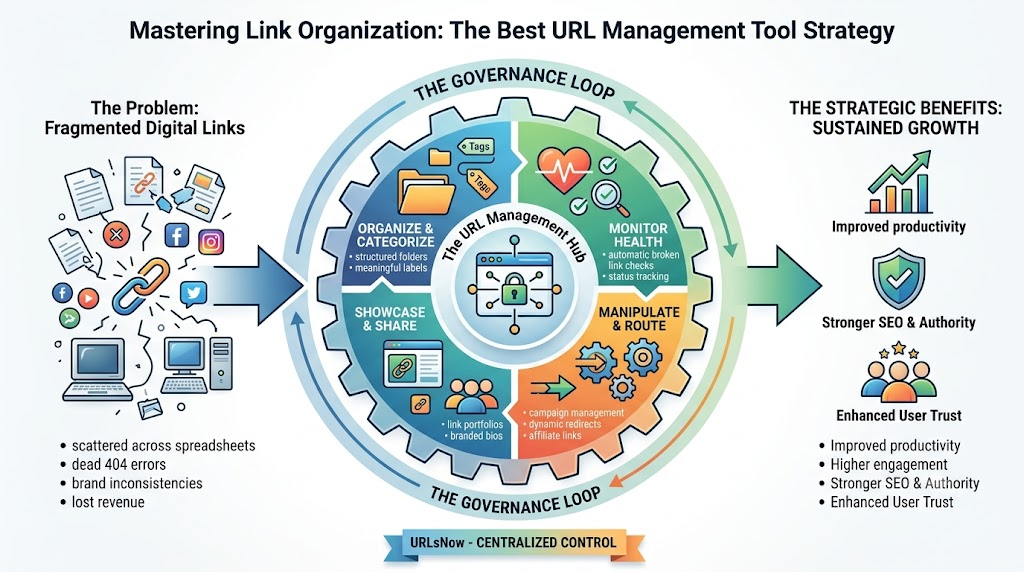
In today’s hyper-connected digital landscape, managing your online assets effectively is critical to maintaining a professional web presence. From content creators and digital marketers to enterprise agencies and developers, individuals across every sector generate hundreds of links monthly. However, when these resources are scattered across random browser bookmarks, chaotic spreadsheets, and disparate chat applications, inefficiency reigns. Broken links go unnoticed, campaigns lose tracking precision, and valuable digital content gets lost in the noise. Centralizing your links eliminates this friction, transforming a disorganized web presence into a streamlined, high-performing asset engine. Implementing a dedicated URL management tool allows you to structure your digital ecosystem, automate health audits, and improve overall productivity. Solutions like URLsNow simplify this process by offering a unified workspace where you can categorize, monitor, and share links effortlessly.
What Is a URL Management Tool?
A URL management tool is a centralized software application designed to help individuals and organizations catalog, structure, monitor, and distribute web links from a unified interface. Rather than relying on static, single-browser bookmarking systems or unorganized documents, modern link management solutions treat URLs as dynamic assets that require ongoing maintenance, categorized grouping, and performance tracking.
How URL Management Works
Link management platforms operate by ingesting web links and organizing them into structured databases. Users can assign metadata, custom tags, nested folders, and context-rich titles to every entry. Advanced platforms continuously ping these destination URLs to verify HTTP status codes, ensuring that every asset remains active, secure, and accessible to target audiences.
Why Link Organization Matters
As your digital footprint expands, unorganized links lead to operational bottlenecks. Finding a specific campaign landing page or client resource can waste valuable time. Proper link organization creates an intuitive repository where assets can be retrieved instantaneously by team members, clients, or followers.
Benefits of Centralized URL Management
Adopting a URL management tool provides immediate structural advantages. It transforms chaotic web references into searchable, structured databases. Furthermore, utilizing a centralized link management platform reduces redundant link creation, ensures consistent brand presentation across marketing channels, and safeguards your digital infrastructure against broken destination pages.
Why Link Management Is Important
Effective link management is no longer optional for modern digital operations; it is a foundational necessity for operational efficiency, collaboration, and search engine authority.
- Better Organization: Grouping links by project, client, or topic eliminates digital clutter and simplifies asset retrieval.
- Improved Productivity: Teams spend significantly less time hunting for lost landing pages, documentation, or marketing collateral.
- Easier Collaboration: Shared folders and centralized link collections allow cross-functional teams to access approved assets seamlessly.
- Better User Experience: Providing audiences with functional, well-structured links builds trust and reduces bounce rates.
- Stronger SEO Performance: Maintaining link integrity prevents broken internal or external references, preserving crawl efficiency and link equity.
- Consistent Brand Presence: Standardizing how links are shared ensures uniform presentation across social media, email campaigns, and client deliverables.
Essential Features of a Modern Link Management Platform
Modern link management goes far beyond saving web pages. To handle complex digital workflows, a platform must offer robust organizational features tailored for power users.
URL Organization and Folders
A high-performing platform allows users to build logical hierarchies using custom folders and nested collections. This structure allows agencies to separate client assets, marketers to isolate specific campaigns, and creators to group personal project links.
Tagging, Search, and Filtering
Tagging systems add a dynamic layer of categorization across multiple folders. By applying multi-attribute tags—such as #Campaign2026, #Draft, or #ClientA—users can run complex search queries using an intuitive URL organizer tool to locate specific assets in seconds.
Sharing, Collaboration, and Access Management
Granular access permissions enable teams to share specific link collections publicly or restrict access to internal stakeholders. This ensures secure collaboration while keeping proprietary project links protected.
Automatic Broken Link Monitoring
Broken links—often resulting in frustrating 404 errors—severely damage user experience and degrade brand credibility. They occur when destination pages are moved, deleted, or altered without updating the original link reference.
+-------------------+      Scheduled Health Ping      +----------------------+
|  URLsNow System   | -----------------------------> |  Destination Server  |
+-------------------+                                +----------------------+
          |                                                     |
          | <---------------------------------------------------|
          |             Returns HTTP Status Code                |
          v                                                     v
   [ 200 OK ]  --> Active Status                     [ 404 / 500 ] --> Broken Alert Triggered
Why Broken Links Matter for SEO and User Experience
When search engine crawlers encounter dead links, they waste crawl budget and receive signals of poor site maintenance. Guidelines from Google Search Central emphasize that providing seamless site navigation and functional links is crucial for optimal indexation and user retention.
Deploying automatic broken link monitoring through a dedicated URL health monitoring tool automates audit routines. Instead of manually clicking through hundreds of links, the platform continuously verifies HTTP response codes in the background and alerts administrators instantly when a link fails, allowing for immediate remediation.
Campaign Link Management for Marketers
Digital marketing relies heavily on precise link distribution across disparate channels, including paid social ads, email newsletters, influencer partnerships, and content syndication networks.
Marketers using a dedicated campaign link management tool can build structured link directories for every marketing initiative. By centralizing campaign landing pages alongside relevant UTM parameters and promotional materials, teams ensure that every distribution channel uses approved, functional targets. This structured approach prevents multi-channel attribution errors and simplifies real-time campaign adjustments.
Link Portfolio Management for Professionals
Professionals, freelancers, and agency executives require an elegant way to display their achievements, press mentions, case studies, and published work.
Using link portfolio management, individuals can curate polished, public-facing digital portfolios. Instead of sending long lists of raw links to potential clients or employers, professionals can present structured collections categorized by project type, client industry, or media format—creating a memorable, professional impression.
Free Link in Bio Tool for Creators
Social media channels often restrict profiles to a single external hyperlink. A free link in bio tool solves this constraint by converting that single profile link into a centralized gateway to your digital universe.
Creators can aggregate online store products, recent YouTube uploads, newsletter sign-ups, and portfolio items into a sleek, mobile-optimized landing page. Streamlining navigation for social media followers boosts cross-platform conversion rates and accelerates personal brand growth.
Content Link Management for Bloggers & Publishers
Managing an active blog or news site involves maintaining hundreds—or even thousands—of internal and external hyperlinks.
A dedicated content link management tool helps publishers catalogue evergreen resources, track external reference sources recommended by standards like the W3C and Mozilla Developer Network, and organize internal link structures. When an authoritative external resource changes its URL path, updating the reference inside your central repository allows you to update your content systematically without missing broken references.
Digital Footprint Management
Your digital footprint represents the collective presence of your brand across social networks, publishing platforms, business registries, and external websites.
A comprehensive digital footprint management tool acts as a control center for this online presence. By archiving and tracking every URL associated with your brand, you maintain total visibility over off-page assets, outdated business profiles, and distributed media, protecting your online reputation and brand authority over time.
Feature Comparison of Link Management Workflows
| Feature / Use Case | Traditional Bookmarks | Spreadsheets | Specialized URL Management Tool |
| Centralized Access | Local to single browser | Cloud-accessible, unorganized | Cloud-based dashboard across all devices |
| Automated Link Audits | None (Manual checking) | None | Continuous broken link monitoring |
| Categorization System | Basic folder structure | Rows and columns | Nested collections, tags, and search filters |
| Public Sharing Options | Limited/Export file | Generic share link | Customized portfolios & Link in Bio pages |
| Team Collaboration | Difficult | High risk of accidental overwrite | Granular permission settings & team spaces |
URLsNow for Different User Types
URLsNow provides flexible, scalable solutions designed to support diverse operational needs across various user groups:
Bloggers
Organize research sources, manage internal linking maps, and monitor external citations to protect SEO health.
Content Creators
Build mobile-responsive bio pages, group affiliate links cleanly, and guide social followers to primary distribution channels via the Link in Bio interface.
Digital Marketers
Construct clean campaign directories, track promotional landing pages, and maintain brand consistency across multi-channel initiatives using Campaign Management.
Businesses
Centralize internal documentation links, organize corporate assets, and manage public business listings from a single secure workspace.
Agencies
Manage client-specific link portfolios, share organized project collateral seamlessly, and maintain strict access controls via the Dashboard.
Developers
Catalog technical documentation, API endpoints, code repositories, and web utilities into searchable, tagged collections using URL Collections.
Freelancers
Showcase verified client work, publish structured portfolios, and share interactive proposal links using Portfolio Management.
Students & Educators
Group academic research links, organize syllabus materials, and collaborate on shared project resources via the Help Center.
Best Practices for Managing URLs Effectively
Implementing structured link governance ensures long-term asset security and maximum operational efficiency.
- Establish Clear Hierarchies: Group links logically by project, department, or content type using standardized folders.
- Implement Consistent Tagging: Use predictable, lower-case tags to facilitate cross-collection filtering.
- Automate Link Audits: Enable background health checks to detect and fix 404 errors before users encounter them.
- Clean Up Outdated Assets: Periodically archive or delete expired campaign links and outdated temporary resources.
- Use Descriptive Titles: Replace raw, unreadable URLs with context-rich titles that explain the destination content clearly.
- Centralize Access Permissions: Manage team access through role-based permissions to maintain security over sensitive internal links.
Common URL Management Mistakes
Avoiding common link management pitfalls saves significant time and prevents technical SEO issues:
- Relying on Browser-Only Bookmarks: Local browser bookmarks lack collaboration, automated health monitoring, and cross-device synchronization.
- Ignoring Broken Links: Allowing 404 errors to accumulate frustrates users and signals poor site health to search engines like Google and platform auditors like Ahrefs or Semrush.
- Failing to Standardize Naming: Unstructured link titles make searching and filtering inefficient for team members.
- Overlooking Digital Assets: Forgetting where campaign or press links are published leads to fragmented digital footprints and lost brand equity.
The Future of URL Management
As the volume of digital information expands, link management is shifting toward automated, AI-assisted asset organization. Future platforms will feature intelligent auto-tagging, predictive broken link detection, and deeper integration with digital asset management ecosystems. Furthermore, as the creator economy grows, centralized platforms will play an increasingly central role in unifying multi-channel publishing workflows, team collaboration, and personal brand management.
How URLsNow Helps Users Stay Organized
URLsNow transforms how individuals and businesses manage their web presence by providing an intuitive, centralized platform for all link-related workflows.
Through its centralized Dashboard, users can organize thousands of links using custom URL Collections and multi-attribute tags. The integrated Link Monitoring engine performs automated status checks, alerting you immediately to server errors or broken destinations to preserve site health. Marketing teams leverage dedicated Campaign Management tools to organize promotional assets, while creators and professionals utilize interactive Link in Bio and Portfolio Management features to showcase their work gracefully. Explore the complete range of capabilities on the Features page or learn more about our platform vision on the About Page.
Frequently Asked Questions (FAQ)
What is a URL management tool?
A URL management tool is a cloud-based software platform designed to help users store, organize, categorize, monitor, and share web links from a single dashboard. Unlike simple browser bookmarks, link management tools offer advanced features such as automated broken link monitoring, team collaboration, tagging systems, campaign link tracking, and public portfolio creation.
Why is link management important?
Link management is essential because unorganized web links lead to lost productivity, broken user experiences, and degraded SEO performance. Centralizing your links ensures that team members can access critical digital assets quickly, marketing campaigns run smoothly, and broken 404 links are caught and repaired before impacting audience trust.
How does broken link monitoring work?
Broken link monitoring works by automatically pinging saved URLs at scheduled intervals to check their HTTP response status codes. If a destination server returns a 404 (Not Found), 500 (Server Error), or redirection error, the system flags the link inside your dashboard, allowing you to update or remove the broken resource immediately.
What is URL health monitoring?
URL health monitoring is the process of tracking the operational status, security, accessibility, and responsiveness of saved web links. It ensures that critical web destinations—such as marketing landing pages, client portfolios, and documentation—remain active, functional, and safe for visiting users without requiring manual verification.
What is a link portfolio?
A link portfolio is a curated, professionally designed online showcase that aggregates an individual’s or agency’s best work, case studies, published articles, press mentions, and social links into a single shareable landing page. It helps freelancers, creators, and businesses present their achievements cleanly to prospective clients and partners.
How does a link in bio tool help creators?
A link in bio tool helps creators by consolidating multiple external links into a single, mobile-optimized landing page that fits inside social media bio restrictions. This enables creators to direct followers to their store, latest videos, newsletter sign-ups, and portfolio simultaneously, maximizing audience engagement and conversions across platforms.
Why should businesses organize URLs?
Businesses must organize URLs to maintain brand consistency, streamline employee onboarding, protect digital assets, and improve cross-departmental collaboration. Centralizing company links prevents brand confusion, eliminates duplicate asset creation, and ensures that staff and customers always access official, up-to-date web destinations.
Can URL management improve SEO?
Yes, systematic URL management directly benefits SEO by ensuring internal and external link integrity. Identifying and fixing broken links prevents search engine crawlers from wasting crawl budget on 404 pages. Furthermore, maintaining structured content link maps helps preserve domain authority and improves overall site indexation.
Who should use URLsNow?
URLsNow is designed for content creators, bloggers, digital marketers, agency managers, web developers, freelancers, businesses, and educators who need to organize, monitor, and share web links efficiently. Whether managing a simple social bio or an enterprise-level link repository, URLsNow scales to meet your requirements.
How often should links be audited?
Links should ideally be audited continuously using automated monitoring tools. For high-traffic marketing campaigns and core business landing pages, real-time or daily automated status checks are recommended. For static blog archives and external reference lists, conducting comprehensive monthly link audits ensures optimal link health and user experience.
Conclusion
Effectively managing your digital assets is a prerequisite for sustained online success. As explored throughout this guide, implementing a dedicated URL management tool converts scattered web links into a structured, reliable engine for marketing, collaboration, and personal branding. From setting up organized folder hierarchies and conducting automated link health audits to crafting sleek portfolios and social bio pages, structured link governance saves operational time and safeguards your online reputation. By combining proactive link maintenance with centralized discovery tools like URLsNow, creators, marketers, and businesses can eliminate link degradation, protect SEO equity, and navigate the web with complete efficiency. Start structuring your web assets today to build a organized, resilient digital footprint.
