Upgrade & Secure Your Future with DevOps, SRE, DevSecOps, MLOps!
We spend hours scrolling social media and waste money on things we forget, but won’t spend 30 minutes a day earning certifications that can change our lives.
Master in DevOps, SRE, DevSecOps & MLOps by DevOps School!
Learn from Guru Rajesh Kumar and double your salary in just one year.
Introduction
Every time you make a call, hidden numbers work behind the scenes. Your phone talks to a cell tower nearby. That tower belongs to a mobile network. A tiny chip inside your phone carries digital ID codes.
These codes tell the network who you are and where you belong. They guide calls across cities and countries. Without them, global roaming would simply stop.
This guide explains those hidden codes in plain English. You will learn about MCC, MNC, PLMN, and IMSI numbers. You will also see how directories organize this data.
Platforms like eSIMGlobo help researchers and developers find verified telecom facts. No hype. Just clear, evidence-led information you can trust.
Understanding Cellular Identity: What Are MCC and MNC Codes?
Let us start with the basics. Every mobile network has a digital address. Two code types make up this address.
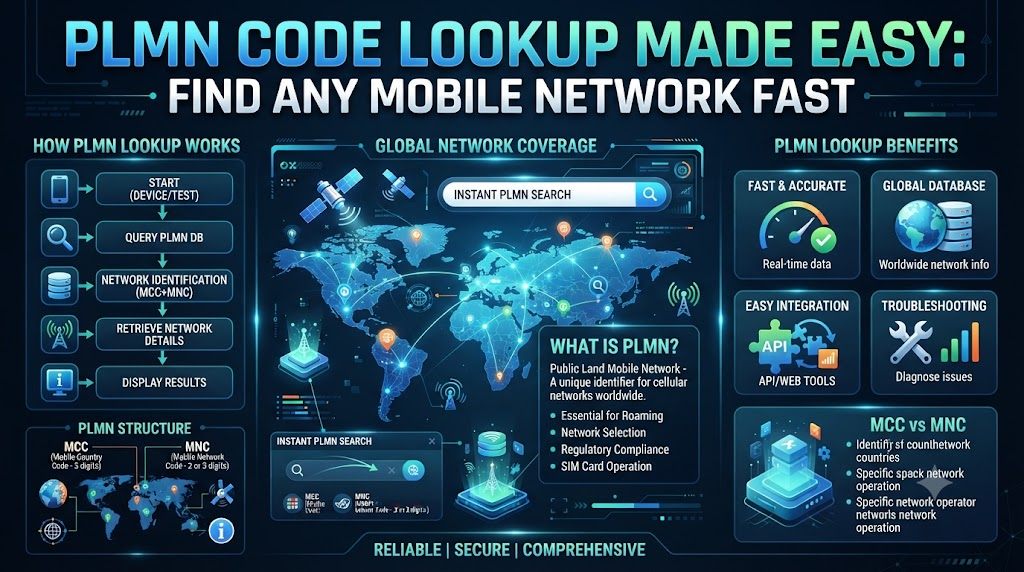
A Mobile Country Code (MCC) is a three-digit number. It shows which country a network belongs to. For example, 310 means the United States. 204 means the Netherlands.
A Mobile Network Code (MNC) is a two- or three-digit number. It shows the exact phone carrier inside that country. So the MNC points to one company, not the whole nation.
Now put them together. The MCC plus the MNC creates a full network ID. This ID lives inside every SIM card. It guides calls and mobile data to the right carrier.
So these small numbers do big work. They route your calls, connect your data, and keep global roaming running smoothly every day.
Decoding the Telecom Stack: Codes, Networks, and Operators
Cellular identifiers work like a layered address system. One layer marks the country. Another marks the carrier. A final layer marks the individual subscriber.
This clear separation keeps global networks organized. It also helps engineers trace problems fast. Let us look at each identifier in detail.
| Telecom Identifier | Number Length | Primary Purpose | Real-World Example | Managing Body |
|---|---|---|---|---|
| Mobile Country Code (MCC) | 3 Digits | Identifies geographic territory or international scope | 310 (United States) / 204 (Netherlands) | ITU-T |
| Mobile Network Code (MNC) | 2 or 3 Digits | Identifies specific mobile carrier within a country | 260 (T-Mobile) / 04 (Vodafone) | National Regulators |
| PLMN Code (MCC + MNC) | 5 or 6 Digits | Identifies unique wireless network operator | 310260 / 20404 | Cellular Industry |
| IMSI Identifier | Up to 15 Digits | Identifies the unique individual subscriber line | Stored securely on SIM card chips | Mobile Operators |
When your phone starts up, it reads these numbers. It scans for nearby radio signals. Then it matches each signal to a known code. This is how your phone finds the right network and connects without any input from you.
MCC MNC Lookup and Identifying Wireless Carriers
Sometimes you see a code and wonder who owns it. A five- or six-digit number appears in a log file. Which company runs that network? This is where an MCC MNC Lookup helps.
A lookup tool works in a simple way. You type in the code. The tool searches official records. Then it shows the legal company behind that number.
Developers use this daily. They check which carrier sent a message. Fraud analysts use it too. They verify that incoming traffic comes from a real network, not a fake one.
Engineers rely on official ITU-T E.212 records for this work. These records list every legal code assignment. Using them keeps research accurate and trustworthy.
So a good lookup saves time and stops mistakes. It turns a mystery number into a clear, verified fact.
PLMN Code Lookup and Cellular Network Routing
Now let us talk about PLMN codes. A PLMN means Public Land Mobile Network. In simple words, it is the full mix of country code plus carrier code.
So a PLMN is just the MCC and MNC joined together. This combined code names one unique wireless network.
A PLMN Code Lookup helps with international roaming. When you travel, your phone searches for local networks. It reads each PLMN it finds. Then it checks if your home carrier has a roaming deal with that network.
This matching process also involves radio bands. Different networks use different frequencies. Your phone must support the right band to connect. So the PLMN tells your phone who the network is. The band tells it whether a connection is even possible.
Good lookup tools make travel research easy. You can check which local carriers your phone will likely use abroad. No guesswork needed.
Mobile Network Operator Directory and Verified Network Holders
Not all phone companies are the same. Some own physical towers and base stations. Others simply rent space on those towers. This difference matters a lot.
A Mobile Network Operator (MNO) owns real infrastructure. They build and run radio towers. They hold spectrum licenses from the government. They are the true network holders.
Brand names often hide this fact. A popular brand may not own any towers at all. So researchers must check the legal assignee, not just the logo.
A Mobile Network Operator Directory solves this problem. It lists verified network holders with their official codes. It separates true MNOs from brands that only resell service.
This clarity helps many people. Fraud teams verify real networks. Developers route traffic correctly. Researchers study market structure with facts, not guesses.
Global Telecom Provider Directory and International Coverage
The world has hundreds of countries and territories. Each one has its own mobile networks. Some have just a few. Others have dozens. Keeping track of them all is a huge task.
A Global Telecom Provider Directory organizes this data. It covers every region in one searchable place. Users can compare networks across borders.
Some networks are unusual. International shared codes cover satellite services. Maritime networks serve ships at sea. Cross-border data routing adds another layer.
These special networks use unique code ranges. They do not belong to one single country. So a good directory marks them clearly.
This organized approach saves hours of research. Instead of hunting through scattered sources, you find clean, verified data fast.
Mobile Network Codes by Country and Regional Numbering
Each country has a telecom regulator. This body assigns network codes to local carriers. It also manages spectrum licenses and rules.
So codes differ by region. Europe has its own set of assignments. The Americas, Asia, and Africa each have theirs too.
Studying Mobile Network Codes by Country reveals useful patterns. You can see how many carriers serve each market. You can spot strong competition in some regions. You can also notice markets with fewer players.
This data helps many groups. Investors study market entry. Researchers track consolidation. Travelers learn which networks operate at their destination.
Each country keeps its own numbering plan. But all of them follow the same global framework. This shared structure makes cross-border research possible.
Mobile Country Code List for Global Travelers and Researchers
A Mobile Country Code List is a simple but powerful tool. It shows every three-digit code and its country. You can look up any foreign SIM card this way.
Travelers use these lists often. They check which country a roaming partner belongs to. They confirm that their eSIM will connect to a real local network.
The International Telecommunication Union (ITU) manages these codes. This global body assigns clean three-digit blocks. No two countries share the same MCC. This rule keeps global systems in order.
Researchers also depend on these lists. They trace call origins. They verify network claims. They confirm that a provider truly operates where it says it does.
So a country code list is more than a lookup aid. It is a trust tool for anyone working with global mobile data.
Network Data Validation and Carrier Research Checklist
Bad data causes real problems. Copied lists spread errors fast. Old records miss recent mergers. So researchers need a clear validation process.
This checklist helps you confirm that network data is correct. Follow these steps before trusting any telecom record.
| Research Step | What to Check | Why It Matters |
|---|---|---|
| ITU-T E.212 Baseline | Official Assignment Status | Confirms legal code ownership from international records |
| National Regulator Filing | Local Frequency Licenses | Shows domestic operational approval and spectrum rights |
| Commercial Role Check | MNO vs MVNO Designation | Clarifies whether the provider owns physical cell towers |
| Active Brand Matching | Retail Trade Name | Connects technical network numbers to consumer brand logos |
| International Shared Codes | 901/902 Global Allocations | Identifies satellite, maritime, and specialized IoT networks |
| Data Timestamp Review | Date of Last Assignment Audit | Ensures decommissioned or merged network codes are updated |
Many websites copy old carrier lists without checking them. These lists often contain errors. Some invent network assignments that never existed. So always trace data back to primary sources. A careful check takes minutes. It saves hours of confusion later.
Telecom Operator Database and Evidence-Led Research
Facts matter in telecom research. A wrong code can break a routing system. A false claim can mislead an entire project.
So evidence-led research is essential. Every network record should link to a primary source. Official government filings are the gold standard. Regulator documents and ITU records come next.
A good Telecom Operator Database follows this rule. It shows not just the code, but also the proof behind it. Users can trace each record to its origin.
This approach builds trust. Developers know the data is current. Analysts know the source is real. Researchers can cite clean, verified facts.
So strong databases do more than store numbers. They protect accuracy across the whole telecom industry.
MVNO Directory: Virtual Operators and Wholesale Networks
Not every phone company owns towers. Many simply rent space on existing networks. These companies are called Mobile Virtual Network Operators, or MVNOs.
In simple words, an MVNO sells cellular service without owning radio infrastructure. It leases capacity from a host MNO. Then it builds its own brand and pricing plans around that rented network.
This model brings real benefits. MVNOs offer flexible plans. They target niche groups like travelers or budget users. They add competition to local markets.
But this setup creates research puzzles. An MVNO shares the physical PLMN codes of its host. So a lookup may show the host network, not the virtual brand.
An MVNO Directory clears this confusion. It maps each virtual operator to its host network. This helps researchers understand who really runs the towers behind a brand.
eSIM Provider Directory and Modern Digital Connectivity
eSIM technology changes how phones connect. An eSIM is a tiny digital chip built inside modern smartphones. It downloads mobile plans over the internet. No plastic card is needed.
This makes travel easier. You can buy a plan before a trip. Then your phone connects to a local network when you arrive.
But many eSIM providers exist today. Each one uses different underlying networks. So travelers need a clear way to compare them.
An eSIM Provider Directory helps here. It lists digital connectivity providers and their supported destinations. It also shows which local networks each provider partners with.
This data protects users. They know which network will carry their data abroad. They avoid plans that rely on weak or limited partners. So a good directory turns a confusing market into a clear choice.
Developer Workflows: MCC MNC Lookup API and Data Integration
Software teams need fast, accurate network data. Manual lookups do not scale. So developers use automated tools instead.
An MCC MNC Lookup API connects apps to live network records. The app sends a code. The API returns verified carrier details in milliseconds.
This powers many useful systems. Fintech platforms check SIM card origins during signup. Messaging tools route SMS codes through the right carrier. Fraud systems flag suspicious network traffic before damage occurs.
APIs also help global data platforms. They pick the best local network for each user. This improves speed and cuts costs.
So a reliable API is a core building block. It turns raw numbers into useful, real-time decisions. Developers who use it save time and reduce errors across their products.
Real-Life Telecommunications Scenarios
Here are four real situations that show these tools at work.
- A mobile app developer uses an automated network lookup to route two-factor SMS codes through the lowest-cost local carrier. This cuts delivery costs while keeping login messages fast and reliable for users worldwide.
- An international business traveler checks an online directory to identify which local network partner their roaming eSIM connects to abroad. This helps them confirm coverage before an important meeting or client call.
- A telecom security analyst investigates an unfamiliar PLMN code to flag suspected SIM-swap fraud or unauthorized network spoofing. The lookup reveals the true network owner and exposes the fake signal source.
- An IoT fleet manager verifies country codes and network assignees to ensure smart tracking sensors connect reliably across foreign borders. This keeps shipment data flowing without gaps or dropped signals.
Common Mistakes to Avoid in Telecom and Network Code Research
Watch out for these eight common errors. Each one has a simple fix.
- Confusing a consumer brand name with the actual licensed infrastructure owner. Fix: always check the legal assignee in official records before trusting a brand claim.
- Assuming an International Dialing Code (like +1 or +44) is the same as a Mobile Country Code (MCC). Fix: remember that dialing codes route calls, while MCCs identify networks.
- Relying on outdated carrier lists that do not reflect recent corporate telecom mergers. Fix: check the timestamp on any list and confirm against current ITU records.
- Overlooking whether a code belongs to an international shared range (such as 901 or 902) rather than a single country. Fix: mark shared codes clearly and treat them as special global networks.
- Trusting unsourced blog lists that invent network assignments without checking ITU E.212 records. Fix: trace every code back to an official primary source before use.
- Forgetting that an MVNO shares the radio towers and physical PLMN codes of its host operator. Fix: use an MVNO directory to map virtual brands to their real host networks.
- Assuming all mobile operators operate on the same radio frequency bands across different continents. Fix: check local band support before promising coverage in a new region.
- Neglecting to verify whether an assigned network code is actively operating or held as a non-commercial test license. Fix: confirm live status through regulator filings and recent audits.
Simple Telecom Data Research Checklist
Follow these steps to keep your network research clean and accurate.
- Verify the three-digit Mobile Country Code (MCC) against the official ITU list. This confirms the country is real and correctly matched.
- Confirm the Mobile Network Code (MNC) length (two digits versus three digits). Length errors cause lookup failures and wrong matches.
- Check the combined five- or six-digit PLMN code in a verified operator database. This confirms the full network identity in one step.
- Identify the legal corporate assignee holding the frequency license. Brand names often differ from the true license holder.
- Review official national regulator filings for recent changes or license transfers. This keeps your records current after mergers or rebrands.
Frequently Asked Questions
1. What is the difference between an MCC and an MNC?
An MCC is a three-digit Mobile Country Code. It shows which country a network belongs to. An MNC is a two- or three-digit Mobile Network Code. It shows the exact carrier inside that country. Together they form a full network ID that phones use to connect correctly.
2. How do mobile phones use PLMN codes to select a cellular network?
A PLMN combines the country code and carrier code into one ID. When your phone starts, it scans nearby signals. It reads each PLMN it finds. Then it checks if your home carrier has a roaming deal with that network. If yes, it connects automatically.
3. Where do official Mobile Country Code and Network Code records come from?
The International Telecommunication Union (ITU) manages country codes under the E.212 standard. National regulators assign network codes inside each country. So official records come from two sources. The ITU handles country blocks, while local regulators handle carrier assignments.
4. What is the difference between an MNO and an MVNO in a telecom directory?
An MNO owns physical radio towers and spectrum licenses. It runs the real infrastructure. An MVNO rents capacity from an MNO and sells service under its own brand. A good directory marks this difference clearly, so users know who truly owns the network.
5. Why do some international networks use 901 or 902 country codes?
Codes 901 and 902 are special shared ranges. They do not belong to one single country. Satellite services use them. Maritime networks use them too. Specialized IoT systems also rely on these codes. So they mark global or cross-border networks, not national ones.
6. How does an MCC MNC lookup tool help stop financial and SMS fraud?
Fraudsters often fake network details. A lookup tool checks the real code against official records. If the code does not match a real carrier, the system flags it. This stops fake SMS routing, SIM-swap attacks, and unauthorized traffic before harm occurs.
7. Can two different telephone companies share the exact same MCC and MNC?
No. Each MCC and MNC pair is unique. The ITU and national regulators prevent duplicates. However, an MVNO may share its host network’s code. So the code points to the host, while the virtual brand sells service under a separate name.
8. How does an eSIM profile connect to local physical cell towers abroad?
An eSIM downloads a digital plan over the internet. That plan includes a local network code. When you arrive abroad, your phone reads nearby signals. It matches them to the downloaded code. Then it connects to the right local towers automatically.
9. What is an IMSI number, and how does it relate to network codes?
An IMSI is a unique subscriber ID stored on the SIM card. It can hold up to 15 digits. The first digits contain the MCC and MNC. The remaining digits identify the individual user. So the IMSI links a person to a specific network.
10. Why do some network operators hold multiple MNC assignments in the same country?
Large operators often run several networks. They may hold codes for different services. Some codes cover legacy systems. Others support new technology or test programs. So multiple codes help one company manage many network functions at once.
11. How do developers integrate an MCC MNC lookup API into their applications?
Developers connect their app to the API endpoint. The app sends a network code. The API checks official records. Then it returns carrier details in milliseconds. This powers fraud checks, SMS routing, and global data optimization without manual work.
12. How does eSIMGlobo help researchers find verified global telecom information?
eSIMGlobo organizes telecom data with clear evidence. It links network codes to official ITU records and regulator filings. Users can trace each fact to its source. This helps developers, analysts, and travelers trust the data they use every day.
Conclusion
Global mobile communication runs on small, hidden numbers. MCC and MNC codes identify countries and carriers. PLMN codes guide roaming. IMSI numbers link each user to a network. Official ITU records and regulator filings keep this system honest. Verified directories turn messy data into clear facts. Digital tools like APIs make this knowledge usable at scale. So reliable, evidence-backed telecom data powers every smooth call and fast connection worldwide. Researchers and developers who respect this foundation build systems that connect people across borders without friction.
