Upgrade & Secure Your Future with DevOps, SRE, DevSecOps, MLOps!
We spend hours scrolling social media and waste money on things we forget, but won’t spend 30 minutes a day earning certifications that can change our lives.
Master in DevOps, SRE, DevSecOps & MLOps by DevOps School!
Learn from Guru Rajesh Kumar and double your salary in just one year.
Introduction
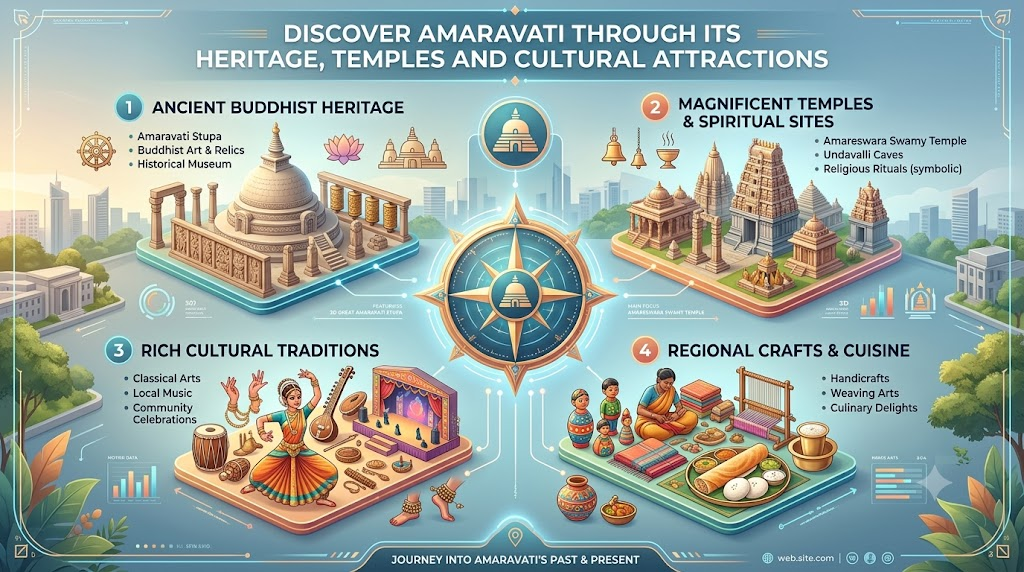
To experience Amaravati is to step into an open-air archive where ancient art, classical philosophy, and daily rituals converge on the banks of the Krishna River. Long before modern maps designated this plain as a state capital, the settlement of Dhanyakataka flourished as a global crossroads of trade, monastic learning, and artistic mastery under the Satavahanas. For travelers who view journeys through the lens of art history, regional culture, and living sacred traditions, an intentional Amaravati travel guide provides the necessary cultural perspective to interpret the stone carvings, monastic foundations, and centuries-old ghat rituals found across the town. This guide looks at Amaravati beyond ordinary surface sightseeing. By focusing on the interplay between early Buddhist artistic schools and enduring river-centric worship, you will learn how to read the landscape, engage thoughtfully with local traditions, plan meaningful single or multi-day walks, and uncover seasonal celebrations across the region.
Main Article
Reading the Landscape: How History Shaped Modern Amaravati
The topography of Amaravati has always dictated its destiny. Situated where the Krishna River slows into a wide, navigable basin, the region was an ideal trading node connecting peninsular India’s inland agricultural valleys with international sea lanes in the Bay of Bengal. By the 2nd century BCE, this commercial wealth directly sustained monastic orders, scholarly assemblies, and artisan guilds.
Art historians celebrate this riverfront hub as the birthplace of the Amaravati School of Art. Unlike the earlier, more rigid narrative bas-reliefs seen at northern sites like Bharhut, Amaravati’s sculptors pioneered dynamic, multi-layered visual compositions on pale greenish-white Palnadu limestone. Figures carved here exhibited dramatic movement, slender forms, intricate jewelry, and emotional expressiveness that eventually influenced sculptural conventions across Sri Lanka, Java, and mainland Southeast Asia.
As royal patronages evolved, the town adapted without erasing its past. Medieval centuries witnessed the rise of classical Shaivism, positioning the riverbank as a foundational Pancharama Kshetra. Today, stepping between ancient stupa foundations and bustling temple corridors demonstrates cultural continuity: the physical materials of the landscape have changed, but the relationship between the people, the river, and sacred reflection remains constant.
The Cultural Itinerary: Key Monuments and Sites
Examining Amaravati’s physical landmarks reveals a continuous story of architectural innovation and devotional practices across different eras.
The Mahachaitya (Great Stupa)
Approaching the Great Stupa requires looking past its present ruined core to appreciate what once was a towering, hemispherical monument encased in intricately carved limestone marble slabs. Dating from the 3rd century BCE with subsequent Satavahana elaborations, this structure was an architectural marvel of the Deccan. Walking along the circular processional path (pradakshina-patha) allows you to study the base platforms and surviving stone plinths that once supported elaborate railing pillars carved with lotus medallions, dynamic life scenes of the Buddha, and narrative friezes.
ASI Archaeological Museum
The Archaeological Survey of India museum functions as an indispensable visual companion to the stupa grounds. Rather than an assortment of isolated relics, its halls display original decorative elements arranged to help you understand the stupa’s architectural elevation. Notice the subtle expressions on the carved devotees, the elaborate garments worn by urban elites of the Satavahana era, and the intricate representations of ships and ocean-going craft that illustrate the region’s maritime trade connections.
Sri Amareswara Swamy Temple
Standing tall on the southern bank of the Krishna, this temple complex honors Lord Shiva as Amareswara. It represents one of the Pancharama Kshetras—five sacred Shaivite sanctuaries established across coastal Andhra. The sanctum preserves a remarkably tall, slender marble Shiva lingam, traditionally bathed from an elevated gallery. The temple’s courtyards feature ancient epigraphs carved into stone slabs that chronicle centuries of royal endowments from Vijayanagara, Reddy, and Chola rulers.
The 125-Foot Dhyana Buddha
Located on high ground facing the river, this monumental seated Buddha statue reinterprets ancient stylistic forms within a modern civic space. The statue sits in a meditative posture upon a grand lotus pedestal that houses a multi-level cultural museum. The internal galleries present detailed dioramas, paintings, and traditional artworks depicting major events from early Buddhist history and regional Andhra folklore.
Dharanikota Fortified Settlement
A short walk westward leads to Dharanikota, the ancient urban enclosure that housed the merchants, civil administrators, and civic population that supported the nearby monastic centers. The surviving earthworks, moat lines, and defensive remnants provide physical context for the worldly trade, river wharves, and civic organization that flourished side-by-side with religious scholarship.
Experiencing Local Traditions and River Life
Engaging with the town requires tuning into the rhythm of the local community and the natural waterways.
+------------------------+------------------------------------+---------------------+
| Cultural Experience    | Focus of Observation               | Recommended Time   |
+------------------------+------------------------------------+---------------------+
| Sacred River Ablutions | Krishna River Steps & Devotion     | 06:00 AM – 07:30 AM |
| Architectural Analysis | ASI Museum & Stupa Remnants        | 09:30 AM – 12:00 PM |
| Regional Craft Finding | Guntur Handlooms & Metalcraft      | 02:30 PM – 04:30 PM |
| Evening Temple Rites   | Amareswara Swamy Pradosha Pujas    | 05:30 PM – 07:00 PM |
| Riverside Meditation   | Dhyana Buddha Riverfront Promenades| 05:00 PM – 06:30 PM |
+------------------------+------------------------------------+---------------------+
- Participate in Morning River Rites: Visit the riverfront steps near the Amareswara temple at dawn. Watching local boatmen, temple priests, and pilgrims start their day with sacred water offerings highlights the cultural tie between the Krishna River and local community life.
- Observe Handloom Weaving Traditions: The larger rural pocket between Amaravati and Mangalagiri is renowned for master weavers producing crisp cotton fabrics. Visiting small family workshops offers a direct look at traditional bobbin winding, warp preparations, and the delicate execution of woven borders.
- Savor Regional Andhra Meals: Local eateries offer traditional vegetarian meals arranged around rice, native leafy preparations, and rich spices. Taste the tart depth of gongura preparations, freshly ground vegetable pachadis, rasam, and traditional lentil wafers that reflect regional culinary history.
Itinerary Pathways: Immersive 1-Day and 2-Day Routes
One-Day Heritage Route
- Morning (07:30 AM – 10:30 AM): Begin at the river ghats near the Amareswara Temple to observe early morning rituals. Proceed to the Great Stupa grounds while temperatures remain moderate to study the foundational masonry and site topography.
- Midday (11:00 AM – 01:30 PM): Spend quiet hours inside the ASI Museum examining limestone relief carvings, Jataka panels, and ancient epigraphy. Break for a traditional lunch at a nearby local mess.
- Afternoon (02:30 PM – 04:30 PM): Head to the Dhyana Buddha grounds to explore the historical exhibits within the pedestal base and walk the perimeter gardens.
- Evening (05:00 PM – 06:30 PM): Return to the Amareswara Temple complex for evening lamps and arati, followed by a quiet walk along the river edge.
Two-Day Classical Deccan Exploration
- Day 1: Execute the full Amaravati historical circuit (Stupa, Museum, Dharanikota, Dhyana Buddha, and Amareswara Temple). Overnight in Vijayawada or Guntur.
- Day 2: Expand your focus across the Krishna Valley. Spend your morning exploring the 5th-century rock-cut monolithic chambers at Undavalli Caves near Tadepalle, followed by an afternoon visit to Kondapalli village to see generations of craftspeople carving wooden toys from local white-sand poniki wood.
Festivals and Regional Gatherings
The seasonal calendar in Amaravati moves with lunar cycles and historical celebrations.
- Maha Shivaratri: Observed in late winter (February/March), this festival transforms the town. Devotees from across Andhra Pradesh arrive for sacred dips in the Krishna River, followed by continuous prayers, chants, and night-long darshans at the Amareswara Swamy shrine.
- Buddha Purnima: Celebrated during the full moon of Vaishakha (April/May), this sacred day brings international monks, cultural scholars, and travelers to the Dhyana Buddha and stupa grounds for morning meditation, scriptural recitations, and lectures.
- Karthika Deepotsavam: Across the sacred month of Karthika (October/November), evenings along the river ghats are illuminated by thousands of small clay oil lamps placed along the stone steps, accompanied by community ritual gatherings.
- Regional Events and Assemblies: Throughout the year, seasonal trade fairs, classical music programs, and cultural exhibitions emerge across the capital region. Travel platforms like AmaravatiOrbit.com offer an accessible way to keep track of verified public schedules, traditional workshops, and upcoming cultural gatherings across the Krishna Valley without missing out on seasonal events.
Practical Planning for Cultural Travelers
Weather Windows and Seasons
Plan your historical walking tours between October and February. Daytime temperatures during these months remain comfortable for outdoor exploration, and cooler breezes blow off the river. Avoid the scorching summer months from April to June, when stone surfaces become very hot and high humidity drains your energy. The monsoon period (July through September) brings dramatic skies and running rivers, though outdoor excursions require rain preparation.
Arriving and Moving Around
- Transit Hubs: Major rail connectivity runs through Vijayawada Junction and Guntur Junction, both of which handle frequent interstate trains. Vijayawada International Airport at Gannavaram offers domestic flight connectivity.
- Connecting Transit: From either hub, state transport buses run regular connections to Amaravati village. Auto-rickshaws and hire vehicles operate reliably across the local circuit, making inter-monument travel easy.
Practical Mistakes to Watch Out For
- Overlooking Contextual Displays: Viewing the Great Stupa without touring the ASI Museum leaves out the decorative mastery that made the site renowned worldwide. Treat the two as a paired visit.
- Underestimating Ground Heat: Open stone courtyards at the stupa and temples absorb high midday heat. Aim to finish open-air walking before 11:00 AM or after 3:30 PM.
- Ignoring Religious Etiquette: Traditional dress codes apply inside the Amareswara Swamy Temple. Avoid shorts or sleeveless tops, remove your footwear at designated stations outside, and observe signage regarding interior photography limits.
Practical Tips
- Dress Appropriately: Breathable natural cottons with modest cuts work best for visiting ancient monuments and active places of worship.
- Hydration Needs: Carry water and an umbrella to shield yourself from open sun exposure along the riverbank and stupa perimeters.
- Payment Readiness: Keep small-denomination currency notes handy for local transport, boat rides, and entrance tokens, even though mobile payments are standard in established storefronts.
- Photography Caution: Always check with temple administrators before photographing interior ritual chambers, active priests, or specialized artifact collections in museums.
FAQs
What makes the Amaravati School of Art significant in Indian history?
The Amaravati School introduced distinctive naturalism, fluid movement, and complex multi-figure compositions using pale green-tinted limestone. Developing between the 2nd century BCE and 3rd century CE, its stylistic mastery influenced Buddhist art and sculpture throughout India, Sri Lanka, and maritime Southeast Asia.
How should an art or history enthusiast prioritize their day in Amaravati?
Start at the Great Stupa early in the morning to examine the foundational layout and scale, follow immediately with the ASI Museum to study the preserved limestone reliefs, and end the afternoon at the Amareswara Temple to witness centuries of continuous, living devotional worship.
Is Amaravati suitable for a focused educational day trip?
Yes. Because its core monuments—the Great Stupa, Archaeological Museum, Amareswara Temple, and Dhyana Buddha—sit within a small geographical radius, travelers can comprehensively study regional history, archaeology, and architectural styles comfortably within a single day.
What is the connection between Amaravati and the Satavahana dynasty?
Amaravati, then called Dhanyakataka or Dharanikota, served as an imperial capital and vibrant river port under the Satavahanas. The dynasty’s patronage supported early Buddhist monastic orders and funded monumental stone expansions of the Great Stupa.
What rules of conduct should visitors follow at the Amareswara Temple?
Visitors must wear modest attire that covers both shoulders and knees, remove all footwear before stepping onto the temple grounds, and respect photography bans inside the inner sanctum.
How does Dharanikota relate to the archaeological heritage of the area?
Dharanikota served as the fortified urban, administrative, and trading harbor adjacent to the monastic sanctuaries. It offers physical evidence of ancient embankments, water routes, and civil structures that sustained the region’s scholarly and artistic communities.
What are the primary festivals celebrated at Amaravati?
The most prominent celebrations include Maha Shivaratri at the Amareswara Temple, Buddha Purnima at the Dhyana Buddha complex, and the daily evening lamp offerings along the river throughout the month of Karthika.
What is the best way to travel between Vijayawada and Amaravati?
Direct state transport buses run frequently between Vijayawada’s Pandit Nehru Bus Station and Amaravati village. Alternatively, rental taxis, auto-rickshaws, and private vehicles make the 40-kilometer drive in roughly 60 to 90 minutes.
Can visitors take boat rides on the Krishna River at Amaravati?
Local boatmen frequently provide short passenger crossings and scenic river jaunts near the temple steps, though availability changes based on seasonal river currents, water levels, and local weather alerts.
Where can travelers find current listings of regional cultural programs?
Visitors can check local newspaper listings, regional tourism offices, or destination portals such as AmaravatiOrbit.com to review verified updates on upcoming events, seasonal fairs, and community celebrations across the district.
Conclusion
Approaching Amaravati from a cultural perspective reveals a settlement where ancient artistic achievements blend naturally with living spiritual traditions. Walking along the circular processional paths of the Mahachaitya, analyzing classical limestone friezes inside the museum, and listening to evening temple bells along the Krishna River provides a layered understanding of Andhra Pradesh’s rich heritage. Whether you are an art historian, cultural traveler, or weekend explorer, this ancient riverfront landscape rewards patient and observant travel. Planning your journey during the cooler winter months and keeping an eye on community cultural platforms like AmaravatiOrbit.com will ensure your time along the Krishna River is both historically enriching and personally memorable.
