Upgrade & Secure Your Future with DevOps, SRE, DevSecOps, MLOps!
We spend hours scrolling social media and waste money on things we forget, but won’t spend 30 minutes a day earning certifications that can change our lives.
Master in DevOps, SRE, DevSecOps & MLOps by DevOps School!
Learn from Guru Rajesh Kumar and double your salary in just one year.
Introduction
Many newcomers entering the world of digital assets quickly realize that digital currencies involve much more than simple peer-to-peer payments. While initial exploration often focuses on digital money, learners soon encounter programmable networks that allow developers to build complex applications. Without a clear guide, understanding these multi-functional networks can feel overwhelming due to dense technical jargon and confusing terminology.
This guide breaks down the Ethereum blockchain in clear, beginner-friendly language. You will learn what this technology is, how it operates behind the scenes, and why it plays a foundational role in modern decentralized applications. By the end, you will have a solid grasp of how programmable ledgers function and how they differ from simpler digital payment systems.
What Is Ethereum Blockchain?
The Ethereum blockchain is an open-source, decentralized computing platform that features smart contract functionality. While basic digital currencies function primarily as digital cash or stores of value, this network was designed from the ground up as a global, programmable computer. Its main purpose is to allow developers to build and deploy decentralized applications, often referred to as dApps, without relying on a central authority.
Understanding this network matters because it serves as the underlying infrastructure for a vast portion of the Web3 ecosystem, including decentralized finance and digital ownership tools. Beginners who want to explore digital assets beyond basic transactions need to understand this environment.
Important terminology includes smart contracts, which are self-executing code blocks stored on the ledger, and Ether, the native asset used to pay for computational services on the network.
How Does Ethereum Blockchain Work?
Operating a decentralized, programmable network requires a coordinated system of cryptographic verification and distributed consensus.
- User Initiation: A user or developer initiates a transaction or smart contract deployment through a compatible crypto wallet.
- Network Broadcast: The transaction request broadcasts across a global peer-to-peer network of computers known as nodes.
- Validation and Sequencing: Network participants validate the transaction details against established protocol rules to ensure validity.
- Consensus and Block Creation: Validated transactions group together into a new block, which is then cryptographically secured and added to the existing ledger through consensus mechanisms.
- Execution: If the transaction involves a smart contract, the network nodes execute the code instructions autonomously and transparently.
This process relies heavily on public and private key cryptography. Public keys act like account numbers for receiving assets, while private keys act like digital signatures required to authorize outgoing transactions.
Key Components of Ethereum Blockchain
Decentralized Network Nodes
The network consists of thousands of independent computers distributed worldwide. Each node maintains a complete copy of the ledger, ensuring that no single entity controls the infrastructure.
Smart Contracts
Smart contracts are immutable programs stored on the ledger that execute automatically when predefined conditions are met. They remove the need for trusted intermediaries in digital agreements.
Crypto Wallets and Accounts
Users interact with the network through software or hardware wallets. These tools do not actually store digital assets; instead, they securely manage the cryptographic keys required to access and manage accounts on the ledger.
Real-World Examples
To understand how this technology functions in practice, consider a few everyday scenarios.
When a user wants to send Ether to another person, they open their crypto wallet, enter the recipient public address, and authorize the transfer using their private key. The network processes this transfer transparently, verifying the user balance without needing a traditional bank.
Another common example involves decentralized applications. A user might access a peer-to-peer lending protocol through a web browser extension wallet. By interacting with a smart contract, the user lends or borrows digital assets programmatically, governed entirely by transparent code rather than corporate policies.
Benefits and Limitations
Benefits
- Programmability: Enables complex logic, financial agreements, and automated applications beyond simple currency transfers.
- Transparency: All transactions and smart contract code are publicly visible on the distributed ledger.
- Censorship Resistance: Because the network is decentralized, no single government or corporation can shut it down or alter transaction history arbitrarily.
Limitations and Risks
- Network Congestion: High demand for block space can lead to elevated transaction fees during busy periods.
- Complexity: Interacting with smart contracts and decentralized applications requires a steeper learning curve for beginners.
- Smart Contract Vulnerabilities: Flaws or bugs in custom smart contract code can lead to unintended outcomes or security exploits.
Security and Safety Considerations
Navigating decentralized networks safely requires strict personal security habits. Because transactions are irreversible, taking proactive measures protects your digital assets.
- Protect Private Keys and Seed Phrases: Never share your private keys or backup seed phrases with anyone. Anyone with these credentials has complete control over your accounts.
- Beware of Phishing Scams: Attackers often create fake websites or impersonate support staff to steal sensitive credentials. Always double-check URLs before connecting a wallet.
- Verify Smart Contract Interactions: Before approving transactions on decentralized applications, review the permissions requested by the smart contract.
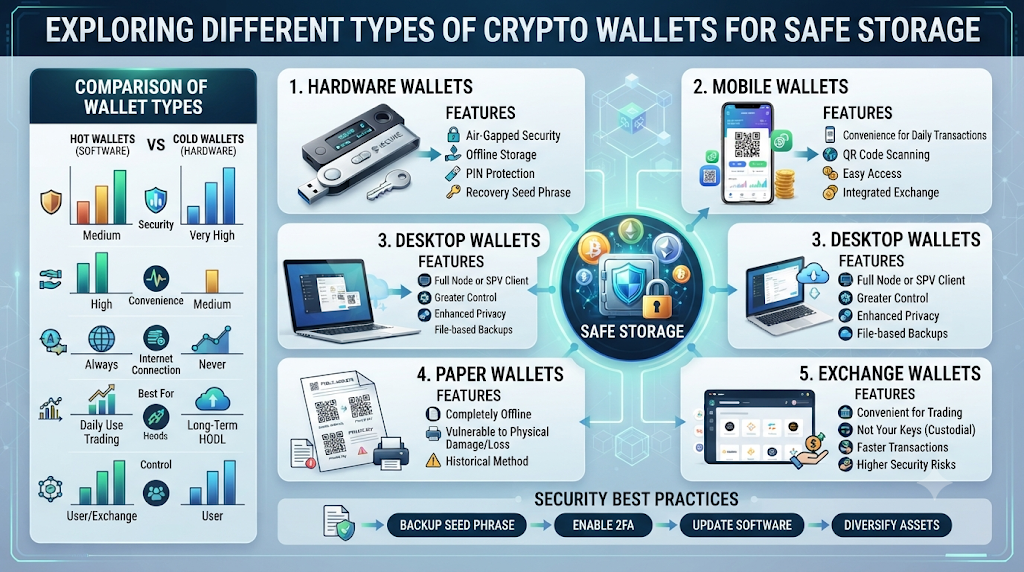
- Use Hardware Wallets: For larger holdings, hardware wallets provide superior security by keeping private keys offline and away from internet-connected devices.
Common Mistakes Beginners Make
- Ignoring Transaction Fees: Failing to account for network transaction fees can leave users with insufficient funds to complete a transfer.
- Sharing Sensitive Credentials: Entering seed phrases into unverified websites or sharing them online.
- Using Unfamiliar Platforms: Interacting with unvetted decentralized applications without researching their background or code audits.
- Mismanaging Wallet Backups: Failing to securely store physical backup copies of recovery seed phrases.
- Expecting Instant Irreversible Mastery: Rushing into complex financial protocols without understanding foundational mechanics first.
Ethereum Blockchain vs Related Concepts
| Feature / Concept | Bitcoin | Ethereum Blockchain |
|---|---|---|
| Primary Design | Decentralized peer-to-peer digital currency | Programmable platform for decentralized applications |
| Smart Contracts | Limited scripting capabilities | Advanced, Turing-complete smart contract execution |
| Native Asset | Bitcoin (BTC) | Ether (ETH) |
| Main Focus | Secure store of value and monetary transfer | Decentralized finance, apps, and Web3 infrastructure |
Step-By-Step Beginner Guide
- Learn the Fundamentals: Read reliable educational resources to understand how public ledgers and cryptography work.
- Set Up a Secure Wallet: Choose a reputable software or hardware wallet and securely back up your recovery seed phrase offline.
- Understand Network Fees: Learn how network gas fees function so you can anticipate transaction costs accurately.
- Explore Decentralized Applications: Browse educational guides on decentralized finance and Web3 applications to see practical use cases.
- Practice Safe Digital Habits: Prioritize security by double-checking URLs, avoiding suspicious links, and maintaining strict offline backup security.
Future Considerations
As blockchain technology matures, ongoing developments focus on improving scalability, reducing environmental impact, and enhancing user experience. Layer-2 scaling solutions and modular network designs aim to process transactions faster and more affordably.
Furthermore, institutional adoption and evolving regulatory frameworks continue to shape how decentralized networks integrate with traditional systems. Education remains essential as these technologies evolve.
CryptoBlockCoins provides educational information only and does not provide financial or investment advice. Cryptocurrency markets can be volatile, so readers should conduct independent research and consider professional advice before making financial decisions.
Frequently Asked Questions
- What is the Ethereum blockchain in simple terms?
It is a decentralized, global computer network that runs programmable software and smart contracts, allowing developers to build censorship-resistant applications.
- How does the Ethereum blockchain differ from Bitcoin?
While Bitcoin was designed primarily as a secure digital currency and store of value, this network functions as a programmable platform for executing smart contracts and decentralized applications.
- What is Ether and how is it used?
Ether is the native cryptocurrency of the network used primarily to pay for computational services and transaction fees required to run smart contracts.
- What are smart contracts?
Smart contracts are self-executing programs stored on the blockchain that automatically execute agreements when pre-set conditions are met, removing the need for middlemen.
- Do I need to own cryptocurrency to use decentralized applications?
Yes, interacting with decentralized applications usually requires holding a small amount of the native network asset to cover transaction fees.
- Is the Ethereum blockchain safe to use?
The underlying cryptographic network is secure, but user safety depends heavily on personal security practices such as protecting private keys and avoiding phishing scams.
- What are gas fees?
Gas fees are transaction costs paid to network validators to compensate for the computational power required to process transactions and execute smart contracts.
- Can I reverse a blockchain transaction?
No, transactions confirmed on a decentralized ledger are permanent and cannot be reversed by any bank, company, or individual.
- What is the difference between a hot wallet and a cold wallet?
Hot wallets connect to the internet for convenient daily use, while cold wallets store private keys offline for enhanced long-term security.
- Where can beginners learn more about Web3 technology?
Beginners can explore trusted educational platforms, official protocol documentation, and guides focused on blockchain security and digital literacy.
Conclusion
Understanding the Ethereum blockchain opens the door to a broader world of programmable technology, decentralized applications, and digital ownership. By looking beyond simple digital currencies, learners can appreciate how distributed ledgers enable transparent, automated agreements. Remember to prioritize security, practice continuous learning, and approach new digital concepts with patience and curiosity as the ecosystem continues to evolve.
