Upgrade & Secure Your Future with DevOps, SRE, DevSecOps, MLOps!
We spend hours scrolling social media and waste money on things we forget, but won’t spend 30 minutes a day earning certifications that can change our lives.
Master in DevOps, SRE, DevSecOps & MLOps by DevOps School!
Learn from Guru Rajesh Kumar and double your salary in just one year.
Introduction
Order Management Systems (OMS) are software platforms that streamline the entire order lifecycle—from order capture, processing, fulfillment, and tracking to customer delivery and returns. OMS platforms help businesses centralize orders across multiple sales channels, synchronize inventory, optimize fulfillment, and provide real-time visibility into order status. In, with the acceleration of e-commerce, omnichannel retail, and global supply chains, having a robust OMS is critical to reduce errors, improve customer satisfaction, and drive operational efficiency.
Real-world use cases include:
- Managing online and offline retail orders across multiple marketplaces.
- Automating order routing to the nearest warehouse for faster fulfillment.
- Synchronizing inventory levels in real-time to prevent overselling.
- Handling returns, exchanges, and refunds efficiently.
- Generating analytics on order trends, fulfillment bottlenecks, and customer behavior.
When evaluating OMS platforms, buyers should consider:
- Real-time order tracking and reporting
- Multi-channel integration (e-commerce, marketplaces, POS)
- Inventory synchronization and allocation
- Workflow automation for order processing
- Returns and refund management
- Analytics and KPI dashboards
- Cloud, on-premises, or hybrid deployment
- Scalability for seasonal spikes or enterprise needs
- Security and compliance
- Vendor support and community presence
Best for: E-commerce managers, operations teams, fulfillment centers, and enterprises seeking centralized order visibility and multichannel control.
Not ideal for: Small-scale businesses with low order volumes, organizations using manual spreadsheets or lightweight ERP systems, or teams with minimal need for automation or analytics.
Key Trends in Order Management Systems (OMS) Toolkits
- AI-driven order routing: Automated assignment of orders to the optimal warehouse or fulfillment center.
- Cloud-native OMS: Real-time visibility and collaboration across distributed teams.
- Omnichannel integration: Centralized processing for online marketplaces, retail stores, and direct-to-consumer channels.
- Predictive inventory and demand management: AI forecasts help avoid stockouts and overstocking.
- Workflow automation: Streamlined order approval, fulfillment, and returns processes.
- Enhanced analytics and dashboards: Insights into fulfillment performance, customer trends, and operational KPIs.
- Hybrid deployment models: Flexible cloud, on-premises, or hybrid environments.
- Mobile-first access: Real-time updates and approvals from mobile devices.
- Subscription and modular pricing: Pay-for-use models scalable to catalog size and sales volume.
- Security and compliance: SSO, MFA, encryption, and GDPR/SOC 2 compliance.
How We Selected These Tools (Methodology)
- Evaluated market adoption, reputation, and industry recognition.
- Assessed feature completeness including order capture, fulfillment, inventory, and returns.
- Reviewed reliability and performance in high-volume, multi-channel operations.
- Examined security posture and compliance features.
- Checked integrations with e-commerce platforms, ERP, CRM, and warehouse management systems.
- Evaluated suitability for SMB, mid-market, and enterprise operations.
- Analyzed vendor support, onboarding, documentation, and community strength.
- Balanced enterprise-grade and SMB-friendly OMS platforms for top 10 selection.
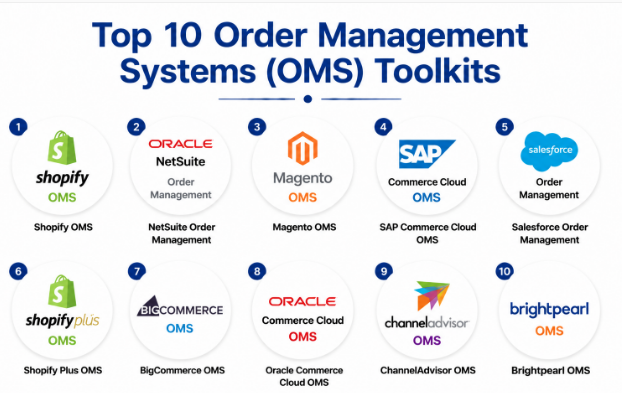
Top 10 Order Management Systems (OMS) Toolkits
#1 — Shopify OMS
Short description: Shopify OMS centralizes order management for online retailers and marketplace sellers, streamlining fulfillment, tracking, and inventory synchronization. Ideal for SMBs and mid-sized e-commerce teams.
Key Features
- Multi-channel order capture
- Inventory synchronization
- Automated fulfillment routing
- Returns and refund management
- Analytics dashboards
- Workflow automation
Pros
- Seamless Shopify ecosystem integration
- Intuitive and user-friendly interface
Cons
- Limited enterprise-level features
- Integration with non-Shopify platforms may require workarounds
Platforms / Deployment
- Web / Windows / macOS / iOS / Android
- Cloud
Security & Compliance
- SSO/MFA, encryption
- GDPR compliant
Integrations & Ecosystem
Integrates with Shopify POS, marketplaces, and third-party logistics providers.
- API access for custom workflows
- Payment gateways integration
- Analytics and reporting tools
Support & Community
- Vendor support and knowledge base
- Active Shopify community
#2 — NetSuite Order Management
Short description: Oracle NetSuite OMS is a cloud-native platform for enterprises, offering centralized order processing, inventory management, and multi-channel fulfillment for complex supply chains.
Key Features
- Multi-channel order capture
- Inventory allocation and real-time updates
- Fulfillment automation
- Returns and exchange workflows
- Analytics and reporting
- Workflow approvals
Pros
- Enterprise-grade scalability
- Comprehensive ERP integration
Cons
- Premium pricing
- Learning curve for new users
Platforms / Deployment
- Web / Windows
- Cloud
Security & Compliance
- SSO/MFA, encryption
- SOC 2 compliant
Integrations & Ecosystem
- ERP, CRM, and marketplace integration
- API access
- Third-party logistics providers
Support & Community
- Vendor support and training
- Enterprise user forums
#3 — Magento OMS
Short description: Magento OMS centralizes e-commerce order processing, inventory, and fulfillment, suitable for retailers operating across multiple marketplaces and channels.
Key Features
- Multi-channel order capture
- Inventory management and synchronization
- Fulfillment routing and automation
- Returns and exchange management
- Analytics dashboards
- Workflow automation
Pros
- Flexible for SMB to mid-market retailers
- Strong multichannel capabilities
Cons
- Requires technical setup
- Premium features may require extensions
Platforms / Deployment
- Web / Windows / macOS
- Cloud / Self-hosted
Security & Compliance
- Not publicly stated
Integrations & Ecosystem
- ERP and e-commerce platform integration
- Marketplace connectors
- API access
Support & Community
- Vendor support
- Active developer community
#4 — SAP Commerce Cloud OMS
Short description: SAP Commerce Cloud OMS provides enterprise-level order processing, inventory synchronization, and multi-channel fulfillment for complex global operations.
Key Features
- Multi-channel order capture and processing
- Inventory and fulfillment management
- Returns and reverse logistics
- Analytics and reporting
- Workflow automation
- Integration with ERP and CRM
Pros
- Enterprise scalability
- Deep integration with SAP ecosystem
Cons
- High implementation cost
- Complexity for small teams
Platforms / Deployment
- Web / Windows
- Cloud / Hybrid
Security & Compliance
- SSO/MFA, encryption
- ISO 27001 compliant
Integrations & Ecosystem
- ERP and CRM integration
- API access
- Third-party logistics integration
Support & Community
- Vendor support
- SAP community forums
#5 — Salesforce Order Management
Short description: Salesforce OMS centralizes order capture, processing, and fulfillment within the Salesforce ecosystem, enabling real-time tracking and analytics for retailers and distributors.
Key Features
- Multi-channel order capture
- Inventory synchronization
- Fulfillment automation
- Returns and exchanges
- Analytics and dashboards
- Workflow approvals
Pros
- Seamless Salesforce ecosystem integration
- Real-time visibility across channels
Cons
- Premium pricing
- Advanced features require Salesforce expertise
Platforms / Deployment
- Web / Windows / macOS / iOS / Android
- Cloud
Security & Compliance
- SSO/MFA, encryption
- SOC 2, GDPR
Integrations & Ecosystem
- Salesforce CRM and ERP integration
- API for custom workflows
- Third-party logistics integration
Support & Community
- Salesforce support and knowledge base
- Active user community
#6 — Shopify Plus OMS
Short description: Shopify Plus OMS is designed for high-volume retailers, centralizing orders, inventory, and fulfillment for enterprise e-commerce operations.
Key Features
- Multi-channel order management
- Inventory and fulfillment tracking
- Workflow automation
- Returns and refund management
- Analytics dashboards
- Customizable workflows
Pros
- Enterprise-grade features for Shopify ecosystem
- Cloud-native and scalable
Cons
- Limited integrations outside Shopify
- Premium pricing
Platforms / Deployment
- Web / Windows / macOS / iOS / Android
- Cloud
Security & Compliance
- SSO/MFA, encryption
- GDPR compliant
Integrations & Ecosystem
- Shopify POS and marketplaces
- Payment gateways
- API access
Support & Community
- Vendor support
- Active Shopify Plus community
#7 — BigCommerce OMS
Short description: BigCommerce OMS centralizes order management, inventory tracking, and fulfillment for online retailers operating multiple sales channels.
Key Features
- Multi-channel order capture
- Inventory and fulfillment synchronization
- Returns management
- Analytics and reporting
- Workflow automation
Pros
- Easy setup for SMBs and mid-sized retailers
- Multichannel capabilities
Cons
- Limited enterprise scalability
- Advanced analytics may require third-party tools
Platforms / Deployment
- Web / Windows / macOS
- Cloud
Security & Compliance
- Not publicly stated
Integrations & Ecosystem
- ERP and e-commerce integration
- API access
- Analytics connectors
Support & Community
- Vendor support
- User forums
#8 — Oracle Commerce Cloud OMS
Short description: Oracle Commerce Cloud OMS provides enterprise-grade order processing, fulfillment automation, and inventory management for global retailers.
Key Features
- Multi-channel order capture
- Inventory synchronization and allocation
- Returns and reverse logistics
- Workflow automation
- Analytics dashboards
- ERP integration
Pros
- Enterprise scalability
- Robust analytics and reporting
Cons
- High cost
- Complexity for small teams
Platforms / Deployment
- Web / Windows
- Cloud
Security & Compliance
- ISO 27001, SOC 2
- SSO/MFA
Integrations & Ecosystem
- ERP, CRM, and marketplace integration
- API access
- Third-party logistics connectors
Support & Community
- Vendor support
- Knowledge base
#9 — ChannelAdvisor OMS
Short description: ChannelAdvisor OMS centralizes online orders across marketplaces, providing inventory synchronization, fulfillment, and analytics for multi-channel sellers.
Key Features
- Marketplace order capture
- Inventory and fulfillment management
- Returns and refunds processing
- Workflow automation
- Analytics dashboards
Pros
- Strong marketplace integration
- Real-time inventory updates
Cons
- Limited offline or retail store support
- Premium pricing for SMBs
Platforms / Deployment
- Web / Windows
- Cloud
Security & Compliance
- Not publicly stated
Integrations & Ecosystem
- ERP and e-commerce platforms
- API access
- Third-party logistics integration
Support & Community
- Vendor support
- Active seller community
#10 — Brightpearl OMS
Short description: Brightpearl OMS is designed for retailers and wholesalers, centralizing order management, inventory, and fulfillment across multiple channels.
Key Features
- Multi-channel order capture
- Inventory and warehouse management
- Returns and refunds
- Workflow automation
- Analytics dashboards
Pros
- Strong multichannel retail support
- Real-time order visibility
Cons
- Premium pricing
- Limited enterprise analytics
Platforms / Deployment
- Web / Windows / macOS
- Cloud
Security & Compliance
- Not publicly stated
Integrations & Ecosystem
- ERP, POS, and marketplaces
- API for custom workflows
- Analytics and reporting connectors
Support & Community
- Vendor support
- User forums
Comparison Table (Top 10)
| Tool Name | Best For | Platform(s) Supported | Deployment | Standout Feature | Public Rating |
|---|---|---|---|---|---|
| Shopify OMS | SMB e-commerce | Web / Windows / macOS / iOS / Android | Cloud | Shopify ecosystem integration | N/A |
| NetSuite OMS | Enterprise | Web / Windows | Cloud | ERP integration & scalability | N/A |
| Magento OMS | Retailers & marketplaces | Web / Windows / macOS | Cloud / Self-hosted | Flexible multichannel support | N/A |
| SAP Commerce Cloud OMS | Global enterprises | Web / Windows | Cloud / Hybrid | Multi-site order processing | N/A |
| Salesforce OMS | Retail & distribution | Web / Windows / macOS / iOS / Android | Cloud | Salesforce ecosystem integration | N/A |
| Shopify Plus OMS | Enterprise e-commerce | Web / Windows / macOS / iOS / Android | Cloud | High-volume order management | N/A |
| BigCommerce OMS | SMB & mid-market | Web / Windows / macOS | Cloud | Multichannel retail management | N/A |
| Oracle Commerce Cloud OMS | Global retailers | Web / Windows | Cloud | Enterprise analytics & fulfillment | N/A |
| ChannelAdvisor OMS | Marketplace sellers | Web / Windows | Cloud | Marketplace integration | N/A |
| Brightpearl OMS | Retailers & wholesalers | Web / Windows / macOS | Cloud | Real-time inventory visibility | N/A |
Evaluation & Scoring of OMS Tools
| Tool Name | Core (25%) | Ease (15%) | Integrations (15%) | Security (10%) | Performance (10%) | Support (10%) | Value (15%) | Weighted Total (0–10) |
|---|---|---|---|---|---|---|---|---|
| Shopify OMS | 8 | 9 | 7 | 8 | 8 | 8 | 8 | 8.2 |
| NetSuite OMS | 9 | 7 | 9 | 8 | 9 | 8 | 8 | 8.4 |
| Magento OMS | 8 | 7 | 8 | 7 | 8 | 8 | 7 | 7.7 |
| SAP Commerce Cloud OMS | 9 | 7 | 9 | 8 | 9 | 8 | 8 | 8.4 |
| Salesforce OMS | 8 | 8 | 8 | 8 | 8 | 8 | 8 | 8.0 |
| Shopify Plus OMS | 9 | 8 | 7 | 8 | 8 | 8 | 8 | 8.2 |
| BigCommerce OMS | 8 | 8 | 7 | 7 | 8 | 8 | 7 | 7.8 |
| Oracle Commerce Cloud OMS | 9 | 7 | 8 | 8 | 9 | 8 | 8 | 8.3 |
| ChannelAdvisor OMS | 8 | 7 | 8 | 7 | 8 | 8 | 7 | 7.7 |
| Brightpearl OMS | 8 | 8 | 7 | 7 | 8 | 8 | 7 | 7.8 |
Interpretation: Higher scores indicate stronger core capabilities, integration options, ease of use, and value. Comparative scoring helps determine which OMS platform fits organizational needs based on size, complexity, and channel strategy.
Which Order Management System Tool Is Right for You?
Solo / Freelancer
Shopify OMS or BigCommerce OMS are ideal for small teams managing e-commerce stores and marketplace orders.
SMB
Magento OMS, Shopify Plus OMS, or Salesforce OMS provide workflow automation and multichannel integration for mid-sized retailers.
Mid-Market
ChannelAdvisor OMS or Brightpearl OMS offer strong marketplace support and real-time inventory visibility.
Enterprise
NetSuite OMS, SAP Commerce Cloud OMS, or Oracle Commerce Cloud OMS provide enterprise-scale order processing, analytics, and multi-channel fulfillment.
Budget vs Premium
Budget-friendly: Shopify OMS, BigCommerce OMS
Premium: NetSuite OMS, SAP Commerce Cloud OMS, Oracle Commerce Cloud OMS
Feature Depth vs Ease of Use
- Complex workflows and enterprise needs: NetSuite OMS, SAP Commerce Cloud OMS
- Ease of use and SMB adoption: Shopify OMS, BigCommerce OMS
Integrations & Scalability
Enterprise tools offer extensive ERP, CRM, and marketplace integrations. SMB solutions prioritize ease of deployment and workflow automation.
Security & Compliance Needs
Prioritize platforms with encryption, SSO/MFA, GDPR, and SOC 2 compliance.
Frequently Asked Questions (FAQs)
1. What are common pricing models for OMS software?
Pricing typically includes subscription-based SaaS, modular features, or enterprise licensing based on orders and channels.
2. How long does onboarding take?
Small teams may onboard within days, while enterprise deployments may require weeks due to integrations and workflows.
3. Can OMS handle multiple sales channels?
Yes, leading OMS platforms support e-commerce marketplaces, retail POS, and direct-to-consumer channels.
4. Are these platforms suitable for global operations?
Enterprise-grade OMS platforms support multiple currencies, languages, and regional fulfillment strategies.
5. How secure are OMS platforms?
Security varies; top tools provide encryption, multi-factor authentication, and compliance with GDPR and SOC 2.
6. Can OMS integrate with ERP or warehouse management systems?
Yes, APIs and native connectors allow synchronization with ERP, WMS, and CRM systems.
7. What support options are available?
Vendors provide documentation, email/phone support, training, and enterprise account management.
8. Are open-source OMS tools reliable?
Yes, some open-source platforms offer flexibility and scalability but may require technical expertise for setup.
9. How often are updates released?
Cloud-native OMS platforms are continuously updated, while on-premises deployments follow scheduled upgrade cycles.
10. Are AI and analytics features necessary?
AI and analytics enhance predictive inventory, order routing, and fulfillment optimization, improving operational efficiency and customer satisfaction.
Conclusion
Selecting the right OMS depends on company size, channel complexity, integration requirements, and workflow needs. Small teams may benefit from Shopify OMS or BigCommerce OMS for ease of use and multichannel control, while mid-market organizations can leverage Magento OMS or Salesforce OMS for automated workflows and inventory synchronization. Enterprises with complex supply chains and high order volumes should consider NetSuite OMS, SAP Commerce Cloud OMS, or Oracle Commerce Cloud OMS for advanced analytics, real-time visibility, and enterprise-scale integration. Organizations are advised to shortlist , run pilot programs, and validate integration, security, and scalability before full deployment.
