Upgrade & Secure Your Future with DevOps, SRE, DevSecOps, MLOps!
We spend hours scrolling social media and waste money on things we forget, but won’t spend 30 minutes a day earning certifications that can change our lives.
Master in DevOps, SRE, DevSecOps & MLOps by DevOps School!
Learn from Guru Rajesh Kumar and double your salary in just one year.
Introduction
Retail Category Management Tools Suites are specialized software platforms designed to help retailers organize, manage, and optimize product categories across stores and channels. In simple terms, they allow businesses to maximize category performance by analyzing sales, inventory, and consumer behavior to make data-driven decisions.
In today’s dynamic retail environment, retailers face increased competition, rapidly changing customer preferences, and multi-channel complexity. Category management tools provide the analytics, planning, and execution capabilities necessary to optimize assortments, promotions, and shelf placement, ensuring that each product category contributes to overall revenue and margin targets.
Real-world use cases:
- Analyzing category sales and performance trends across stores
- Optimizing product assortment to match customer demand
- Planning promotional campaigns and measuring effectiveness
- Monitoring inventory and product availability by category
- Coordinating category managers and field teams across regions
Key evaluation criteria for buyers:
- Category performance analytics
- Assortment planning and optimization
- Inventory and stock management
- Promotion and campaign execution
- Reporting and dashboards
- Integration with POS, ERP, and merchandising systems
- AI-powered recommendations
- Mobile and field team accessibility
- Security and compliance
- Ease of use and cost efficiency
Best for: Category managers, merchandising teams, retail operations managers, and marketing teams in mid-sized to large retail organizations
Not ideal for: Small stores or retailers with minimal product lines; simpler spreadsheets or basic reporting tools may suffice
Key Trends in Retail Category Management Tools
- AI-driven product assortment recommendations
- Real-time inventory monitoring across multiple channels
- Integration with e-commerce, POS, and ERP systems
- Automated promotion planning and execution
- Advanced dashboards and category performance analytics
- Cloud-based deployment with mobile access
- Predictive analytics for sales forecasting
- Enhanced field team collaboration and mobile planograms
- Usage-based and subscription pricing models
- Security-first platforms with encryption, MFA, and access control
How We Selected These Tools (Methodology)
- Evaluated market adoption and reputation in the retail industry
- Assessed the completeness of category management and analytics features
- Reviewed reliability, performance, and scalability for multi-store operations
- Checked security and regulatory compliance certifications
- Examined integrations with POS, ERP, and merchandising systems
- Assessed mobile and field team usability
- Considered AI-powered recommendations and predictive analytics
- Evaluated reporting dashboards and visualization capabilities
- Reviewed support, onboarding, and training resources
- Ensured coverage for cloud, hybrid, and multi-region deployments
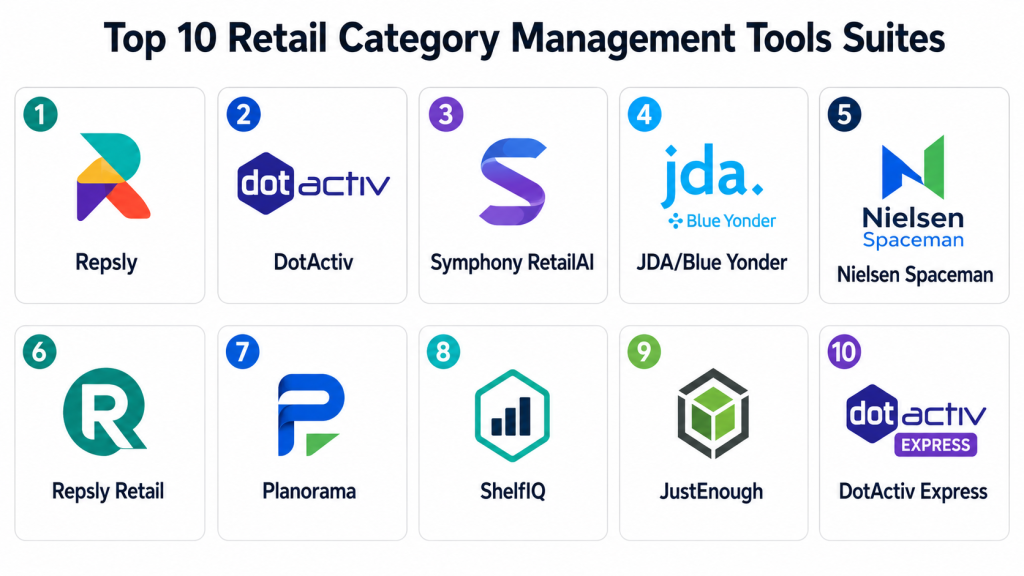
Top 10 Retail Category Management Tools Suites
#1 — Repsly
Short description: Repsly provides mobile-first category management and field merchandising, enabling retail teams to track sales, monitor compliance, and execute category strategies efficiently across multiple stores.
Key Features
- Mobile planogram and category compliance
- Field team task management
- Sales and inventory analytics
- Reporting dashboards
- Workflow automation
- Integration with POS and CRM
- Photo capture for visual audits
Pros
- Strong mobile support for field teams
- Easy-to-use interface
Cons
- Limited AI-driven insights
- Premium pricing for advanced features
Platforms / Deployment
- Web / iOS / Android
- Cloud
Security & Compliance
- MFA, encryption
- Not publicly stated
Integrations & Ecosystem
- Salesforce, POS systems
- Slack and team collaboration tools
Support & Community
- Email and chat support
- Knowledge base
#2 — DotActiv
Short description: DotActiv specializes in visual category management and merchandising, allowing teams to optimize product placement and track category performance using planograms and analytics.
Key Features
- Planogram design and execution
- Category performance analytics
- Shelf and space optimization
- Reporting dashboards
- Integration with ERP and POS
- Workflow collaboration
Pros
- Strong visual merchandising tools
- Detailed analytics for category performance
Cons
- Limited field team tracking
- Desktop-centric interface
Platforms / Deployment
- Web / Windows
- Cloud / Hybrid
Security & Compliance
- Encryption
- Not publicly stated
Integrations & Ecosystem
- ERP and POS systems
- Excel reporting tools
Support & Community
- Email support
- Training tutorials
#3 — Symphony RetailAI
Short description: Symphony RetailAI provides AI-powered category management, helping retailers forecast demand, optimize assortment, and improve overall category profitability.
Key Features
- AI-driven product assortment
- Promotion and campaign execution
- Inventory and stock analytics
- Real-time dashboards
- Field team task management
- POS and ERP integration
Pros
- Advanced AI analytics
- Scalable for enterprise retailers
Cons
- Higher pricing tier
- Complexity in setup
Platforms / Deployment
- Web / iOS / Android
- Cloud
Security & Compliance
- MFA, encryption
- SOC 2, GDPR
Integrations & Ecosystem
- SAP, Oracle ERP
- Analytics and reporting platforms
Support & Community
- Enterprise support
- Training materials
#4 — JDA/Blue Yonder
Short description: JDA/Blue Yonder provides enterprise-grade category management with predictive analytics, enabling retailers to maximize category performance and streamline planning.
Key Features
- Category planning and allocation
- Inventory and demand forecasting
- Planogram and shelf optimization
- Promotion tracking
- Real-time analytics dashboards
- Integration with ERP and POS
Pros
- Strong predictive analytics
- Enterprise-level scalability
Cons
- Premium pricing
- Complex deployment
Platforms / Deployment
- Web / Windows / macOS
- Cloud / Hybrid
Security & Compliance
- MFA, encryption
- SOC 2, ISO 27001
Integrations & Ecosystem
- ERP and POS systems
- Analytics dashboards
- Slack and team collaboration tools
Support & Community
- Enterprise onboarding
- Knowledge base
#5 — Nielsen Spaceman
Short description: Nielsen Spaceman focuses on category allocation and space management, providing actionable insights to improve in-store category execution and compliance.
Key Features
- Space allocation management
- Planogram compliance tracking
- Category performance analytics
- Reporting dashboards
- Mobile access for field teams
Pros
- Accurate allocation insights
- Mobile accessibility
Cons
- Focused mainly on space
- Higher pricing for analytics
Platforms / Deployment
- Web / iOS / Android
- Cloud
Security & Compliance
- MFA, encryption
- Not publicly stated
Integrations & Ecosystem
- ERP and POS systems
- Reporting tools
Support & Community
- Email support
- Tutorials
#6 — Repsly Retail
Short description: Repsly Retail combines category management, promotions tracking, and field operations into a mobile-first platform, streamlining execution across stores.
Key Features
- Planogram compliance and monitoring
- Promotion tracking and execution
- Task management for field teams
- Analytics dashboards
- Integration with CRM and POS
Pros
- Mobile-first platform
- Easy adoption for field teams
Cons
- Limited advanced analytics
- Cost scales with user count
Platforms / Deployment
- Web / iOS / Android
- Cloud
Security & Compliance
- MFA, encryption
- Not publicly stated
Integrations & Ecosystem
- Salesforce, POS systems
- Slack notifications
Support & Community
- Email and chat support
- Knowledge base
#7 — Planorama
Short description: Planorama leverages image recognition and analytics for category management, monitoring shelf compliance and product placement in real time.
Key Features
- Image-based shelf monitoring
- Planogram and compliance tracking
- Inventory analytics
- Reporting dashboards
- Mobile access for field teams
Pros
- Automated compliance monitoring
- Visual merchandising insights
Cons
- Dependent on image capture quality
- Premium pricing
Platforms / Deployment
- Web / iOS / Android
- Cloud
Security & Compliance
- MFA, encryption
- Not publicly stated
Integrations & Ecosystem
- POS and ERP systems
- Analytics dashboards
- Slack
Support & Community
- Email support
- Knowledge base
#8 — ShelfIQ
Short description: ShelfIQ provides real-time category management and analytics for in-store performance, helping retailers optimize product mix and placement.
Key Features
- Shelf and category monitoring
- Real-time inventory tracking
- Analytics dashboards
- Promotion and campaign tracking
- Mobile access for field teams
Pros
- Real-time insights
- Easy-to-use interface
Cons
- Limited enterprise reporting
- Smaller integration ecosystem
Platforms / Deployment
- Web / iOS / Android
- Cloud
Security & Compliance
- MFA, encryption
- Not publicly stated
Integrations & Ecosystem
- ERP and POS
- Analytics platforms
- APIs
Support & Community
- Email and chat support
- Tutorials
#9 — JustEnough
Short description: JustEnough provides category planning, assortment optimization, and demand forecasting, enabling retailers to maximize category profitability.
Key Features
- Category planning and allocation
- Assortment optimization
- Inventory and demand analytics
- Field team collaboration
- Integration with POS and ERP
Pros
- Comprehensive planning tools
- Supports multi-store operations
Cons
- Premium pricing
- Complexity in setup
Platforms / Deployment
- Web / iOS / Android
- Cloud
Security & Compliance
- MFA, encryption
- Not publicly stated
Integrations & Ecosystem
- ERP and POS
- Analytics dashboards
Support & Community
- Enterprise support
- Knowledge base
#10 — DotActiv Express
Short description: DotActiv Express provides streamlined category management and planogram tools for smaller retailers or regional operations.
Key Features
- Planogram design and management
- Category analytics
- Reporting dashboards
- Inventory tracking
- Mobile access for field teams
Pros
- Simple and quick adoption
- Affordable for smaller retailers
Cons
- Limited advanced analytics
- Smaller integration options
Platforms / Deployment
- Web / Windows / iOS / Android
- Cloud
Security & Compliance
- Encryption
- Not publicly stated
Integrations & Ecosystem
- POS and ERP systems
- Analytics dashboards
Support & Community
- Email support
- Tutorials
Comparison Table (Top 10)
| Tool Name | Best For | Platform(s) Supported | Deployment | Standout Feature | Public Rating |
|---|---|---|---|---|---|
| Repsly | Field merchandising teams | Web / iOS / Android | Cloud | Mobile-first category execution | N/A |
| DotActiv | Planogram and analytics | Web / Windows | Cloud / Hybrid | Shelf optimization | N/A |
| Symphony RetailAI | Enterprise retailers | Web / iOS / Android | Cloud | AI-powered category insights | N/A |
| JDA/Blue Yonder | Large retail chains | Web / Windows / macOS | Cloud / Hybrid | Predictive analytics | N/A |
| Nielsen Spaceman | Allocation and compliance | Web / iOS / Android | Cloud | Space and planogram management | N/A |
| Repsly Retail | Field teams & promotions | Web / iOS / Android | Cloud | Mobile-first execution | N/A |
| Planorama | Shelf monitoring teams | Web / iOS / Android | Cloud | Image-based compliance | N/A |
| ShelfIQ | Retail performance teams | Web / iOS / Android | Cloud | Real-time shelf insights | N/A |
| JustEnough | Merchandise planning | Web / iOS / Android | Cloud | Assortment optimization | N/A |
| DotActiv Express | Small retailers | Web / Windows / iOS | Cloud | Simple category management | N/A |
Evaluation & Scoring of Retail Category Management Tools
| Tool Name | Core (25%) | Ease (15%) | Integrations (15%) | Security (10%) | Performance (10%) | Support (10%) | Value (15%) | Weighted Total (0–10) |
|---|---|---|---|---|---|---|---|---|
| Repsly | 9 | 8 | 8 | 8 | 8 | 8 | 7 | 8.1 |
| DotActiv | 8 | 7 | 7 | 8 | 8 | 7 | 7 | 7.6 |
| Symphony RetailAI | 9 | 7 | 8 | 9 | 9 | 8 | 7 | 8.3 |
| JDA/Blue Yonder | 9 | 7 | 8 | 9 | 9 | 8 | 7 | 8.3 |
| Nielsen Spaceman | 8 | 7 | 7 | 8 | 8 | 7 | 7 | 7.6 |
| Repsly Retail | 9 | 8 | 8 | 8 | 8 | 8 | 7 | 8.1 |
| Planorama | 9 | 8 | 7 | 8 | 8 | 7 | 7 | 7.9 |
| ShelfIQ | 8 | 8 | 7 | 8 | 8 | 7 | 7 | 7.7 |
| JustEnough | 8 | 7 | 7 | 8 | 8 | 7 | 7 | 7.6 |
| DotActiv Express | 7 | 8 | 7 | 8 | 8 | 7 | 7 | 7.5 |
Interpretation: Weighted totals allow comparison of core category management, ease of use, integrations, security, performance, support, and value. Higher scores indicate better overall suitability.
Which Retail Category Management Tool Is Right for You?
Solo / Freelancer
DotActiv Express or ShelfIQ are ideal for small stores or single-location operations needing simple category monitoring.
SMB
Repsly, JustEnough, or DotActiv provide mid-market retailers with analytics, mobile field support, and planogram management.
Mid-Market
Symphony RetailAI, Planorama, and Repsly Retail offer AI-driven insights, reporting, and multi-store oversight.
Enterprise
JDA/Blue Yonder and Symphony RetailAI provide enterprise-grade analytics, AI recommendations, and scalable category management.
Budget vs Premium
Entry-level tools suit small retailers; premium platforms deliver advanced AI insights, multi-store scalability, and enhanced analytics.
Feature Depth vs Ease of Use
ShelfIQ and DotActiv Express are intuitive; Symphony RetailAI and JDA/Blue Yonder offer deep functionality with more complex onboarding.
Integrations & Scalability
Enterprise retailers should select platforms integrating POS, ERP, and analytics to scale operations across regions and product categories.
Security & Compliance Needs
Choose platforms with encryption, MFA, and compliance standards like SOC 2 or GDPR for handling sensitive retail data.
Frequently Asked Questions (FAQs)
1. How are pricing models structured?
Most tools offer subscription-based pricing with tiers based on user count, stores, and features. Enterprise pricing is customized.
2. What is the onboarding process?
Onboarding includes account setup, store configuration, field team training, and workflow customization.
3. Can data be imported from other systems?
Yes, via CSV import, API integration, or vendor-assisted migrations from legacy systems.
4. Are these platforms mobile-friendly?
Yes, most platforms provide iOS and Android apps for field and category management on the go.
5. What integrations are commonly available?
Common integrations include POS systems, ERP platforms, analytics dashboards, and collaboration tools like Slack.
6. How scalable are these platforms?
Enterprise-grade tools can manage hundreds of stores, thousands of SKUs, and multi-region operations.
7. Can these tools track promotions by category?
Yes, they monitor category-level promotions, compliance, and campaign performance across stores.
8. How are analytics and reporting handled?
Dashboards offer insights into category performance, shelf compliance, inventory, and promotional effectiveness.
9. How do AI features assist?
AI can recommend category adjustments, forecast demand, optimize product placement, and detect compliance issues.
10. What common mistakes should retailers avoid?
Avoid under-training field teams, neglecting data integrations, and ignoring analytics for actionable decisions.
Conclusion
Retail Category Management Tools Suites help retailers optimize product categories, improve sales performance, and enhance in-store execution. The “best” tool depends on store count, team size, and operational complexity. Small retailers may adopt DotActiv Express or ShelfIQ, mid-market Repsly or JustEnough, and enterprise organizations JDA/Blue Yonder or Symphony RetailAI. Evaluate features, AI capabilities, integrations, and security before adoption.
