Upgrade & Secure Your Future with DevOps, SRE, DevSecOps, MLOps!
We spend hours scrolling social media and waste money on things we forget, but won’t spend 30 minutes a day earning certifications that can change our lives.
Master in DevOps, SRE, DevSecOps & MLOps by DevOps School!
Learn from Guru Rajesh Kumar and double your salary in just one year.
Introduction
Retail Pricing Optimization Tools are software platforms that help retailers dynamically set and adjust prices to maximize revenue, profit margins, and competitiveness. In plain English, these tools analyze sales data, market trends, inventory levels, and customer behavior to recommend optimal pricing strategies.
With retail markets becoming increasingly competitive, accurate pricing is critical for maintaining profitability and customer satisfaction. Modern pricing optimization tools leverage AI and machine learning to predict demand, adjust pricing in real-time, and support promotional campaigns.
Real-world use cases include:
- Dynamic pricing adjustments based on inventory levels and demand
- Competitive price monitoring across markets
- Price elasticity analysis to optimize revenue
- Promotional planning and markdown management
- Integration with e-commerce and POS systems
Key buyer evaluation criteria:
- AI-driven pricing recommendations
- Real-time market and competitive analysis
- Integration with POS, e-commerce, and ERP systems
- Reporting and analytics dashboards
- Automated pricing rules and workflows
- Multi-channel and multi-store support
- Inventory and demand-based pricing
- Scalability and cloud accessibility
- Security and compliance
- Support and onboarding resources
Best for: Retail operations managers, pricing analysts, e-commerce managers, and merchandising teams in SMBs, mid-market, and enterprise retailers.
Not ideal for: Small stores or single-location retailers with limited inventory and static pricing needs.
Key Trends in Retail Pricing Optimization Tools
- AI and machine learning for predictive pricing and demand forecasting
- Real-time dynamic pricing across online and offline channels
- Automated promotional and markdown management
- Integration with POS, e-commerce, ERP, and analytics platforms
- Cloud-native systems enabling multi-location pricing adjustments
- Competitive intelligence and price monitoring across markets
- Scenario analysis and simulations for revenue optimization
- Price elasticity modeling for smarter discounting
- Flexible subscription and enterprise pricing models
- Enhanced security for pricing data and compliance
How We Selected These Tools (Methodology)
- Market adoption and recognition among retailers and pricing teams
- Feature completeness including AI recommendations, dynamic pricing, and analytics
- Reliability and performance metrics
- Security and compliance posture (encryption, role-based access)
- Integration with POS, e-commerce, ERP, and CRM platforms
- Scalability for SMB, mid-market, and enterprise retailers
- Ease of use and learning curve for pricing teams
- Reporting and visualization capabilities
- Vendor support and community engagement
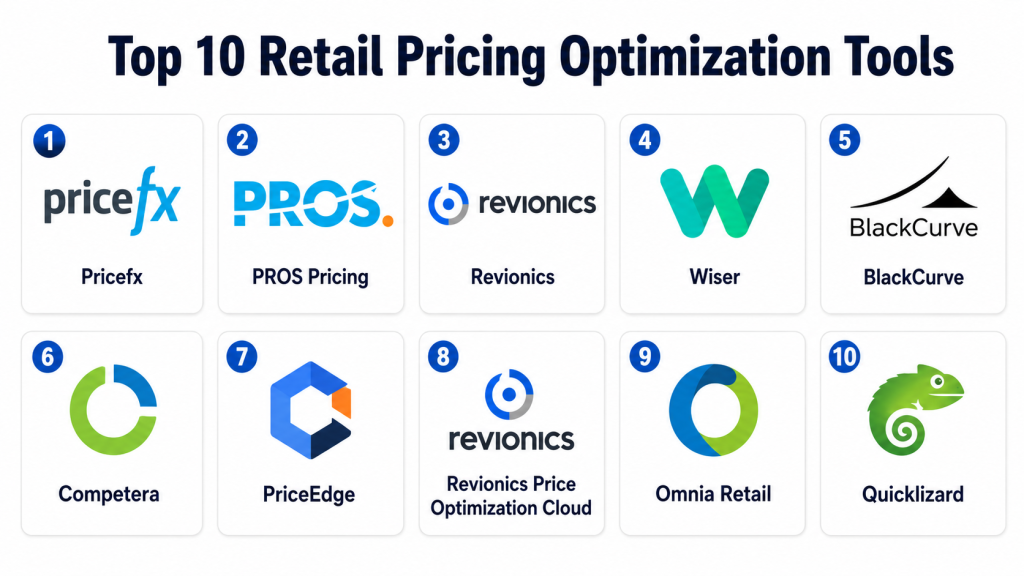
Top 10 Retail Pricing Optimization Tools
#1 — Pricefx
Short description: Pricefx is a cloud-based pricing optimization platform offering AI-driven recommendations and dynamic pricing for retailers. Best for multi-channel and enterprise retailers.
Key Features
- Price optimization and management
- AI-powered recommendations
- Dynamic pricing rules
- Competitive price monitoring
- Scenario analysis and simulations
- Integration with ERP and e-commerce
- Reporting dashboards
Pros
- Comprehensive pricing insights
- Flexible and scalable
Cons
- Premium pricing for advanced modules
- Steep learning curve
Platforms / Deployment
- Web
- Cloud
Security & Compliance
- Encryption and role-based access
- GDPR compliance
Integrations & Ecosystem
- ERP and POS systems
- E-commerce platforms
- API for custom workflows
Support & Community
- Tutorials and documentation
- Dedicated support
- Community forums
#2 — PROS Pricing
Short description: PROS Pricing provides AI-based retail pricing, revenue management, and dynamic optimization for retailers and distributors.
Key Features
- AI-driven price optimization
- Dynamic pricing and promotions
- Competitive price intelligence
- Analytics and reporting
- Multi-channel pricing support
- Inventory and demand-based pricing
Pros
- Powerful predictive analytics
- Scalable for large retailers
Cons
- Costly for smaller businesses
- Complex configuration
Platforms / Deployment
- Web
- Cloud
Security & Compliance
- Encryption, SSO
- Not publicly stated
Integrations & Ecosystem
- POS, ERP, and e-commerce
- API for custom integrations
Support & Community
- Tutorials and support
- Customer success teams
#3 — Revionics
Short description: Revionics provides pricing, promotions, and markdown optimization for retail and grocery sectors. Suitable for large-scale retailers.
Key Features
- AI-powered price recommendations
- Markdown and promotion optimization
- Real-time competitive pricing
- Demand forecasting
- Reporting and analytics
- Multi-store and channel support
Pros
- Industry-specific analytics
- Strong AI modeling
Cons
- Higher cost
- Learning curve for smaller teams
Platforms / Deployment
- Web
- Cloud
Security & Compliance
- Encryption and access control
- Not publicly stated
Integrations & Ecosystem
- POS, ERP, e-commerce
- API and connector support
Support & Community
- Online documentation
- Customer support
#4 — Wiser
Short description: Wiser provides price intelligence, optimization, and monitoring for retail businesses. Ideal for omnichannel retailers and brands.
Key Features
- Competitive price monitoring
- Price optimization and AI insights
- Dynamic pricing rules
- Analytics dashboards
- Inventory-based pricing
- Multi-channel pricing
Pros
- Real-time market insights
- AI-driven recommendations
Cons
- Premium pricing for full suite
- May require training for complex features
Platforms / Deployment
- Web
- Cloud
Security & Compliance
- Not publicly stated
Integrations & Ecosystem
- POS, e-commerce, ERP
- API support
Support & Community
- Knowledge base
- Email support
#5 — BlackCurve
Short description: BlackCurve offers retail price optimization with AI and analytics. Suitable for e-commerce and brick-and-mortar retailers.
Key Features
- AI pricing recommendations
- Dynamic and competitive pricing
- Promotion and discount management
- Reporting dashboards
- Multi-channel integration
- Scenario simulations
Pros
- Easy to use
- Strong analytics
Cons
- Limited offline support
- Smaller vendor ecosystem
Platforms / Deployment
- Web
- Cloud
Security & Compliance
- Encryption and access control
Integrations & Ecosystem
- E-commerce, POS, ERP
- API for custom workflows
Support & Community
- Tutorials and documentation
- Support team
#6 — Competera
Short description: Competera provides pricing optimization and competitive intelligence for retail and e-commerce. Best for large retailers needing AI-driven price recommendations.
Key Features
- AI-driven price optimization
- Competitor monitoring
- Markdown and promotion planning
- Multi-channel pricing
- Analytics dashboards
- Inventory-aware pricing
Pros
- Scalable for enterprise
- Strong competitive insights
Cons
- Premium pricing
- Requires training for AI features
Platforms / Deployment
- Web
- Cloud
Security & Compliance
- Encryption and role-based access
Integrations & Ecosystem
- POS, ERP, e-commerce platforms
- API support
Support & Community
- Documentation and tutorials
- Email support
#7 — PriceEdge
Short description: PriceEdge provides pricing optimization and promotion management for retailers. Suitable for SMB and mid-market e-commerce.
Key Features
- AI-based pricing recommendations
- Competitive pricing analysis
- Promotion and discount management
- Reporting dashboards
- Multi-channel pricing
Pros
- Affordable for mid-market
- User-friendly interface
Cons
- Limited advanced analytics
- Smaller integrations ecosystem
Platforms / Deployment
- Web
- Cloud
Security & Compliance
- Not publicly stated
Integrations & Ecosystem
- POS, ERP, e-commerce
- API for custom workflows
Support & Community
- Email and chat support
- Tutorials
#8 — Revionics Price Optimization Cloud
Short description: Provides cloud-based pricing optimization for retail and grocery. AI-powered for predictive pricing and promotions.
Key Features
- Dynamic pricing and recommendations
- Promotions and markdown optimization
- Competitive intelligence
- Multi-store and online support
- Reporting and analytics
Pros
- Cloud-based accessibility
- Industry-specific models
Cons
- Premium pricing
- Training required for full functionality
Platforms / Deployment
- Web
- Cloud
Security & Compliance
- Encryption, access control
Integrations & Ecosystem
- POS, ERP, e-commerce
- API for integration
Support & Community
- Documentation and support team
#9 — Omnia Retail
Short description: Omnia Retail offers price management, optimization, and automation for retailers and brands. Best for large e-commerce and omnichannel retailers.
Key Features
- AI-driven price optimization
- Competitive price tracking
- Multi-channel pricing automation
- Analytics and dashboards
- Promotion and markdown management
Pros
- Real-time pricing insights
- Automation features
Cons
- High cost
- Requires training
Platforms / Deployment
- Web
- Cloud
Security & Compliance
- Encryption
- Not publicly stated
Integrations & Ecosystem
- E-commerce and POS integration
- API support
Support & Community
- Tutorials and email support
#10 — Quicklizard
Short description: Quicklizard provides AI-powered pricing and markdown optimization for e-commerce and retail chains.
Key Features
- AI pricing recommendations
- Competitive price monitoring
- Dynamic promotions and discounts
- Analytics dashboards
- Inventory and demand-aware pricing
Pros
- Strong AI and predictive capabilities
- Multi-channel optimization
Cons
- Premium pricing
- Smaller user community
Platforms / Deployment
- Web
- Cloud
Security & Compliance
- Not publicly stated
Integrations & Ecosystem
- POS, ERP, e-commerce
- API support
Support & Community
- Documentation
- Email support
Comparison Table (Top 10)
| Tool Name | Best For | Platform(s) Supported | Deployment | Standout Feature | Public Rating |
|---|---|---|---|---|---|
| Pricefx | Enterprise & multi-channel | Web | Cloud | AI-driven pricing | N/A |
| PROS Pricing | Retailers & distributors | Web | Cloud | AI-based optimization | N/A |
| Revionics | Retail & grocery | Web | Cloud | Markdown & promo optimization | N/A |
| Wiser | Omnichannel retailers | Web | Cloud | Competitive intelligence | N/A |
| BlackCurve | E-commerce & SMB | Web | Cloud | AI-based recommendations | N/A |
| Competera | Enterprise retailers | Web | Cloud | Competitive & dynamic pricing | N/A |
| PriceEdge | SMB & mid-market | Web | Cloud | Promotion management | N/A |
| Revionics Cloud | Retail & grocery | Web | Cloud | Cloud-based AI optimization | N/A |
| Omnia Retail | Large e-commerce | Web | Cloud | Multi-channel pricing automation | N/A |
| Quicklizard | E-commerce & retail chains | Web | Cloud | AI predictive pricing | N/A |
Evaluation & Scoring of Retail Pricing Optimization Tools
| Tool Name | Core (25%) | Ease (15%) | Integrations (15%) | Security (10%) | Performance (10%) | Support (10%) | Value (15%) | Weighted Total (0–10) |
|---|---|---|---|---|---|---|---|---|
| Pricefx | 9 | 8 | 8 | 8 | 8 | 8 | 7 | 8.2 |
| PROS Pricing | 9 | 7 | 8 | 8 | 8 | 7 | 7 | 8.0 |
| Revionics | 8 | 7 | 8 | 8 | 8 | 7 | 7 | 7.8 |
| Wiser | 8 | 8 | 7 | 7 | 8 | 7 | 7 | 7.7 |
| BlackCurve | 7 | 8 | 7 | 7 | 7 | 7 | 7 | 7.2 |
| Competera | 9 | 7 | 8 | 8 | 8 | 7 | 7 | 7.9 |
| PriceEdge | 8 | 8 | 7 | 7 | 7 | 7 | 7 | 7.4 |
| Revionics Cloud | 8 | 7 | 8 | 8 | 8 | 7 | 7 | 7.8 |
| Omnia Retail | 8 | 7 | 7 | 7 | 7 | 7 | 7 | 7.3 |
| Quicklizard | 8 | 7 | 7 | 7 | 7 | 7 | 7 | 7.3 |
Interpretation: Weighted totals indicate which tools offer the strongest balance of AI pricing, usability, integrations, security, and overall value. Higher scores reflect better suitability for retailers of various sizes.
Which Retail Pricing Optimization Tool Is Right for You?
Solo / Freelancer
- BlackCurve or PriceEdge for affordable, easy-to-use solutions
SMB
- Wiser, PriceEdge, or Revionics Cloud for scalable pricing optimization
Mid-Market
- Pricefx, PROS Pricing, Competera for AI-driven recommendations
Enterprise
- Pricefx, PROS Pricing, Revionics, Omnia Retail for multi-channel optimization
Budget vs Premium
- Small teams: BlackCurve, PriceEdge
- Large enterprises: Pricefx, PROS, Competera
Feature Depth vs Ease of Use
- Wiser and BlackCurve balance usability and functionality
Integrations & Scalability
- Ensure POS, ERP, e-commerce, and analytics integrations
Security & Compliance Needs
- Choose tools with encryption, role-based access, and secure cloud deployment
Frequently Asked Questions (FAQs)
1. What pricing models do these tools use?
Subscription-based, often with tiered plans depending on features and transaction volume.
2. Can these tools handle multiple channels?
Yes, top solutions provide omnichannel pricing for online and physical stores.
3. Are mobile platforms supported?
Most cloud-based tools allow mobile access for pricing adjustments on the go.
4. Can AI predict demand and optimize prices automatically?
Yes, predictive analytics is a key feature of Pricefx, PROS, and Competera.
5. Are these solutions suitable for small retailers?
Yes, BlackCurve and PriceEdge offer affordable and user-friendly solutions.
6. Do they integrate with POS systems?
Yes, most tools integrate with major POS, ERP, and e-commerce platforms.
7. How secure is pricing data?
Encryption, role-based access, and compliance standards like GDPR are implemented in leading platforms.
8. Can they manage promotions and markdowns?
Yes, most include automated promotion planning and markdown optimization.
9. How scalable are these tools?
Enterprise platforms like Pricefx, PROS, and Revionics scale across multiple stores and regions.
10. Do these tools provide analytics and reporting?
Yes, dashboards provide insights into price performance, competitive intelligence, and margin optimization.
Conclusion
Selecting a retail pricing optimization tool depends on retailer size, product range, and pricing complexity. Small retailers may start with BlackCurve or PriceEdge, while mid-market and enterprise operations benefit from Pricefx, PROS Pricing, and Revionics for AI-driven, multi-channel optimization. A practical next step is to shortlist , pilot pricing strategies, and validate integration, analytics, and usability before full deployment.
