Upgrade & Secure Your Future with DevOps, SRE, DevSecOps, MLOps!
We spend hours scrolling social media and waste money on things we forget, but won’t spend 30 minutes a day earning certifications that can change our lives.
Master in DevOps, SRE, DevSecOps & MLOps by DevOps School!
Learn from Guru Rajesh Kumar and double your salary in just one year.
Introduction
Synthetic monitoring tools are platforms that simulate user interactions with websites, applications, and APIs to proactively measure performance, availability, and functionality. In plain English, these tools mimic real users to test system behavior before actual users experience issues.
Synthetic monitoring has become increasingly critical as applications grow in complexity with microservices, multi-cloud deployments, and hybrid infrastructure. By using pre-defined scripts, synthetic tools can detect performance degradation, errors, and outages early, allowing teams to resolve issues before they affect end-users.
Common real-world use cases include:
- Monitoring website uptime and page load performance
- Simulating transaction flows in web and mobile applications
- Measuring API response times and reliability
- Identifying performance regressions after deployments
- Benchmarking SLAs and service availability
Buyers should evaluate:
- Scripted transaction creation and flexibility
- Multi-browser and multi-device support
- Real-time alerting and notifications
- Dashboards and analytics
- Integration with APM, RUM, and DevOps tools
- API and CI/CD pipeline support
- Global monitoring locations
- SLA reporting and compliance features
- Ease of setup and maintenance
- Cost and scalability
Best for: DevOps engineers, SREs, QA teams, IT operations, product managers, mid-market and enterprise organizations running web or mobile applications.
Not ideal for: very small sites with minimal traffic or apps where uptime is not critical, or teams relying solely on RUM without need for proactive testing.
Key Trends in Synthetic Monitoring Tools
AI-powered anomaly detection for identifying performance deviations automatically.
- Integration with observability platforms for combining RUM, logs, metrics, and synthetic tests.
- Multi-cloud and hybrid infrastructure support for distributed applications.
- Automated synthetic testing pipelines integrated with CI/CD for proactive issue detection.
- Script reuse and modular testing to simplify test creation and maintenance.
- Global monitoring locations to measure regional performance differences.
- API monitoring and SLA tracking for enterprise-level compliance.
- Mobile and multi-browser testing to cover diverse user environments.
- Performance benchmarking and trend analysis to support capacity planning.
- Privacy-compliant monitoring to ensure GDPR, CCPA, and other regulations are respected.
How We Selected These Tools
The top synthetic monitoring tools were chosen based on:
- Market adoption and enterprise recognition
- Feature depth for scripted transactions and monitoring
- Real-time alerting and analytics capabilities
- Integration with observability and DevOps ecosystems
- Multi-device, multi-browser, and global monitoring support
- Ease of deployment and usability
- Scalability for enterprise workloads
- Security, compliance, and privacy features
- Support for API and automated pipeline testing
- Community, documentation, and enterprise support quality
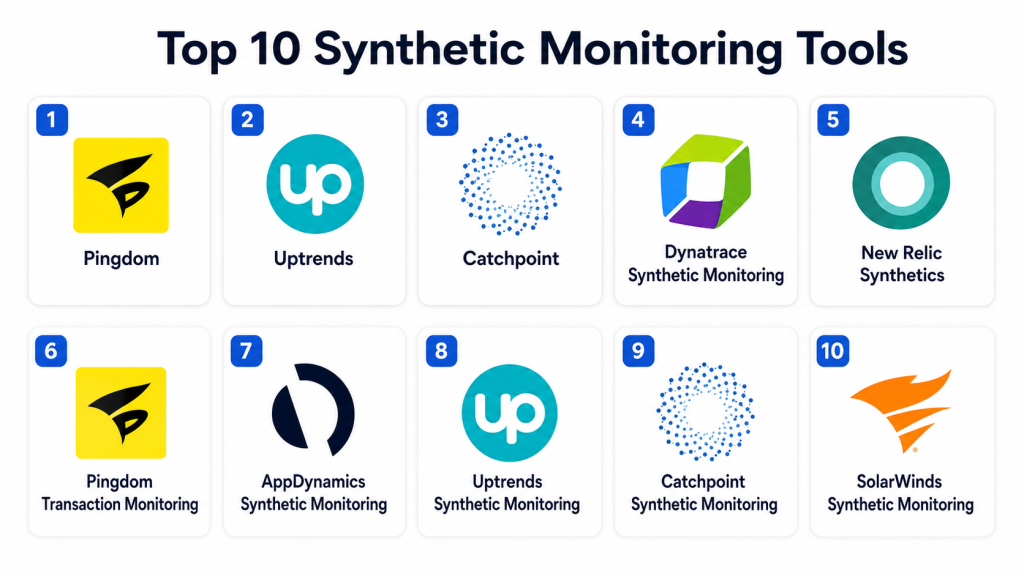
Top 10 Synthetic Monitoring Tools
#1 — Pingdom
Short description: Pingdom provides web performance and availability monitoring through synthetic tests. Ideal for SMEs and enterprises needing proactive website performance insights.
Key Features
- Website uptime monitoring
- Scripted transaction testing
- Multi-browser support
- Global monitoring locations
- Real-time alerting
- Dashboard visualization
- SLA reporting
Pros
- Easy setup and user-friendly
- Alerts allow proactive issue resolution
- Broad geographic monitoring
Cons
- Limited advanced analytics
- Fewer API integrations
- Mobile application testing is basic
Platforms / Deployment
Web / Linux / Windows / macOS
Cloud
Security & Compliance
SSO, encryption, RBAC; SOC 2 and GDPR compliance configurable.
Integrations & Ecosystem
- Slack, PagerDuty
- Email alerts
- CI/CD notifications
- Dashboard APIs
Support & Community
Documentation, support plans, and community forums available.
#2 — Uptrends
Short description: Uptrends offers synthetic monitoring for websites, APIs, and applications with global checkpoints and detailed performance analytics.
Key Features
- Multi-step transaction monitoring
- API performance monitoring
- Global monitoring nodes
- Mobile and web testing
- Real-time alerts and notifications
- Performance trend analysis
- SLA tracking
Pros
- Comprehensive global monitoring
- API and web transaction support
- Customizable alerting
Cons
- Setup can be complex for advanced scripts
- Enterprise pricing may be high
- Limited open-source integration
Platforms / Deployment
Web / iOS / Android
Cloud
Security & Compliance
SSO, RBAC, encryption; GDPR and SOC 2 support.
Integrations & Ecosystem
- Slack, Teams, PagerDuty
- CI/CD pipelines
- REST API for automation
- Dashboard integrations
Support & Community
Enterprise support, documentation, and onboarding guides.
#3 — Catchpoint
Short description: Catchpoint provides synthetic monitoring with multi-channel testing, including web, mobile, and APIs, designed for large-scale enterprises.
Key Features
- Multi-browser synthetic tests
- API and transaction monitoring
- Global testing nodes
- Performance and availability dashboards
- AI-assisted anomaly detection
- SLA and uptime reporting
- Mobile and network simulation
Pros
- Enterprise-grade monitoring
- Advanced analytics and reporting
- Global coverage with diverse endpoints
Cons
- Pricing can be high for small teams
- Requires technical expertise for advanced setup
- Learning curve for dashboard customization
Platforms / Deployment
Web / iOS / Android
Cloud
Security & Compliance
Supports encryption, SSO, RBAC, and audit logs; GDPR, SOC 2 compliance supported.
Integrations & Ecosystem
- APM platforms
- DevOps pipelines
- Alerting systems
- API access for custom integration
Support & Community
Documentation, professional support, and enterprise onboarding available.
#4 — Dynatrace Synthetic Monitoring
Short description: Dynatrace provides synthetic monitoring as part of its full-stack observability platform with AI-driven performance insights.
Key Features
- Web and API synthetic testing
- Global testing locations
- Multi-step transaction recording
- AI-based anomaly detection
- Dashboards and alerting
- SLA monitoring
- Integration with Dynatrace observability
Pros
- Unified with full-stack observability
- AI-driven insights
- Enterprise scalability
Cons
- Complexity for small teams
- Subscription cost can be high
- Advanced features require configuration
Platforms / Deployment
Web / iOS / Android
Cloud / Hybrid
Security & Compliance
SSO, RBAC, MFA, encryption; SOC 2 and GDPR support.
Integrations & Ecosystem
- CI/CD pipelines
- Cloud providers
- Alerting tools
- Dynatrace APM
Support & Community
Enterprise support, documentation, and community forums.
#5 — New Relic Synthetics
Short description: New Relic Synthetics simulates user interactions to proactively monitor website and API performance, providing automated alerts and dashboards.
Key Features
- Scripted browser transactions
- API endpoint monitoring
- Multi-location monitoring
- Alerting and notification
- Dashboard visualizations
- SLA compliance reporting
- Automated uptime checks
Pros
- Easy integration with New Relic APM
- Multi-browser support
- Automated performance testing
Cons
- Requires New Relic subscription for full features
- Advanced scripting may be complex
- Limited mobile-specific monitoring
Platforms / Deployment
Web / Linux / Windows / macOS / iOS / Android
Cloud
Security & Compliance
SSO, RBAC, MFA, encryption; GDPR and SOC 2 support.
Integrations & Ecosystem
- New Relic APM
- CI/CD pipelines
- Alerting tools
- APIs for automation
Support & Community
Documentation, enterprise support, and community resources.
#6 — Pingdom Transaction Monitoring
Short description: Pingdom Transaction Monitoring provides synthetic scripts for multi-step workflows and uptime monitoring.
Key Features
- Scripted web transactions
- Page load and performance metrics
- Global checkpoints
- Alerting and notifications
- SLA reporting
- Dashboard visualizations
- Multi-browser testing
Pros
- Simple setup
- Effective for proactive monitoring
- Alerts reduce downtime risk
Cons
- Limited advanced analytics
- Focused mainly on web monitoring
- Enterprise integrations may be limited
Platforms / Deployment
Web / Linux / Windows / macOS
Cloud
Security & Compliance
SSO, encryption, RBAC; GDPR compliance configurable.
Integrations & Ecosystem
- Slack, PagerDuty
- CI/CD notifications
- Dashboard APIs
Support & Community
Documentation, support plans, and tutorials.
#7 — AppDynamics Synthetic Monitoring
Short description: AppDynamics Synthetic Monitoring tracks web and API transactions to simulate user interactions and detect performance issues.
Key Features
- Browser and API synthetic tests
- Multi-location monitoring
- Scripted multi-step transactions
- Real-time alerts
- Dashboard visualizations
- SLA and uptime monitoring
- Integration with AppDynamics APM
Pros
- Enterprise-grade monitoring
- AI-assisted detection
- Deep integration with APM
Cons
- Complex for small deployments
- Subscription costs are high
- Advanced scripting requires expertise
Platforms / Deployment
Web / iOS / Android
Cloud / Hybrid
Security & Compliance
SSO, RBAC, MFA, encryption; SOC 2, GDPR supported.
Integrations & Ecosystem
- CI/CD pipelines
- Cloud providers
- Alerting tools
- AppDynamics APM
Support & Community
Enterprise support, documentation, and professional services.
#8 — Uptrends Synthetic Monitoring
Short description: Uptrends provides multi-step, multi-location synthetic monitoring for websites, APIs, and mobile applications.
Key Features
- Multi-step transaction monitoring
- API and web monitoring
- Global checkpoints
- Real-time alerting
- Dashboards and analytics
- SLA compliance
- Mobile application support
Pros
- Comprehensive global coverage
- Easy to set up scripts
- Alerts improve reliability
Cons
- Advanced analytics may require subscription
- Learning curve for scripting
- Enterprise-grade integrations may be limited
Platforms / Deployment
Web / iOS / Android
Cloud
Security & Compliance
Encryption, SSO, RBAC; GDPR compliance configurable.
Integrations & Ecosystem
- Slack, Teams, PagerDuty
- CI/CD pipelines
- APIs for automation
- Dashboard integration
Support & Community
Documentation, enterprise support, and tutorials.
#9 — Catchpoint Synthetic Monitoring
Short description: Catchpoint provides proactive monitoring for web, API, and mobile applications with AI-driven insights and global monitoring points.
Key Features
- Multi-step transaction monitoring
- Web, mobile, and API support
- AI anomaly detection
- Global checkpoints
- Real-time dashboards
- Alerts and notifications
- SLA and trend reporting
Pros
- Enterprise-scale global monitoring
- AI-assisted performance analysis
- Supports complex transaction flows
Cons
- Cost may be high for SMBs
- Setup complexity for large environments
- Advanced dashboard customization required
Platforms / Deployment
Web / iOS / Android
Cloud
Security & Compliance
SSO, RBAC, encryption; SOC 2 and GDPR supported.
Integrations & Ecosystem
- APM integration
- CI/CD pipelines
- Alerting systems
- API automation
Support & Community
Enterprise support, documentation, and community resources.
#10 — SolarWinds Synthetic Monitoring
Short description: SolarWinds Synthetic Monitoring offers scripted user interactions and uptime monitoring for websites and APIs with enterprise reporting.
Key Features
- Scripted web transactions
- API endpoint monitoring
- Real-time alerts and dashboards
- SLA tracking
- Global monitoring nodes
- Performance trend analytics
- Multi-browser support
Pros
- Enterprise-grade visibility
- SLA and compliance support
- Multi-location monitoring
Cons
- On-premises deployment complexity
- Pricing may be high for smaller teams
- Advanced scripting requires expertise
Platforms / Deployment
Web / Linux / Windows / macOS
Cloud / Self-hosted
Security & Compliance
SSO, RBAC, encryption; SOC 2 and GDPR configurable.
Integrations & Ecosystem
- CI/CD pipelines
- Cloud providers
- Alerting tools
- Dashboard APIs
Support & Community
Enterprise support, documentation, and professional services.
Comparison Table
| Tool Name | Best For | Platform(s) Supported | Deployment | Standout Feature | Public Rating |
|---|---|---|---|---|---|
| Pingdom | SMB & web monitoring | Web / Linux / Windows / macOS | Cloud | Uptime and transaction monitoring | N/A |
| Uptrends | Global monitoring | Web / iOS / Android | Cloud | Multi-step synthetic transactions | N/A |
| Catchpoint | Enterprise apps | Web / iOS / Android | Cloud | AI-driven synthetic monitoring | N/A |
| Dynatrace | Cloud-native apps | Web / iOS / Android | Cloud / Hybrid | AI-based anomaly detection | N/A |
| New Relic Synthetics | Enterprise web & APIs | Web / Linux / Windows / macOS / iOS / Android | Cloud | End-to-end transaction testing | N/A |
| Raygun | Web & mobile apps | Web / iOS / Android | Cloud | Session replay and crash monitoring | N/A |
| AppDynamics | Enterprise applications | Web / iOS / Android | Cloud / Hybrid | Transaction visibility & synthetic testing | N/A |
| Pingdom Transaction Monitoring | Web workflows | Web / Linux / Windows / macOS | Cloud | Multi-step web transactions | N/A |
| Appsee | Mobile apps | iOS / Android | Cloud | Session replay for mobile UX | N/A |
| SolarWinds | Enterprise web & APIs | Web / Linux / Windows / macOS | Cloud / Self-hosted | SLA and trend analytics | N/A |
Evaluation & Scoring of Synthetic Monitoring Tools
| Tool Name | Core (25%) | Ease (15%) | Integrations (15%) | Security (10%) | Performance (10%) | Support (10%) | Value (15%) | Weighted Total (0–10) |
|---|---|---|---|---|---|---|---|---|
| Pingdom | 8 | 9 | 7 | 7 | 8 | 7 | 8 | 7.95 |
| Uptrends | 8 | 8 | 8 | 8 | 8 | 8 | 7 | 8.05 |
| Catchpoint | 9 | 7 | 8 | 8 | 9 | 8 | 7 | 8.30 |
| Dynatrace | 9 | 7 | 8 | 8 | 9 | 8 | 7 | 8.25 |
| New Relic Synthetics | 9 | 8 | 8 | 8 | 8 | 8 | 7 | 8.20 |
| Raygun | 8 | 8 | 7 | 7 | 8 | 7 | 7 | 7.65 |
| AppDynamics | 9 | 7 | 8 | 8 | 8 | 8 | 7 | 8.10 |
| Pingdom Transaction Monitoring | 8 | 8 | 7 | 7 | 8 | 7 | 7 | 7.75 |
| Appsee | 7 | 7 | 6 | 7 | 7 | 6 | 7 | 6.85 |
| SolarWinds | 9 | 7 | 7 | 8 | 8 | 8 | 7 | 8.05 |
Scores reflect comparative strengths in monitoring capabilities, integration flexibility, ease of use, and enterprise support.
Which Synthetic Monitoring Tool Is Right for You?
Solo / Freelancer
Pingdom, Raygun, and GA4 Synthetics are practical, cost-effective options for individual developers or small web projects.
SMB
Uptrends, Pingdom Transaction Monitoring, and Appsee provide centralized monitoring for small to medium teams with global checkpoints.
Mid-Market
Dynatrace, New Relic Synthetics, AppDynamics, and Catchpoint are suitable for monitoring complex web and mobile applications across regions and devices.
Enterprise
Catchpoint, Dynatrace, New Relic Synthetics, AppDynamics, and SolarWinds provide enterprise-grade synthetic monitoring with AI insights, scalability, and compliance features.
Budget vs Premium
Budget-conscious teams may start with Pingdom, Appsee, or Pingdom Transaction Monitoring. Premium teams can benefit from Catchpoint, Dynatrace, or New Relic for advanced AI insights and global synthetic coverage.
Feature Depth vs Ease of Use
Pingdom, Raygun, and Uptrends offer ease of use. Dynatrace, New Relic, AppDynamics, and Catchpoint provide deeper insights and enterprise capabilities.
Integrations & Scalability
Enterprises should prioritize CI/CD, APM, cloud, and observability integrations. Dynatrace, New Relic, and Catchpoint offer extensive integration ecosystems.
Security & Compliance Needs
SOC 2, ISO 27001, and GDPR compliance are supported by Dynatrace, New Relic, AppDynamics, and Catchpoint for enterprise environments.
Frequently Asked Questions
What is synthetic monitoring?
Synthetic monitoring simulates user interactions with applications or APIs to proactively detect performance or availability issues.
Why is synthetic monitoring important?
It allows teams to identify potential issues before users encounter them, improving reliability and customer experience.
Can synthetic monitoring track APIs?
Yes. Most synthetic monitoring tools provide API transaction tracking alongside web and mobile monitoring.
How does synthetic differ from RUM?
Synthetic monitoring simulates user interactions, while RUM collects data from actual users in real time.
Are synthetic monitoring tools useful for mobile apps?
Yes. Tools like Dynatrace, AppDynamics, Raygun, and Appsee provide mobile SDKs for synthetic testing.
Can these tools integrate with CI/CD?
Yes. Integration allows automated performance testing with new deployments and continuous monitoring.
What metrics are commonly monitored?
Page load time, transaction success rate, response time, error rates, uptime, and SLA compliance are commonly tracked.
Are open-source synthetic monitoring tools available?
Fewer options exist compared to SaaS; most enterprises rely on commercial tools for global coverage and advanced features.
How often should synthetic tests run?
Continuous or scheduled intervals are typical, depending on monitoring goals and SLA requirements.
Can synthetic monitoring help with SLA compliance?
Yes. Synthetic tests provide reliable data to track SLA adherence and uptime commitments.
Conclusion
Synthetic monitoring tools are essential for proactive performance and availability management. Dynatrace, New Relic, AppDynamics, and Catchpoint provide enterprise-grade AI-assisted insights, scalability, and compliance. Pingdom, Uptrends, Raygun, and Appsee offer cost-effective options for SMBs and developers.
