Upgrade & Secure Your Future with DevOps, SRE, DevSecOps, MLOps!
We spend hours scrolling social media and waste money on things we forget, but won’t spend 30 minutes a day earning certifications that can change our lives.
Master in DevOps, SRE, DevSecOps & MLOps by DevOps School!
Learn from Guru Rajesh Kumar and double your salary in just one year.
Introduction
Product Lifecycle Management (PLM) toolkits are software platforms that enable organizations to manage the entire lifecycle of a product—from ideation, design, and development to manufacturing, maintenance, and end-of-life. PLM platforms centralize product data, streamline workflows, enhance collaboration among teams, and ensure compliance with industry standards.
In , PLM solutions have become more critical as organizations face increasing product complexity, globalization of supply chains, and growing regulatory scrutiny. Modern PLM platforms incorporate AI-driven analytics, cloud collaboration, and integration with ERP, CAD, and IoT systems, enabling faster time-to-market, reduced errors, and optimized product quality.
Real-world use cases:
- Automotive manufacturers coordinating complex design and assembly workflows.
- Electronics firms managing product revisions and supplier collaboration.
- Aerospace organizations ensuring compliance and traceability across multiple sites.
- Consumer goods companies streamlining new product development cycles.
- Medical device manufacturers meeting stringent regulatory requirements.
Evaluation criteria buyers should consider:
- Centralized product data management
- Change and revision control
- Workflow automation for design and approval processes
- Integration with CAD, ERP, and IoT systems
- Collaboration tools for multi-site teams
- Regulatory compliance and audit tracking
- Analytics and reporting dashboards
- Cloud, on-premises, or hybrid deployment
- Security and role-based access control
- Scalability for multi-product, multi-site environments
Best for: Product managers, engineers, quality teams, and cross-functional product development teams across industries such as automotive, electronics, aerospace, consumer goods, and medical devices.
Not ideal for: Small teams with minimal product complexity or organizations relying solely on spreadsheets for basic product data management.
Key Trends in PLM Toolkits
- AI-driven design optimization and predictive analytics.
- Cloud-native PLM platforms enabling global collaboration.
- Integration with IoT sensors for real-time product monitoring.
- Hybrid deployment models (cloud and on-premises).
- Automated change management and revision control.
- Enhanced workflow automation for approvals and design review.
- Multi-site and multi-product scalability.
- Integration with ERP, MES, and CAD systems.
- Advanced analytics and KPI dashboards for product performance.
- Flexible subscription-based licensing and cost optimization.
How We Selected These Tools (Methodology)
- Market adoption and brand recognition.
- Completeness of PLM functionalities for design, development, and lifecycle management.
- Reliability and performance in real-world deployments.
- Security posture and compliance certifications.
- Integration with ERP, CAD, MES, and IoT systems.
- Scalability for multi-product and multi-site operations.
- Documentation, training, and support quality.
- AI and predictive analytics capabilities.
- Customer testimonials and industry-specific use cases.
- Flexibility in deployment (cloud, on-premises, hybrid).
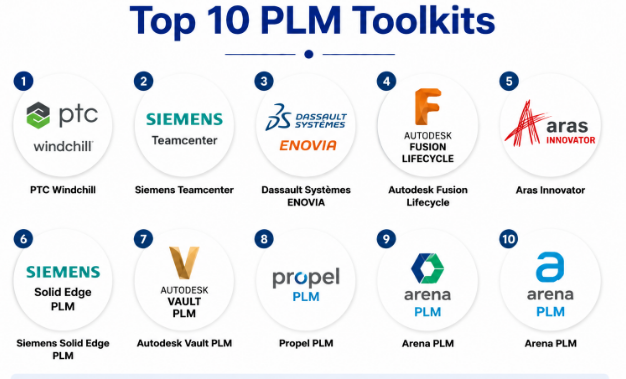
Top 10 PLM Toolkits
#1 — PTC Windchill
Short description: PTC Windchill is a comprehensive PLM platform designed for product data management, collaboration, and lifecycle control. It is widely used in complex manufacturing and engineering environments to improve efficiency and compliance.
Key Features
- Centralized product data management
- Change and revision control
- Workflow automation for design and approvals
- Integration with CAD and ERP systems
- Multi-site collaboration
- Regulatory compliance management
- Analytics and reporting dashboards
Pros
- Enterprise-grade scalability
- Strong CAD and ERP integration
- Robust compliance and traceability
Cons
- Steep learning curve for new users
- Licensing cost may be high
- Implementation can be complex
Platforms / Deployment
- Windows / Linux / Web
- Cloud / Self-hosted / Hybrid
Security & Compliance
- SSO/SAML, encryption, RBAC
- ISO 9001, ISO 13485, FDA 21 CFR Part 11 (Varies / N/A)
Integrations & Ecosystem
- CAD systems (Creo, SolidWorks)
- ERP systems (SAP, Oracle)
- IoT and PLM analytics
- API for custom workflows
Support & Community
- Vendor support and professional services
- Online documentation and training
- User community forums
#2 — Siemens Teamcenter
Short description: Siemens Teamcenter PLM provides a scalable solution for managing product information, engineering workflows, and collaboration across global teams. It is widely adopted in automotive, aerospace, and electronics industries.
Key Features
- Product data management and BOM control
- Change and configuration management
- Workflow automation and approvals
- CAD and ERP integrations
- Collaboration tools for distributed teams
- Regulatory compliance management
- Reporting and analytics dashboards
Pros
- Enterprise-grade reliability
- Multi-site and multi-product support
- Strong integration with Siemens CAD tools
Cons
- Complex implementation
- Requires specialized training
- Licensing can be expensive
Platforms / Deployment
- Windows / Linux / Web
- Cloud / Self-hosted / Hybrid
Security & Compliance
- Encryption, SSO, RBAC
- ISO 9001, ISO 13485, FDA compliance (Varies / N/A)
Integrations & Ecosystem
- Siemens CAD and CAM tools
- ERP systems (SAP, Oracle)
- IoT and PLM analytics
- API for customization
Support & Community
- Vendor support and training
- Online knowledge base
- Industry-focused user community
#3 — Dassault Systèmes ENOVIA
Short description: ENOVIA PLM supports product innovation and lifecycle management, providing collaborative tools, compliance tracking, and integration with 3DEXPERIENCE platforms for complex product development.
Key Features
- Centralized product lifecycle management
- Collaborative project management
- Change and configuration control
- CAD integration
- Multi-site collaboration
- Compliance and audit management
- Advanced reporting and analytics
Pros
- Strong collaboration capabilities
- Integration with 3DEXPERIENCE suite
- Enterprise scalability
Cons
- High implementation complexity
- Licensing costs
- Learning curve for new users
Platforms / Deployment
- Windows / Linux / Web
- Cloud / Self-hosted / Hybrid
Security & Compliance
- SSO/SAML, encryption, RBAC
- ISO 9001, ISO 13485 (Varies / N/A)
Integrations & Ecosystem
- Dassault CAD tools (CATIA)
- ERP integration
- PLM analytics and IoT
- API support
Support & Community
- Vendor support and onboarding
- Training and documentation
- Active user forums
#4 — Autodesk Fusion Lifecycle
Short description: Fusion Lifecycle PLM offers cloud-based product lifecycle management for design, collaboration, and compliance. It is suited for small to mid-market manufacturers seeking a flexible cloud solution.
Key Features
- Cloud-native product lifecycle management
- Workflow and approval automation
- CAD and ERP integration
- BOM management
- Multi-site collaboration
- Compliance tracking
- Reporting dashboards
Pros
- Cloud-native, easy deployment
- Scalable for mid-sized organizations
- Intuitive interface
Cons
- Less enterprise functionality
- Limited advanced analytics
- Subscription-based licensing
Platforms / Deployment
- Web / Windows / macOS
- Cloud
Security & Compliance
- Encryption, RBAC
- ISO compliance (Varies / N/A)
Integrations & Ecosystem
- Autodesk CAD integration
- ERP platforms
- API support for custom workflows
- Collaboration tools
Support & Community
- Vendor documentation
- Online tutorials
- Customer support
#5 — Aras Innovator
Short description: Aras Innovator is an open, flexible PLM platform for complex product development, offering cloud and on-premises deployment with strong workflow automation and integration capabilities.
Key Features
- Enterprise PLM with open architecture
- Change and revision management
- Workflow automation
- CAD and ERP integrations
- Multi-site collaboration
- Compliance tracking
- Reporting and dashboards
Pros
- Flexible and customizable
- Open architecture supports integrations
- Scalable for enterprise operations
Cons
- Advanced configuration may require technical expertise
- Learning curve for new users
- Some modules require additional cost
Platforms / Deployment
- Windows / Linux / Web
- Cloud / Self-hosted / Hybrid
Security & Compliance
- SSO, encryption, RBAC
- ISO and FDA compliance (Varies / N/A)
Integrations & Ecosystem
- CAD tools integration
- ERP platforms
- API support
- IoT and analytics integration
Support & Community
- Vendor support and documentation
- Training resources
- Active community forums
#6 — Oracle Agile PLM
Short description: Oracle Agile PLM provides end-to-end product lifecycle management for global enterprises, combining design, compliance, and collaboration tools to streamline product development.
Key Features
- Product data management
- Change and configuration management
- Workflow automation
- ERP integration
- Compliance management
- Multi-site collaboration
- Analytics and reporting dashboards
Pros
- Strong enterprise functionality
- Integration with Oracle ERP
- Scalable for large organizations
Cons
- Complex implementation
- High licensing cost
- Learning curve for new users
Platforms / Deployment
- Windows / Linux / Web
- Cloud / Self-hosted / Hybrid
Security & Compliance
- SSO/SAML, encryption, RBAC
- ISO 9001, ISO 13485 (Varies / N/A)
Integrations & Ecosystem
- Oracle ERP
- CAD systems
- PLM analytics
- API support
Support & Community
- Vendor training and documentation
- Professional support tiers
- User community
#7 — Siemens Solid Edge PLM
Short description: Solid Edge PLM integrates product data, workflow, and design management, offering real-time collaboration and regulatory compliance for manufacturers of complex products.
Key Features
- Product data management
- Workflow automation
- CAD integration
- Compliance tracking
- Multi-site collaboration
- Reporting and analytics
Pros
- Strong CAD integration
- User-friendly interface
- Scalable for enterprise
Cons
- Limited advanced analytics
- Windows-centric deployment
- Licensing costs
Platforms / Deployment
- Windows / Web
- Cloud / Self-hosted / Hybrid
Security & Compliance
- Encryption, RBAC
- ISO compliance (Varies / N/A)
Integrations & Ecosystem
- Siemens CAD tools
- ERP systems
- API support
- IoT integration
Support & Community
- Vendor documentation
- Training programs
- User community
#8 — Autodesk Vault PLM
Short description: Vault PLM centralizes product data and design workflows, offering version control, collaboration, and integration with Autodesk design software.
Key Features
- Data and document management
- Revision and change control
- Workflow automation
- CAD integration
- Compliance and audit tracking
- Reporting dashboards
Pros
- Tight integration with Autodesk CAD
- Cloud and on-premises deployment
- User-friendly interface
Cons
- Limited multi-enterprise collaboration
- Advanced features require training
- Less suitable for large global enterprises
Platforms / Deployment
- Windows / Web
- Cloud / Self-hosted / Hybrid
Security & Compliance
- Encryption and RBAC
- ISO compliance (Varies / N/A)
Integrations & Ecosystem
- Autodesk CAD tools
- ERP systems
- API support
Support & Community
- Vendor support
- Training and documentation
- Online user forums
#9 — Propel PLM
Short description: Propel PLM is a cloud-native platform for product data management, collaboration, and compliance, designed for fast-growing companies and mid-market manufacturers.
Key Features
- Cloud-based PLM
- Workflow automation
- Collaboration tools
- Change and revision management
- Compliance tracking
- ERP integration
- Analytics dashboards
Pros
- Cloud-native and scalable
- Intuitive interface
- Rapid deployment
Cons
- Less advanced analytics
- Enterprise features may be limited
- Subscription-based pricing
Platforms / Deployment
- Web / Windows
- Cloud
Security & Compliance
- SSO, encryption, RBAC
- ISO and FDA compliance (Varies / N/A)
Integrations & Ecosystem
- ERP and MES integration
- CAD tools
- API support
- IoT integration
Support & Community
- Vendor support
- Training resources
- Customer community
#10 — Arena PLM
Short description: Arena PLM provides cloud-based product lifecycle management for global manufacturers, enabling collaboration, compliance, and lifecycle visibility across teams.
Key Features
- Cloud-based PLM
- Change and revision management
- Workflow automation
- Compliance and audit tracking
- Multi-site collaboration
- ERP and CAD integration
- Reporting dashboards
Pros
- Cloud-native and scalable
- Enterprise collaboration capabilities
- Compliance-ready
Cons
- Subscription pricing
- Learning curve for complex workflows
- Advanced modules require additional cost
Platforms / Deployment
- Web / Windows
- Cloud
Security & Compliance
- SSO, encryption, RBAC
- ISO 9001, ISO 13485 (Varies / N/A)
Integrations & Ecosystem
- CAD and ERP systems
- API for workflow automation
- IoT and analytics integration
Support & Community
- Vendor support and documentation
- Training resources
- Online community
Comparison Table (Top 10)
| Tool Name | Best For | Platform(s) Supported | Deployment | Standout Feature | Public Rating |
|---|---|---|---|---|---|
| PTC Windchill | Complex manufacturing | Windows / Linux / Web | Cloud / Self-hosted / Hybrid | End-to-end product lifecycle control | N/A |
| Siemens Teamcenter | Enterprise manufacturing | Windows / Linux / Web | Cloud / Self-hosted / Hybrid | Multi-site collaboration | N/A |
| Dassault ENOVIA | Aerospace, automotive | Windows / Linux / Web | Cloud / Self-hosted / Hybrid | Collaborative product development | N/A |
| Autodesk Fusion Lifecycle | SMB to mid-market | Web / Windows / macOS | Cloud | Cloud-native PLM | N/A |
| Aras Innovator | Enterprise customization | Windows / Linux / Web | Cloud / Self-hosted / Hybrid | Open architecture and flexibility | N/A |
| Oracle Agile PLM | Large enterprises | Windows / Linux / Web | Cloud / Self-hosted / Hybrid | ERP-integrated PLM | N/A |
| Siemens Solid Edge PLM | CAD-intensive manufacturing | Windows / Web | Cloud / Self-hosted / Hybrid | Strong CAD integration | N/A |
| Autodesk Vault PLM | Design data management | Windows / Web | Cloud / Self-hosted / Hybrid | Tight Autodesk CAD integration | N/A |
| Propel PLM | Fast-growing mid-market | Web / Windows | Cloud | Cloud-native and intuitive | N/A |
| Arena PLM | Global manufacturing | Web / Windows | Cloud | Enterprise collaboration and compliance | N/A |
Evaluation & Scoring of PLM Tools
| Tool Name | Core (25%) | Ease (15%) | Integrations (15%) | Security (10%) | Performance (10%) | Support (10%) | Value (15%) | Weighted Total (0–10) |
|---|---|---|---|---|---|---|---|---|
| PTC Windchill | 9 | 7 | 9 | 8 | 9 | 8 | 7 | 8.1 |
| Siemens Teamcenter | 9 | 6 | 9 | 8 | 9 | 7 | 7 | 7.9 |
| Dassault ENOVIA | 9 | 6 | 8 | 7 | 8 | 7 | 6 | 7.5 |
| Autodesk Fusion Lifecycle | 8 | 8 | 7 | 7 | 8 | 7 | 7 | 7.6 |
| Aras Innovator | 8 | 7 | 8 | 7 | 8 | 7 | 7 | 7.5 |
| Oracle Agile PLM | 9 | 6 | 8 | 8 | 9 | 7 | 6 | 7.6 |
| Siemens Solid Edge PLM | 8 | 7 | 8 | 7 | 8 | 7 | 7 | 7.5 |
| Autodesk Vault PLM | 8 | 8 | 7 | 7 | 8 | 7 | 7 | 7.5 |
| Propel PLM | 7 | 8 | 7 | 7 | 7 | 7 | 6 | 7.1 |
| Arena PLM | 8 | 7 | 8 | 7 | 8 | 7 | 7 | 7.5 |
Interpretation: Weighted totals indicate comparative PLM platform performance across core features, usability, integrations, security, reliability, support, and value. Higher scores reflect stronger overall capability.
Which PLM Tool Is Right for You?
Solo / Freelancer
- Cloud-native platforms like Autodesk Fusion Lifecycle or Propel PLM provide intuitive, scalable tools for small teams or startups.
SMB
- Autodesk Vault PLM, Fusion Lifecycle, or Propel PLM offer flexible workflows and cloud deployment for mid-market organizations.
Mid-Market
- PTC Windchill, Siemens Solid Edge PLM, or Aras Innovator provide advanced workflow automation, CAD integration, and multi-site support.
Enterprise
- Siemens Teamcenter, Dassault ENOVIA, Oracle Agile PLM, or Arena PLM deliver enterprise-grade features, compliance, and global collaboration capabilities.
Budget vs Premium
- Cloud-first or subscription-based PLM platforms (Fusion Lifecycle, Propel) suit smaller budgets.
- Enterprise-scale PLM (Windchill, Teamcenter, ENOVIA) provide extensive features and integration at a premium cost.
Feature Depth vs Ease of Use
- Beginner-friendly: Autodesk Fusion Lifecycle, Propel PLM.
- Advanced capabilities: PTC Windchill, Siemens Teamcenter, Dassault ENOVIA.
Integrations & Scalability
- Evaluate CAD, ERP, MES, and IoT integrations.
- Multi-site scalability is critical for global enterprises.
Security & Compliance Needs
- Ensure platforms provide encryption, RBAC, audit logs, and regulatory compliance capabilities for ISO, FDA, or industry-specific standards.
Frequently Asked Questions (FAQs)
1. What are the pricing models for PLM tools?
PLM tools typically offer subscription, enterprise, or site-based licenses. Costs vary by deployment scale, user count, and features.
2. How long does PLM implementation take?
Small deployments may take a few weeks; enterprise-scale implementations can require several months for configuration, integration, and validation.
3. Can PLM tools integrate with CAD and ERP systems?
Yes, modern PLM platforms support integration with CAD, ERP, MES, and IoT systems for end-to-end product lifecycle management.
4. Are cloud-based PLM tools secure?
Leading platforms provide encryption, SSO, RBAC, and audit logging. Enterprise deployments may require additional security audits.
5. Which industries benefit most from PLM?
Automotive, aerospace, electronics, consumer goods, medical devices, and other manufacturing sectors with complex product development.
6. Do PLM tools support multi-site collaboration?
Yes, enterprise PLM platforms allow global teams to collaborate, share data, and manage products across multiple sites.
7. Are PLM platforms easy to learn?
Ease of use varies. Tools like Autodesk Fusion Lifecycle and Propel PLM are user-friendly; Windchill and Teamcenter require specialized training.
8. How do PLM tools improve product quality?
By centralizing product data, enforcing workflows, and enabling analytics, PLM tools reduce errors, ensure compliance, and improve traceability.
9. Can PLM tools handle version control and change management?
Yes, all leading PLM platforms offer robust revision and change management to track updates and ensure consistency across teams.
10. Are there alternatives to PLM software?
For small teams or simple products, spreadsheets, shared drives, or basic document management systems may suffice, but they lack workflow automation and compliance features.
Conclusion
PLM toolkits are critical for organizations aiming to optimize product development, streamline collaboration, and ensure compliance. Small and mid-market companies may find cloud-native solutions like Autodesk Fusion Lifecycle or Propel PLM sufficient, while enterprise organizations benefit from comprehensive platforms such as PTC Windchill, Siemens Teamcenter, or Dassault ENOVIA. Evaluate integration, scalability, and compliance requirements, platforms, and conduct pilot implementations to determine the best fit for your organization.
