Upgrade & Secure Your Future with DevOps, SRE, DevSecOps, MLOps!
We spend hours scrolling social media and waste money on things we forget, but won’t spend 30 minutes a day earning certifications that can change our lives.
Master in DevOps, SRE, DevSecOps & MLOps by DevOps School!
Learn from Guru Rajesh Kumar and double your salary in just one year.
Introduction
Payment gateway platforms are digital solutions that securely authorize and process online payments for businesses and consumers. They act as intermediaries between merchants, banks, and payment networks, ensuring transactions are fast, secure, and reliable.
In , payment gateways are more critical than ever due to the surge in e-commerce, subscription services, and digital payments. Modern platforms leverage AI for fraud detection, automation for transaction monitoring, and APIs for seamless integration with business applications.
Real-world use cases include:
- E-commerce platforms enabling online checkout and recurring billing.
- Retail businesses accepting card, UPI, or mobile wallet payments.
- SaaS companies managing subscriptions and automated billing.
- Marketplaces facilitating payments between multiple vendors and buyers.
- International businesses handling multi-currency transactions.
Key evaluation criteria for buyers:
- Supported payment methods (cards, wallets, UPI, BNPL)
- Transaction processing speed and reliability
- Fraud detection and AI-powered risk analytics
- Security and compliance (PCI DSS, SOC 2, ISO 27001, GDPR)
- API availability for integrations with websites, apps, or ERPs
- Pricing structure and transaction fees
- Reporting, analytics, and dashboards
- Scalability and global coverage
- Customer support and developer resources
Best for: Online merchants, e-commerce businesses, SaaS providers, marketplaces, and fintech companies.
Not ideal for: Companies with minimal digital transactions or offline-only businesses.
Key Trends in Payment Gateway Platforms
- AI-powered fraud detection and predictive risk analytics
- Real-time payments and settlement processing
- Integration with multiple payment methods including wallets, BNPL, and crypto
- API-first design for seamless integration with apps, ERPs, and marketplaces
- Cloud-based platforms for scalability and resilience
- Subscription and recurring billing automation
- Enhanced security with encryption, MFA, and tokenization
- Multi-currency and global payment support
- Subscription and usage-based pricing models
- Embedded financial services for loyalty, rewards, and financing
How We Selected These Tools (Methodology)
- Market adoption and mindshare among e-commerce, SaaS, and retail businesses
- Feature completeness including payment methods, fraud detection, and reporting
- Reliability and performance metrics like uptime and transaction success rate
- Security posture including PCI DSS, SOC 2, and encryption standards
- Integration capabilities with APIs, ERPs, marketplaces, and apps
- Fit for different business sizes and industries
- AI and automation for risk and payment processing
- Ease of use and onboarding experience
- Customer support, developer resources, and community engagement
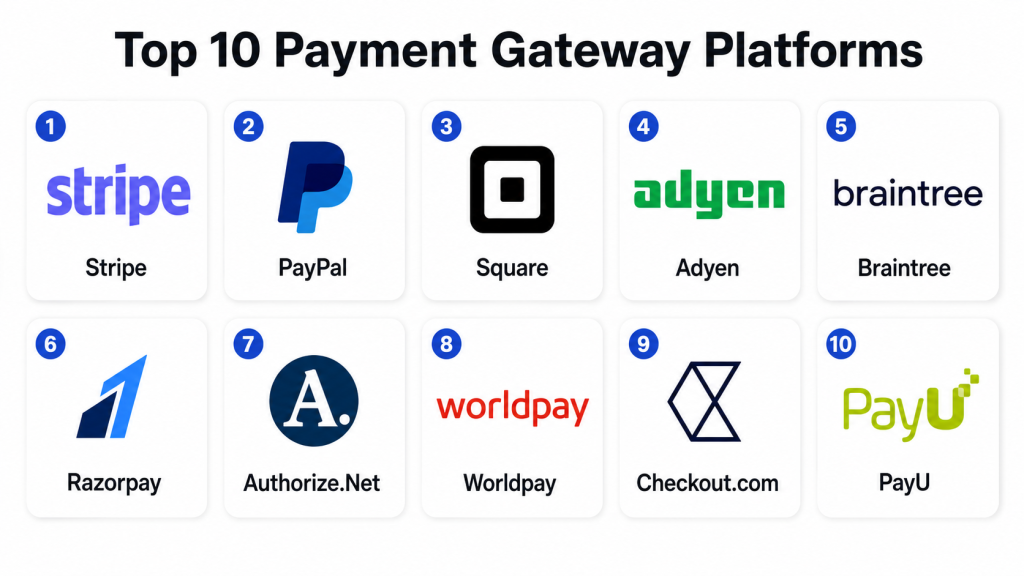
Top 10 Payment Gateway Platforms
#1 — Stripe
Short description :
Stripe is a cloud-based payment gateway enabling businesses to accept online payments globally. It offers advanced API integrations, real-time analytics, and fraud prevention tools for e-commerce, SaaS, and marketplaces.
Key Features
- Accepts cards, wallets, BNPL, and international payments
- Developer-friendly API and SDKs
- Fraud prevention and AI-powered risk analytics
- Subscription and recurring billing
- Real-time dashboards and reporting
- Multi-currency support
Pros
- Flexible and scalable for startups and enterprises
- Strong developer ecosystem
Cons
- Pricing may be higher for high-volume merchants
- Advanced customization may require developer resources
Platforms / Deployment
- Web / iOS / Android
- Cloud
Security & Compliance
- PCI DSS, SOC 2
- Encryption, MFA, tokenization
Integrations & Ecosystem
- E-commerce platforms (Shopify, WooCommerce)
- SaaS billing systems
- Accounting and ERP integrations
Support & Community
- Extensive documentation and API references
- Developer community and support forums
- Enterprise support options
#2 — PayPal
Short description :
PayPal provides digital payments and gateway services for merchants and consumers worldwide. It supports online checkout, invoicing, and subscription payments with strong security and buyer protection.
Key Features
- Accepts cards, PayPal balance, and wallets
- Subscription and recurring billing
- Buyer and seller protection
- Analytics and reporting dashboards
- Fraud detection and risk management
Pros
- Globally recognized and trusted
- Easy integration with marketplaces and websites
Cons
- Higher transaction fees for certain volumes
- Limited flexibility for complex integrations
Platforms / Deployment
- Web / iOS / Android
- Cloud
Security & Compliance
- PCI DSS, GDPR
- Encryption, fraud monitoring, MFA
Integrations & Ecosystem
- Marketplaces (eBay, Etsy)
- E-commerce platforms
- Accounting and invoicing software
Support & Community
- Online support and help center
- Community forums
- Enterprise support plans
#3 — Square
Short description :
Square offers payment gateway and point-of-sale solutions for small to medium businesses. It supports online payments, mobile payments, and in-store transactions with simple setup and reporting.
Key Features
- Online and in-person payments
- Recurring billing and invoicing
- Analytics dashboards
- Fraud detection
- Multi-currency and mobile wallet support
Pros
- Easy to set up for small businesses
- Integrated POS and online payments
Cons
- Limited global coverage
- Advanced features require paid plans
Platforms / Deployment
- Web / iOS / Android
- Cloud
Security & Compliance
- PCI DSS
- Encryption, fraud monitoring
Integrations & Ecosystem
- E-commerce platforms (Wix, Shopify)
- Accounting tools (QuickBooks)
- API access for custom apps
Support & Community
- Online documentation
- Support via chat and email
- User forums
#4 — Adyen
Short description:
Adyen is an enterprise payment gateway supporting global payments, multi-currency processing, and fraud management. It caters to large-scale e-commerce, marketplaces, and retail enterprises.
Key Features
- Global payment processing
- Fraud prevention and risk management
- Multi-currency support
- API integrations for marketplaces
- Analytics and reporting dashboards
Pros
- Enterprise-grade reliability
- Strong global coverage
Cons
- Pricing geared toward large businesses
- Complex setup for small merchants
Platforms / Deployment
- Web / iOS / Android
- Cloud
Security & Compliance
- PCI DSS, SOC 2
- Encryption, MFA
Integrations & Ecosystem
- Marketplaces and ERP systems
- E-commerce platforms
- Accounting and reporting tools
Support & Community
- Dedicated enterprise support
- Documentation and onboarding guides
- Developer resources
#5 — Braintree
Short description:
Braintree, a PayPal service, provides global payment processing and subscription management for merchants and marketplaces, supporting multiple payment methods including cards, wallets, and BNPL.
Key Features
- Multi-currency payments
- Recurring billing and subscription management
- Fraud detection tools
- Analytics and reporting
- Wallets and PayPal integration
Pros
- Flexible for marketplaces and SaaS
- Supports multiple payment types
Cons
- Limited offline payment options
- Advanced features may require developer skills
Platforms / Deployment
- Web / iOS / Android
- Cloud
Security & Compliance
- PCI DSS, GDPR
- Encryption, tokenization
Integrations & Ecosystem
- E-commerce platforms
- SaaS billing systems
- Accounting software
Support & Community
- Developer documentation
- Online support and guides
- Enterprise support options
#6 — Razorpay
Short description :
Razorpay provides payment gateway solutions for India-based businesses and startups, enabling card, UPI, wallets, and subscription payments with simple APIs.
Key Features
- Cards, UPI, wallets, and net banking
- Recurring and subscription billing
- Analytics and reporting dashboards
- Fraud prevention and risk monitoring
- Mobile SDKs
Pros
- Affordable and fast integration
- Localized for Indian merchants
Cons
- Limited international coverage
- Advanced analytics require paid plans
Platforms / Deployment
- Web / iOS / Android
- Cloud
Security & Compliance
- PCI DSS, ISO 27001
- MFA, encryption
Integrations & Ecosystem
- E-commerce platforms
- Accounting and ERP integrations
- API for custom apps
Support & Community
- Email and chat support
- Developer documentation
- Community forums
#7 — Authorize.Net
Short description :
Authorize.Net is a US-based payment gateway that supports online, mobile, and recurring payments for SMEs and e-commerce merchants.
Key Features
- Credit card and e-check processing
- Subscription and recurring billing
- Fraud detection and monitoring
- API for custom integration
- Analytics and reporting
Pros
- Trusted for US-based merchants
- Reliable and secure
Cons
- Limited global reach
- Legacy interface may feel dated
Platforms / Deployment
- Web / iOS / Android
- Cloud
Security & Compliance
- PCI DSS
- Encryption, fraud monitoring
Integrations & Ecosystem
- E-commerce platforms
- ERP and accounting tools
- Custom API integration
Support & Community
- Documentation and guides
- Email and phone support
- Community forums
#8 — Worldpay
Short description:
Worldpay provides enterprise-grade payment gateway services, supporting multi-currency payments, fraud detection, and analytics for global merchants.
Key Features
- Global payment processing
- Multi-currency support
- Fraud monitoring and analytics
- Recurring billing and subscription management
- API for integration
Pros
- Strong global coverage
- Enterprise reliability
Cons
- Pricing may be high for SMBs
- Complex onboarding
Platforms / Deployment
- Web / iOS / Android
- Cloud
Security & Compliance
- PCI DSS, SOC 2
- Encryption, MFA
Integrations & Ecosystem
- E-commerce platforms
- ERP and accounting software
- Payment and marketplace APIs
Support & Community
- Enterprise support teams
- Documentation and onboarding
- Developer resources
#9 — Checkout.com
Short description:
Checkout.com offers global payment processing for e-commerce and SaaS businesses, supporting cards, wallets, and alternative payment methods.
Key Features
- Multi-currency and global payments
- Fraud detection and risk analytics
- Recurring billing and subscriptions
- API-first integration
- Analytics dashboards
Pros
- Fast global transactions
- Flexible API integrations
Cons
- Enterprise focus may be complex for small merchants
- Pricing not ideal for low-volume merchants
Platforms / Deployment
- Web / iOS / Android
- Cloud
Security & Compliance
- PCI DSS, SOC 2
- Encryption, MFA
Integrations & Ecosystem
- E-commerce platforms
- ERP and SaaS apps
- Developer API support
Support & Community
- Documentation and guides
- Enterprise support options
- Developer community
#10 — PayU
Short description :
PayU is a payment gateway for emerging markets, enabling card, UPI, wallets, and local payment methods with easy API integration and subscription management.
Key Features
- Multi-method payment support
- Subscription and recurring billing
- Fraud prevention and risk monitoring
- Analytics and reporting dashboards
- Mobile SDK and web integration
Pros
- Localized for emerging markets
- Affordable and scalable
Cons
- Limited global coverage
- Advanced features require paid tiers
Platforms / Deployment
- Web / iOS / Android
- Cloud
Security & Compliance
- PCI DSS, ISO 27001
- Encryption, MFA
Integrations & Ecosystem
- E-commerce platforms
- Accounting and ERP software
- API access for custom apps
Support & Community
- Email and chat support
- Developer documentation
- Community forums
Comparison Table (Top 10)
| Tool Name | Best For | Platform(s) Supported | Deployment | Standout Feature | Public Rating |
|---|---|---|---|---|---|
| Stripe | Global merchants | Web / iOS / Android | Cloud | Developer-friendly API | N/A |
| PayPal | E-commerce & marketplaces | Web / iOS / Android | Cloud | Trusted global payments | N/A |
| Square | SMBs | Web / iOS / Android | Cloud | POS & online integration | N/A |
| Adyen | Enterprise merchants | Web / iOS / Android | Cloud | Global payment coverage | N/A |
| Braintree | Marketplaces & SaaS | Web / iOS / Android | Cloud | Subscription & BNPL | N/A |
| Razorpay | Indian merchants | Web / iOS / Android | Cloud | Localized payments | N/A |
| Authorize.Net | US-based SMEs | Web / iOS / Android | Cloud | Reliable US payments | N/A |
| Worldpay | Enterprise global | Web / iOS / Android | Cloud | Multi-currency support | N/A |
| Checkout.com | E-commerce & SaaS | Web / iOS / Android | Cloud | API-first payments | N/A |
| PayU | Emerging markets | Web / iOS / Android | Cloud | Localized payment methods | N/A |
Evaluation & Scoring of Payment Gateway Platforms
| Tool Name | Core (25%) | Ease (15%) | Integrations (15%) | Security (10%) | Performance (10%) | Support (10%) | Value (15%) | Weighted Total (0–10) |
|---|---|---|---|---|---|---|---|---|
| Stripe | 9 | 8 | 9 | 9 | 9 | 8 | 7 | 8.6 |
| PayPal | 8 | 8 | 7 | 9 | 8 | 8 | 7 | 8.1 |
| Square | 7 | 9 | 7 | 8 | 7 | 7 | 8 | 7.7 |
| Adyen | 9 | 7 | 8 | 9 | 9 | 8 | 7 | 8.4 |
| Braintree | 8 | 8 | 7 | 9 | 8 | 7 | 7 | 8.0 |
| Razorpay | 7 | 8 | 6 | 8 | 7 | 7 | 8 | 7.5 |
| Authorize.Net | 7 | 8 | 6 | 8 | 7 | 7 | 7 | 7.3 |
| Worldpay | 9 | 7 | 8 | 9 | 9 | 8 | 7 | 8.4 |
| Checkout.com | 9 | 7 | 8 | 9 | 8 | 7 | 7 | 8.1 |
| PayU | 7 | 8 | 6 | 8 | 7 | 7 | 8 | 7.5 |
Interpretation: Scores compare core payment features, usability, integrations, security, performance, support, and value. Weighted totals provide a summary, but selection depends on transaction volume, geography, and business type.
Which Payment Gateway Platform Is Right for You?
Solo / Freelancer
- Stripe, PayPal, or Razorpay for easy setup and global or local payments.
SMB
- Square, Stripe, or Braintree for online and POS payments with recurring billing.
Mid-Market
- Adyen, Checkout.com, or Worldpay for enterprise-grade payment capabilities.
Enterprise
- Adyen, Worldpay, Stripe, or Braintree for global coverage, API flexibility, and advanced risk management.
Budget vs Premium
- SMBs can select Stripe, Square, or Razorpay for cost efficiency; enterprises benefit from Adyen or Worldpay for scale.
Feature Depth vs Ease of Use
- Enterprise solutions provide advanced features but require developer integration; smaller merchants benefit from easy-to-use platforms.
Integrations & Scalability
- Ensure APIs, ERP/CRM connections, and multi-currency support for future growth.
Security & Compliance Needs
- PCI DSS, SOC 2, encryption, and fraud detection are mandatory for business and customer protection.
Frequently Asked Questions (FAQs)
1. What is a payment gateway platform?
A payment gateway securely processes online transactions between merchants, banks, and consumers.
2. What pricing models exist?
Models include per-transaction fees, subscription-based plans, or usage-based pricing depending on volume and features.
3. How long does onboarding take?
Small merchants can integrate within hours; enterprises may require days or weeks for full API and POS integration.
4. Are these platforms secure?
Yes, most comply with PCI DSS, SOC 2, and use encryption, MFA, and tokenization to ensure secure payments.
5. Can these gateways handle subscriptions?
Yes, platforms like Stripe, Braintree, and PayPal offer recurring billing and subscription management.
6. Which platforms support international payments?
Stripe, PayPal, Adyen, and Worldpay support multi-currency and global payments.
7. How do gateways detect fraud?
AI-powered analytics, transaction monitoring, and risk scoring identify suspicious behavior and reduce chargebacks.
8. Are mobile payments supported?
Yes, all top platforms provide mobile SDKs and web apps for payments via smartphones or tablets.
9. Can I integrate with e-commerce platforms?
Yes, popular gateways integrate with Shopify, WooCommerce, Wix, Magento, and other e-commerce platforms.
10. What are common integration mistakes?
Mistakes include neglecting testing, ignoring API updates, and underestimating international payment complexities.
Conclusion
Payment gateway platforms are essential for businesses accepting digital payments. SMBs may prioritize ease of use and affordability, while enterprises need global coverage, API flexibility, and advanced fraud detection. Shortlist 2–3 platforms, test integrations, and validate compliance and security before deployment to ensure seamless and secure payment operations.
