Upgrade & Secure Your Future with DevOps, SRE, DevSecOps, MLOps!
We spend hours scrolling social media and waste money on things we forget, but won’t spend 30 minutes a day earning certifications that can change our lives.
Master in DevOps, SRE, DevSecOps & MLOps by DevOps School!
Learn from Guru Rajesh Kumar and double your salary in just one year.
Introduction
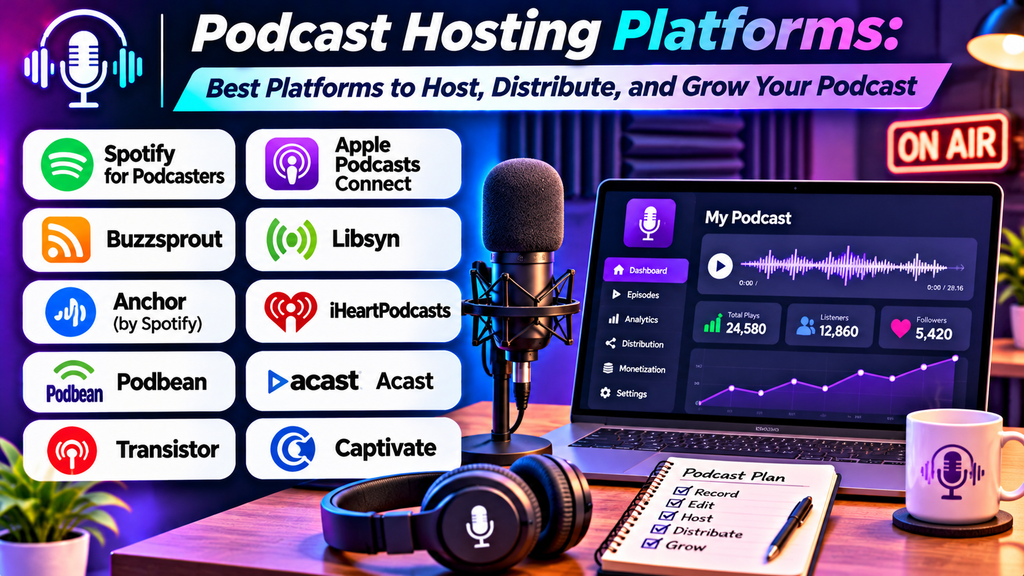
Podcasting has become a popular way to share knowledge, tell stories, interview experts, and build an audience. Whether you are launching your first show or managing an established podcast, a reliable hosting platform can simplify episode publishing, distribution, analytics, and audience growth.
Podcast hosting services store your audio files and help make episodes available through podcast directories and listening applications. Some platforms also provide websites, monetization features, private feeds, and tools for understanding audience engagement.
What Are Podcast Hosting Platforms?
Podcast hosting platforms are services that store podcast episodes and help publishers distribute them to listeners. Most generate an RSS feed, which podcast directories and compatible listening apps use to retrieve new episodes and show information.
Depending on the provider, features may include:
- Audio episode storage and publishing.
- RSS feed creation and management.
- Distribution support for podcast directories.
- Downloads and audience analytics.
- Podcast websites and embeddable players.
- Monetization, advertising, or listener subscription options.
A podcast host is different from a podcast recording or editing application. Hosting manages publication and distribution, while recording and editing tools help create the episode itself.
Best Podcast Hosting Platforms
1. Spotify for Creators
Spotify for Creators offers tools for publishing and managing podcasts, with features that may vary by format, region, and current product offering.
Key features:
- Podcast publishing and episode management.
- Show analytics and audience insights.
- Support for managing a podcast presence on Spotify.
- Additional creator features depending on eligibility and availability.
Best for: Beginners and independent podcasters who want to start publishing and manage their show with a straightforward workflow.
Limitations: Features for hosting, distribution, monetization, and external podcast platforms may differ from those offered by dedicated paid hosting providers. Review the current options before migrating an existing show.
2. Buzzsprout
Buzzsprout is a podcast hosting service designed to make episode publishing and podcast management accessible to independent creators.
Key features:
- Episode uploading and publishing tools.
- Podcast directory distribution support.
- Download statistics and performance reports.
- Podcast website and embeddable player options.
Best for: New podcasters, small teams, and creators who want a guided publishing workflow.
Limitations: Storage, publishing allowances, advanced features, and pricing depend on the selected plan.
3. Podbean
Podbean provides podcast hosting, publishing, analytics, and monetization-related features for different types of podcast creators.
Key features:
- Episode hosting and RSS feed management.
- Podcast website and player options.
- Audience analytics.
- Monetization and live audio features where supported.
Best for: Independent podcasters and publishers interested in combining hosting with audience development and monetization tools.
Limitations: Features and monetization eligibility can depend on the plan, region, and platform policies.
4. Transistor
Transistor is a podcast hosting platform designed for creators, businesses, and teams managing one or more shows.
Key features:
- Hosting and distribution tools.
- Analytics for podcast performance.
- Management of multiple podcasts under supported plans.
- Private podcasting options for eligible workflows.
Best for: Businesses, professional creators, and podcast networks that need to manage several shows.
Limitations: Its paid plans may be more than an occasional podcaster needs, and limits vary by plan.
5. Captivate
Captivate focuses on podcast hosting, publishing, audience analytics, and growth-oriented tools.
Key features:
- Podcast publishing and RSS feed management.
- Download and audience analytics.
- Support for managing multiple shows under eligible plans.
- Marketing and distribution tools.
Best for: Independent publishers and growing podcast businesses that want analytics and show-management features.
Limitations: Available tools and show limits depend on the selected plan, and beginners may not need every growth feature.
6. RSS.com
RSS.com provides podcast hosting and publishing features intended to help creators manage episodes and distribute their shows.
Key features:
- Podcast hosting and RSS feed generation.
- Episode publishing and management.
- Analytics and performance reporting.
- Distribution and monetization options, depending on eligibility and plan.
Best for: New podcasters and independent publishers looking for a structured hosting workflow.
Limitations: Plan features, distribution options, and monetization availability can change, so compare current offerings before choosing.
7. Libsyn
Libsyn is an established podcast hosting provider offering publishing, distribution, and analytics tools.
Key features:
- Audio episode hosting and publishing.
- RSS feed and distribution management.
- Podcast statistics.
- Monetization options on supported plans.
Best for: Experienced podcasters, publishers, and creators who prefer a dedicated hosting service.
Limitations: Costs and available features depend on the plan, and the interface may feel less streamlined to some new users than newer services.
Podcast Hosting Platforms Comparison
| Platform | Main strength | Best suited for | Cost category |
|---|---|---|---|
| Spotify for Creators | Accessible podcast publishing | Beginners and independent creators | Free creator features; terms vary |
| Buzzsprout | Guided publishing workflow | New podcasters and small teams | Free or paid options may vary |
| Podbean | Hosting with audience and monetization tools | Independent creators | Free and paid plans vary |
| Transistor | Managing multiple shows | Businesses and podcast networks | Paid plans |
| Captivate | Analytics and growth features | Growing podcast businesses | Paid plans |
| RSS.com | Hosting and distribution workflow | Independent publishers | Plan-dependent |
| Libsyn | Established hosting and publishing tools | Experienced podcasters and publishers | Paid plans |
Pricing, storage limits, analytics, monetization, and distribution features can change. Review the current terms of each service before signing up or moving an existing podcast.
How to Choose the Right Podcast Hosting Platform
- Define your podcast goals: A hobby show, branded business podcast, interview series, and subscription-based podcast may need different features.
- Check distribution support: Confirm that you can submit or distribute your show to the listening applications and directories your audience uses.
- Review storage and publishing limits: Consider episode length, publishing frequency, audio quality, and expected growth.
- Compare analytics: Look for useful metrics such as downloads, listening trends, and episode performance.
- Understand monetization: Check whether advertising, listener support, subscriptions, or sponsorship tools are available and whether eligibility conditions apply.
- Consider multiple shows: If you plan to launch several podcasts, check whether one account can manage them and what limits apply.
- Plan for portability: Understand how to export episodes, retain access to your RSS feed, and migrate to another provider if necessary.
Common Mistakes to Avoid
- Choosing a platform based only on its free plan without checking its limits.
- Assuming every host automatically distributes a podcast to every directory.
- Ignoring ownership and access to the RSS feed.
- Failing to back up original audio files and episode descriptions.
- Treating download counts as a complete measure of audience engagement.
- Selecting a monetization plan before confirming eligibility and terms.
- Moving an established podcast without following the provider’s migration instructions.
Frequently Asked Questions
What is the best podcast hosting platform for beginners?
Spotify for Creators, Buzzsprout, and other beginner-friendly services can be useful starting points. The best choice depends on the publishing workflow, distribution needs, analytics, and whether you need paid features.
Are podcast hosting platforms free?
Some services offer free publishing or limited free plans, while others require a paid subscription. Free options may have restrictions on storage, analytics, support, or monetization.
Do I need podcast hosting if I already upload videos to YouTube?
YouTube can be one way to reach podcast listeners, especially with video podcasts. A dedicated podcast host can also provide an RSS feed for compatible podcast directories and listening applications. Your distribution strategy determines whether you need both.
What is an RSS feed in podcasting?
An RSS feed is a structured file that contains podcast information and episode details. Compatible directories and listening applications use it to retrieve updates and make new episodes available.
Can I change my podcast hosting platform later?
Usually, yes, but migration needs care. Keep copies of your original audio and metadata, follow the new and old providers’ instructions, and use any available RSS redirect process to help preserve existing subscriptions.
How do podcast hosts make money?
Depending on the provider, revenue may come from subscriptions, advertising, premium features, or other services. A creator’s ability to earn money depends on the platform’s offerings, eligibility requirements, audience, and applicable terms.
Conclusion
Podcast hosting platforms help creators publish episodes, manage RSS feeds, distribute shows, and understand audience performance. Spotify for Creators and Buzzsprout can suit beginners, Podbean combines hosting with additional creator features, Transistor and Captivate support growing podcast operations, while RSS.com and Libsyn offer dedicated hosting and distribution workflows.
