Upgrade & Secure Your Future with DevOps, SRE, DevSecOps, MLOps!
We spend hours scrolling social media and waste money on things we forget, but won’t spend 30 minutes a day earning certifications that can change our lives.
Master in DevOps, SRE, DevSecOps & MLOps by DevOps School!
Learn from Guru Rajesh Kumar and double your salary in just one year.
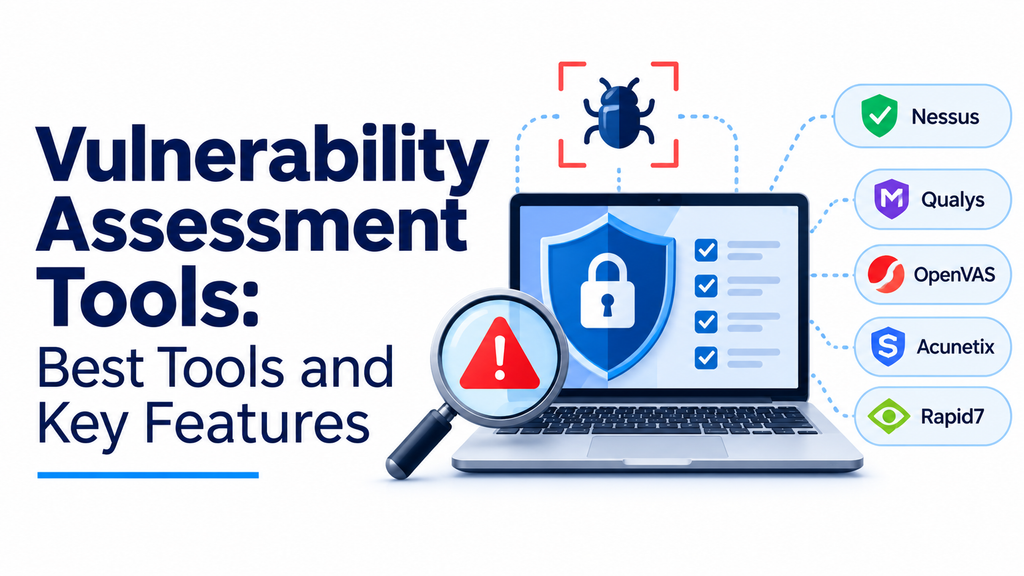
Vulnerability Assessment Tools help organizations identify, analyze, and prioritize security weaknesses in their IT infrastructure. These tools examine networks, servers, applications, cloud environments, and connected devices to discover vulnerabilities that attackers could potentially exploit.
As cyber threats continue to evolve, organizations need to understand where their systems are exposed. Vulnerability assessment solutions provide visibility into outdated software, insecure configurations, missing patches, and other security gaps. They help IT and security teams address weaknesses before they become serious security incidents.
What Are Vulnerability Assessment Tools?
Vulnerability assessment tools are cybersecurity solutions designed to scan systems and identify known security weaknesses. They compare discovered software versions, configurations, and system characteristics against vulnerability databases and security checks.
These tools help organizations understand their security posture, evaluate potential risks, and plan remediation activities. They are commonly used as part of vulnerability management and continuous security assessment programs.
How Vulnerability Assessment Tools Work
- Asset discovery: Identify devices, applications, servers, and systems within the assessment scope.
- Security scanning: Examine assets for known vulnerabilities, outdated software, and insecure configurations.
- Vulnerability identification: Match discovered weaknesses against vulnerability databases and security checks.
- Risk analysis: Evaluate findings based on severity, exploitability, asset importance, and potential business impact.
- Prioritization: Help security teams decide which vulnerabilities require immediate attention.
- Remediation: Recommend actions such as patching, configuration changes, or software upgrades.
- Validation and reporting: Rescan systems to verify that identified weaknesses have been addressed.
Popular Vulnerability Assessment Tools
Several solutions help organizations assess vulnerabilities across different environments.
- Tenable Nessus: Performs vulnerability scanning to identify security weaknesses, misconfigurations, and outdated software.
- Qualys VMDR: Provides vulnerability detection, risk prioritization, and remediation management.
- Rapid7 InsightVM: Helps organizations discover assets, assess vulnerabilities, and prioritize remediation.
- OpenVAS: An open-source vulnerability scanning solution used to identify security weaknesses.
- Greenbone Vulnerability Management: Provides vulnerability scanning and management capabilities.
- ManageEngine Vulnerability Manager Plus: Supports vulnerability assessment, patch management, and security configuration management.
- Nmap: A network discovery and security auditing tool that can help identify exposed services and potential weaknesses.
- Microsoft Defender Vulnerability Management: Provides vulnerability assessment and security recommendations for supported environments.
Capabilities and licensing vary, so organizations should evaluate the tools according to their infrastructure and assessment requirements.
Key Features of Vulnerability Assessment Tools
1. Automated Vulnerability Scanning
Automatically examines systems, applications, and networks to identify known security weaknesses.
2. Asset Discovery
Identifies connected devices, servers, software, and other assets that need security assessment.
3. Risk-Based Prioritization
Ranks vulnerabilities using severity, exploitability, asset context, and business risk to help teams focus on important issues.
4. Configuration Assessment
Detects insecure settings, weak configurations, and deviations from recommended security standards.
5. Patch and Remediation Guidance
Provides recommendations for applying patches, updating software, and correcting configuration weaknesses.
6. Vulnerability Database Integration
Uses vulnerability information such as Common Vulnerabilities and Exposures (CVE) records to identify known security issues.
7. Compliance Reporting
Supports security assessments and reporting against applicable standards and organizational policies.
8. Continuous Monitoring
Enables recurring assessments to identify newly introduced vulnerabilities and changes in the security environment.
Benefits of Vulnerability Assessment Tools
- Early weakness detection: Identifies security gaps before attackers can exploit them.
- Reduced attack surface: Helps organizations eliminate unnecessary exposure and insecure configurations.
- Improved risk management: Provides visibility into vulnerabilities across the IT environment.
- Better remediation planning: Helps teams prioritize fixes based on risk and business impact.
- Compliance support: Provides evidence and reports that can support security audits.
- Increased visibility: Helps maintain an understanding of assets and their security condition.
- Stronger cybersecurity posture: Encourages continuous identification and correction of security weaknesses.
How to Choose the Right Vulnerability Assessment Tool
Before selecting a solution, organizations should consider:
- Assessment coverage: Ensure support for networks, endpoints, servers, applications, and cloud infrastructure as required.
- Scanning accuracy: Evaluate detection quality and the handling of false positives.
- Risk prioritization: Look for contextual risk scoring rather than relying only on vulnerability severity scores.
- Automation: Check support for scheduled scans, notifications, and remediation workflows.
- Reporting: Choose tools that provide clear technical findings and management-level summaries.
- Integration: Confirm compatibility with patch management, ticketing, SIEM, and asset management systems.
- Scalability: Ensure the platform can support the organization’s current and future infrastructure.
- Pricing: Compare licensing, scan limits, deployment costs, and ongoing maintenance.
Vulnerability Assessment vs. Penetration Testing
Vulnerability assessment focuses on discovering and prioritizing known security weaknesses across systems. Penetration testing goes further by safely attempting to exploit selected weaknesses to demonstrate their real-world impact.
Both approaches are valuable: vulnerability assessments provide ongoing visibility into security gaps, while penetration testing offers deeper insight into how vulnerabilities could be used in an attack.
Conclusion
Vulnerability Assessment Tools play an important role in helping organizations identify and manage security weaknesses across their IT infrastructure. They provide visibility into vulnerabilities, support risk-based prioritization, and guide remediation efforts.
By choosing suitable tools and conducting assessments regularly, organizations can reduce their attack surface, improve security awareness, and build a stronger cybersecurity defense.
