Upgrade & Secure Your Future with DevOps, SRE, DevSecOps, MLOps!
We spend hours scrolling social media and waste money on things we forget, but won’t spend 30 minutes a day earning certifications that can change our lives.
Master in DevOps, SRE, DevSecOps & MLOps by DevOps School!
Learn from Guru Rajesh Kumar and double your salary in just one year.
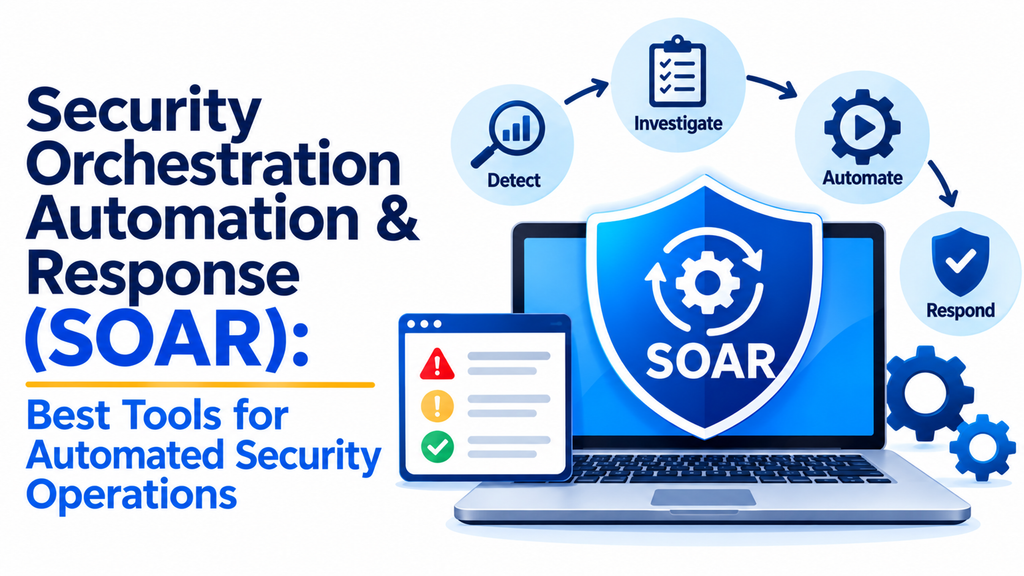
Security Orchestration, Automation and Response (SOAR) platforms help organizations streamline cybersecurity operations by connecting security tools, automating repetitive tasks, and coordinating incident response workflows. As businesses face growing numbers of security alerts and increasingly complex attacks, manually investigating every incident can overwhelm security teams.
SOAR solutions bring different security technologies together and use predefined workflows, known as playbooks, to automate routine activities. This helps analysts respond more consistently, reduce manual effort, and focus on serious security incidents.
What Is SOAR?
SOAR is a cybersecurity technology category that combines three major capabilities:
- Security orchestration: Connects security products and systems so they can share information and work together.
- Security automation: Performs repetitive tasks automatically, such as enriching alerts, collecting evidence, and creating incident tickets.
- Incident response: Coordinates actions that help security teams investigate, contain, and resolve threats.
SOAR platforms are commonly used by security operations centers (SOCs) to improve incident handling and operational efficiency.
How SOAR Works
SOAR platforms use integrations, automation rules, and workflows to coordinate security operations.
- Alert collection: Receives alerts from SIEM, EDR, firewalls, email security, and other connected tools.
- Alert enrichment: Collects additional context, such as IP reputation, domain information, asset details, and threat intelligence.
- Incident prioritization: Evaluates alerts using predefined rules and contextual information.
- Workflow execution: Runs automated playbooks to investigate or respond to specific types of incidents.
- Response coordination: Performs approved actions, such as blocking malicious IP addresses, disabling compromised accounts, or isolating endpoints.
- Documentation and reporting: Records actions, outcomes, and investigation details for future review.
Popular SOAR Tools and Platforms
Organizations can consider several established SOAR solutions:
- Palo Alto Networks Cortex XSOAR: Provides security orchestration, incident management, integrations, and automated playbooks.
- Splunk SOAR: Helps security teams automate workflows and coordinate incident response across connected tools.
- Microsoft Security Copilot and automation capabilities: Supports security investigations and workflow efficiency within Microsoft’s security ecosystem; it is not a standalone traditional SOAR replacement in every deployment.
- IBM Security QRadar SOAR: Supports incident management, security orchestration, and response workflow automation.
- Tines: Offers workflow automation for security operations and other technical teams.
- Swimlane: Provides low-code security automation and case management capabilities.
- Fortinet FortiSOAR: Helps coordinate security operations through integrations, playbooks, and incident management.
The right platform depends on existing security products, workflow complexity, integration requirements, and team expertise.
Key Features of SOAR Solutions
1. Security Tool Integration
Connects SIEM, EDR, email security, threat intelligence, firewalls, identity platforms, and ticketing systems.
2. Automated Playbooks
Uses predefined workflows to perform repeatable tasks during security investigations and incident response.
3. Alert Enrichment
Adds contextual information to alerts, helping analysts determine whether an event is suspicious and how serious it may be.
4. Incident and Case Management
Organizes security incidents, investigation notes, response actions, and communication in a centralized workspace.
5. Automated Threat Response
Can execute approved actions such as blocking malicious domains, disabling accounts, or isolating affected devices.
6. Approval and Escalation Workflows
Supports human approval for sensitive actions and escalates incidents to the appropriate security personnel.
7. Reporting and Dashboards
Tracks incident status, response activity, automation performance, and operational metrics.
8. Custom Workflow Development
Allows teams to build and adapt playbooks to their security policies, infrastructure, and response procedures.
Benefits of SOAR
- Reduced manual workload: Automates repetitive security tasks and investigation steps.
- Faster incident response: Helps teams execute response procedures more quickly and consistently.
- Improved productivity: Allows analysts to spend more time on complex investigations.
- Consistent processes: Standardizes incident handling through reusable playbooks.
- Better collaboration: Connects security tools and teams through coordinated workflows.
- Improved visibility: Maintains records of investigations, actions, and response outcomes.
- Operational scalability: Helps security teams handle increasing alert volumes without relying entirely on manual processes.
How to Choose the Right SOAR Platform
Before selecting a SOAR solution, organizations should evaluate:
- Integration coverage: Confirm that the platform supports the security tools already in use.
- Playbook flexibility: Check whether workflows can be customized without excessive development.
- Ease of use: Look for an interface that security analysts can operate and maintain.
- Automation controls: Ensure sensitive actions can require approval and follow organizational policies.
- Case management: Evaluate incident tracking, collaboration, and documentation features.
- Scalability: Confirm that the platform can handle expected alert volumes and workflow complexity.
- Deployment and pricing: Compare cloud and on-premises options, licensing, maintenance, and training costs.
SOAR vs. SIEM
SIEM platforms primarily collect and analyze security data to detect suspicious activity and generate alerts. SOAR platforms focus on coordinating and automating the investigation and response process.
The technologies complement one another: a SIEM can identify a potential threat, while a SOAR platform can enrich the alert, launch an investigation workflow, and coordinate approved response actions.
Conclusion
SOAR platforms help modern security teams manage complex operations by connecting tools, automating repetitive tasks, and coordinating incident response. They reduce manual effort, improve consistency, and help organizations respond more efficiently to cybersecurity threats.
By selecting a platform that integrates with existing security infrastructure and supports well-designed automation workflows, organizations can strengthen their security operations and make better use of their available resources.
