Upgrade & Secure Your Future with DevOps, SRE, DevSecOps, MLOps!
We spend hours scrolling social media and waste money on things we forget, but won’t spend 30 minutes a day earning certifications that can change our lives.
Master in DevOps, SRE, DevSecOps & MLOps by DevOps School!
Learn from Guru Rajesh Kumar and double your salary in just one year.
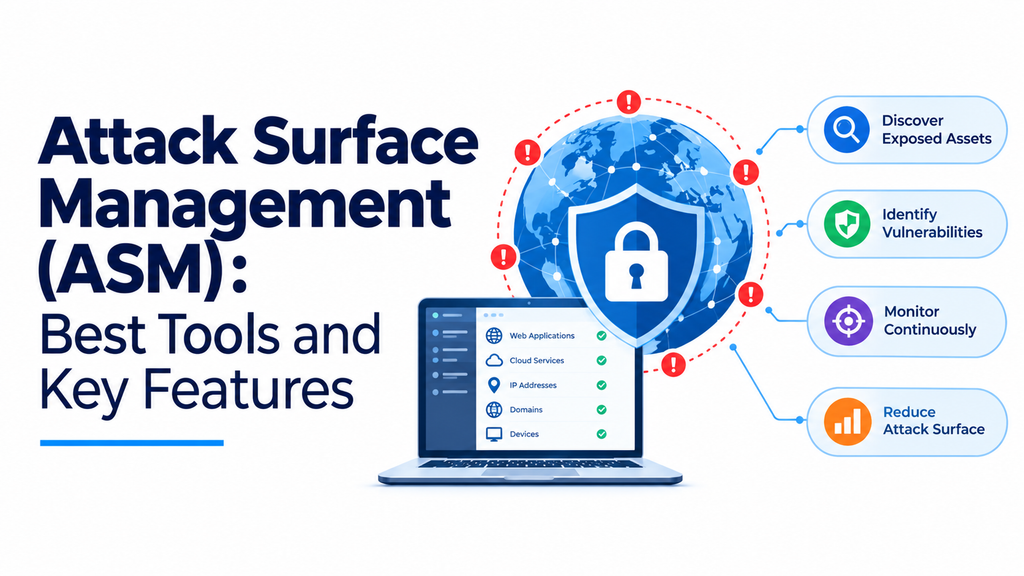
Attack Surface Management (ASM) solutions help organizations discover, monitor, analyze, and reduce their exposure to cyber threats. As businesses expand their digital infrastructure through cloud services, websites, remote access, applications, and connected devices, their external attack surface becomes increasingly complex.
Unknown assets, forgotten domains, exposed services, and misconfigured systems can create security weaknesses. ASM platforms help organizations identify these risks by continuously mapping their digital presence and highlighting potential entry points that attackers could exploit.
What Is Attack Surface Management?
Attack Surface Management is a cybersecurity approach focused on identifying and managing all digital assets that could be exposed to potential attacks.
These assets may include websites, domains, IP addresses, cloud resources, APIs, applications, servers, and third-party systems. ASM platforms provide visibility into both known and previously undiscovered assets.
The goal is to help organizations understand their exposure, identify security gaps, prioritize risks, and reduce opportunities for attackers.
How ASM Works
ASM platforms use automated discovery, continuous monitoring, and risk analysis to manage an organization’s attack surface.
- Asset discovery: Identifies internet-facing domains, subdomains, IP addresses, applications, and other digital assets.
- Asset inventory: Creates a centralized view of discovered assets and their relationships.
- Exposure identification: Detects exposed services, outdated software, misconfigurations, and potentially vulnerable systems.
- Risk assessment: Evaluates identified exposures based on severity, exploitability, and business importance.
- Continuous monitoring: Tracks changes in the attack surface and identifies newly exposed assets.
- Remediation: Provides recommendations to reduce exposure and address security weaknesses.
- Reporting: Generates visibility into asset coverage, risk levels, and remediation progress.
Popular ASM Tools and Platforms
Several cybersecurity vendors provide attack surface management solutions.
- Microsoft Defender External Attack Surface Management: Discovers external assets and identifies vulnerabilities and exposure risks.
- Palo Alto Networks Cortex Xpanse: Provides external attack surface discovery and risk visibility.
- Censys ASM: Helps organizations discover internet-facing assets and monitor their exposure.
- Tenable Attack Surface Management: Provides visibility into external assets and potential security weaknesses.
- Bitsight: Offers external risk management and security ratings capabilities.
- Rapid7 Surface Command: Helps organizations discover and monitor their external attack surface.
- CyCognito: Provides external attack surface discovery, prioritization, and exposure analysis.
- Qualys External Attack Surface Management: Helps identify and assess internet-facing assets.
Product capabilities and licensing vary, so organizations should evaluate each platform based on their infrastructure and security requirements.
Key Features of ASM Solutions
1. Continuous Asset Discovery
Automatically discovers internet-facing assets, including domains, subdomains, IP addresses, cloud resources, and applications.
2. External Exposure Monitoring
Monitors public-facing systems for exposed services, insecure configurations, and potential vulnerabilities.
3. Shadow IT Discovery
Helps identify unauthorized or unmanaged digital assets that may exist outside official IT inventories.
4. Risk Prioritization
Ranks exposures using factors such as severity, exploitability, accessibility, and business impact.
5. Attack Surface Mapping
Visualizes relationships between digital assets and helps security teams understand possible attack paths.
6. Third-Party Risk Visibility
Provides insight into externally exposed assets associated with vendors, partners, and other connected organizations.
7. Change Detection
Identifies newly created assets, configuration changes, and unexpected exposure across the digital environment.
8. Security Integrations
Connects with vulnerability management, SIEM, ticketing, and other security systems to support remediation workflows.
Benefits of Attack Surface Management
- Improved asset visibility: Helps organizations discover assets that may not be included in traditional inventories.
- Reduced external exposure: Identifies internet-facing weaknesses and unnecessary services.
- Better risk prioritization: Helps security teams focus on exposures that create the greatest potential business risk.
- Continuous security awareness: Tracks changes as the digital environment evolves.
- Reduced shadow IT risk: Helps identify unmanaged applications and infrastructure.
- Improved third-party awareness: Highlights potential exposure associated with external business relationships.
- Stronger cybersecurity posture: Helps organizations reduce opportunities for attackers to gain initial access.
How to Choose the Right ASM Platform
Organizations should evaluate the following factors:
- Discovery coverage: Check whether the platform can identify domains, IP addresses, cloud assets, APIs, and other internet-facing resources.
- Monitoring frequency: Look for continuous or sufficiently frequent discovery and exposure monitoring.
- Detection quality: Evaluate the accuracy of asset identification and security findings.
- Risk prioritization: Choose tools that provide actionable risk context rather than simply producing large lists of alerts.
- Remediation support: Check whether findings can be assigned, tracked, and integrated into existing workflows.
- Third-party visibility: Consider whether monitoring external vendors and partners is important.
- Scalability: Ensure the platform can handle complex and rapidly changing environments.
- Pricing: Compare asset limits, licensing models, deployment requirements, and support costs.
ASM vs. Vulnerability Management
Attack Surface Management focuses on discovering digital assets and understanding an organization’s overall exposure, especially across internet-facing infrastructure.
Vulnerability management focuses on identifying, prioritizing, and remediating security weaknesses in systems and applications.
The two approaches complement each other. ASM helps organizations discover what needs protection, while vulnerability management helps assess and fix weaknesses in those assets.
Conclusion
Attack Surface Management is an important cybersecurity capability for organizations operating across cloud, on-premises, and internet-facing environments. It helps security teams discover unknown assets, monitor external exposure, prioritize risks, and reduce potential entry points for attackers.
By adopting an ASM platform that provides continuous discovery, accurate risk analysis, and practical remediation support, organizations can gain better control over their digital footprint and strengthen their overall security posture.
