Upgrade & Secure Your Future with DevOps, SRE, DevSecOps, MLOps!
We spend hours scrolling social media and waste money on things we forget, but won’t spend 30 minutes a day earning certifications that can change our lives.
Master in DevOps, SRE, DevSecOps & MLOps by DevOps School!
Learn from Guru Rajesh Kumar and double your salary in just one year.
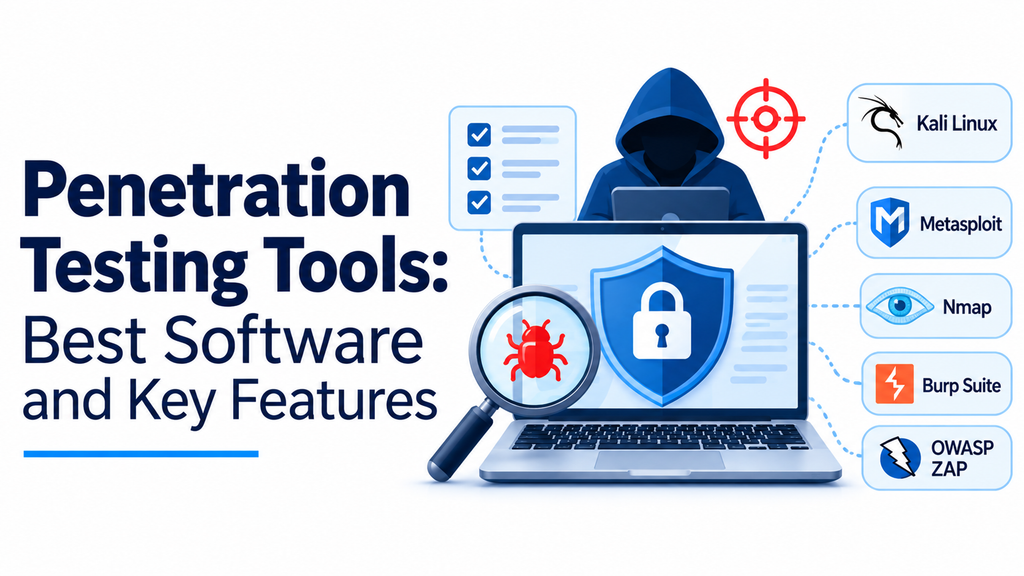
Penetration Testing Tools help cybersecurity professionals evaluate the security of networks, applications, servers, and other digital systems by simulating controlled attacks. These tools help identify vulnerabilities, test existing security controls, and understand how attackers might exploit weaknesses in an organization’s infrastructure.
As cyber threats become more advanced, organizations need to regularly assess whether their security defenses can withstand real-world attack techniques. Penetration testing tools support ethical hackers, security consultants, and internal security teams in finding weaknesses before malicious attackers can take advantage of them.
What Are Penetration Testing Tools?
Penetration testing tools are software applications and utilities used to conduct authorized security assessments. They support activities such as reconnaissance, vulnerability validation, application testing, network analysis, password security auditing, and reporting.
These tools are used by penetration testers and security professionals within an approved scope. Testing should always be performed with proper authorization to avoid disrupting systems or accessing data without permission.
How Penetration Testing Tools Work
A typical penetration testing process involves several stages:
- Reconnaissance: Collect information about the target environment, its technologies, domains, and exposed services.
- Scanning and discovery: Identify reachable systems, open ports, applications, and potential weaknesses.
- Vulnerability analysis: Examine discovered services and applications for security flaws.
- Controlled exploitation: Safely validate whether identified vulnerabilities can be exploited within the authorized testing scope.
- Post-exploitation assessment: Determine the potential impact of access gained, without exceeding approved boundaries.
- Reporting: Document findings, evidence, severity, business impact, and recommended fixes.
- Retesting: Verify that reported vulnerabilities have been properly addressed.
Popular Penetration Testing Tools
- Metasploit Framework: A widely used framework for developing and executing authorized security tests and validating vulnerabilities.
- Burp Suite: Provides tools for testing web application security, including request analysis, scanning, and vulnerability validation.
- Nmap: Supports network discovery, service identification, and security auditing.
- Kali Linux: A security-focused Linux distribution that includes a broad collection of penetration testing and digital forensics tools.
- Wireshark: Analyzes network traffic to help investigate communications and identify potential security issues.
- OWASP ZAP: An open-source tool for finding security vulnerabilities in web applications.
- Nessus: Supports vulnerability assessment and security auditing.
- John the Ripper: Helps authorized security professionals audit password strength and identify weak credentials.
- sqlmap: Automates testing for SQL injection vulnerabilities in authorized web application assessments.
Each tool serves a different purpose. Professional testing often combines several tools with manual analysis and verification.
Key Features of Penetration Testing Tools
1. Network Discovery and Scanning
Identifies hosts, open ports, running services, and network configurations that may require further security review.
2. Vulnerability Detection
Helps identify weaknesses in operating systems, applications, network services, and software components.
3. Web Application Testing
Examines websites and web applications for issues such as injection vulnerabilities, authentication weaknesses, and insecure configurations.
4. Exploitation Frameworks
Provides controlled methods for validating whether known vulnerabilities can be exploited in an authorized environment.
5. Password Security Auditing
Evaluates password strength and identifies weak or poorly protected credentials.
6. Network Traffic Analysis
Allows testers to inspect network communications and investigate suspicious or insecure data exchanges.
7. Evidence Collection
Records technical findings, test results, and supporting evidence for security assessments.
8. Reporting and Remediation Guidance
Helps generate reports that explain vulnerabilities, severity, potential impact, and recommended corrective actions.
Benefits of Penetration Testing Tools
- Proactive security testing: Helps identify weaknesses before attackers exploit them.
- Better risk visibility: Shows how vulnerabilities may affect real systems and business operations.
- Improved application security: Helps development teams discover security flaws during testing.
- Stronger security controls: Evaluates the effectiveness of firewalls, authentication, and other defenses.
- Compliance support: Provides evidence that can support applicable security assessment requirements.
- Reduced attack risk: Helps organizations prioritize and correct exploitable weaknesses.
- Improved security awareness: Gives IT and development teams practical insight into common attack techniques.
How to Choose the Right Penetration Testing Tools
Organizations and security professionals should consider:
- Testing requirements: Choose tools suited to network, web application, wireless, cloud, or mobile security testing.
- Accuracy: Evaluate detection quality and the ability to validate findings.
- Ease of use: Consider the experience required to configure and interpret results.
- Integration: Check compatibility with vulnerability management, ticketing, and reporting systems.
- Automation: Look for features that reduce repetitive tasks without replacing expert validation.
- Reporting: Ensure findings can be documented clearly for technical teams and management.
- Cost and licensing: Compare open-source and commercial options, support, and training requirements.
- Safety controls: Confirm that testing can be limited to approved assets and performed without unnecessary disruption.
Penetration Testing vs. Vulnerability Assessment
Vulnerability assessment focuses on identifying, classifying, and prioritizing security weaknesses. Penetration testing goes further by attempting to validate whether selected weaknesses can be exploited and what impact they could have.
Vulnerability assessments are useful for continuous security visibility, while penetration tests provide deeper insight into practical attack paths and the effectiveness of defenses.
Conclusion
Penetration Testing Tools are essential for authorized security professionals who need to evaluate systems from an attacker’s perspective. They support network discovery, vulnerability validation, application testing, and detailed security reporting.
By choosing suitable tools and following a clearly authorized testing process, organizations can uncover weaknesses, improve defenses, and reduce the likelihood of successful cyberattacks.
