Upgrade & Secure Your Future with DevOps, SRE, DevSecOps, MLOps!
We spend hours scrolling social media and waste money on things we forget, but won’t spend 30 minutes a day earning certifications that can change our lives.
Master in DevOps, SRE, DevSecOps & MLOps by DevOps School!
Learn from Guru Rajesh Kumar and double your salary in just one year.
Introduction
eProcurement Platforms are digital solutions designed to streamline the procurement process, from requisitioning to purchase order management and supplier collaboration. These platforms enable organizations to automate procurement workflows, ensure compliance, track spending, and enhance supplier relationships. In , with increasingly complex supply chains and rising demands for efficiency, eProcurement platforms have become essential for reducing operational costs, improving transparency, and optimizing procurement cycles.
Real-world use cases include:
- Automating purchase requisitions and approvals to reduce manual effort.
- Centralizing supplier data and contracts for better management and negotiation.
- Tracking spend analytics to optimize sourcing strategies and identify cost savings.
- Managing compliance with internal policies and regulatory requirements.
- Integrating with ERP systems to synchronize financial and procurement data.
When evaluating eProcurement platforms, buyers should consider:
- Requisition and purchase order automation
- Supplier management and onboarding
- Spend analysis and reporting
- Contract lifecycle management
- Approval workflows and compliance tracking
- Integration with ERP, finance, and inventory systems
- Cloud or on-premises deployment
- Mobile access and ease of use
- Security and regulatory compliance
- Vendor support and community engagement
Best for: Procurement managers, finance teams, supply chain professionals, and enterprises with multiple suppliers and complex procurement requirements.
Not ideal for: Small businesses with limited procurement needs or organizations relying on manual purchase processes.
Key Trends in eProcurement Platforms
- AI-driven spend analytics: Identify cost-saving opportunities and supplier performance trends.
- Supplier collaboration portals: Enhance communication and transparency with suppliers.
- Cloud-native deployments: Real-time access and multi-location management.
- Mobile-first platforms: Access to approvals, requisitions, and reporting on mobile devices.
- Contract lifecycle automation: Streamline negotiation, approvals, and renewals.
- Predictive procurement: Anticipate demand and optimize inventory sourcing.
- Integration with ERP and finance systems: Seamless financial and procurement workflows.
- Compliance and regulatory tracking: Ensure adherence to internal and external policies.
- Subscription-based and modular pricing: Flexibility based on organizational needs.
- Advanced reporting and dashboards: Real-time insights for informed decision-making.
How We Selected These Tools (Methodology)
- Assessed market adoption and industry recognition.
- Evaluated feature completeness including requisitions, purchase orders, and supplier management.
- Considered platform reliability, scalability, and performance.
- Reviewed security and compliance capabilities.
- Checked integration options with ERP, finance, and inventory systems.
- Analyzed suitability across SMB, mid-market, and enterprise organizations.
- Evaluated vendor support, documentation, and user communities.
- Balanced enterprise-grade and SMB-friendly platforms for the top 10 list.
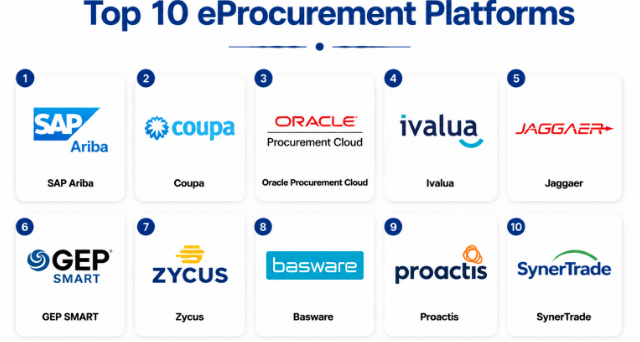
Top 10 eProcurement Platforms
#1 — SAP Ariba
Short description: SAP Ariba is a comprehensive cloud-based eProcurement solution that automates procurement, supplier collaboration, and spend management. Ideal for enterprises seeking full-featured procurement automation.
Key Features
- Supplier management and onboarding
- Automated requisition and purchase orders
- Spend analytics and reporting
- Contract lifecycle management
- Compliance monitoring
- Integration with ERP systems
Pros
- Enterprise scalability and reliability
- Strong analytics and supplier collaboration
Cons
- High cost for smaller businesses
- Complex implementation
Platforms / Deployment
- Web / iOS / Android
- Cloud
Security & Compliance
- SOC 2, ISO 27001
- SSO/MFA, encryption
Integrations & Ecosystem
- ERP and finance systems
- Supplier networks
- API access for custom integrations
Support & Community
- Vendor support and enterprise training
- Active user community
#2 — Coupa
Short description: Coupa provides a cloud-native procurement platform with requisition, approval workflows, spend analytics, and supplier management. Suitable for SMBs and enterprises seeking streamlined procurement processes.
Key Features
- Requisition and approval workflows
- Supplier management and onboarding
- Spend analytics and reporting
- Contract management
- Compliance tracking
- Mobile approvals
Pros
- User-friendly interface
- Scalable for mid-market and enterprise
Cons
- Premium features may require add-ons
- Implementation can be time-intensive
Platforms / Deployment
- Web / iOS / Android
- Cloud
Security & Compliance
- SOC 2, ISO 27001
- SSO/MFA, encryption
Integrations & Ecosystem
- ERP and finance systems
- Supplier catalogs
- API for custom workflows
Support & Community
- Vendor support and onboarding
- Community forums
#3 — Oracle Procurement Cloud
Short description: Oracle Procurement Cloud automates procurement, supplier collaboration, and spend analytics. Ideal for large enterprises seeking a unified procurement and finance system.
Key Features
- Purchase requisitions and purchase order automation
- Supplier portal and collaboration tools
- Spend analysis and reporting dashboards
- Contract lifecycle management
- Compliance and approval workflows
Pros
- Seamless ERP integration
- Strong analytics and reporting capabilities
Cons
- Complex configuration
- High pricing for smaller companies
Platforms / Deployment
- Web / iOS / Android
- Cloud
Security & Compliance
- SOC 2, ISO 27001
- SSO/MFA, encryption
Integrations & Ecosystem
- Oracle ERP and finance systems
- Supplier networks
- API access for custom integrations
Support & Community
- Vendor support
- Enterprise user forums
#4 — Ivalua
Short description: Ivalua is an enterprise procurement platform offering sourcing, supplier management, and procurement analytics. Suitable for mid-market and enterprise organizations.
Key Features
- Supplier lifecycle management
- Sourcing and procurement automation
- Spend analysis
- Contract management
- Compliance tracking
- Analytics dashboards
Pros
- Flexible and configurable
- Strong supplier collaboration tools
Cons
- Implementation requires specialized knowledge
- High licensing costs
Platforms / Deployment
- Web / iOS / Android
- Cloud
Security & Compliance
- Not publicly stated
Integrations & Ecosystem
- ERP and finance integration
- API for custom workflows
- Supplier networks
Support & Community
- Vendor support
- Knowledge base and forums
#5 — Jaggaer
Short description: Jaggaer provides an eProcurement solution with sourcing, supplier management, and spend analytics. Ideal for enterprises looking for modular procurement tools.
Key Features
- Requisition and purchase order management
- Supplier onboarding and management
- Spend visibility and analytics
- Contract management
- Compliance monitoring
Pros
- Modular and flexible platform
- Strong analytics capabilities
Cons
- Implementation can be complex
- Premium features add to cost
Platforms / Deployment
- Web / iOS / Android
- Cloud
Security & Compliance
- SOC 2, ISO 27001
- SSO/MFA, encryption
Integrations & Ecosystem
- ERP and finance systems
- Supplier network integration
- API for custom workflows
Support & Community
- Vendor support
- Online knowledge base
#6 — GEP SMART
Short description: GEP SMART offers procurement automation, supplier management, and spend analysis, suitable for global enterprises and complex supply chains.
Key Features
- Supplier lifecycle management
- Requisition and purchase order automation
- Spend visibility and analytics
- Contract management
- Compliance and approval workflows
Pros
- Cloud-native and scalable
- Strong global procurement features
Cons
- Premium pricing
- Implementation may require consulting
Platforms / Deployment
- Web / iOS / Android
- Cloud
Security & Compliance
- SOC 2, ISO 27001
- SSO/MFA, encryption
Integrations & Ecosystem
- ERP and finance integration
- Supplier networks
- API access
Support & Community
- Vendor support
- Enterprise forums
#7 — Zycus
Short description: Zycus provides eProcurement and spend management software with sourcing, supplier collaboration, and analytics for mid-market and enterprise organizations.
Key Features
- Supplier management
- Requisition and order automation
- Spend analysis
- Contract management
- Compliance workflows
Pros
- Strong analytics and AI-driven insights
- Flexible configuration options
Cons
- Premium pricing for advanced features
- Learning curve for new users
Platforms / Deployment
- Web / iOS / Android
- Cloud
Security & Compliance
- Not publicly stated
Integrations & Ecosystem
- ERP and finance systems
- Supplier network connectivity
- API access
Support & Community
- Vendor support
- Knowledge base and forums
#8 — Basware
Short description: Basware provides cloud-based procurement and invoicing solutions for mid-market and enterprise organizations, focusing on automation and compliance.
Key Features
- Requisition and purchase order automation
- Supplier management and onboarding
- Spend analytics and reporting
- Contract management
- Compliance and approvals
Pros
- Cloud-native
- Strong supplier management
Cons
- Premium pricing
- Implementation complexity
Platforms / Deployment
- Web / iOS / Android
- Cloud
Security & Compliance
- Not publicly stated
Integrations & Ecosystem
- ERP and finance systems
- Supplier networks
- API access
Support & Community
- Vendor support
- Knowledge base
#9 — Proactis
Short description: Proactis provides eProcurement and spend management tools for SMBs and enterprises, offering requisition, supplier management, and analytics capabilities.
Key Features
- Purchase requisitions and orders
- Supplier onboarding and management
- Spend analysis and reporting
- Contract management
- Compliance tracking
Pros
- Flexible and configurable
- User-friendly interface
Cons
- Limited enterprise-scale features
- Advanced modules add cost
Platforms / Deployment
- Web / iOS / Android
- Cloud
Security & Compliance
- Not publicly stated
Integrations & Ecosystem
- ERP and finance integration
- Supplier networks
- API access
Support & Community
- Vendor support
- Online documentation
#10 — SynerTrade
Short description: SynerTrade delivers eProcurement and supplier management solutions with spend analytics, contract management, and workflow automation for enterprises.
Key Features
- Supplier management
- Requisition and order automation
- Spend visibility and analytics
- Contract lifecycle management
- Compliance monitoring
Pros
- Enterprise-grade features
- Strong analytics and reporting
Cons
- Premium pricing
- Complex implementation
Platforms / Deployment
- Web / iOS / Android
- Cloud
Security & Compliance
- Not publicly stated
Integrations & Ecosystem
- ERP and finance systems
- Supplier networks
- API access
Support & Community
- Vendor support
- Knowledge base
Comparison Table (Top 10)
| Tool Name | Best For | Platform(s) Supported | Deployment | Standout Feature | Public Rating |
|---|---|---|---|---|---|
| SAP Ariba | Enterprises | Web / iOS / Android | Cloud | Full-featured procurement automation | N/A |
| Coupa | SMB & Enterprise | Web / iOS / Android | Cloud | Spend visibility & supplier management | N/A |
| Oracle Procurement Cloud | Enterprises | Web / iOS / Android | Cloud | Unified procurement and finance | N/A |
| Ivalua | Mid-market & Enterprise | Web / iOS / Android | Cloud | Supplier lifecycle management | N/A |
| Jaggaer | Enterprises | Web / iOS / Android | Cloud | Modular procurement features | N/A |
| GEP SMART | Global Enterprises | Web / iOS / Android | Cloud | End-to-end procurement automation | N/A |
| Zycus | Mid-market & Enterprise | Web / iOS / Android | Cloud | AI-driven spend insights | N/A |
| Basware | Mid-market & Enterprise | Web / iOS / Android | Cloud | Cloud-native procurement & invoicing | N/A |
| Proactis | SMB & Enterprise | Web / iOS / Android | Cloud | Flexible and configurable | N/A |
| SynerTrade | Enterprises | Web / iOS / Android | Cloud | Advanced spend analytics & automation | N/A |
Evaluation & Scoring of eProcurement Tools
| Tool Name | Core (25%) | Ease (15%) | Integrations (15%) | Security (10%) | Performance (10%) | Support (10%) | Value (15%) | Weighted Total (0–10) |
|---|---|---|---|---|---|---|---|---|
| SAP Ariba | 9 | 7 | 8 | 8 | 9 | 8 | 8 | 8.3 |
| Coupa | 8 | 8 | 8 | 8 | 8 | 8 | 8 | 8.0 |
| Oracle Procurement Cloud | 9 | 7 | 8 | 8 | 9 | 8 | 8 | 8.3 |
| Ivalua | 8 | 7 | 8 | 7 | 8 | 8 | 7 | 7.7 |
| Jaggaer | 8 | 7 | 8 | 7 | 8 | 8 | 7 | 7.7 |
| GEP SMART | 9 | 7 | 8 | 8 | 9 | 8 | 8 | 8.3 |
| Zycus | 8 | 7 | 8 | 7 | 8 | 8 | 7 | 7.7 |
| Basware | 8 | 8 | 7 | 7 | 8 | 8 | 7 | 7.7 |
| Proactis | 7 | 8 | 7 | 7 | 7 | 7 | 7 | 7.2 |
| SynerTrade | 8 | 7 | 8 | 7 | 8 | 8 | 7 | 7.7 |
Interpretation: Higher scores reflect stronger core functionality, usability, integration, and overall value. Comparative scoring helps organizations select the most suitable eProcurement platform based on company size, procurement complexity, and budget.
Which eProcurement Platform Tool Is Right for You?
Solo / Freelancer
Proactis or Coupa provide flexible, cost-effective solutions suitable for smaller teams with moderate procurement needs.
SMB
Ivalua, Basware, or Zycus offer automated workflows, spend analytics, and supplier management for mid-sized organizations.
Mid-Market
Jaggaer, Ivalua, or Coupa provide enterprise-grade features with strong analytics and compliance tracking.
Enterprise
SAP Ariba, Oracle Procurement Cloud, or GEP SMART deliver full-scale automation, global supplier management, and advanced analytics.
Budget vs Premium
Budget-friendly: Proactis, Basware
Premium: SAP Ariba, Oracle Procurement Cloud, GEP SMART
Feature Depth vs Ease of Use
- Advanced procurement automation: SAP Ariba, Oracle Procurement Cloud, GEP SMART
- Ease of deployment: Coupa, Proactis, Basware
Integrations & Scalability
Enterprise platforms integrate extensively with ERP, finance, and supplier networks; SMB platforms focus on ease of deployment and core features.
Security & Compliance Needs
Select tools offering encryption, SSO/MFA, SOC 2, ISO 27001, and GDPR compliance.
Frequently Asked Questions (FAQs)
1. What are typical pricing models?
Most eProcurement platforms use subscription-based SaaS, feature-based licensing, or enterprise contracts depending on organization size.
2. How long does onboarding take?
Small to mid-sized organizations can onboard in days to weeks; enterprise-scale deployments may require months.
3. Can these platforms handle multiple suppliers?
Yes, top platforms support global supplier networks and multi-tier vendor management.
4. Are these platforms suitable for global procurement?
Yes, enterprise-grade platforms handle multi-currency, multi-language, and regional compliance requirements.
5. How secure are eProcurement platforms?
Security varies; leading tools provide encryption, multi-factor authentication, and SOC 2/ISO 27001 compliance.
6. Can these platforms integrate with ERP or finance systems?
Yes, native connectors and APIs allow seamless integration with ERP, finance, and inventory management systems.
7. What support options are available?
Vendors provide documentation, email/phone support, training, and enterprise account management.
8. Are these tools suitable for small businesses?
Yes, platforms like Proactis or Coupa are designed for SMBs with flexible pricing and easy deployment.
9. How frequently are updates released?
Cloud-native solutions receive continuous updates, while on-premises platforms follow scheduled upgrade cycles.
10. Are AI and analytics features necessary?
AI enhances spend analysis, supplier performance insights, and predictive procurement, especially for enterprise users.
Conclusion
Choosing the right eProcurement platform depends on organizational size, procurement complexity, and integration needs. Small businesses benefit from Proactis or Coupa for affordability and ease of use. SMBs can leverage Ivalua, Basware, or Zycus for automated workflows and spend analytics. Enterprises should consider SAP Ariba, Oracle Procurement Cloud, or GEP SMART for full-scale procurement automation, global supplier management, and advanced analytics. Organizations should shortlist, run pilot programs, and validate integration, security, and scalability before full deployment.
