Upgrade & Secure Your Future with DevOps, SRE, DevSecOps, MLOps!
We spend hours scrolling social media and waste money on things we forget, but won’t spend 30 minutes a day earning certifications that can change our lives.
Master in DevOps, SRE, DevSecOps & MLOps by DevOps School!
Learn from Guru Rajesh Kumar and double your salary in just one year.
Introduction
Product Information Management (PIM) tools are specialized software platforms that centralize, organize, and manage product data across all sales channels. These platforms enable organizations to maintain accurate, consistent, and high-quality product information, ensuring an optimal customer experience. In with growing e-commerce, omnichannel retail, and global supply chain complexity, robust PIM systems are critical for operational efficiency, data accuracy, and faster time-to-market.
Real-world use cases include:
- Consolidating product catalogs across online marketplaces, retail stores, and ERP systems.
- Maintaining consistent product descriptions, images, and specifications across global channels.
- Streamlining onboarding for new products and variants.
- Integrating with marketing automation to ensure accurate product promotion.
- Analyzing product performance data for informed business decisions.
When evaluating PIM software, buyers should consider:
- Data centralization and governance
- Product attribute and metadata management
- Workflow automation and approval processes
- Integration with e-commerce, ERP, and marketing platforms
- Multichannel syndication capabilities
- Data quality control and validation
- Analytics and reporting features
- Cloud, on-premises, or hybrid deployment options
- User interface and collaboration tools
- Vendor support and community engagement
Best for: E-commerce managers, product managers, marketing teams, and enterprises with complex catalogs or global sales channels.
Not ideal for: Small businesses with limited product lines, teams relying on simple spreadsheets, or organizations with minimal need for centralized product data management.
Key Trends in Product Information Management (PIM) Toolkits
- AI-powered product enrichment: Automated suggestions for product descriptions, images, and SEO metadata.
- Cloud-native deployment: Real-time updates across global teams and channels.
- Omnichannel integration: Seamless connection to e-commerce, marketplaces, ERP, and marketing platforms.
- Data quality automation: Validation, deduplication, and enrichment of product information.
- Flexible workflow automation: Multi-level approval processes and content governance.
- Analytics and insights: Data-driven decision-making for product performance and trends.
- Mobile-first access: Management of product data on mobile devices for field teams.
- Scalable subscription pricing: Modular models that grow with catalog size and feature needs.
- Enhanced security & compliance: SSO, MFA, encryption, and GDPR compliance.
- Vendor-neutral integrations: APIs and connectors for diverse system ecosystems.
How We Selected These Tools (Methodology)
- Evaluated market adoption, mindshare, and industry recognition.
- Assessed feature completeness including data management, workflow automation, and analytics.
- Considered reliability, performance, and uptime in enterprise and SMB deployments.
- Reviewed security posture and compliance features.
- Checked integrations with e-commerce, ERP, PIM, and marketing platforms.
- Evaluated suitability across SMB, mid-market, and enterprise organizations.
- Analyzed vendor support, onboarding, and documentation quality.
- Balanced enterprise-grade platforms and flexible SMB solutions for the top 10 list.
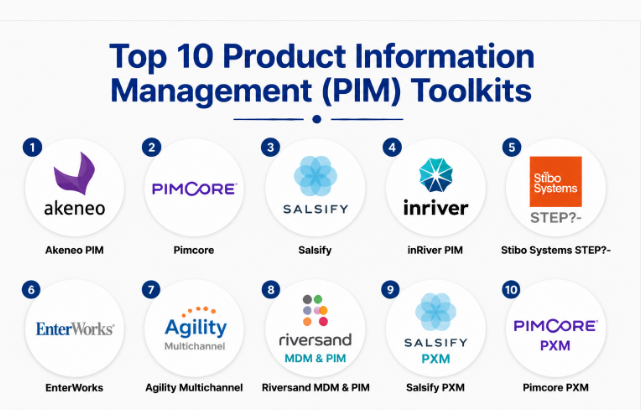
Top 10 Product Information Management (PIM) Toolkits
#1 — Akeneo PIM
Short description: Akeneo PIM is a cloud-native platform for centralizing product information, ensuring data consistency, and syndicating it across multiple channels. Ideal for e-commerce teams managing complex product catalogs.
Key Features
- Centralized product data management
- Attribute and metadata enrichment
- Workflow and approval automation
- Multichannel syndication
- Data quality validation
- Analytics dashboards
Pros
- Intuitive interface for marketers and product managers
- Flexible cloud deployment
Cons
- Premium pricing for enterprise editions
- Integration may require technical expertise
Platforms / Deployment
- Web / Windows / macOS
- Cloud / Hybrid
Security & Compliance
- SSO/MFA, encryption
- GDPR compliant
Integrations & Ecosystem
Integrates with ERP, e-commerce platforms, and marketing tools.
- API for custom extensions
- Marketplace connectors
- Analytics and reporting integrations
Support & Community
- Vendor support and documentation
- Active global user community
#2 — Pimcore
Short description: Pimcore is an open-source PIM platform that enables businesses to manage product data, digital assets, and content in a single system. Suitable for enterprises seeking flexibility and developer-friendly customization.
Key Features
- Open-source PIM platform
- Product and digital asset management
- Workflow automation and approvals
- Multichannel publishing
- Data quality monitoring
Pros
- Highly customizable
- No licensing costs for community edition
Cons
- Implementation may require developer resources
- Advanced features available in paid edition only
Platforms / Deployment
- Web / Linux / Windows / macOS
- Cloud / Self-hosted / Hybrid
Security & Compliance
- Not publicly stated
Integrations & Ecosystem
- ERP, e-commerce, and CMS integration
- API and SDK support
- Connector ecosystem
Support & Community
- Vendor and community support
- Developer forums
#3 — Salsify
Short description: Salsify is a cloud-based PIM solution focusing on product experience management, enabling real-time content updates and multichannel distribution for retail and e-commerce organizations.
Key Features
- Product information centralization
- Channel-specific content syndication
- Workflow automation
- Data quality and enrichment
- Analytics dashboards
Pros
- Strong multichannel support
- Real-time updates and synchronization
Cons
- Premium pricing for small businesses
- Learning curve for new users
Platforms / Deployment
- Web / Windows / macOS
- Cloud
Security & Compliance
- SSO/MFA, encryption
- GDPR compliant
Integrations & Ecosystem
- E-commerce platforms (Shopify, Magento, etc.)
- ERP and DAM integrations
- API access
Support & Community
- Vendor support
- User forums and knowledge base
#4 — inRiver PIM
Short description: inRiver PIM focuses on streamlining product marketing and information distribution across channels. Suitable for B2B and B2C enterprises seeking agility in content management.
Key Features
- Product content modeling
- Workflow management and approvals
- Multichannel syndication
- Analytics and reporting
- Collaboration tools
Pros
- Optimized for marketing and sales teams
- Cloud-based with scalable features
Cons
- Limited offline deployment
- May require technical configuration for integrations
Platforms / Deployment
- Web
- Cloud
Security & Compliance
- SSO/MFA, encryption
- Not publicly stated
Integrations & Ecosystem
- ERP and e-commerce platforms
- Marketing automation tools
- API for custom workflows
Support & Community
- Vendor support
- Documentation and user forums
#5 — Stibo Systems STEP
Short description: Stibo Systems STEP is an enterprise PIM designed for large organizations to manage complex product data, ensure data governance, and synchronize product information globally.
Key Features
- Centralized product data management
- Data quality governance
- Workflow and approval automation
- Multichannel distribution
- Analytics and reporting
Pros
- Enterprise-grade scalability
- Strong data governance features
Cons
- High implementation cost
- Complexity for smaller teams
Platforms / Deployment
- Web / Windows
- Cloud / On-premises / Hybrid
Security & Compliance
- SSO/MFA, encryption
- ISO 27001 compliant
Integrations & Ecosystem
- ERP, e-commerce, DAM integration
- API support
- Analytics and reporting systems
Support & Community
- Vendor support and training
- Enterprise community forums
#6 — EnterWorks
Short description: EnterWorks is a cloud-based PIM and MDM platform for enterprises needing centralized product data management, multichannel syndication, and workflow automation.
Key Features
- Product data centralization
- Workflow and approval automation
- Data quality and validation
- Multichannel content distribution
- Reporting and analytics
Pros
- Scalable for large catalogs
- Strong workflow and content governance
Cons
- Premium pricing for SMBs
- Integration may require IT resources
Platforms / Deployment
- Web / Windows / macOS
- Cloud
Security & Compliance
- SSO/MFA, encryption
- Not publicly stated
Integrations & Ecosystem
- ERP and e-commerce integration
- API for custom workflows
- Analytics and reporting tools
Support & Community
- Vendor support
- User forums
#7 — Agility Multichannel
Short description: Agility PIM enables businesses to manage product content and deliver consistent information across all digital channels. Ideal for retailers and distributors seeking omnichannel readiness.
Key Features
- Centralized product information
- Workflow automation and approvals
- Multichannel distribution
- Digital asset management
- Analytics dashboards
Pros
- Strong multichannel capabilities
- User-friendly interface
Cons
- Limited on-premises deployment
- Advanced features may require premium subscription
Platforms / Deployment
- Web
- Cloud
Security & Compliance
- Not publicly stated
Integrations & Ecosystem
- ERP, e-commerce, and DAM integration
- API support
- Analytics tools
Support & Community
- Vendor support
- User knowledge base
#8 — Riversand MDM & PIM
Short description: Riversand provides a unified PIM and MDM platform for enterprises seeking centralization, governance, and multichannel syndication of product data.
Key Features
- Product and master data management
- Workflow automation
- Multichannel content delivery
- Data quality management
- Analytics and reporting
Pros
- Enterprise-grade data governance
- Strong multichannel capabilities
Cons
- Complexity for small teams
- Premium pricing
Platforms / Deployment
- Web / Windows
- Cloud / Hybrid
Security & Compliance
- Not publicly stated
Integrations & Ecosystem
- ERP, DAM, e-commerce integration
- API for custom applications
- Analytics platforms
Support & Community
- Vendor support
- Knowledge base and community
#9 — Salsify PXM
Short description: Salsify Product Experience Management (PXM) centralizes product information for marketing and sales teams, enabling multichannel distribution and enhanced customer experience.
Key Features
- Centralized product content
- Workflow automation
- Multichannel syndication
- Data quality validation
- Analytics dashboards
Pros
- Real-time updates across channels
- Optimized for marketing and sales
Cons
- Higher cost for small businesses
- Learning curve for complex catalogs
Platforms / Deployment
- Web
- Cloud
Security & Compliance
- SSO/MFA, encryption
- GDPR compliant
Integrations & Ecosystem
- ERP and e-commerce systems
- Marketing automation platforms
- API access
Support & Community
- Vendor support
- Knowledge base and forums
#10 — Pimcore PXM
Short description: Pimcore Product Experience Management combines PIM, DAM, and content management in a single open-source platform, allowing enterprises to manage product data and assets efficiently.
Key Features
- Product and digital asset management
- Workflow automation and approvals
- Multichannel publishing
- Data quality and enrichment
- Analytics dashboards
Pros
- Open-source flexibility
- Combines PIM and DAM in one system
Cons
- Requires developer resources for setup
- Advanced features in paid edition
Platforms / Deployment
- Web / Linux / Windows / macOS
- Cloud / Self-hosted / Hybrid
Security & Compliance
- Not publicly stated
Integrations & Ecosystem
- ERP, e-commerce, and CMS integration
- API and SDK support
- Analytics and reporting connectors
Support & Community
- Vendor support for enterprise edition
- Active developer and user community
Comparison Table (Top 10)
| Tool Name | Best For | Platform(s) Supported | Deployment | Standout Feature | Public Rating |
|---|---|---|---|---|---|
| Akeneo PIM | Retail & e-commerce | Web / Windows / macOS | Cloud / Hybrid | Multichannel syndication | N/A |
| Pimcore | Enterprise | Web / Linux / Windows / macOS | Cloud / Self-hosted / Hybrid | Open-source flexibility | N/A |
| Salsify | E-commerce & marketing | Web / Windows / macOS | Cloud | Real-time PXM updates | N/A |
| inRiver PIM | B2B/B2C marketing | Web | Cloud | Marketing-focused PIM | N/A |
| Stibo Systems STEP | Large enterprise | Web / Windows | Cloud / On-premises / Hybrid | Data governance & scalability | N/A |
| EnterWorks | Enterprise | Web / Windows / macOS | Cloud | Workflow automation & multichannel | N/A |
| Agility Multichannel | Retail & distribution | Web | Cloud | Omnichannel content management | N/A |
| Riversand MDM & PIM | Enterprise | Web / Windows | Cloud / Hybrid | Unified PIM & MDM | N/A |
| Salsify PXM | Marketing & sales | Web | Cloud | Product experience management | N/A |
| Pimcore PXM | Enterprise | Web / Linux / Windows / macOS | Cloud / Self-hosted / Hybrid | PIM + DAM + CMS | N/A |
Evaluation & Scoring of PIM Tools
| Tool Name | Core (25%) | Ease (15%) | Integrations (15%) | Security (10%) | Performance (10%) | Support (10%) | Value (15%) | Weighted Total (0–10) |
|---|---|---|---|---|---|---|---|---|
| Akeneo PIM | 9 | 8 | 8 | 8 | 8 | 8 | 8 | 8.3 |
| Pimcore | 8 | 7 | 8 | 7 | 8 | 8 | 7 | 7.7 |
| Salsify | 8 | 8 | 8 | 7 | 8 | 8 | 7 | 7.9 |
| inRiver PIM | 8 | 7 | 8 | 7 | 8 | 8 | 7 | 7.8 |
| Stibo Systems STEP | 9 | 7 | 8 | 8 | 8 | 8 | 8 | 8.2 |
| EnterWorks | 8 | 7 | 8 | 7 | 8 | 8 | 7 | 7.8 |
| Agility Multichannel | 8 | 8 | 7 | 7 | 8 | 8 | 7 | 7.8 |
| Riversand MDM & PIM | 9 | 7 | 8 | 8 | 8 | 8 | 8 | 8.2 |
| Salsify PXM | 8 | 8 | 8 | 7 | 8 | 8 | 7 | 7.9 |
| Pimcore PXM | 8 | 7 | 8 | 7 | 8 | 8 | 7 | 7.8 |
Interpretation: Higher scores reflect stronger core functionality, usability, integration, and value. Scores are comparative to assist in identifying the best fit based on organizational size and catalog complexity.
Which Product Information Management Tool Is Right for You?
Solo / Freelancer
Akeneo PIM or Salsify are suitable for small teams managing online product catalogs and marketing content.
SMB
inRiver PIM, Agility Multichannel, or EnterWorks provide workflow automation and multichannel distribution for mid-sized teams.
Mid-Market
Riversand MDM & PIM or Stibo Systems STEP offer enterprise-grade governance, analytics, and multi-site synchronization.
Enterprise
Pimcore PXM, Stibo Systems STEP, or EnterWorks are ideal for complex catalogs, multiple channels, and global operations.
Budget vs Premium
Budget-friendly: Akeneo PIM, Salsify
Premium: Stibo Systems STEP, Riversand MDM & PIM, Pimcore PXM
Feature Depth vs Ease of Use
- Extensive features and data governance: Stibo Systems STEP, Riversand MDM & PIM
- Simpler adoption: Akeneo PIM, Salsify
Integrations & Scalability
Ensure ERP, e-commerce, DAM, and marketing platforms integrate seamlessly. Enterprise tools offer greater flexibility for scaling.
Security & Compliance Needs
Look for platforms with encryption, SSO/MFA, GDPR compliance, and enterprise security certifications.
Frequently Asked Questions (FAQs)
1. What are typical pricing models for PIM software?
Pricing usually includes subscription-based SaaS, modular features, or enterprise licensing based on catalog size and users.
2. How long does onboarding typically take?
Small teams may onboard within days; enterprise deployments with complex catalogs can take weeks.
3. Can PIM tools manage multiple sales channels?
Yes, leading platforms offer multichannel syndication for e-commerce, marketplaces, and retail stores.
4. Are these tools suitable for global operations?
Yes, enterprise-grade PIM systems support multiple languages, currencies, and regional catalog variations.
5. How secure are PIM platforms?
Security varies; top tools provide encryption, SSO/MFA, and compliance with GDPR and ISO 27001.
6. Can PIM integrate with ERP and e-commerce systems?
Yes, APIs and native connectors allow integration with ERP, e-commerce, DAM, and marketing platforms.
7. What support options are typically offered?
Vendors provide training, documentation, email/phone support, and enterprise account management.
8. Are open-source PIM tools reliable?
Yes, platforms like Pimcore are widely adopted and customizable, but may require developer resources for setup.
9. How often are updates deployed?
Cloud-native platforms often release continuous updates, while on-premises solutions follow scheduled upgrades.
10. Are AI and analytics features necessary?
AI enhances product enrichment, SEO, and data validation, while analytics provide insights into catalog performance and operational efficiency.
Conclusion
Choosing the right PIM tool depends on catalog size, complexity, multichannel needs, and integration requirements. Small teams benefit from Akeneo PIM or Salsify for ease of use and cloud deployment, while mid-market organizations can leverage inRiver PIM or EnterWorks for workflow automation and multichannel distribution. Enterprises with global operations and complex data governance requirements should consider Stibo Systems STEP, Riversand MDM & PIM, or Pimcore PXM for advanced analytics, CAPA, and governance. Organizations are encouraged to shortlist , run pilot programs, and validate integration, security, and scalability before full deployment.
