Upgrade & Secure Your Future with DevOps, SRE, DevSecOps, MLOps!
We spend hours scrolling social media and waste money on things we forget, but won’t spend 30 minutes a day earning certifications that can change our lives.
Master in DevOps, SRE, DevSecOps & MLOps by DevOps School!
Learn from Guru Rajesh Kumar and double your salary in just one year.
Introduction
Robotics fleet management tools are specialized software platforms designed to monitor, control, and optimize fleets of robots across various environments. These tools allow organizations to track the performance, location, and status of their robotic assets in real time, making operations more efficient, safer, and cost-effective. In , with the rise of autonomous logistics, warehouse automation, and industrial robotics, having a robust fleet management system is critical for companies seeking operational excellence and competitive advantage.
Real-world use cases include:
- Managing autonomous warehouse robots to optimize picking and packing operations.
- Monitoring delivery drones and ground-based delivery bots for urban logistics.
- Coordinating agricultural robots for precision farming and crop monitoring.
- Overseeing cleaning and service robots in large commercial or public spaces.
- Controlling inspection and maintenance robots in industrial facilities, reducing human risk.
When evaluating robotics fleet management platforms, buyers should consider the following criteria:
- Real-time tracking and monitoring capabilities
- Scalability and fleet size support
- Integration with existing ERP, IoT, and operational systems
- Automation and AI-powered optimization
- Security and compliance adherence
- Reliability and uptime guarantees
- Ease of use and onboarding
- Vendor support and community presence
Best for: Robotics operations managers, warehouse operators, logistics coordinators, industrial automation teams, and enterprises of all sizes implementing robotic fleets.
Not ideal for: Companies with a small number of robots, highly specialized or experimental robotics, or teams preferring custom in-house solutions over commercial platforms.
Key Trends in Robotics Fleet Management Tools
- AI-driven optimization: Predictive maintenance, task assignment, and route planning leverage machine learning.
- Cloud-native platforms: SaaS solutions offer real-time monitoring and centralized fleet control.
- Interoperability standards: Increased support for common robotic protocols and IoT integration.
- Enhanced cybersecurity: Multi-factor authentication, encryption, and compliance with SOC 2, ISO 27001, and GDPR.
- Edge computing: Real-time decision-making near the robots to reduce latency and improve safety.
- Autonomous coordination: Tools enable multiple robots to work collaboratively without human intervention.
- Mobile and remote dashboards: Managers can monitor fleets via web and mobile interfaces.
- Flexible deployment models: Cloud, hybrid, and on-premises options depending on organizational needs.
- Data analytics and reporting: Insights into fleet efficiency, utilization, and ROI for operational decision-making.
- Subscription-based pricing models: Increasingly modular pricing allows scaling according to fleet size and features.
How We Selected These Tools (Methodology)
- Evaluated market adoption and overall industry mindshare.
- Assessed completeness of features, including monitoring, reporting, and AI capabilities.
- Considered reliability and performance signals from operational deployments.
- Reviewed security posture and compliance adherence across platforms.
- Checked integrations with common enterprise systems, IoT devices, and robotic hardware.
- Evaluated customer fit across SMBs, mid-market, and enterprise operations.
- Analyzed vendor support, documentation, and community engagement.
- Balanced enterprise and developer-focused solutions for a comprehensive top 10 list.
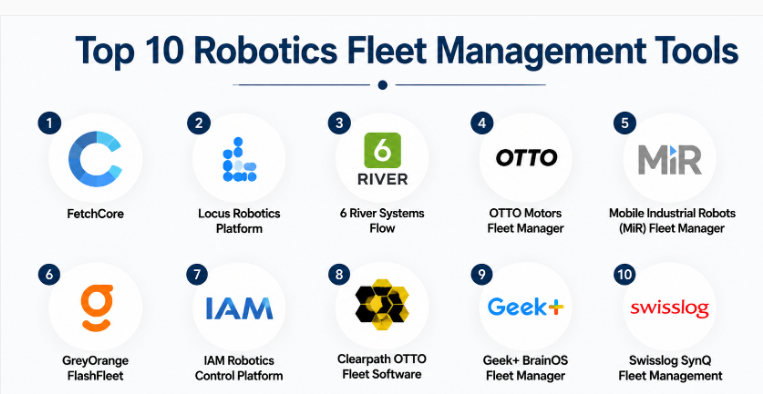
Top 10 Robotics Fleet Management Tools
#1 — FetchCore
Short description: FetchCore is a cloud-based fleet management platform for warehouse and logistics robots. It allows real-time tracking, task assignment, and workflow optimization for enterprises seeking to improve robotic operational efficiency.
Key Features
- Real-time robot status monitoring
- Task scheduling and prioritization
- Route optimization using AI
- Integration with warehouse management systems (WMS)
- Predictive maintenance alerts
- Performance analytics dashboards
Pros
- Scales efficiently for large fleets
- AI-powered task optimization reduces human intervention
Cons
- May require training for complex workflow configuration
- Limited support for non-warehouse robots
Platforms / Deployment
- Web / Windows / macOS
- Cloud
Security & Compliance
- Not publicly stated
Integrations & Ecosystem
FetchCore supports integrations with WMS, ERP, and common IoT devices.
- API for custom integrations
- Warehouse automation systems
- Robotics SDK compatibility
- Data export to analytics platforms
Support & Community
- Strong documentation and onboarding support
- Dedicated enterprise support tiers
#2 — Locus Robotics Platform
Short description: Locus Robotics provides a centralized fleet management tool for autonomous mobile robots in fulfillment centers. It emphasizes seamless task allocation and real-time monitoring for operational efficiency.
Key Features
- Task assignment and workload balancing
- Fleet health and maintenance monitoring
- Cloud dashboard with analytics
- Integration with warehouse systems
- Autonomous navigation monitoring
Pros
- Intuitive interface for managers
- Optimized warehouse throughput
Cons
- Limited applicability outside fulfillment centers
- Relatively higher pricing for small fleets
Platforms / Deployment
- Web / Windows
- Cloud
Security & Compliance
- Not publicly stated
Integrations & Ecosystem
- ERP and WMS integration
- Mobile dashboards
- API access for reporting and analytics
Support & Community
- Responsive support team
- Community forums for operational best practices
#3 — 6 River Systems Flow
Short description: Flow by 6 River Systems manages collaborative mobile robots in warehouses. It provides task coordination, analytics, and seamless integration with existing warehouse systems to enhance productivity.
Key Features
- Task orchestration across multiple robots
- Performance analytics dashboards
- Predictive maintenance insights
- Integration with WMS
- Cloud-based fleet management
Pros
- High reliability and uptime
- Supports large collaborative fleets
Cons
- Requires subscription for cloud features
- Less suitable for industrial outdoor robots
Platforms / Deployment
- Web / Windows / macOS
- Cloud
Security & Compliance
- Not publicly stated
Integrations & Ecosystem
- Warehouse and inventory management systems
- APIs for custom automation
- IoT device integration
Support & Community
- Onboarding and support available
- Knowledge base and tutorials
#4 — OTTO Motors Fleet Manager
Short description: OTTO Motors offers an end-to-end platform for managing autonomous mobile robots in industrial settings, with real-time monitoring, analytics, and task coordination.
Key Features
- Autonomous navigation tracking
- Task scheduling and prioritization
- Fleet analytics and reporting
- Cloud-based dashboards
- Maintenance alerts
Pros
- Industrial-grade reliability
- Comprehensive fleet oversight
Cons
- May require professional training
- Less flexible for small operations
Platforms / Deployment
- Web / Windows
- Cloud
Security & Compliance
- Not publicly stated
Integrations & Ecosystem
- Industrial control systems
- ERP and IoT device integrations
- API support for custom dashboards
Support & Community
- Professional onboarding
- Dedicated enterprise support
#5 — Mobile Industrial Robots (MiR) Fleet Manager
Short description: MiR Fleet Manager centralizes management for autonomous mobile robots in warehouses and manufacturing facilities, focusing on task scheduling, fleet monitoring, and safety compliance.
Key Features
- Task assignment and queue management
- Real-time robot location tracking
- Safety monitoring
- Fleet analytics and reporting
- Integration with automation systems
Pros
- Safety-focused monitoring
- Supports mixed robot fleets
Cons
- Limited support outside manufacturing/warehouse
- Advanced features require premium plan
Platforms / Deployment
- Web / Windows
- Cloud
Security & Compliance
- Not publicly stated
Integrations & Ecosystem
- ERP systems integration
- Automation control systems
- APIs for reporting
Support & Community
- Strong documentation
- Customer support available
#6 — GreyOrange FlashFleet
Short description: FlashFleet is a management platform for GreyOrange’s warehouse robots, providing centralized control, task optimization, and performance monitoring.
Key Features
- Centralized fleet control
- AI-based task optimization
- Real-time dashboards
- Maintenance scheduling
- Analytics and reporting
Pros
- Efficient AI-driven task management
- Scales to large warehouses
Cons
- Limited to GreyOrange hardware
- Higher cost for smaller operations
Platforms / Deployment
- Web / Windows
- Cloud
Security & Compliance
- Not publicly stated
Integrations & Ecosystem
- Warehouse systems
- Analytics platforms
- API support
Support & Community
- Dedicated support team
- Tutorials and documentation
#7 — IAM Robotics Control Platform
Short description: IAM Robotics Control Platform manages autonomous picking robots, offering fleet coordination, task scheduling, and operational analytics for warehouses and distribution centers.
Key Features
- Real-time fleet monitoring
- Task assignment and scheduling
- Analytics dashboards
- Safety and maintenance alerts
- Integration with WMS
Pros
- Reliable for picking operations
- Good real-time insights
Cons
- Limited to IAM Robotics hardware
- Not ideal for diverse robot fleets
Platforms / Deployment
- Web / Windows
- Cloud
Security & Compliance
- Not publicly stated
Integrations & Ecosystem
- WMS and ERP systems
- APIs for analytics
- IoT device integration
Support & Community
- Documentation provided
- Customer support available
#8 — Clearpath OTTO Fleet Software
Short description: Clearpath OTTO Fleet Software provides fleet management for industrial autonomous robots, offering scheduling, task tracking, and performance monitoring.
Key Features
- Fleet coordination and monitoring
- Task assignment optimization
- Analytics and reporting
- Safety compliance tracking
- Cloud-based dashboards
Pros
- Industrial-grade reliability
- Optimized for manufacturing logistics
Cons
- Hardware-specific solution
- Limited small-scale flexibility
Platforms / Deployment
- Web / Windows
- Cloud
Security & Compliance
- Not publicly stated
Integrations & Ecosystem
- ERP and automation systems
- API support
- Analytics platforms
Support & Community
- Strong enterprise support
- Knowledge base available
#9 — Geek+ BrainOS Fleet Manager
Short description: BrainOS manages Geek+ warehouse robots, providing centralized control, task optimization, and real-time monitoring for efficient operations.
Key Features
- AI-powered task scheduling
- Real-time fleet monitoring
- Performance analytics
- Maintenance alerts
- Safety compliance
Pros
- AI-driven optimization
- Strong monitoring capabilities
Cons
- Limited outside warehouse logistics
- Hardware-dependent
Platforms / Deployment
- Web / Windows
- Cloud
Security & Compliance
- Not publicly stated
Integrations & Ecosystem
- Warehouse and ERP systems
- API for analytics
- IoT integration
Support & Community
- Documentation and tutorials
- Support available
#10 — Swisslog SynQ Fleet Management
Short description: SynQ provides management of Swisslog robots for warehouse automation, including task orchestration, real-time monitoring, and analytics dashboards.
Key Features
- Task orchestration
- Fleet monitoring and analytics
- Maintenance scheduling
- Safety monitoring
- Integration with warehouse systems
Pros
- Comprehensive analytics
- Reliable fleet management
Cons
- Limited to Swisslog robots
- Advanced features may require training
Platforms / Deployment
- Web / Windows
- Cloud
Security & Compliance
- Not publicly stated
Integrations & Ecosystem
- Warehouse and ERP integration
- APIs for analytics
- IoT device compatibility
Support & Community
- Strong support network
- Detailed documentation
Comparison Table (Top 10)
| Tool Name | Best For | Platform(s) Supported | Deployment | Standout Feature | Public Rating |
|---|---|---|---|---|---|
| FetchCore | Warehouses & logistics | Web / Windows / macOS | Cloud | AI-based task optimization | N/A |
| Locus Robotics Platform | Fulfillment centers | Web / Windows | Cloud | Intuitive fleet monitoring | N/A |
| 6 River Systems Flow | Collaborative mobile robots | Web / Windows / macOS | Cloud | Task orchestration | N/A |
| OTTO Motors Fleet Manager | Industrial robots | Web / Windows | Cloud | Industrial-grade reliability | N/A |
| MiR Fleet Manager | Manufacturing & warehouse | Web / Windows | Cloud | Safety-focused monitoring | N/A |
| GreyOrange FlashFleet | GreyOrange robots | Web / Windows | Cloud | AI-driven task scheduling | N/A |
| IAM Robotics Control Platform | Picking robots | Web / Windows | Cloud | Real-time insights | N/A |
| Clearpath OTTO Fleet Software | Industrial logistics | Web / Windows | Cloud | Task optimization | N/A |
| Geek+ BrainOS Fleet Manager | Warehouse robots | Web / Windows | Cloud | AI-powered scheduling | N/A |
| Swisslog SynQ Fleet Management | Warehouse automation | Web / Windows | Cloud | Comprehensive analytics | N/A |
Evaluation & Scoring of Robotics Fleet Management Tools
| Tool Name | Core (25%) | Ease (15%) | Integrations (15%) | Security (10%) | Performance (10%) | Support (10%) | Value (15%) | Weighted Total (0–10) |
|---|---|---|---|---|---|---|---|---|
| FetchCore | 9 | 8 | 8 | 7 | 9 | 8 | 8 | 8.3 |
| Locus Robotics Platform | 8 | 9 | 7 | 7 | 8 | 8 | 7 | 7.9 |
| 6 River Systems Flow | 9 | 8 | 8 | 7 | 9 | 8 | 8 | 8.3 |
| OTTO Motors Fleet Manager | 8 | 7 | 7 | 7 | 9 | 8 | 7 | 7.7 |
| MiR Fleet Manager | 8 | 8 | 7 | 7 | 8 | 8 | 8 | 7.9 |
| GreyOrange FlashFleet | 8 | 7 | 7 | 7 | 8 | 8 | 7 | 7.7 |
| IAM Robotics Control Platform | 8 | 8 | 7 | 7 | 8 | 8 | 7 | 7.8 |
| Clearpath OTTO Fleet Software | 8 | 7 | 7 | 7 | 8 | 8 | 7 | 7.7 |
| Geek+ BrainOS Fleet Manager | 8 | 8 | 7 | 7 | 8 | 8 | 7 | 7.8 |
| Swisslog SynQ Fleet Management | 8 | 7 | 7 | 7 | 8 | 8 | 7 | 7.7 |
Interpretation: Higher scores indicate stronger feature coverage, usability, integrations, security, and overall value. This is comparative—actual suitability depends on fleet size, hardware, and operational context.
Which Robotics Fleet Management Tool Is Right for You?
Solo / Freelancer
Smaller-scale operators may use MiR Fleet Manager or FetchCore for light warehouse operations or pilot programs.
SMB
Medium businesses benefit from 6 River Systems Flow or Locus Robotics Platform to streamline fulfillment with moderate automation.
Mid-Market
Mid-market enterprises require OTTO Motors Fleet Manager or Geek+ BrainOS for cross-facility coordination and AI-driven optimization.
Enterprise
Large-scale operations should consider FetchCore, Clearpath OTTO, or Swisslog SynQ for centralized control, compliance, and industrial-grade reliability.
Budget vs Premium
Budget-friendly tools: MiR Fleet Manager, IAM Robotics Control Platform
Premium tools: FetchCore, GreyOrange FlashFleet, OTTO Motors Fleet Manager
Feature Depth vs Ease of Use
- Complex workflows: Flow by 6 River Systems or FlashFleet
- Simple adoption: Locus Robotics Platform or MiR Fleet Manager
Integrations & Scalability
Ensure ERP, WMS, and IoT systems integrate smoothly. Enterprise-grade tools often have better API and integration support.
Security & Compliance Needs
Enterprises with strict compliance requirements should prioritize platforms with SOC 2, ISO 27001, or GDPR certifications where available.
Frequently Asked Questions (FAQs)
1. What are typical pricing models for robotics fleet management platforms?
Most platforms use subscription-based SaaS pricing, often scaled by fleet size, features, or hardware compatibility. Some offer enterprise licensing for larger deployments.
2. How long does onboarding typically take?
Onboarding varies from a few days for small fleets to several weeks for enterprise deployments involving multiple locations and integration with ERP systems.
3. Can these tools integrate with existing warehouse management systems?
Yes, most platforms support integration with WMS, ERP, and IoT devices via APIs or built-in connectors, facilitating centralized operations.
4. What are common mistakes when selecting a fleet management tool?
Common errors include underestimating fleet growth, ignoring integration requirements, or selecting tools incompatible with existing hardware.
5. How secure are these platforms?
Security varies; most SaaS tools provide encrypted communication, user access controls, and audit logs. Specific compliance certifications should be verified per vendor.
6. Can the tools scale to large robot fleets?
Yes, enterprise-grade tools like FetchCore or Flow by 6 River Systems are designed to scale to hundreds or thousands of robots across multiple sites.
7. What support options are available?
Vendors typically provide documentation, onboarding guides, email or phone support, and dedicated account managers for enterprise clients.
8. Can the platforms handle mixed robot fleets?
Some platforms, such as MiR Fleet Manager and IAM Robotics, can manage heterogeneous fleets, while others may be hardware-specific.
9. How often are software updates deployed?
Cloud platforms generally release updates continuously, with automatic deployment for improvements, bug fixes, and new features.
10. Are AI features necessary?
AI-driven optimization enhances task allocation, predictive maintenance, and operational efficiency, especially for medium to large-scale deployments.
Conclusion
Selecting the right robotics fleet management platform depends on fleet size, operational needs, hardware compatibility, and integration requirements. Enterprise operators may prioritize FetchCore or Swisslog SynQ for full-scale industrial deployments, while SMBs can achieve efficiency with Locus Robotics or MiR Fleet Manager. Before committing, it is advisable to shortlist 2–3 platforms, run pilots, and verify integration, scalability, and security features.
