Upgrade & Secure Your Future with DevOps, SRE, DevSecOps, MLOps!
We spend hours scrolling social media and waste money on things we forget, but won’t spend 30 minutes a day earning certifications that can change our lives.
Master in DevOps, SRE, DevSecOps & MLOps by DevOps School!
Learn from Guru Rajesh Kumar and double your salary in just one year.
Introduction
Route Optimization Tools) Toolkits are specialized software solutions designed to plan, manage, and optimize delivery and transportation routes for vehicles. These platforms use AI, geospatial data, and real-time analytics to help companies reduce travel time, fuel consumption, and operational costs while improving customer service and on-time delivery.
In and beyond, route optimization has become increasingly important due to growing logistics complexity, e-commerce demands, and sustainability initiatives. Companies are adopting automated route planning to handle dynamic traffic conditions, integrate electric vehicle routes, and comply with regulatory requirements efficiently.
Real-world use cases include:
- Optimizing delivery routes for e-commerce fleets to reduce fuel costs and improve delivery speed.
- Planning routes for service technicians to minimize travel time and maximize appointments per day.
- Coordinating multi-stop delivery routes for food, grocery, or parcel logistics.
- Integrating predictive traffic and weather data to adjust routes in real-time.
- Supporting electric vehicle fleets with charging station-aware route planning.
Buyers should evaluate:
- AI-driven route planning and optimization
- Real-time traffic and weather integration
- Multi-stop and dynamic routing capabilities
- Mobile and driver app usability
- Integration with fleet management and ERP systems
- Analytics and reporting features
- Compliance with transportation regulations
- Cost optimization and ROI metrics
- Security and data privacy features
Best for: Logistics managers, delivery coordinators, fleet operators, companies with medium-to-large delivery operations, e-commerce and food delivery businesses.
Not ideal for: Very small fleets (1–5 vehicles), organizations with minimal route complexity, or companies that rely on manual scheduling with limited technology adoption.
Key Trends in Route Optimization Tools) Toolkits
- AI-powered dynamic routing adapting to traffic, weather, and delivery constraints.
- Predictive analytics to anticipate delays and optimize schedules.
- Integration with electric vehicle (EV) charging networks for green logistics.
- Cloud-native deployment for real-time, multi-location operations.
- Mobile-first design for drivers with offline functionality.
- API integrations with ERP, CRM, and fleet management software.
- Sustainability-focused optimization to reduce emissions and fuel costs.
- Enhanced security with encryption, RBAC, and multi-factor authentication.
- Flexible pricing: subscription, per-route, or per-vehicle models.
- Data-driven insights for operational efficiency and strategic planning.
How We Selected These Tools (Methodology)
- Evaluated market adoption and recognition among logistics professionals.
- Reviewed feature completeness in route optimization, multi-stop planning, and traffic integration.
- Analyzed performance, uptime, and reliability signals.
- Assessed security posture and compliance with industry standards.
- Considered integration capabilities with ERP, fleet, and CRM systems.
- Evaluated customer fit for different company sizes and delivery volumes.
- Prioritized platforms with AI and automation capabilities for dynamic routing.
- Verified ease of use, mobile app quality, and driver engagement features.
- Checked vendor support, documentation, and community resources.
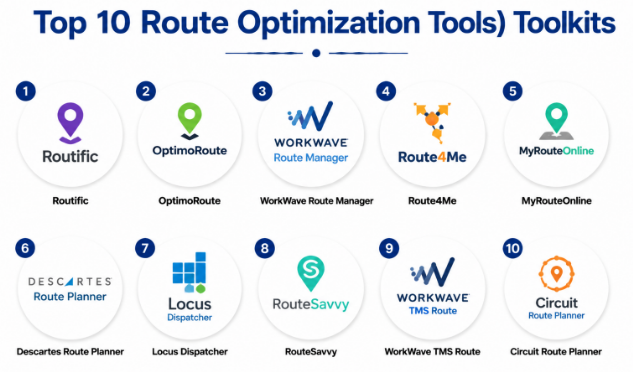
Top 10 Route Optimization Tools) Toolkits
#1 — Routific
Short description: Routific provides AI-driven route optimization for delivery and field service businesses. It focuses on reducing travel time, fuel costs, and manual scheduling while offering real-time updates for drivers and managers. Ideal for SMBs and mid-market fleets.
Key Features
- Multi-stop route optimization
- Real-time route updates and traffic integration
- Driver mobile app with navigation
- Delivery tracking for customers
- Analytics dashboard for performance
- API integration with dispatch software
Pros
- Reduces travel time and fuel expenses
- Easy-to-use interface for managers and drivers
Cons
- Limited advanced analytics for very large fleets
- Some features require higher subscription tiers
Platforms / Deployment
- Web / iOS / Android
- Cloud
Security & Compliance
- Not publicly stated
Integrations & Ecosystem
- ERP and CRM systems
- Delivery and dispatch software
- GPS and telematics devices
Support & Community
- Online documentation, onboarding guides, and email support. Community resources vary.
#2 — OptimoRoute
Short description: OptimoRoute provides automated route and schedule optimization for deliveries and field service operations. It supports multi-day planning, dynamic traffic adjustments, and driver assignment optimization.
Key Features
- Multi-stop, multi-day route planning
- Dynamic traffic-based adjustments
- Driver assignment optimization
- Customer notifications and ETA tracking
- Analytics and reporting
Pros
- Scales from small to mid-sized fleets
- Optimizes delivery efficiency and customer service
Cons
- Mobile app usability can vary across devices
- Complex configurations for very large fleets
Platforms / Deployment
- Web / iOS / Android
- Cloud
Security & Compliance
- Not publicly stated
Integrations & Ecosystem
- Dispatch software
- CRM and ERP platforms
- Telematics devices
Support & Community
- Email and chat support, documentation, onboarding materials available.
#3 — WorkWave Route Manager
Short description: WorkWave Route Manager is designed for service businesses and logistics operations, offering route optimization, scheduling, and customer communication. It integrates with fleet management and mobile workforce management platforms.
Key Features
- AI route optimization
- Real-time traffic monitoring
- Mobile app for technicians and drivers
- Customer notifications and alerts
- Maintenance and service scheduling
Pros
- Combines routing and workforce management
- Supports dynamic traffic adjustments
Cons
- May require training for larger teams
- Advanced analytics limited in basic plans
Platforms / Deployment
- Web / iOS / Android
- Cloud
Security & Compliance
- Not publicly stated
Integrations & Ecosystem
- Mobile workforce management
- Fleet telematics systems
- CRM and dispatch platforms
Support & Community
- Documentation, live chat support, and email assistance available.
#4 — Route4Me
Short description: Route4Me provides fast route planning for deliveries, service calls, and sales routes. The platform emphasizes speed, simplicity, and scalability for SMBs and mid-market companies.
Key Features
- Multi-stop route optimization
- Real-time route adjustments
- Driver mobile app with navigation
- Customer delivery tracking
- API for third-party integrations
Pros
- Quick route planning and easy setup
- Scalable for various business sizes
Cons
- Interface can feel cluttered for large fleets
- Limited predictive analytics
Platforms / Deployment
- Web / iOS / Android
- Cloud
Security & Compliance
- Not publicly stated
Integrations & Ecosystem
- Fleet management tools
- Dispatch and CRM software
- Telematics devices
Support & Community
- Documentation, email, and chat support. Active online community.
#5 — MyRouteOnline
Short description: MyRouteOnline specializes in converting addresses into optimized routes for delivery and field service teams. It’s suitable for SMBs and smaller logistics operations looking for efficiency.
Key Features
- Batch address import
- Route optimization and export
- Mobile app for driver guidance
- Multi-day planning
- Customer delivery notifications
Pros
- Affordable and simple for small businesses
- Quick address-to-route conversion
Cons
- Limited features for enterprise-scale fleets
- Manual reporting required for analytics
Platforms / Deployment
- Web / iOS / Android
- Cloud
Security & Compliance
- Not publicly stated
Integrations & Ecosystem
- CSV and Excel import/export
- GPS navigation apps
Support & Community
- Email support and documentation available. Community limited.
#6 — Descartes Route Planner
Short description: Descartes Route Planner offers comprehensive optimization for delivery, transportation, and field service. It includes dynamic routing, vehicle capacity planning, and compliance management.
Key Features
- Dynamic route optimization
- Vehicle and driver capacity planning
- Real-time traffic and weather integration
- Compliance alerts
- Customer ETA notifications
Pros
- Advanced features for large fleets
- Integrates compliance with route planning
Cons
- May require training for smaller teams
- Higher cost than basic platforms
Platforms / Deployment
- Web / iOS / Android
- Cloud
Security & Compliance
- Not publicly stated
Integrations & Ecosystem
- ERP systems
- Telematics and GPS hardware
- Dispatch and CRM software
Support & Community
- Documentation, email, and phone support. Moderate user community.
#7 — Locus Dispatcher
Short description: Locus Dispatcher provides AI-driven route planning and dispatch automation for logistics and e-commerce delivery networks. It focuses on efficiency, real-time adjustments, and multi-modal routing.
Key Features
- AI-based route optimization
- Multi-modal transport planning
- Real-time traffic updates
- Driver mobile app and ETA notifications
- Analytics dashboard
Pros
- Optimizes complex delivery networks
- Supports multiple vehicle types and constraints
Cons
- Advanced features may be overkill for small fleets
- Pricing can be high for SMBs
Platforms / Deployment
- Web / iOS / Android
- Cloud
Security & Compliance
- Not publicly stated
Integrations & Ecosystem
- ERP and fleet management systems
- Telematics devices
- API access for custom integrations
Support & Community
- Documentation, online support, and onboarding guides available.
#8 — RouteSavvy
Short description: RouteSavvy offers easy-to-use route optimization for small to medium-sized delivery operations. It focuses on cost and time savings for businesses with limited technical resources.
Key Features
- Multi-stop route planning
- Route export for GPS navigation
- Mobile app for drivers
- Customer delivery notifications
- Batch address processing
Pros
- Affordable and user-friendly
- Quick setup for SMBs
Cons
- Limited advanced analytics
- Not ideal for enterprise-scale operations
Platforms / Deployment
- Web / iOS / Android
- Cloud
Security & Compliance
- Not publicly stated
Integrations & Ecosystem
- GPS navigation apps
- Basic API integration
Support & Community
- Documentation and email support available. Small user community.
#9 — WorkWave TMS Route
Short description: WorkWave TMS Route combines transportation management with route optimization for service and delivery companies, emphasizing scheduling and cost reduction.
Key Features
- AI route optimization
- Real-time vehicle tracking
- Customer notifications
- Multi-day planning
- Integration with fleet and workforce management
Pros
- Combines TMS and route optimization
- Reduces delivery costs
Cons
- Requires training for smaller teams
- Advanced features limited to higher plans
Platforms / Deployment
- Web / iOS / Android
- Cloud
Security & Compliance
- Not publicly stated
Integrations & Ecosystem
- Fleet and CRM software
- Telematics devices
- ERP integration
Support & Community
- Documentation, chat, and email support available.
#10 — Circuit Route Planner
Short description: Circuit Route Planner provides route optimization for delivery drivers, emphasizing speed, simplicity, and multi-stop efficiency. Ideal for SMBs and small delivery teams.
Key Features
- Multi-stop route optimization
- Real-time traffic updates
- Driver mobile app navigation
- Customer ETA notifications
- Batch address upload
Pros
- Simple and fast for small operations
- Affordable for SMBs
Cons
- Limited advanced analytics and reporting
- Not suitable for large fleets
Platforms / Deployment
- Web / iOS / Android
- Cloud
Security & Compliance
- Not publicly stated
Integrations & Ecosystem
- GPS apps
- CSV/Excel import/export
- API limited
Support & Community
- Email support and documentation available. Small online community.
Comparison Table (Top 10)
| Tool Name | Best For | Platform(s) Supported | Deployment | Standout Feature | Public Rating |
|---|---|---|---|---|---|
| Routific | SMB-mid fleets | Web/iOS/Android | Cloud | AI-driven optimization | N/A |
| OptimoRoute | Delivery & field service | Web/iOS/Android | Cloud | Multi-day planning | N/A |
| WorkWave Route Manager | Service fleets | Web/iOS/Android | Cloud | Real-time traffic integration | N/A |
| Route4Me | SMB-mid fleets | Web/iOS/Android | Cloud | Fast multi-stop planning | N/A |
| MyRouteOnline | Small SMB fleets | Web/iOS/Android | Cloud | Simple address-to-route | N/A |
| Descartes Route Planner | Large fleets | Web/iOS/Android | Cloud | Vehicle & driver planning | N/A |
| Locus Dispatcher | E-commerce & logistics | Web/iOS/Android | Cloud | Multi-modal routing | N/A |
| RouteSavvy | SMB fleets | Web/iOS/Android | Cloud | Simple & affordable | N/A |
| WorkWave TMS Route | Service & delivery teams | Web/iOS/Android | Cloud | TMS integration | N/A |
| Circuit Route Planner | Small delivery teams | Web/iOS/Android | Cloud | Quick multi-stop efficiency | N/A |
Evaluation & Scoring of Route Optimization Tools
| Tool Name | Core (25%) | Ease (15%) | Integrations (15%) | Security (10%) | Performance (10%) | Support (10%) | Value (15%) | Weighted Total (0–10) |
|---|---|---|---|---|---|---|---|---|
| Routific | 9 | 8 | 7 | 7 | 8 | 7 | 8 | 8.0 |
| OptimoRoute | 8 | 8 | 7 | 7 | 8 | 7 | 8 | 7.9 |
| WorkWave Route Manager | 8 | 7 | 7 | 7 | 8 | 7 | 8 | 7.8 |
| Route4Me | 8 | 8 | 7 | 7 | 8 | 7 | 8 | 7.9 |
| MyRouteOnline | 7 | 8 | 6 | 7 | 7 | 6 | 8 | 7.2 |
| Descartes Route Planner | 9 | 7 | 7 | 7 | 8 | 7 | 7 | 7.8 |
| Locus Dispatcher | 9 | 7 | 8 | 7 | 8 | 7 | 7 | 7.9 |
| RouteSavvy | 7 | 8 | 6 | 7 | 7 | 6 | 8 | 7.2 |
| WorkWave TMS Route | 8 | 7 | 7 | 7 | 8 | 7 | 8 | 7.7 |
| Circuit Route Planner | 7 | 8 | 6 | 7 | 7 | 6 | 8 | 7.2 |
Interpretation: Weighted totals provide a comparative benchmark, helping organizations identify which tools balance core functionality, usability, integrations, and value for their specific needs.
Which Route Optimization Tool Is Right for You?
Solo / Freelancer
- Circuit Route Planner or RouteSavvy for small-scale deliveries with limited stops.
SMB
- Routific or Route4Me for simple multi-stop optimization and efficiency improvements.
Mid-Market
- OptimoRoute or WorkWave Route Manager for scalable multi-day planning and dynamic routing.
Enterprise
- Descartes Route Planner, Locus Dispatcher, or WorkWave TMS Route for complex fleets, multi-modal routing, and real-time traffic adjustments.
Budget vs Premium
- Budget: MyRouteOnline, RouteSavvy, Circuit Route Planner
- Premium: Descartes Route Planner, Locus Dispatcher, OptimoRoute
Feature Depth vs Ease of Use
- Depth: Locus Dispatcher, Descartes, WorkWave TMS
- Ease: Circuit Route Planner, RouteSavvy
Integrations & Scalability
- Enterprise integration: Locus Dispatcher, Descartes, WorkWave TMS
- SMB-friendly: Route4Me, Routific
Security & Compliance Needs
- High compliance and enterprise security: Descartes, Locus Dispatcher
- Standard compliance: Circuit Route Planner, RouteSavvy
Frequently Asked Questions (FAQs)
1. How is pricing structured for route optimization tools?
Pricing is often subscription-based per vehicle, per route, or by number of users, with optional advanced feature add-ons.
2. What is required for onboarding a new route optimization system?
Typically, address database upload, driver app setup, configuration of route preferences, and integration with existing fleet systems.
3. Can these tools integrate with ERP or fleet management software?
Yes, most enterprise-grade tools provide APIs or built-in integrations to connect with ERP, CRM, and telematics systems.
4. How do these tools handle real-time traffic updates?
Through AI and geospatial data feeds, most tools dynamically adjust routes to minimize delays caused by traffic or weather.
5. Are these platforms suitable for electric vehicle fleets?
Yes, modern solutions support EV route planning including charging station integration and energy-efficient routing.
6. How is driver performance monitored?
Using GPS tracking, telematics, and AI algorithms to track speed, stops, and adherence to assigned routes.
7. Can these tools optimize multi-day routes?
Yes, tools like OptimoRoute and Locus Dispatcher support multi-day, multi-stop route planning for complex logistics.
8. Are mobile apps available for drivers?
All top solutions provide iOS and Android apps for real-time route guidance, updates, and proof of delivery.
9. How scalable are these solutions?
Enterprise tools handle hundreds to thousands of vehicles, while SMB-focused tools suit smaller fleets with simpler routing needs.
10. Can data be exported for reporting or analysis?
Most platforms allow CSV, Excel, or API-based export to integrate with reporting and analytics systems.
Conclusion
Route Optimization Tools) Toolkits are essential for companies seeking efficiency, cost savings, and improved service levels in delivery and field operations. The right tool depends on fleet size, operational complexity, integration needs, and budget. For smaller operations, Circuit Route Planner or RouteSavvy offers simplicity and affordability, while enterprise fleets benefit from Locus Dispatcher, Descartes Route Planner, or WorkWave TMS Route for advanced routing, multi-modal planning, and real-time adjustments.
