Upgrade & Secure Your Future with DevOps, SRE, DevSecOps, MLOps!
We spend hours scrolling social media and waste money on things we forget, but won’t spend 30 minutes a day earning certifications that can change our lives.
Master in DevOps, SRE, DevSecOps & MLOps by DevOps School!
Learn from Guru Rajesh Kumar and double your salary in just one year.
Introduction
Shopping Cart Software is a critical component of e-commerce platforms that allows retailers to manage online sales, product catalogs, payments, and customer transactions. In simple terms, it’s the digital equivalent of a retail shopping basket, providing customers with an intuitive checkout experience and businesses with tools to process orders efficiently.
In, shopping cart solutions are essential as online shopping continues to grow globally. These platforms provide automation, data analytics, and integration with payment gateways, inventory systems, and marketing tools, helping retailers optimize conversion rates, reduce cart abandonment, and improve customer experience.
Real-world use cases include:
- Enabling seamless checkout for online shoppers
- Integrating with multiple payment gateways
- Managing complex product catalogs with variations
- Automating tax, shipping, and discount calculations
- Connecting with CRM, ERP, and marketing platforms
Key buyer evaluation criteria:
- Ease of setup and usability
- Payment gateway support
- Multi-channel integration
- Product and inventory management
- Marketing and promotion tools
- Analytics and reporting dashboards
- Mobile responsiveness
- Security and compliance (PCI, encryption)
- Scalability and performance
- Support and community resources
Best for: E-commerce managers, online retailers, and multi-channel sellers seeking optimized checkout, conversions, and inventory management.
Not ideal for: Businesses with minimal online sales or static product offerings that do not require complex cart functionality.
Key Trends in E-commerce Platforms
- AI-driven personalized product recommendations and upselling
- Mobile-first and responsive shopping experiences
- Omnichannel integration including social commerce
- Automated tax, shipping, and discount calculations
- Real-time inventory updates and synchronization
- Cloud-based, scalable solutions for high traffic
- Integrated analytics and reporting dashboards
- Enhanced security features including encryption and PCI compliance
- Subscription and SaaS pricing models
- API connectivity for custom integrations
How We Selected These Tools (Methodology)
- Market adoption and brand recognition among online retailers
- Feature completeness covering payments, catalog, and marketing tools
- Reliability and performance in high-traffic environments
- Security and compliance posture, including PCI and encryption
- Integration capability with payment gateways, ERP, and CRM systems
- Suitability for SMB, mid-market, and enterprise e-commerce
- Ease of use and setup experience
- Reporting and analytics functionality
- Vendor support and community engagement
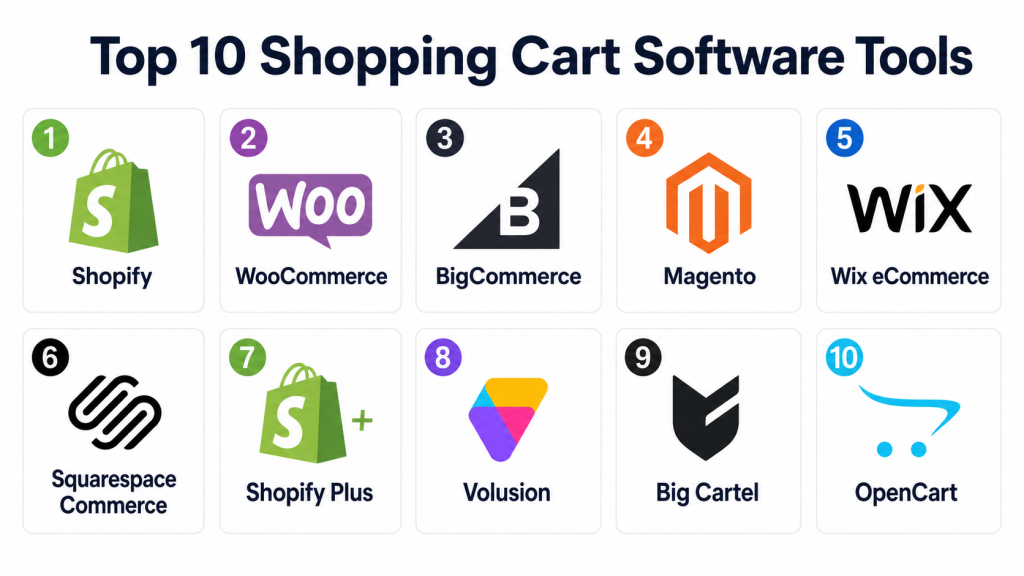
Top 10 Shopping Cart Software Tools
#1 — Shopify
Short description: Shopify is a comprehensive e-commerce platform with integrated shopping cart, payments, and inventory management. Ideal for small to large online retailers.
Key Features
- Integrated shopping cart and checkout
- Multiple payment gateway support
- Inventory and product management
- Marketing and promotion tools
- Analytics and reporting dashboards
- Mobile-friendly interface
- API for custom integrations
Pros
- Easy setup and intuitive interface
- Scalable from small stores to enterprise
Cons
- Subscription pricing can be high for advanced features
- Customization may require coding knowledge
Platforms / Deployment
- Web / iOS / Android
- Cloud
Security & Compliance
- PCI-compliant, encryption
- MFA and role-based access
Integrations & Ecosystem
- POS and ERP integrations
- Payment gateways
- Marketing automation tools
Support & Community
- Extensive tutorials and documentation
- 24/7 support
- Active user forums
#2 — WooCommerce
Short description: WooCommerce is an open-source WordPress plugin for e-commerce, providing a flexible shopping cart and product management. Best for small to mid-sized online stores.
Key Features
- WordPress integration
- Flexible product catalog management
- Payment gateway support
- Discounts and promotion options
- Analytics and reporting
- Inventory management
- Extensions and plugins
Pros
- Free core plugin
- Highly customizable
Cons
- Requires WordPress knowledge
- Extensions can add cost
Platforms / Deployment
- Web
- Self-hosted
Security & Compliance
- Encryption, SSL
- PCI-compliant
Integrations & Ecosystem
- Payment gateways
- Marketing and shipping plugins
- API for custom development
Support & Community
- WordPress community support
- Documentation and tutorials
#3 — BigCommerce
Short description: BigCommerce is a cloud-based e-commerce platform with built-in shopping cart, SEO tools, and multi-channel selling. Suitable for SMB and enterprise retailers.
Key Features
- Integrated shopping cart and checkout
- Multi-channel selling
- Payment gateway support
- Inventory and catalog management
- Analytics and reporting dashboards
- SEO and marketing tools
Pros
- No transaction fees
- Enterprise-grade features
Cons
- Learning curve for advanced features
- Higher pricing for premium plans
Platforms / Deployment
- Web / iOS / Android
- Cloud
Security & Compliance
- PCI-compliant, encryption
- MFA and role-based access
Integrations & Ecosystem
- Payment gateways
- ERP, POS, and CRM systems
- API for custom extensions
Support & Community
- Tutorials and documentation
- 24/7 support
#4 — Magento
Short description: Magento is an open-source e-commerce platform with a robust shopping cart and extensive customization options. Best for large, enterprise online stores.
Key Features
- Advanced product catalog management
- Multi-store support
- Integrated checkout and payment options
- Marketing and promotions tools
- Analytics and reporting
- Mobile-responsive design
Pros
- Highly flexible and scalable
- Enterprise-grade capabilities
Cons
- Requires technical expertise
- Hosting and maintenance costs
Platforms / Deployment
- Web
- Self-hosted / Cloud
Security & Compliance
- PCI-compliant
- Encryption and access controls
Integrations & Ecosystem
- ERP and CRM integrations
- Payment gateways
- API for custom development
Support & Community
- Developer community support
- Documentation and tutorials
#5 — Wix eCommerce
Short description: Wix eCommerce offers a user-friendly website builder with integrated shopping cart and payments. Ideal for SMB retailers and beginners.
Key Features
- Drag-and-drop website builder
- Integrated shopping cart
- Payment gateways
- Product and inventory management
- Analytics and reporting dashboards
- Mobile-friendly design
Pros
- Easy to use for beginners
- Affordable pricing
Cons
- Limited advanced features
- Less scalable for large enterprises
Platforms / Deployment
- Web / iOS / Android
- Cloud
Security & Compliance
- PCI-compliant, encryption
- SSL included
Integrations & Ecosystem
- Payment gateways
- Marketing apps
- API for integrations
Support & Community
- Tutorials and help center
- Email support
#6 — Squarespace Commerce
Short description: Squarespace Commerce provides a website builder with integrated shopping cart and e-commerce functionality. Suitable for SMB and boutique stores.
Key Features
- Integrated shopping cart
- Product catalog management
- Payment processing
- Marketing and SEO tools
- Analytics dashboards
- Mobile-optimized templates
Pros
- Easy setup and design flexibility
- Intuitive interface
Cons
- Limited third-party extensions
- Less suitable for large catalogs
Platforms / Deployment
- Web / iOS / Android
- Cloud
Security & Compliance
- PCI-compliant, encryption
- SSL included
Integrations & Ecosystem
- Payment gateways
- Marketing apps
- API support
Support & Community
- Tutorials and help center
- Email and chat support
#7 — Shopify Plus
Short description: Shopify Plus is the enterprise version of Shopify, offering advanced shopping cart, automation, and multi-channel capabilities.
Key Features
- Enterprise-grade e-commerce
- Multi-channel and wholesale support
- Advanced automation and workflows
- Analytics dashboards
- Payment gateway integrations
- Inventory management
Pros
- Scalable for large retailers
- Robust enterprise features
Cons
- Higher pricing
- Advanced features may require training
Platforms / Deployment
- Web / iOS / Android
- Cloud
Security & Compliance
- PCI-compliant, encryption
- MFA and role-based access
Integrations & Ecosystem
- POS, ERP, CRM
- API and app marketplace
Support & Community
- Dedicated enterprise support
- Tutorials and forums
#8 — Volusion
Short description: Volusion offers cloud-based e-commerce with integrated shopping cart and payment options. Suitable for SMB and mid-sized retailers.
Key Features
- Shopping cart and checkout
- Payment gateway support
- Product and inventory management
- Analytics dashboards
- Marketing tools
Pros
- User-friendly interface
- Affordable for SMB
Cons
- Limited advanced features
- Less suitable for enterprise
Platforms / Deployment
- Web / iOS / Android
- Cloud
Security & Compliance
- PCI-compliant
- Encryption
Integrations & Ecosystem
- Payment gateways
- Marketing tools
- API access
Support & Community
- Tutorials and help center
- Email support
#9 — Big Cartel
Short description: Big Cartel is an e-commerce platform tailored for artists and small online shops. Offers a simple shopping cart and inventory management.
Key Features
- Product catalog management
- Shopping cart and checkout
- Payment integration
- Inventory tracking
- Basic analytics
Pros
- Simple and affordable
- Easy setup
Cons
- Limited scalability
- Few advanced features
Platforms / Deployment
- Web / iOS / Android
- Cloud
Security & Compliance
- PCI-compliant
- Encryption
Integrations & Ecosystem
- Payment gateways
- Basic marketing tools
Support & Community
- Tutorials and documentation
- Email support
#10 — OpenCart
Short description: OpenCart is an open-source e-commerce platform with shopping cart functionality. Best for small to mid-sized businesses seeking customizability.
Key Features
- Open-source shopping cart
- Product catalog management
- Payment and shipping options
- Extensions and themes
- Analytics dashboards
Pros
- Highly customizable
- No subscription cost
Cons
- Requires technical setup
- Support is community-based
Platforms / Deployment
- Web
- Self-hosted
Security & Compliance
- Encryption and SSL
- PCI-compliant
Integrations & Ecosystem
- Payment gateways
- Shipping providers
- Plugins and API
Support & Community
- Community forums
- Documentation
Comparison Table (Top 10)
| Tool Name | Best For | Platform(s) Supported | Deployment | Standout Feature | Public Rating |
|---|---|---|---|---|---|
| Shopify | SMB to enterprise | Web / iOS / Android | Cloud | Scalable e-commerce | N/A |
| WooCommerce | SMB | Web | Self-hosted | Flexible WordPress integration | N/A |
| BigCommerce | SMB & enterprise | Web / iOS / Android | Cloud | Multi-channel selling | N/A |
| Magento | Enterprise | Web | Self-hosted / Cloud | Enterprise-grade customization | N/A |
| Wix eCommerce | SMB | Web / iOS / Android | Cloud | Drag-and-drop setup | N/A |
| Squarespace Commerce | SMB | Web / iOS / Android | Cloud | Design flexibility | N/A |
| Shopify Plus | Enterprise | Web / iOS / Android | Cloud | Automation & multi-channel | N/A |
| Volusion | SMB | Web / iOS / Android | Cloud | Affordable cloud solution | N/A |
| Big Cartel | Small shops & artists | Web / iOS / Android | Cloud | Simple setup | N/A |
| OpenCart | SMB & developers | Web | Self-hosted | Open-source customizability | N/A |
Evaluation & Scoring of Shopping Cart Software
| Tool Name | Core (25%) | Ease (15%) | Integrations (15%) | Security (10%) | Performance (10%) | Support (10%) | Value (15%) | Weighted Total (0–10) |
|---|---|---|---|---|---|---|---|---|
| Shopify | 9 | 9 | 9 | 8 | 9 | 8 | 8 | 8.7 |
| WooCommerce | 8 | 8 | 8 | 8 | 8 | 7 | 8 | 8.0 |
| BigCommerce | 9 | 8 | 8 | 8 | 9 | 8 | 8 | 8.5 |
| Magento | 9 | 7 | 9 | 8 | 9 | 8 | 7 | 8.3 |
| Wix eCommerce | 7 | 9 | 7 | 8 | 8 | 7 | 7 | 7.7 |
| Squarespace Commerce | 7 | 9 | 7 | 8 | 8 | 7 | 7 | 7.7 |
| Shopify Plus | 9 | 8 | 9 | 8 | 9 | 8 | 8 | 8.6 |
| Volusion | 7 | 8 | 7 | 8 | 8 | 7 | 7 | 7.5 |
| Big Cartel | 6 | 9 | 6 | 7 | 7 | 6 | 6 | 6.6 |
| OpenCart | 7 | 7 | 7 | 7 | 8 | 6 | 6 | 7.0 |
Interpretation: Weighted totals help identify shopping cart software with the best balance of features, usability, integrations, security, and value for SMBs to enterprises.
Which Shopping Cart Software Is Right for You?
Solo / Freelancer
- Big Cartel or Wix eCommerce for simple, affordable setups
SMB
- Shopify, WooCommerce, Volusion for scalable and flexible platforms
Mid-Market
- BigCommerce, Squarespace Commerce for multi-channel retail
Enterprise
- Shopify Plus, Magento for advanced features and multi-store scalability
Budget vs Premium
- Budget: Wix, Big Cartel
- Premium: Shopify Plus, Magento
Feature Depth vs Ease of Use
- Shopify balances powerful features with ease of use
- Magento provides customization at the cost of complexity
Integrations & Scalability
- Ensure integration with POS, ERP, payment gateways, and marketing platforms
Security & Compliance Needs
- Select PCI-compliant platforms with encryption and secure cloud hosting
Frequently Asked Questions (FAQs)
1. What pricing models do shopping cart platforms use?
Most are subscription-based; some open-source solutions are free with optional add-ons.
2. Can they handle multi-channel sales?
Yes, top solutions integrate in-store, online, and social commerce.
3. Are mobile-friendly platforms available?
Yes, most platforms provide responsive mobile design and apps.
4. Can AI be used for product recommendations?
Yes, platforms like Shopify and BigCommerce leverage AI for upselling and recommendations.
5. Are these suitable for small retailers?
Yes, Wix, Big Cartel, and WooCommerce cater to small online stores.
6. Do they integrate with payment gateways?
Yes, integration with PayPal, Stripe, and major gateways is standard.
7. How secure are transactions?
Top platforms provide PCI compliance, encryption, and secure hosting.
8. Can inventory be managed in real time?
Yes, multi-channel and real-time inventory management is supported.
9. Can discounts and promotions be automated?
Yes, all major platforms allow automated discounts, promotions, and campaigns.
10. Can platforms scale as business grows?
Yes, Shopify Plus, BigCommerce, and Magento scale from SMBs to enterprises.
Conclusion
Selecting a shopping cart software depends on business size, product catalog, and sales channels. Small stores benefit from Big Cartel or Wix, SMBs from Shopify and WooCommerce, and enterprise operations from Shopify Plus or Magento. Retailers should shortlistplatforms, test integrations and usability, and ensure security compliance before full-scale adoption.
