Upgrade & Secure Your Future with DevOps, SRE, DevSecOps, MLOps!
We spend hours scrolling social media and waste money on things we forget, but won’t spend 30 minutes a day earning certifications that can change our lives.
Master in DevOps, SRE, DevSecOps & MLOps by DevOps School!
Learn from Guru Rajesh Kumar and double your salary in just one year.
Introduction
IP Address Management (IPAM) tools are software solutions that help organizations plan, track, and manage their IP address space across physical, virtual, and cloud networks. In plain English, IPAM centralizes IP address inventory, ensures efficient allocation, and prevents conflicts, enabling teams to maintain healthy, organized network infrastructures.
In , networks are increasingly complex due to hybrid architectures, cloud adoption, and IoT devices. Without proper IP management, organizations risk misconfigurations, security vulnerabilities, and service interruptions. IPAM tools provide automation, visualization, and reporting to reduce manual errors and improve operational efficiency.
Common real-world use cases include:
- Centralized management of IPv4 and IPv6 address space
- Tracking IP assignments across multiple sites and subnets
- Detecting and resolving IP conflicts automatically
- Integration with DNS and DHCP servers for coordinated management
- Network planning for expansions or cloud migrations
Buyers should evaluate:
- Centralized IP inventory management
- Integration with DNS and DHCP
- Automation and conflict detection
- IPv4 and IPv6 support
- Network visualization and mapping
- Alerts and notifications for anomalies
- Multi-site and multi-cloud support
- Role-based access control and audit logging
- Scalability for growing enterprise networks
- Ease of deployment and reporting capabilities
Best for: Network administrators, IT operations teams, cloud architects, enterprises with complex IP networks, and service providers managing multiple clients.
Not ideal for: Small organizations with simple networks, limited IP addresses, or minimal DNS/DHCP requirements.
Key Trends in IPAM Tools
AI-assisted IP allocation and conflict resolution
- Integration with cloud-native networks and multi-cloud environments
- Automation for IP provisioning and lifecycle management
- IPv6 adoption and dual-stack management
- Real-time dashboards and analytics for IP utilization
- Enhanced security and compliance reporting
- API integrations with ITSM, monitoring, and orchestration tools
- Predictive capacity planning for IP and subnet expansion
- Role-based access and audit logging for multi-team environments
- Subscription-based SaaS deployment for centralized management
How We Selected These Tools
The top 10 IPAM platforms were selected based on:
- Market adoption and recognition in enterprise networks
- Feature completeness including IPv4/IPv6 management, DNS/DHCP integration, and automation
- Reliability and performance across hybrid and multi-site networks
- Security and compliance features (RBAC, encryption, logging)
- Integration with cloud, monitoring, and ITSM tools
- Reporting and analytics capabilities
- Ease of deployment and user experience
- Scalability for growing and dynamic networks
- Vendor support, documentation, and community resources
- AI or predictive capabilities for IP space management
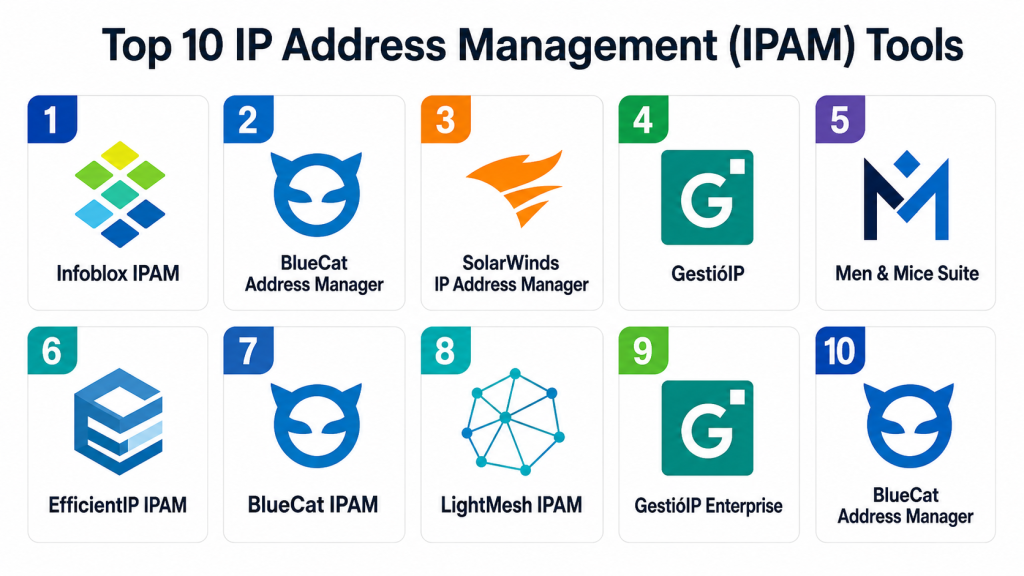
Top 10 IP Address Management (IPAM) Tools
#1 — Infoblox IPAM
Short description: Infoblox provides centralized IP address management, DNS, and DHCP integration for enterprise networks.
Key Features
- Centralized IP inventory and tracking
- Automated conflict detection
- IPv4 and IPv6 support
- Integration with DNS and DHCP
- Reporting and analytics dashboards
- Role-based access control
- Multi-site and hybrid network support
Pros
- Enterprise-grade reliability and scalability
- Strong DNS/DHCP integration
- Comprehensive automation capabilities
Cons
- Premium pricing
- Complex initial deployment
- Learning curve for advanced features
Platforms / Deployment
Web / Windows / Linux / macOS
Cloud / Self-hosted / Hybrid
Security & Compliance
SSO, RBAC, encryption; SOC 2 and ISO 27001 Not publicly stated.
Integrations & Ecosystem
- DHCP and DNS servers
- Network monitoring tools
- Cloud platforms
- APIs for automation
Support & Community
Enterprise support, documentation, and active community forums.
#2 — BlueCat Address Manager
Short description: BlueCat provides IPAM with DNS, DHCP, and network automation for complex enterprise networks.
Key Features
- Centralized IP inventory and reporting
- IPv4 and IPv6 management
- Automated provisioning and conflict detection
- DNS and DHCP integration
- Analytics and usage dashboards
- Role-based access control
- Multi-cloud and hybrid network support
Pros
- Strong automation and orchestration
- Scalable for large networks
- Centralized management for multi-site environments
Cons
- Premium cost
- Requires training for advanced features
- Complexity in multi-cloud deployments
Platforms / Deployment
Web / Linux / Windows / macOS
Cloud / Self-hosted / Hybrid
Security & Compliance
SSO, MFA, RBAC, encryption; SOC 2 Not publicly stated.
Integrations & Ecosystem
- DNS/DHCP servers
- ITSM platforms
- Cloud environments
- APIs for custom workflows
Support & Community
Documentation, enterprise support, and community forums.
#3 — SolarWinds IP Address Manager
Short description: SolarWinds IPAM simplifies IP management with integrated DNS/DHCP coordination and automated conflict resolution.
Key Features
- IP inventory and subnet management
- IPv4 and IPv6 support
- Automated IP tracking and conflict detection
- Integration with DNS and DHCP
- Alerts and reporting dashboards
- Role-based access control
- Multi-site network support
Pros
- User-friendly interface
- Cost-effective for SMBs and mid-size enterprises
- Automated management reduces manual errors
Cons
- Limited multi-cloud support
- Advanced reporting requires configuration
- Windows-centric deployment
Platforms / Deployment
Windows / Web
Self-hosted / Hybrid
Security & Compliance
SSO, RBAC, encryption; Not publicly stated for SOC 2/ISO.
Integrations & Ecosystem
- DNS/DHCP servers
- Network monitoring tools
- ITSM integration
- APIs for automation
Support & Community
Documentation, enterprise support, and community forums.
#4 — GestióIP
Short description: GestióIP is an open-source IPAM solution for enterprises needing centralized IP inventory and management.
Key Features
- IPv4 and IPv6 management
- Subnet and address allocation tracking
- Web-based dashboards and reporting
- Role-based access control
- Automated conflict detection
- Multi-site support
- API for integration
Pros
- Open-source and flexible
- No licensing costs
- Customizable for specific enterprise needs
Cons
- Requires technical expertise to deploy
- Limited official support
- Advanced features require customization
Platforms / Deployment
Linux / Web
Self-hosted
Security & Compliance
RBAC and encryption; Not publicly stated.
Integrations & Ecosystem
- APIs for automation and integration
- DNS/DHCP servers
- Monitoring tools
Support & Community
Open-source community, documentation, and forums.
#5 — Men & Mice Suite
Short description: Men & Mice offers IPAM with DNS/DHCP management, analytics, and automation for hybrid networks.
Key Features
- Centralized IP inventory
- IPv4 and IPv6 support
- DNS and DHCP integration
- Automation for provisioning and conflict resolution
- Multi-site and multi-cloud support
- Role-based access control
- Reporting dashboards
Pros
- Enterprise-grade features
- Strong DNS/DHCP integration
- Scalable for large networks
Cons
- Premium cost
- Setup complexity for large deployments
- Learning curve for advanced automation
Platforms / Deployment
Web / Linux / Windows / macOS
Cloud / Self-hosted / Hybrid
Security & Compliance
SSO, RBAC, encryption; SOC 2 Not publicly stated.
Integrations & Ecosystem
- DNS/DHCP servers
- Cloud environments
- ITSM tools
- API for automation
Support & Community
Enterprise support, documentation, and training resources.
#6 — EfficientIP IPAM
Short description: EfficientIP IPAM provides centralized IP address management with automation, analytics, and multi-cloud support.
Key Features
- IP inventory management
- IPv4 and IPv6 support
- DNS and DHCP integration
- Automated provisioning and conflict detection
- Real-time dashboards
- Role-based access
- Multi-cloud and hybrid network support
Pros
- Strong automation capabilities
- Real-time analytics and reporting
- Scalable for enterprise networks
Cons
- High cost for full feature set
- Complex setup for multi-site networks
- Requires training for advanced use
Platforms / Deployment
Web / Linux / Windows / macOS
Cloud / Self-hosted / Hybrid
Security & Compliance
SSO, MFA, RBAC, encryption; SOC 2 Not publicly stated.
Integrations & Ecosystem
- DNS/DHCP servers
- ITSM and monitoring tools
- Cloud providers
- API integration
Support & Community
Documentation, enterprise support, and community forums.
#7 — BlueCat IPAM
Short description: BlueCat IPAM centralizes IP management with DNS/DHCP integration, analytics, and automation for large-scale networks.
Key Features
- IPv4 and IPv6 address management
- DNS and DHCP coordination
- Policy-based IP allocation
- Reporting and dashboards
- Role-based access control
- Multi-site and hybrid support
- API-driven automation
Pros
- Strong enterprise features
- Flexible automation and policy management
- Centralized control for distributed networks
Cons
- Premium pricing
- Complexity for multi-cloud deployments
- Learning curve for advanced configurations
Platforms / Deployment
Web / Linux / Windows / macOS
Cloud / Hybrid
Security & Compliance
SSO, MFA, RBAC, encryption; SOC 2 Not publicly stated.
Integrations & Ecosystem
- Cloud and on-prem DNS/DHCP
- ITSM and monitoring tools
- APIs for automation
Support & Community
Documentation, enterprise support, and community forums.
#8 — LightMesh IPAM
Short description: LightMesh offers cloud-based IPAM for enterprises needing centralized inventory, analytics, and automated allocation.
Key Features
- Centralized IP inventory
- IPv4 and IPv6 support
- Multi-cloud integration
- Automated conflict detection
- Analytics and dashboards
- Role-based access
- API-driven workflows
Pros
- SaaS deployment simplifies management
- Automation reduces errors
- Multi-cloud visibility
Cons
- Limited on-premises deployment
- Premium pricing
- Advanced analytics may require configuration
Platforms / Deployment
Web / Cloud
Cloud
Security & Compliance
SSO, RBAC, encryption; SOC 2 Not publicly stated.
Integrations & Ecosystem
- DNS/DHCP servers
- Cloud platforms
- ITSM and monitoring tools
- APIs for integration
Support & Community
Documentation, enterprise support, and online resources.
#9 — GestióIP Enterprise
Short description: Enterprise edition of GestióIP provides advanced IPAM, analytics, and reporting for large organizations.
Key Features
- IPv4 and IPv6 management
- Multi-site support
- Automated conflict resolution
- DNS/DHCP integration
- Reporting dashboards
- Role-based access control
- API support
Pros
- Scalable for large enterprises
- Automation reduces manual errors
- Open-source flexibility
Cons
- Technical setup required
- Limited vendor support
- Advanced features require expertise
Platforms / Deployment
Linux / Web
Self-hosted / Hybrid
Security & Compliance
RBAC and encryption; Not publicly stated.
Integrations & Ecosystem
- DNS/DHCP servers
- ITSM platforms
- Monitoring tools
Support & Community
Enterprise support options, open-source community, and documentation.
#10 — BlueCat Address Manager
Short description: BlueCat Address Manager simplifies IP management, automates provisioning, and integrates DNS/DHCP for enterprise networks.
Key Features
- Centralized IP inventory
- IPv4 and IPv6 support
- Automated provisioning
- DNS/DHCP integration
- Real-time dashboards
- Role-based access control
- Multi-site and hybrid support
Pros
- Enterprise-grade automation
- Scalable for multi-site networks
- Strong analytics and reporting
Cons
- Premium cost
- Complexity for large deployments
- Learning curve for advanced features
Platforms / Deployment
Web / Linux / Windows / macOS
Cloud / Self-hosted / Hybrid
Security & Compliance
SSO, MFA, RBAC, encryption; SOC 2 Not publicly stated.
Integrations & Ecosystem
- DNS/DHCP servers
- ITSM platforms
- Cloud and monitoring tools
- APIs for automation
Support & Community
Documentation, enterprise support, and training resources.
Comparison Table
| Tool Name | Best For | Platform(s) Supported | Deployment | Standout Feature | Public Rating |
|---|---|---|---|---|---|
| Infoblox | Enterprise networks | Web / Windows / Linux / macOS | Cloud / Self-hosted / Hybrid | DNS/DHCP integration | N/A |
| BlueCat Address Manager | Enterprise & multi-site | Web / Linux / Windows / macOS | Cloud / Self-hosted / Hybrid | Automation and provisioning | N/A |
| SolarWinds IPAM | SMB to enterprise | Windows / Web | Self-hosted / Hybrid | Conflict detection | N/A |
| GestióIP | Open-source flexible | Linux / Web | Self-hosted | IPv6 support | N/A |
| Men & Mice Suite | Enterprise IT | Web / Linux / Windows / macOS | Cloud / Self-hosted / Hybrid | Centralized IP inventory | N/A |
| EfficientIP IPAM | Hybrid & cloud | Web / Linux / Windows / macOS | Cloud / Self-hosted / Hybrid | Analytics & automation | N/A |
| BlueCat IPAM | Large-scale IP management | Web / Linux / Windows / macOS | Cloud / Hybrid | Policy-based allocation | N/A |
| LightMesh IPAM | SaaS multi-cloud | Web / Cloud | Cloud | Centralized inventory | N/A |
| GestióIP Enterprise | Enterprise-grade | Linux / Web | Self-hosted / Hybrid | Multi-site support | N/A |
| BlueCat Address Manager | Enterprise automation | Web / Linux / Windows / macOS | Cloud / Self-hosted / Hybrid | Real-time dashboards | N/A |
Evaluation & Scoring of IPAM Tools
| Tool Name | Core (25%) | Ease (15%) | Integrations (15%) | Security (10%) | Performance (10%) | Support (10%) | Value (15%) | Weighted Total (0–10) |
|---|---|---|---|---|---|---|---|---|
| Infoblox | 9 | 7 | 8 | 8 | 9 | 8 | 7 | 8.35 |
| BlueCat Address Manager | 9 | 7 | 8 | 8 | 9 | 8 | 7 | 8.35 |
| SolarWinds IPAM | 8 | 8 | 7 | 7 | 8 | 7 | 7 | 7.65 |
| GestióIP | 7 | 6 | 6 | 7 | 7 | 6 | 7 | 6.65 |
| Men & Mice Suite | 8 | 7 | 8 | 7 | 8 | 7 | 7 | 7.70 |
| EfficientIP IPAM | 8 | 7 | 8 | 7 | 8 | 7 | 7 | 7.70 |
| BlueCat IPAM | 9 | 7 | 8 | 8 | 8 | 8 | 7 | 8.05 |
| LightMesh IPAM | 8 | 7 | 7 | 7 | 8 | 7 | 7 | 7.40 |
| GestióIP Enterprise | 8 | 7 | 7 | 7 | 8 | 7 | 7 | 7.40 |
| BlueCat Address Manager | 9 | 7 | 8 | 8 | 8 | 8 | 7 | 8.05 |
Scores reflect comparative strengths in automation, integration, scalability, and usability.
Which IPAM Tool Is Right for You?
Solo / Freelancer
GestióIP or LightMesh IPAM is suitable for small networks or labs requiring simple IP management.
SMB
SolarWinds IPAM, EfficientIP, and LightMesh provide automation and dashboards for mid-size networks.
Mid-Market
Men & Mice Suite, BlueCat IPAM, and Infoblox are ideal for multi-site networks needing automation, analytics, and hybrid cloud support.
Enterprise
Infoblox, BlueCat Address Manager, and EfficientIP IPAM deliver enterprise-grade automation, multi-cloud support, and security compliance.
Budget vs Premium
Open-source or SaaS LightMesh is cost-effective. Enterprise-grade Infoblox, BlueCat, and Men & Mice offer full-featured capabilities at premium pricing.
Feature Depth vs Ease of Use
GestióIP and LightMesh are easier to deploy. Infoblox and BlueCat provide deeper analytics and multi-site management.
Integrations & Scalability
Enterprises should choose platforms with robust DNS/DHCP, cloud, and ITSM integrations. Infoblox, BlueCat, and Men & Mice excel here.
Security & Compliance Needs
SOC 2, ISO 27001, and encryption support is available in Infoblox, BlueCat, and EfficientIP for regulated environments.
Frequently Asked Questions
What is IPAM?
IPAM centralizes IP address inventory, allocation, and management to avoid conflicts and optimize usage.
Why is IPAM important?
It ensures network reliability, prevents address conflicts, and improves planning for expansions.
Do IPAM tools support IPv6?
Yes. Modern IPAM tools provide dual-stack management for IPv4 and IPv6.
Can IPAM integrate with DNS/DHCP?
Yes. Most IPAM platforms coordinate with DNS and DHCP servers for synchronized management.
Are IPAM tools suitable for SMBs?
Yes. Tools like SolarWinds IPAM and LightMesh provide scalable features for SMB networks.
Do these tools provide automation?
Yes. Automated provisioning, conflict detection, and reporting are standard.
Can IPAM support multi-cloud networks?
Yes. Enterprise tools like Infoblox and BlueCat manage hybrid and multi-cloud IP spaces.
How often should IPAM be updated?
Continuous monitoring and updates are recommended for dynamic and growing networks.
Is deployment difficult?
Cloud-based IPAM tools are easier to deploy; self-hosted or enterprise options may require IT expertise.
How to choose the right IPAM tool?
Consider network size, multi-site support, cloud integration, automation, compliance, and budget.
Conclusion
IP Address Management (IPAM) tools are essential for managing complex IP networks across hybrid and cloud environments. Infoblox, BlueCat Address Manager, and EfficientIP IPAM offer enterprise-grade automation, analytics, and security. SMBs and smaller networks can benefit from SolarWinds IPAM, LightMesh, or GestióIP for cost-effective, scalable management.
