Upgrade & Secure Your Future with DevOps, SRE, DevSecOps, MLOps!
We spend hours scrolling social media and waste money on things we forget, but won’t spend 30 minutes a day earning certifications that can change our lives.
Master in DevOps, SRE, DevSecOps & MLOps by DevOps School!
Learn from Guru Rajesh Kumar and double your salary in just one year.
Introduction
SaaS Security Posture Management (SSPM) tools are designed to help organizations secure their Software-as-a-Service (SaaS) applications by providing continuous visibility, configuration monitoring, and compliance enforcement. These platforms scan SaaS environments to detect misconfigurations, excessive permissions, insecure integrations, and policy violations, giving security teams actionable insights to reduce risk. In plain English, SSPM helps organizations ensure that their cloud applications remain secure, compliant, and aligned with best practices.
With the rapid adoption of SaaS applications in +, organizations face increasing complexity and risk. Misconfigured cloud apps, shadow IT, and weak access controls can expose sensitive data and create compliance gaps. SSPM solutions are essential for proactive security, helping companies detect and remediate risks before attackers can exploit them.
Real-world use cases:
- Continuous monitoring of SaaS applications for misconfigurations.
- Detecting excessive user permissions and access risks.
- Enforcing company-wide security policies across multiple SaaS apps.
- Monitoring integrations and third-party applications for vulnerabilities.
- Generating audit-ready compliance reports for frameworks like SOC 2, ISO 27001, and GDPR.
Evaluation criteria buyers should consider:
- Breadth of SaaS coverage and integration capabilities.
- Real-time monitoring and alerting functionality.
- Policy enforcement and configuration management.
- Access control analysis and permission auditing.
- Compliance reporting and audit support.
- Automated remediation and workflow integration.
- Ease of deployment and usability.
- API support for automation and orchestration.
- Threat intelligence and anomaly detection.
Best for: Security teams, SaaS administrators, IT managers, and CISOs in organizations using multiple SaaS applications or operating in regulated industries.
Not ideal for: Small organizations with minimal SaaS adoption or those using only a few cloud apps without sensitive data, where manual auditing may suffice.
Key Trends in SaaS Security Posture Management (SSPM)
- AI and Machine Learning for Risk Detection: Automatically identifies misconfigurations, unusual behaviors, and high-risk access patterns.
- Integration with Security and DevOps Workflows: SSPM tools are increasingly embedded in CI/CD and ITSM workflows to automate remediation.
- Shadow IT Discovery: Detects unauthorized SaaS applications and accounts to reduce hidden risk.
- Policy and Compliance Automation: Enforces security policies across multiple SaaS platforms and generates audit-ready reports.
- Granular Access Control Analysis: Monitors excessive permissions, shared data, and API tokens.
- Third-Party Application Monitoring: Assesses integrations and vendor risks continuously.
- Behavioral Anomaly Detection: Detects unusual user behavior that may indicate insider threats or compromised accounts.
- Flexible Deployment and Licensing: Cloud-native, hybrid, or multi-tenant solutions with subscription-based pricing.
- Multi-Cloud SaaS Coverage: Ensures security posture across popular SaaS apps like Office 365, Salesforce, Slack, and Google Workspace.
- Automated Remediation and Alerts: Provides actionable recommendations and integrates with ticketing or workflow tools for fast response.
How We Selected These Tools (Methodology)
- Evaluated market adoption and recognition among security professionals.
- Assessed feature completeness, including SaaS coverage, configuration monitoring, and access control analysis.
- Reviewed performance and reliability, ensuring minimal false positives and accurate alerting.
- Analyzed security posture, including encryption, MFA, and compliance alignment.
- Examined integration capabilities with DevSecOps, ITSM, SIEM, and workflow automation tools.
- Considered customer fit across SMB, mid-market, and enterprise segments.
- Evaluated automation and remediation features for operational efficiency.
- Assessed reporting, dashboards, and alerting for actionable insights.
- Reviewed support and community resources for onboarding and troubleshooting.
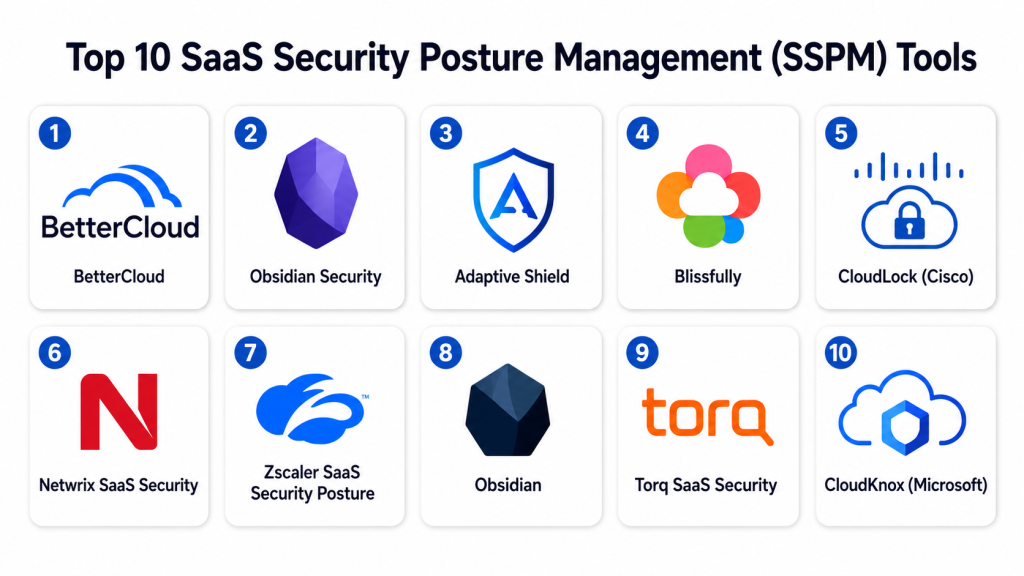
Top 10 SaaS Security Posture Management (SSPM) Tools
#1 — BetterCloud
Short description: BetterCloud provides centralized visibility and automated security enforcement across SaaS applications, helping IT and security teams prevent misconfigurations and data exposure while maintaining compliance across multiple platforms.
Key Features
- Automated monitoring of SaaS applications
- Access and permission auditing
- Security policy enforcement
- Integration and API monitoring
- Compliance reporting (SOC 2, GDPR, HIPAA)
- Workflow automation and remediation
Pros
- Comprehensive SaaS coverage
- Easy-to-use dashboard with automation
Cons
- Higher cost for smaller organizations
- Limited on-prem integration
Platforms / Deployment
- Web / Windows / Linux / macOS
- Cloud
Security & Compliance
- MFA, encryption, RBAC
- SOC 2, ISO 27001, GDPR
Integrations & Ecosystem
- Integrates with Office 365, Google Workspace, Slack, Salesforce
- API support for automation and custom workflows
- Compatible with SIEM and ITSM systems
Support & Community
- Professional support tiers
- Documentation and user forums
#2 — Obsidian Security
Short description: Obsidian Security focuses on detecting and mitigating risks in SaaS environments by continuously monitoring user behavior, configurations, and integrations to maintain a strong security posture.
Key Features
- Continuous monitoring of SaaS apps
- User activity and risk analytics
- Configuration assessment and alerts
- Third-party application risk management
- Compliance dashboards
Pros
- Real-time risk detection and alerts
- Strong integration monitoring
Cons
- Can be complex for organizations with fewer SaaS apps
- Premium pricing
Platforms / Deployment
- Web / Cloud
- Cloud-native
Security & Compliance
- Not publicly stated
Integrations & Ecosystem
- Supports Office 365, G Suite, Salesforce, Slack
- API access for workflow automation
- Integration with SIEM systems
Support & Community
- Professional support available
- Online documentation
#3 — Adaptive Shield
Short description: Adaptive Shield provides automated SaaS security and posture management with continuous monitoring, risk assessment, and remediation across popular enterprise applications.
Key Features
- SaaS configuration monitoring
- Risk prioritization and scoring
- Access management insights
- Third-party app monitoring
- Compliance reporting
Pros
- Automation reduces manual effort
- Supports multiple SaaS platforms
Cons
- Limited customization for smaller deployments
- Premium pricing
Platforms / Deployment
- Web / Cloud
- Cloud-native
Security & Compliance
- Not publicly stated
Integrations & Ecosystem
- Integrates with Salesforce, Slack, Microsoft 365, Zoom
- API automation for workflows
- SIEM integration
Support & Community
- Professional support
- Tutorials and documentation
#4 — Blissfully
Short description: Blissfully helps organizations manage SaaS applications securely by tracking usage, permissions, and risks, providing actionable insights for IT and security teams.
Key Features
- SaaS inventory and discovery
- Permission and access auditing
- Risk analysis and reporting
- Compliance dashboards
- Automated alerts
Pros
- Simple interface for managing SaaS security
- Effective risk prioritization
Cons
- Focused primarily on SaaS usage tracking
- Limited runtime protection
Platforms / Deployment
- Web / Cloud
- Cloud-native
Security & Compliance
- Not publicly stated
Integrations & Ecosystem
- Integrates with Office 365, Google Workspace, Salesforce
- API support for automation
- Compatible with ITSM tools
Support & Community
- Professional support tiers
- Documentation and knowledge base
#5 — CloudLock (Cisco)
Short description: CloudLock provides SaaS security posture monitoring with automated configuration analysis, compliance enforcement, and threat detection for cloud applications.
Key Features
- SaaS configuration and policy monitoring
- Threat detection and alerting
- User and access management
- Compliance reporting
- Automated remediation suggestions
Pros
- Enterprise-level security coverage
- Integration with Cisco ecosystem
Cons
- Complexity in setup for smaller organizations
- Licensing cost can be high
Platforms / Deployment
- Web / Cloud
- Cloud-native
Security & Compliance
- MFA, encryption
- SOC 2, ISO 27001
Integrations & Ecosystem
- Microsoft 365, G Suite, Salesforce, Slack
- API automation
- SIEM integration
Support & Community
- Professional support
- Documentation and user forums
#6 — Netwrix SaaS Security
Short description: Netwrix provides continuous visibility into SaaS application configurations, access controls, and data exposure risks, helping organizations maintain security and compliance.
Key Features
- SaaS configuration monitoring
- Access and permission auditing
- User activity analysis
- Compliance reporting
- Alerts and remediation guidance
Pros
- Effective compliance support
- Broad SaaS coverage
Cons
- Limited automated remediation
- May require additional setup for multi-cloud environments
Platforms / Deployment
- Web / Cloud
- Cloud-native
Security & Compliance
- Not publicly stated
Integrations & Ecosystem
- Integrates with Office 365, G Suite, Salesforce
- API automation support
- SIEM integration
Support & Community
- Online documentation
- Professional support tiers
#7 — Zscaler SaaS Security Posture
Short description: Zscaler SSPM offers visibility and protection for SaaS applications, monitoring user access, configurations, and third-party integrations to prevent security gaps.
Key Features
- SaaS asset discovery
- Risk assessment and prioritization
- Access control analysis
- Compliance dashboards
- Alerts and notifications
Pros
- Real-time risk detection
- Strong integration and reporting
Cons
- Limited customization for small teams
- Premium pricing
Platforms / Deployment
- Web / Cloud
- Cloud-native
Security & Compliance
- MFA, encryption
- Not publicly stated
Integrations & Ecosystem
- Microsoft 365, Salesforce, Slack
- API support for workflow automation
- SIEM integration
Support & Community
- Professional support
- Documentation and tutorials
#8 — Obsidian
Short description: Obsidian provides continuous monitoring, risk scoring, and configuration analysis for SaaS applications, helping organizations enforce security policies and maintain compliance.
Key Features
- SaaS configuration monitoring
- Risk analytics and prioritization
- User activity tracking
- Third-party app security assessment
- Compliance dashboards
Pros
- Comprehensive SaaS coverage
- Automation reduces manual effort
Cons
- Premium pricing
- Requires configuration knowledge
Platforms / Deployment
- Web / Cloud
- Cloud-native
Security & Compliance
- Not publicly stated
Integrations & Ecosystem
- Integrates with Microsoft 365, Google Workspace, Salesforce
- API automation support
- SIEM integration
Support & Community
- Professional support
- Tutorials and documentation
#9 — Torq SaaS Security
Short description: Torq provides automated SaaS security management, including posture assessment, configuration monitoring, and compliance reporting.
Key Features
- Continuous SaaS monitoring
- Automated risk scoring
- Policy enforcement
- Compliance reporting
- Alerts and workflow automation
Pros
- Automation reduces operational overhead
- Supports multiple SaaS platforms
Cons
- Limited visibility for niche apps
- Premium pricing
Platforms / Deployment
- Web / Cloud
- Cloud-native
Security & Compliance
- Not publicly stated
Integrations & Ecosystem
- Integrates with Office 365, Slack, Salesforce
- API automation
- SIEM integration
Support & Community
- Professional support
- Documentation and resources
#10 — CloudKnox (Microsoft)
Short description: CloudKnox monitors SaaS applications for misconfigurations, excessive permissions, and security gaps while providing compliance and policy enforcement.
Key Features
- SaaS configuration and access monitoring
- Risk assessment and remediation guidance
- Compliance dashboards
- Alerts and notifications
- Integration with cloud security and ITSM tools
Pros
- Deep integration with Microsoft SaaS apps
- Detailed risk analytics
Cons
- Primarily focused on Microsoft ecosystem
- Premium pricing
Platforms / Deployment
- Web / Cloud
- Cloud-native
Security & Compliance
- MFA, encryption, RBAC
- SOC 2, ISO 27001
Integrations & Ecosystem
- Office 365, Azure, Salesforce
- API automation support
- SIEM integration
Support & Community
- Professional support tiers
- Documentation and community forums
Comparison Table (Top 10)
| Tool Name | Best For | Platform(s) Supported | Deployment | Standout Feature | Public Rating |
|---|---|---|---|---|---|
| BetterCloud | Multi-cloud SaaS security | Web / Linux / Windows / macOS | Cloud | Automated policy enforcement | N/A |
| Obsidian Security | Risk analytics & compliance | Web / Cloud | Cloud | Continuous monitoring and risk scoring | N/A |
| Adaptive Shield | SaaS posture automation | Web / Cloud | Cloud | Policy enforcement and automation | N/A |
| Blissfully | SaaS usage and risk tracking | Web / Cloud | Cloud | Visibility into permissions & integrations | N/A |
| CloudLock (Cisco) | Enterprise SaaS | Web / Cloud | Cloud | Policy monitoring & threat detection | N/A |
| Netwrix SaaS Security | Compliance-focused SMBs | Web / Cloud | Cloud | Access & permission auditing | N/A |
| Zscaler SSPM | Enterprise SaaS | Web / Cloud | Cloud | Real-time risk detection | N/A |
| Obsidian | Continuous SaaS security | Web / Cloud | Cloud | Risk scoring & anomaly detection | N/A |
| Torq SaaS Security | Automated SaaS management | Web / Cloud | Cloud | Automation and compliance reporting | N/A |
| CloudKnox (Microsoft) | Microsoft SaaS ecosystem | Web / Cloud | Cloud | Detailed permissions & policy monitoring | N/A |
Evaluation & Scoring of SSPM Tools
| Tool Name | Core (25%) | Ease (15%) | Integrations (15%) | Security (10%) | Performance (10%) | Support (10%) | Value (15%) | Weighted Total (0–10) |
|---|---|---|---|---|---|---|---|---|
| BetterCloud | 9 | 7 | 8 | 8 | 8 | 7 | 7 | 8.0 |
| Obsidian Security | 8 | 7 | 7 | 8 | 7 | 7 | 7 | 7.5 |
| Adaptive Shield | 8 | 7 | 8 | 8 | 7 | 7 | 7 | 7.7 |
| Blissfully | 7 | 8 | 7 | 7 | 7 | 7 | 7 | 7.2 |
| CloudLock (Cisco) | 8 | 7 | 7 | 8 | 7 | 7 | 7 | 7.5 |
| Netwrix SaaS Security | 7 | 7 | 7 | 7 | 7 | 7 | 6 | 7.0 |
| Zscaler SSPM | 8 | 7 | 7 | 8 | 7 | 7 | 7 | 7.5 |
| Obsidian | 8 | 7 | 7 | 8 | 7 | 7 | 7 | 7.5 |
| Torq SaaS Security | 7 | 7 | 7 | 7 | 7 | 7 | 6 | 7.0 |
| CloudKnox (Microsoft) | 8 | 7 | 7 | 8 | 7 | 7 | 7 | 7.5 |
Interpretation: Scores are comparative across core features, usability, integration, security, performance, support, and value. Weighted totals highlight relative strengths to guide selection.
Which SSPM Tool Is Right for You?
Solo / Freelancer
- Use Blissfully or Torq SaaS Security for lightweight visibility and simple automation.
SMB
- Netwrix SaaS Security or Adaptive Shield for multi-SaaS monitoring with manageable complexity.
Mid-Market
- BetterCloud or Obsidian Security for comprehensive SaaS coverage and risk analysis.
Enterprise
- CloudLock, Zscaler SSPM, or CloudKnox for large-scale, policy-driven SaaS security and compliance enforcement.
Budget vs Premium
- SMBs can leverage cost-effective platforms with essential features.
- Enterprises benefit from premium automation, integration, and AI-driven risk detection.
Feature Depth vs Ease of Use
- Enterprise tools provide deep policy enforcement and anomaly detection.
- Developer-focused platforms emphasize usability with core monitoring capabilities.
Integrations & Scalability
- API-rich platforms integrate with ITSM, CI/CD, and SIEM systems.
- Cloud-native SSPM tools scale effectively across multiple SaaS applications.
Security & Compliance Needs
- Regulated industries should prioritize BetterCloud, CloudLock, or CloudKnox.
- Smaller teams may find Blissfully or Adaptive Shield sufficient for visibility and risk management.
Frequently Asked Questions (FAQs)
1: What is SaaS Security Posture Management (SSPM)?
SSPM tools monitor SaaS applications to detect misconfigurations, excessive permissions, and compliance gaps.
2: Which SaaS apps are commonly monitored by SSPM?
Popular platforms include Microsoft 365, Google Workspace, Slack, Salesforce, Zoom, and other enterprise SaaS apps.
3: Can SSPM tools detect shadow IT?
Yes, SSPM solutions identify unauthorized applications and access points across the organization.
4: How often should SSPM tools scan SaaS environments?
Continuous monitoring is ideal; critical apps should have real-time scanning and alerts.
5: Can SSPM integrate with ITSM or CI/CD tools?
Yes, most modern SSPM platforms support integrations with ticketing, workflow automation, and CI/CD pipelines.
6: Are SSPM tools suitable for SMBs?
Yes, cloud-native SSPM platforms can scale according to organizational size and SaaS adoption.
7: How do SSPM tools support compliance?
They provide audit-ready reports and enforce security policies aligned with SOC 2, ISO 27001, HIPAA, and GDPR.
8: Can SSPM tools automate remediation?
Yes, SSPM platforms often suggest or automatically enforce security and configuration policies.
9: Do SSPM platforms provide user behavior monitoring?
Many tools detect anomalous user activity to mitigate insider threats or compromised accounts.
10: Are SSPM tools suitable for multi-cloud SaaS environments?
Yes, leading SSPM solutions provide unified visibility and policy enforcement across multiple cloud services.
Conclusion
SaaS Security Posture Management tools are essential for securing modern cloud applications and mitigating risk from misconfigurations, excessive permissions, and shadow IT. Selection depends on organizational size, SaaS usage, compliance needs, and budget. SMBs can leverage lightweight or cost-effective platforms, while enterprises require full-featured SSPM platforms with AI-driven risk detection, automation, and compliance reporting. A recommended approach is to shortlist 2–3 tools, run pilot deployments, and evaluate fit with workflows, integrations, and regulatory requirements to ensure continuous security and compliance across the SaaS ecosystem.
