Upgrade & Secure Your Future with DevOps, SRE, DevSecOps, MLOps!
We spend hours scrolling social media and waste money on things we forget, but won’t spend 30 minutes a day earning certifications that can change our lives.
Master in DevOps, SRE, DevSecOps & MLOps by DevOps School!
Learn from Guru Rajesh Kumar and double your salary in just one year.
Introduction
Container Security Tools are specialized solutions designed to protect containerized applications and their underlying infrastructure. These tools help organizations identify vulnerabilities, enforce security policies, and maintain compliance across containerized environments, such as Docker, Kubernetes, and serverless deployments. In plain English, container security tools ensure that applications packaged in containers are secure throughout the development lifecycle and in production.
In and beyond, container security is critical due to the widespread adoption of microservices architectures, hybrid cloud deployments, and DevSecOps practices. The complexity of modern containerized environments increases the attack surface, making security automation, real-time monitoring, and compliance enforcement essential.
Real-world use cases include:
- Scanning container images for vulnerabilities before deployment.
- Continuous runtime monitoring of containers for anomalous behavior.
- Enforcing Kubernetes security policies and network segmentation.
- Detecting and mitigating configuration drift across container environments.
- Integrating security checks into CI/CD pipelines for DevSecOps practices.
Key criteria buyers should evaluate:
- Image scanning and vulnerability detection.
- Runtime threat detection and response.
- Kubernetes and orchestration security.
- Policy enforcement and compliance checks.
- Automation and integration with DevOps pipelines.
- Reporting, alerting, and analytics.
- Multi-cloud and hybrid environment support.
- Ease of deployment and usability.
- Pricing and licensing flexibility.
Best for: DevOps engineers, security operations teams, cloud architects, and enterprises deploying containerized applications at scale.
Not ideal for: Organizations with minimal container usage or those running small-scale applications, where basic host security may suffice.
Key Trends in Container Security Tools
- AI and Machine Learning: Automated anomaly detection and predictive threat modeling.
- CI/CD Integration: Security checks integrated directly into DevOps pipelines.
- Runtime Threat Protection: Continuous monitoring of container behavior and processes.
- Compliance Automation: Built-in support for standards like SOC 2, ISO 27001, HIPAA, and GDPR.
- Multi-Cloud and Hybrid Support: Tools now cover AWS, Azure, GCP, and hybrid environments.
- Kubernetes-Native Security: Policy enforcement and admission control for Kubernetes clusters.
- Container Image Scanning: Vulnerability scanning of container images before deployment.
- Network Segmentation and Micro-Segmentation: Enhanced container network security.
- Agentless Security Options: Reduced operational overhead with agentless scanning.
- Flexible Pricing Models: Subscription, per-node, or per-image pricing to support SMBs and enterprises.
How We Selected These Tools (Methodology)
- Market adoption and visibility among containerized application users.
- Feature completeness across image scanning, runtime monitoring, and orchestration security.
- Reliability and performance signals, including uptime and scanning speed.
- Security posture and adherence to compliance standards.
- Integration ecosystem with CI/CD, SIEM, and orchestration platforms.
- Customer fit across enterprise, mid-market, and SMB segments.
- AI/automation capabilities for proactive container protection.
- Vendor support, documentation, and community engagement.
- Forward-looking relevance to + container security challenges.
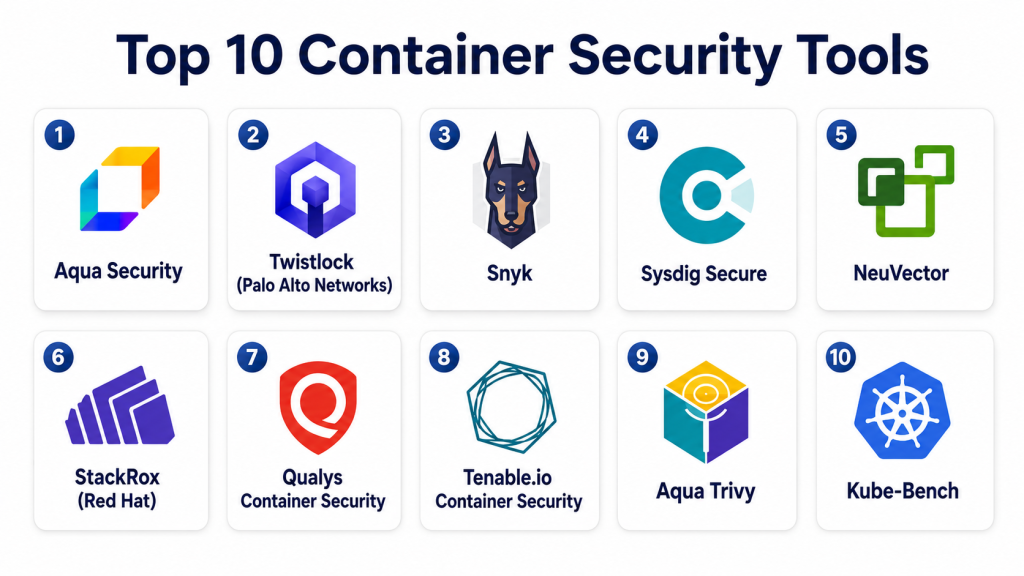
Top 10 Container Security Tools
#1 — Aqua Security
Short description: Aqua Security provides comprehensive container security from image scanning to runtime protection. It is ideal for enterprises and DevSecOps teams seeking end-to-end container security across multiple clouds.
Key Features
- Container image scanning and vulnerability management.
- Runtime protection with behavior monitoring.
- Kubernetes security and policy enforcement.
- Compliance and audit reporting.
- CI/CD pipeline integration.
Pros
- Comprehensive coverage for container lifecycle.
- Strong multi-cloud support and compliance features.
Cons
- Premium pricing may be high for SMBs.
- Advanced features require dedicated expertise.
Platforms / Deployment
- Web / Cloud.
Security & Compliance
- SSO/SAML, MFA, encryption.
- SOC 2, ISO 27001, GDPR supported.
Integrations & Ecosystem
- Integrates with Jenkins, GitLab, and Kubernetes.
- API access for automation.
- SIEM integration.
Support & Community
- Vendor support and documentation available.
- Community forums and knowledge base.
#2 — Twistlock (Palo Alto Networks)
Short description: Twistlock offers container and cloud-native security across the development lifecycle, including image scanning, runtime protection, and Kubernetes policy enforcement.
Key Features
- Image vulnerability scanning.
- Runtime defense for containers and hosts.
- Kubernetes policy enforcement.
- Threat intelligence integration.
- CI/CD security automation.
Pros
- Strong Kubernetes and runtime coverage.
- Integrates well with DevOps workflows.
Cons
- Premium pricing.
- Complexity may require training for full utilization.
Platforms / Deployment
- Web / Cloud.
Security & Compliance
- SSO/MFA, encryption.
- SOC 2, ISO 27001, GDPR compliance.
Integrations & Ecosystem
- Integrates with CI/CD pipelines and SIEM.
- API support for automation.
- Compatible with multiple container orchestration platforms.
Support & Community
- Vendor support available.
- Documentation and training materials.
#3 — Snyk
Short description: Snyk focuses on developer-first container security, integrating vulnerability scanning and remediation directly into development workflows, including CI/CD pipelines.
Key Features
- Container image and code scanning.
- Automated remediation suggestions.
- Integration with Kubernetes and Docker.
- Continuous monitoring of containerized workloads.
- Developer-friendly dashboards.
Pros
- Easy integration into CI/CD workflows.
- Developer-focused approach enhances adoption.
Cons
- Some advanced features require paid plans.
- Limited runtime protection compared to enterprise solutions.
Platforms / Deployment
- Web / Cloud.
Security & Compliance
- Not publicly stated.
Integrations & Ecosystem
- Integrates with GitHub, GitLab, and Jenkins.
- API access for automation.
- Supports container orchestration platforms.
Support & Community
- Vendor support available.
- Documentation and online community.
#4 — Sysdig Secure
Short description: Sysdig Secure provides container security with runtime detection, image scanning, and compliance enforcement, suitable for enterprise Kubernetes deployments.
Key Features
- Runtime threat detection.
- Image vulnerability scanning.
- Kubernetes security policies.
- Compliance reporting (PCI, HIPAA, GDPR).
- CI/CD integration.
Pros
- Strong runtime security and compliance features.
- Supports multi-cloud environments.
Cons
- Premium pricing.
- Complexity requires security expertise.
Platforms / Deployment
- Web / Cloud.
Security & Compliance
- SSO/MFA, encryption.
- SOC 2, ISO 27001, GDPR templates.
Integrations & Ecosystem
- Integrates with Kubernetes, CI/CD pipelines, and SIEM.
- API support for automation.
- Dashboard customization.
Support & Community
- Vendor support and documentation.
- Community knowledge base.
#5 — NeuVector
Short description: NeuVector provides container network security, runtime protection, and vulnerability scanning for Kubernetes and Docker environments, focusing on runtime threat mitigation.
Key Features
- Container network segmentation.
- Runtime threat detection.
- Image vulnerability scanning.
- Kubernetes policy enforcement.
- Real-time alerting.
Pros
- Strong network security for containers.
- Effective runtime monitoring.
Cons
- May require advanced Kubernetes knowledge.
- Smaller community compared to competitors.
Platforms / Deployment
- Web / Cloud / On-Prem.
Security & Compliance
- SSO/MFA, encryption.
- Not publicly stated on certifications.
Integrations & Ecosystem
- Integrates with Kubernetes, CI/CD, and monitoring tools.
- API support for workflow automation.
- Extensible dashboards.
Support & Community
- Vendor support provided.
- Documentation and training.
#6 — StackRox (Red Hat)
Short description: StackRox offers Kubernetes-native container security, including image scanning, runtime threat detection, and policy enforcement, suitable for enterprises using OpenShift or Kubernetes clusters.
Key Features
- Image vulnerability scanning.
- Runtime threat detection.
- Kubernetes policy management.
- Compliance dashboards.
- CI/CD security integration.
Pros
- Kubernetes-native security.
- Strong integration with OpenShift.
Cons
- Enterprise pricing.
- Complexity requires skilled personnel.
Platforms / Deployment
- Web / Cloud / Hybrid.
Security & Compliance
- Not publicly stated.
Integrations & Ecosystem
- Integrates with OpenShift, Kubernetes, CI/CD pipelines.
- API access for automation.
- Extensible monitoring dashboards.
Support & Community
- Vendor support available.
- Documentation provided.
#7 — Qualys Container Security
Short description: Qualys provides container image scanning, runtime monitoring, and compliance checks for Docker and Kubernetes environments, designed for enterprise security teams.
Key Features
- Image vulnerability scanning.
- Runtime threat monitoring.
- Kubernetes security policies.
- Compliance and reporting.
- Continuous monitoring.
Pros
- Strong vulnerability scanning capabilities.
- Multi-cloud support.
Cons
- Premium pricing.
- Limited developer-focused tools.
Platforms / Deployment
- Web / Cloud.
Security & Compliance
- SSO/MFA, encryption.
- SOC 2, ISO 27001 templates.
Integrations & Ecosystem
- Integrates with Kubernetes and CI/CD tools.
- API support for reporting.
- Workflow integration with SIEM.
Support & Community
- Vendor support and documentation.
- Online training resources.
#8 — Tenable.io Container Security
Short description: Tenable.io provides vulnerability management for container images and hosts, including compliance checks and runtime monitoring for containerized workloads.
Key Features
- Image and host vulnerability scanning.
- Runtime monitoring.
- Compliance reporting.
- Multi-cloud support.
- Integration with CI/CD pipelines.
Pros
- Enterprise-grade vulnerability management.
- Continuous monitoring for container workloads.
Cons
- Enterprise pricing.
- Limited advanced runtime security features.
Platforms / Deployment
- Web / Cloud.
Security & Compliance
- SSO/MFA, encryption.
- Not publicly stated.
Integrations & Ecosystem
- CI/CD and orchestration integration.
- API support for automation.
- Reporting dashboards.
Support & Community
- Vendor support included.
- Documentation provided.
#9 — Aqua Trivy
Short description: Trivy is a lightweight, open-source container vulnerability scanner, suitable for developers and DevSecOps teams for pre-deployment image scanning.
Key Features
- Fast image vulnerability scanning.
- CI/CD integration.
- Open-source and lightweight.
- Multi-platform container support.
- Continuous updates for vulnerabilities.
Pros
- Free and open-source.
- Easy integration into pipelines.
Cons
- Limited runtime security capabilities.
- Lacks enterprise-level reporting.
Platforms / Deployment
- Linux / Web.
- Cloud / Self-hosted.
Security & Compliance
- Not publicly stated.
Integrations & Ecosystem
- Integrates with GitHub Actions, Jenkins, GitLab.
- API access available.
- Supports container orchestration tools.
Support & Community
- Open-source community support.
- Documentation provided.
#10 — Kube-Bench
Short description: Kube-Bench is an open-source tool that checks Kubernetes clusters against security benchmarks, designed for developers and security teams to enforce CIS guidelines.
Key Features
- CIS Kubernetes benchmark checks.
- Configuration auditing.
- Multi-cluster scanning.
- Integration with CI/CD pipelines.
- Open-source and free.
Pros
- Free and lightweight.
- CIS benchmark enforcement.
Cons
- Limited runtime security features.
- No native remediation automation.
Platforms / Deployment
- Linux / Web.
- Self-hosted.
Security & Compliance
- Not publicly stated.
Integrations & Ecosystem
- CI/CD integration.
- API support for reporting.
- Extensible scripts.
Support & Community
- Open-source community.
- Documentation provided.
Comparison Table (Top 10)
| Tool Name | Best For | Platform(s) Supported | Deployment | Standout Feature | Public Rating |
|---|---|---|---|---|---|
| Aqua Security | Enterprise | Web | Cloud | End-to-end container security | N/A |
| Twistlock | Enterprise | Web | Cloud | Kubernetes policy enforcement | N/A |
| Snyk | Developers/DevSecOps | Web | Cloud | Developer-first image scanning | N/A |
| Sysdig Secure | Enterprise | Web | Cloud | Runtime threat detection | N/A |
| NeuVector | Enterprise | Web | Cloud / On-Prem | Container network security | N/A |
| StackRox | Enterprise/Kubernetes | Web | Cloud / Hybrid | Kubernetes-native security | N/A |
| Qualys | Enterprise | Web | Cloud | Vulnerability scanning | N/A |
| Tenable.io | Enterprise | Web | Cloud | Continuous monitoring | N/A |
| Aqua Trivy | Developers/DevSecOps | Linux / Web | Cloud / Self-hosted | Lightweight vulnerability scanning | N/A |
| Kube-Bench | Developers | Linux / Web | Self-hosted | CIS benchmark compliance | N/A |
Evaluation & Scoring of Container Security Tools
| Tool Name | Core (25%) | Ease (15%) | Integrations (15%) | Security (10%) | Performance (10%) | Support (10%) | Value (15%) | Weighted Total (0–10) |
|---|---|---|---|---|---|---|---|---|
| Aqua Security | 9 | 7 | 8 | 9 | 8 | 8 | 7 | 8.2 |
| Twistlock | 8 | 7 | 8 | 9 | 8 | 7 | 7 | 7.9 |
| Snyk | 8 | 9 | 7 | 8 | 7 | 7 | 8 | 7.9 |
| Sysdig Secure | 8 | 7 | 8 | 9 | 8 | 7 | 7 | 7.9 |
| NeuVector | 7 | 7 | 7 | 8 | 7 | 7 | 7 | 7.2 |
| StackRox | 8 | 7 | 8 | 9 | 8 | 7 | 7 | 7.9 |
| Qualys | 8 | 7 | 7 | 8 | 8 | 7 | 7 | 7.6 |
| Tenable.io | 8 | 7 | 8 | 8 | 8 | 7 | 7 | 7.7 |
| Aqua Trivy | 7 | 9 | 7 | 7 | 7 | 7 | 8 | 7.5 |
| Kube-Bench | 7 | 8 | 7 | 7 | 7 | 7 | 8 | 7.4 |
Interpretation: Higher weighted totals indicate better overall balance across core features, usability, integrations, security, and value. Organizations should prioritize criteria relevant to their container deployment and operational requirements.
Which Container Security Tool Is Right for You?
Solo / Freelancer
- Tools like Snyk, Aqua Trivy, or Kube-Bench provide lightweight, developer-friendly security checks for individual projects or small deployments.
SMB
- Sysdig Secure, Tenable.io, or NeuVector offer automated scanning, compliance monitoring, and runtime protection suitable for small-to-medium teams.
Mid-Market
- Aqua Security, Twistlock, and StackRox provide end-to-end container security with CI/CD integration and multi-cloud support.
Enterprise
- Large organizations should prioritize Aqua Security, Sysdig Secure, and StackRox for comprehensive visibility, compliance, and automation across extensive containerized environments.
Budget vs Premium
- Open-source solutions like Trivy and Kube-Bench are cost-effective.
- Premium tools provide advanced runtime protection, multi-cloud coverage, and automated compliance reporting.
Feature Depth vs Ease of Use
- Tools like Aqua Security and Twistlock offer deep functionality but may require onboarding.
- Snyk and Trivy balance functionality with ease of integration into DevOps pipelines.
Integrations & Scalability
- Mid-market and enterprise teams benefit from platforms supporting Kubernetes, CI/CD, and SIEM integrations.
- Cloud-native SaaS deployment ensures scalability across multiple accounts and clusters.
Security & Compliance Needs
- Organizations in regulated sectors should prioritize tools with SSO/MFA, encryption, RBAC, and compliance reporting, such as Aqua Security, Sysdig Secure, and Twistlock.
Frequently Asked Questions (FAQs)
What pricing models do container security tools use?
Pricing varies from open-source free tools to subscription-based SaaS and enterprise licensing models.
Can these tools integrate with CI/CD pipelines?
Yes, most tools like Snyk, Aqua Security, and Twistlock offer seamless CI/CD integration.
How quickly can these tools be deployed?
Agentless tools like Trivy deploy in minutes, while enterprise platforms may require days for full configuration.
Are these tools suitable for multi-cloud environments?
Yes, leading platforms support AWS, Azure, GCP, and hybrid cloud environments.
Do they provide real-time runtime protection?
Enterprise tools like Aqua Security, Sysdig Secure, and NeuVector offer continuous runtime monitoring.
Can these tools enforce Kubernetes security policies?
Yes, StackRox, Twistlock, and NeuVector provide native Kubernetes policy enforcement.
Are compliance reports included?
Most tools provide templates for SOC 2, ISO 27001, HIPAA, and GDPR compliance checks.
Are open-source tools reliable for production?
Yes, tools like Trivy and Kube-Bench are widely used, but may require supplementary runtime monitoring for production workloads.
Can these tools scan container images before deployment?
Yes, image vulnerability scanning is a core feature for all leading container security tools.
What alternatives exist to container security tools?
Manual scanning, cloud-native security controls, and host-based security solutions can supplement container security.
Conclusion
Container Security Tools are critical for securing modern cloud-native applications. Choosing the right tool depends on organizational size, container adoption, budget, and compliance requirements. Solo developers and small teams may benefit from Snyk, Trivy, or Kube-Bench, while mid-market and enterprise organizations require comprehensive solutions like Aqua Security, Twistlock, or Sysdig Secure. Next steps include shortlisting 2–3 tools aligned with your container infrastructure, conducting a pilot to assess usability and integration, and validating compliance and runtime protection to ensure a robust container security posture.
