Upgrade & Secure Your Future with DevOps, SRE, DevSecOps, MLOps!
We spend hours scrolling social media and waste money on things we forget, but won’t spend 30 minutes a day earning certifications that can change our lives.
Master in DevOps, SRE, DevSecOps & MLOps by DevOps School!
Learn from Guru Rajesh Kumar and double your salary in just one year.
Introduction
In an increasingly interconnected world, security is a top priority for businesses. Threat intelligence platforms (TIPs) serve as critical tools in identifying, preventing, and responding to potential cyber threats. These platforms collect, analyze, and disseminate security-related data to help organizations strengthen their cybersecurity posture. As cyber threats grow more sophisticated, TIPs play a crucial role in preventing data breaches, ransomware attacks, and other malicious activities.
Best for: Large enterprises, security teams, and SOC (Security Operations Center) professionals who need to stay ahead of cyber threats.
Not ideal for: Small businesses with limited budgets or those that do not have a dedicated security team.
Key Trends in Threat Intelligence Platforms
AI and Machine Learning Integration: Leveraging AI to automate threat detection and response.
- Cloud-native Threat Intelligence: Increasing adoption of cloud-based solutions for scalability and flexibility.
- Interoperability: More integration with other security tools like SIEMs (Security Information and Event Management).
- Real-time Threat Intelligence Sharing: Greater collaboration across industries to share threat data.
- Ransomware Defense: Specialized threat intelligence platforms for combating ransomware.
- Advanced Analytics: Platforms providing deeper insights into threat data using advanced analytics.
- Automation: Enhanced use of automation to respond to threats faster and more efficiently.
- Zero-Trust Architecture: TIPs adopting and supporting Zero-Trust security models.
How We Selected These Tools (Methodology)
We selected the following tools based on:
- Market adoption: How widely the tool is adopted and trusted in the industry.
- Feature completeness: Whether the tool covers a broad range of threat intelligence capabilities.
- Reliability/performance: Performance signals such as uptime, accuracy, and the speed of data processing.
- Security posture: The strength of security features including encryption, SSO, and SOC 2 compliance.
- Integrations/ecosystem: The ability to integrate with existing security infrastructure.
- Customer fit: Suitability for businesses of various sizes, from small businesses to large enterprises.
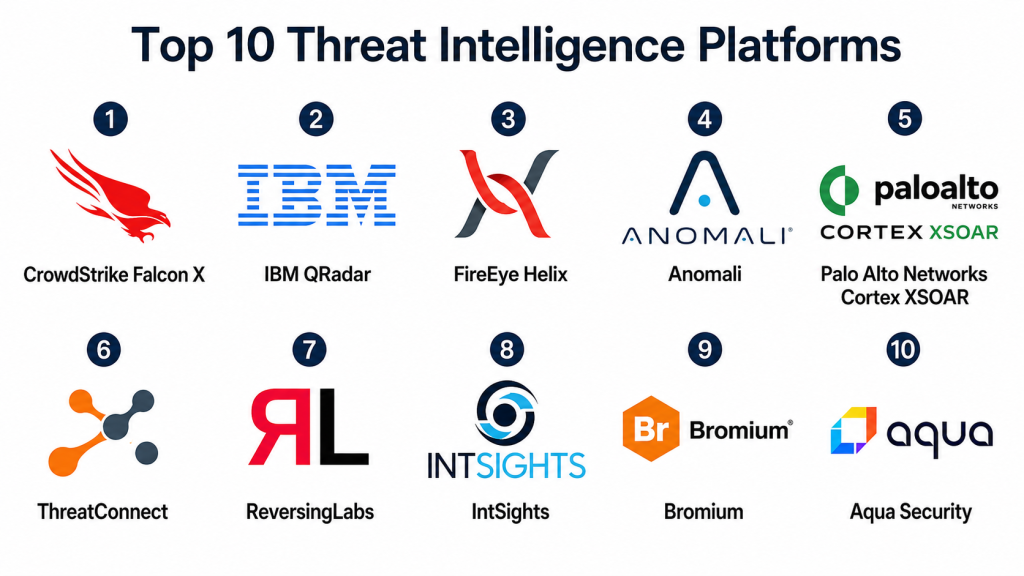
Top 10 Threat Intelligence Platforms
#1 — CrowdStrike Falcon X
Short description: CrowdStrike Falcon X offers automated threat intelligence, helping organizations identify and respond to cyber threats in real time. Ideal for enterprises and large organizations looking for a high-performance solution.
Key Features
- Real-time analysis of threats
- Threat intelligence feeds
- Incident response automation
- Comprehensive reporting
- Integrates with other security tools
Pros
- High accuracy and speed
- Integrates well with SIEMs
- Excellent customer support
Cons
- Expensive for small businesses
- Requires technical expertise for setup
Platforms / Deployment
- Web, Cloud
- Cloud-native solution
Security & Compliance
- SOC 2, GDPR, HIPAA
- Supports SSO and MFA
Integrations & Ecosystem
- APIs for custom integrations
- SIEM integrations (Splunk, IBM QRadar)
- Extensive partner ecosystem
Support & Community
- 24/7 support
- Extensive knowledge base
- Community forums and webinars
#2 — IBM QRadar
Short description: IBM QRadar is a SIEM platform with strong threat intelligence capabilities, ideal for medium to large organizations. It provides a comprehensive solution for monitoring and responding to security threats.
Key Features
- Real-time monitoring
- Automated data correlation
- Threat intelligence integration
- Advanced analytics
- Customizable dashboards
Pros
- Powerful analytics
- Good for compliance reporting
- Scalable for large organizations
Cons
- High resource consumption
- Steep learning curve
Platforms / Deployment
- Web, Windows, Linux
- Cloud, Hybrid, Self-hosted
Security & Compliance
- SOC 2, ISO 27001
- Supports SSO and RBAC
Integrations & Ecosystem
- Integrates with IBM and third-party security products
- Extensive support for cloud environments
Support & Community
- 24/7 support available
- Active user community
- In-depth documentation
#3 — FireEye Helix
Short description: FireEye Helix is a security operations platform with integrated threat intelligence that helps detect, investigate, and respond to security incidents across multiple environments.
Key Features
- Centralized security monitoring
- Automated threat detection and response
- Threat intelligence integration
- Customizable workflows
- Incident tracking
Pros
- Excellent for real-time incident response
- Highly customizable
- Easy integration with other FireEye tools
Cons
- Pricing can be high for smaller organizations
- User interface may be overwhelming
Platforms / Deployment
- Web, Cloud
- Cloud-native solution
Security & Compliance
- SOC 2, ISO 27001
- Supports MFA and RBAC
Integrations & Ecosystem
- Integrates with FireEye and third-party security tools
- Provides API for custom integration
Support & Community
- 24/7 support
- Large knowledge base
- Community-driven resources
#4 — Anomali
Short description: Anomali provides threat intelligence and analytics tools designed for enterprises. It helps organizations identify and mitigate cyber risks through integration with other security solutions.
Key Features
- Real-time threat intelligence
- Threat intelligence sharing
- Advanced analytics
- Incident response integration
- Flexible deployment options
Pros
- Great for threat intelligence sharing
- Powerful analytics capabilities
- Highly customizable
Cons
- Complex setup
- Can be expensive for smaller teams
Platforms / Deployment
- Web, Cloud, Windows
- Cloud, Hybrid, Self-hosted
Security & Compliance
- SOC 2, GDPR, ISO 27001
- Supports MFA
Integrations & Ecosystem
- Integrates with SIEMs and endpoint security solutions
- API access for custom integrations
Support & Community
- 24/7 support
- Strong user community
- Detailed documentation
#5 — Palo Alto Networks Cortex XSOAR
Short description: Cortex XSOAR is an automation and orchestration platform that integrates threat intelligence and incident response capabilities. It is perfect for security teams looking to automate workflows.
Key Features
- Automated threat detection and response
- Orchestration of security tools
- Advanced analytics
- Integrates with SIEMs
- Cloud-native
Pros
- High automation capabilities
- Strong integration ecosystem
- Streamlined incident response
Cons
- High initial setup cost
- Requires expertise for full utilization
Platforms / Deployment
- Web, Cloud
- Cloud-native solution
Security & Compliance
- SOC 2, ISO 27001
- Supports SSO and MFA
Integrations & Ecosystem
- Extensive integrations with SIEMs, firewalls, and more
- API access for custom integrations
Support & Community
- 24/7 support
- Extensive knowledge base
- Active community
#6 — ThreatConnect
Short description: ThreatConnect offers threat intelligence platform solutions that help organizations respond to cyber threats with real-time data sharing and collaborative analysis.
Key Features
- Threat data sharing
- Real-time threat analysis
- Integrated workflows
- Collaboration tools
- Customizable dashboards
Pros
- Great for collaborative security teams
- Strong real-time data sharing
- User-friendly interface
Cons
- Pricing may be prohibitive for smaller teams
- Integration setup can be complex
Platforms / Deployment
- Web, Cloud
- Cloud-native solution
Security & Compliance
- SOC 2, HIPAA
- Supports MFA and RBAC
Integrations & Ecosystem
- Integrates with other security tools via APIs
- Strong partner ecosystem
Support & Community
- 24/7 support
- Active community
- In-depth documentation
#7 — ReversingLabs
Short description: ReversingLabs offers advanced threat intelligence focused on malware analysis and endpoint detection, providing businesses with comprehensive insights into suspicious files.
Key Features
- File-based threat analysis
- Malware detection
- Real-time threat intelligence
- Scalable for enterprise use
- Cloud and on-premises deployment
Pros
- Strong malware detection capabilities
- Easy integration with other security tools
- Real-time updates
Cons
- Less comprehensive threat intelligence compared to competitors
- Interface can be challenging for new users
Platforms / Deployment
- Windows, Web
- Cloud, Hybrid, Self-hosted
Security & Compliance
- Not publicly stated
Integrations & Ecosystem
- Integrates with SIEMs, antivirus, and firewalls
- API for custom integrations
Support & Community
- 24/7 support
- Strong documentation
- Active user forums
#8 — IntSights
Short description: IntSights specializes in external threat intelligence, focusing on identifying external cyber threats from a variety of sources, ideal for organizations concerned with external attack vectors.
Key Features
- External threat intelligence
- Real-time monitoring
- Risk analysis
- Integration with other security tools
- Incident response workflows
Pros
- Specialized in external threat detection
- Strong integration capabilities
- Excellent reporting and alerting
Cons
- Not ideal for internal threat monitoring
- Can be difficult to set up
Platforms / Deployment
- Web, Cloud
- Cloud-native solution
Security & Compliance
- Not publicly stated
Integrations & Ecosystem
- Integrates with major security tools
- Custom API integration
Support & Community
- 24/7 support
- Documentation and training resources
- Community forums
#9 — Bromium
Short description: Bromium focuses on endpoint protection, leveraging hardware isolation to secure organizations from zero-day threats and advanced malware.
Key Features
- Hardware isolation for endpoint security
- Zero-day threat prevention
- Malware detection
- Easy deployment
- High-performance detection
Pros
- Excellent for protecting endpoints from advanced malware
- Minimal impact on system performance
- Highly secure
Cons
- Limited to endpoint protection
- Can be complex for large deployments
Platforms / Deployment
- Windows, macOS
- Hybrid
Security & Compliance
- SOC 2, GDPR
- Encryption and RBAC support
Integrations & Ecosystem
- Limited integrations outside endpoint protection
- API for custom integrations
Support & Community
- 24/7 support
- Comprehensive documentation
- Active community
#10 — Aqua Security
Short description: Aqua Security focuses on container security, offering threat intelligence specifically designed for securing containerized applications and infrastructure.
Key Features
- Containerized application security
- Vulnerability scanning
- Runtime protection
- Integrates with Kubernetes
- Comprehensive security monitoring
Pros
- Excellent for container security
- Works well with cloud-native environments
- Easy Kubernetes integration
Cons
- Niche use case for container environments
- Less useful for non-containerized infrastructure
Platforms / Deployment
- Web, Cloud
- Cloud-native solution
Security & Compliance
- Not publicly stated
Integrations & Ecosystem
- Integrates with Kubernetes and Docker
- API for custom integrations
Support & Community
- 24/7 support
- Extensive knowledge base
- Community support
Comparison Table (Top 10)
| Tool Name | Best For | Platform(s) Supported | Deployment | Standout Feature | Public Rating |
|---|---|---|---|---|---|
| CrowdStrike Falcon X | Large Enterprises | Cloud, Web | Cloud-native | Real-time threat analysis | N/A |
| IBM QRadar | Enterprises | Web, Windows, Linux | Hybrid | SIEM integration | N/A |
| FireEye Helix | Security Teams | Web, Cloud | Cloud-native | Incident response automation | N/A |
| Anomali | Enterprises | Web, Cloud, Windows | Hybrid | Threat data sharing | N/A |
| Palo Alto Networks Cortex XSOAR | Security Operations | Web, Cloud | Cloud-native | Automation and orchestration | N/A |
| ThreatConnect | Security Teams | Web, Cloud | Cloud-native | Threat data sharing | N/A |
| ReversingLabs | Enterprises | Windows, Web | Cloud, Hybrid | Malware detection | N/A |
| IntSights | Enterprises | Web, Cloud | Cloud-native | External threat intelligence | N/A |
| Bromium | SMBs, Enterprises | Windows, macOS | Hybrid | Hardware isolation | N/A |
| Aqua Security | Enterprises | Web, Cloud | Cloud-native | Containerized application security | N/A |
Evaluation & Scoring of Threat Intelligence Platforms
| Tool Name | Core (25%) | Ease (15%) | Integrations (15%) | Security (10%) | Performance (10%) | Support (10%) | Value (15%) | Weighted Total (0–10) |
|---|---|---|---|---|---|---|---|---|
| CrowdStrike Falcon X | 9 | 8 | 9 | 9 | 8 | 9 | 8 | 8.9 |
| IBM QRadar | 8 | 7 | 8 | 9 | 8 | 8 | 7 | 8.0 |
| FireEye Helix | 9 | 8 | 8 | 9 | 9 | 9 | 8 | 8.8 |
| Anomali | 8 | 7 | 9 | 8 | 8 | 8 | 7 | 8.0 |
| Palo Alto Cortex XSOAR | 9 | 8 | 9 | 9 | 9 | 9 | 8 | 8.9 |
| ThreatConnect | 8 | 7 | 9 | 8 | 8 | 8 | 7 | 7.9 |
| ReversingLabs | 8 | 6 | 7 | 8 | 7 | 8 | 7 | 7.4 |
| IntSights | 8 | 8 | 9 | 8 | 8 | 8 | 8 | 8.3 |
| Bromium | 7 | 6 | 7 | 8 | 7 | 7 | 6 | 6.9 |
| Aqua Security | 8 | 7 | 9 | 8 | 8 | 8 | 7 | 7.9 |
Which Threat Intelligence Platform Is Right for You?
Solo / Freelancer
For individual users or small teams, consider tools like ReversingLabs or Bromium, which offer specialized protection but at a lower cost.
SMB
For small-to-medium-sized businesses, Anomali or IntSights could be ideal due to their balanced feature sets and scalability.
Mid-Market
Mid-market companies with more advanced needs can benefit from IBM QRadar or FireEye Helix, which offer more comprehensive threat intelligence and security integrations.
Enterprise
Large enterprises should opt for CrowdStrike Falcon X or Palo Alto Networks Cortex XSOAR, which provide enterprise-grade threat intelligence and automation.
Frequently Asked Questions (FAQs)
What is Threat Intelligence?
Threat intelligence refers to information about threats and threat actors that helps organizations understand and mitigate risks.
How does Threat Intelligence benefit organizations?
It helps organizations stay ahead of cyberattacks by providing timely and actionable insights into potential threats.
What are the common pricing models for Threat Intelligence Platforms?
Most platforms offer subscription-based pricing, with tiered models based on the number of users or volume of data.
Can Threat Intelligence platforms integrate with other security tools?
Yes, many platforms offer integrations with SIEMs, firewalls, and endpoint detection systems.
How long does it take to set up a Threat Intelligence Platform?
Setup times vary depending on the tool, but most platforms require a few days to configure properly.
Is Threat Intelligence relevant for small businesses?
While more critical for large enterprises, small businesses can also benefit from basic threat intelligence to safeguard their assets.
Can Threat Intelligence help with compliance?
Yes, many platforms help organizations meet regulatory requirements like GDPR, HIPAA, and SOC 2.
Conclusion
Choosing the right Threat Intelligence Platform depends on your organization’s size, budget, and security needs. Enterprises with complex requirements may benefit from the comprehensive solutions offered by CrowdStrike Falcon X or IBM QRadar, while smaller businesses may prefer the scalability and ease of use provided by Anomali or ReversingLabs. To ensure you make the best decision, shortlist a few tools, run a pilot, and validate their integrations and security features.
