Upgrade & Secure Your Future with DevOps, SRE, DevSecOps, MLOps!
We spend hours scrolling social media and waste money on things we forget, but won’t spend 30 minutes a day earning certifications that can change our lives.
Master in DevOps, SRE, DevSecOps & MLOps by DevOps School!
Learn from Guru Rajesh Kumar and double your salary in just one year.
Introduction
Employee engagement plays an important role in workplace satisfaction, productivity, and employee retention. When employees feel heard, recognized, and connected to their organization, they are more likely to contribute positively to team goals. However, understanding employee concerns and maintaining engagement across different teams can be challenging.
Employee engagement platforms help organizations collect feedback, recognize achievements, communicate with employees, and monitor workplace sentiment. These tools can support a more connected and responsive work environment.
What Are Employee Engagement Platforms?
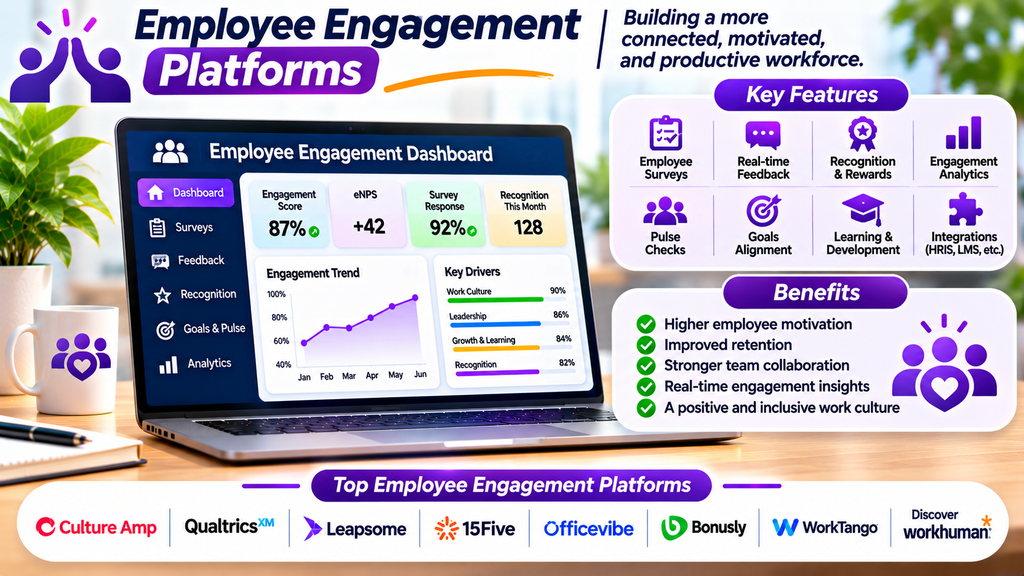
Employee engagement platforms are digital tools designed to measure and improve employees’ connection with their workplace. Depending on the platform, features may include employee surveys, pulse checks, recognition programs, feedback channels, engagement analytics, and communication tools.
HR teams and managers can use these insights to identify workplace challenges, understand employee needs, and plan initiatives that support a positive employee experience.
Top Employee Engagement Platforms
1. Culture Amp
Culture Amp provides employee engagement surveys, people analytics, and performance-related tools to help organizations understand employee experiences.
Best for: Organizations seeking survey-driven insights and structured engagement programs.
2. Workvivo
Workvivo combines employee communication, social interaction, recognition, and company updates in a digital workplace platform.
Best for: Businesses looking to strengthen internal communication and workplace community.
3. Qualtrics Employee Experience
Qualtrics offers employee experience solutions for gathering feedback and analyzing workplace sentiment throughout the employee lifecycle.
Best for: Organizations requiring advanced employee experience analytics.
4. Officevibe
Officevibe supports employee feedback, pulse surveys, and team-level insights to help managers understand employee sentiment.
Best for: Teams that want regular feedback and practical engagement insights.
5. 15Five
15Five offers performance management, employee feedback, engagement surveys, and manager development features.
Best for: Organizations connecting employee engagement with ongoing performance conversations.
6. Bonusly
Bonusly focuses on peer recognition and rewards, allowing employees to recognize colleagues for their contributions.
Best for: Businesses aiming to build a consistent culture of appreciation.
7. Achievers
Achievers provides employee recognition and rewards capabilities designed to help organizations encourage appreciation and strengthen workplace connections.
Best for: Organizations building structured employee recognition programs.
8. Motivosity
Motivosity combines employee recognition, rewards, and workplace connection features.
Best for: Businesses looking to encourage peer appreciation and strengthen team relationships.
Essential Features to Consider
- Employee surveys: Gather feedback about satisfaction, leadership, and workplace culture.
- Pulse checks: Collect feedback regularly rather than relying only on annual surveys.
- Recognition and rewards: Encourage employees and colleagues to acknowledge contributions.
- Engagement analytics: Identify trends across teams and employee groups.
- Manager dashboards: Help managers understand feedback and plan improvements.
- Internal communication: Share updates and encourage workplace participation.
- Action planning: Turn survey results into practical initiatives with clear ownership.
- Confidentiality controls: Protect employee feedback and communicate how responses are used.
- Integrations: Connect compatible HRIS, collaboration, and performance management systems.
Benefits of Employee Engagement Platforms
Better employee feedback: Digital surveys make it easier to gather feedback from employees across teams and locations.
Stronger recognition: Recognition features help make appreciation a regular part of workplace culture.
Improved communication: Internal communication tools can help employees feel informed and connected.
Earlier identification of concerns: Regular feedback can reveal emerging issues before they become larger problems.
More informed HR decisions: Engagement trends can guide workplace initiatives and management priorities.
Support for retention: Addressing employee concerns and improving workplace experiences may contribute to stronger retention, although results depend on broader organizational factors.
How to Choose the Right Platform
Start by identifying your main objective. If you want to measure engagement, prioritize surveys and analytics. If recognition is the primary goal, focus on peer appreciation and rewards. Organizations seeking stronger internal communication may benefit from employee-community features.
Compare pricing, usability, mobile access, survey flexibility, reporting, integrations, support, and privacy controls. Check whether employees can provide honest feedback safely and whether managers can turn findings into meaningful action.
Best Practices for Implementation
- Explain why employee feedback is being collected.
- Use clear, relevant, and unbiased survey questions.
- Communicate confidentiality and anonymity limits accurately.
- Share key findings and planned actions with employees.
- Encourage managers to follow up on feedback.
- Recognize contributions consistently and fairly.
- Measure progress over time and adjust initiatives when needed.
Conclusion
Employee engagement platforms help organizations understand workplace sentiment, recognize contributions, and improve communication. The right platform depends on company size, engagement goals, budget, and existing HR systems. When feedback leads to visible action, these tools can support a more connected, appreciative, and responsive workplace.
