Upgrade & Secure Your Future with DevOps, SRE, DevSecOps, MLOps!
We spend hours scrolling social media and waste money on things we forget, but won’t spend 30 minutes a day earning certifications that can change our lives.
Master in DevOps, SRE, DevSecOps & MLOps by DevOps School!
Learn from Guru Rajesh Kumar and double your salary in just one year.
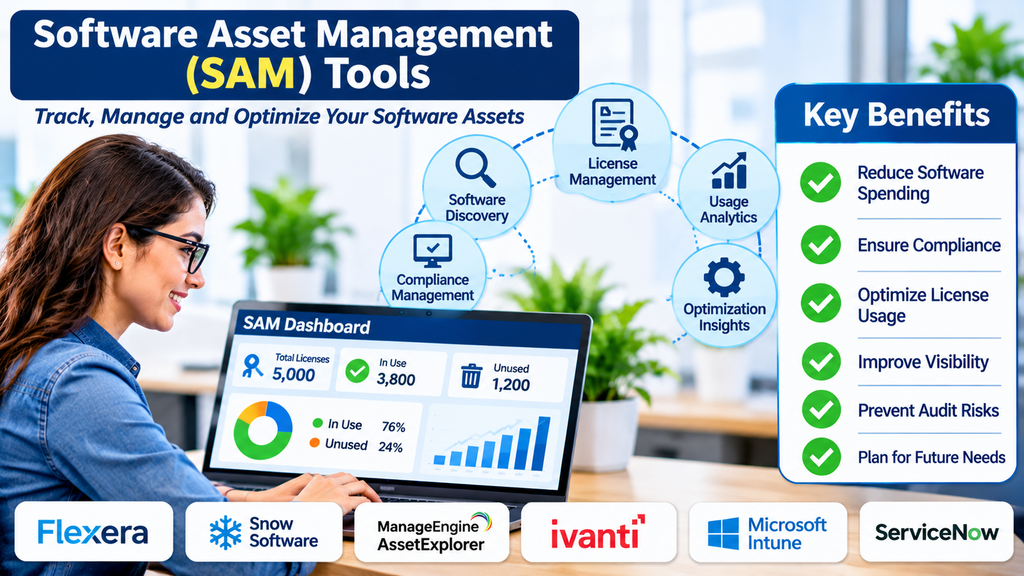
Taking Control of Software Licenses, Usage, and Compliance
Software is essential to modern business operations. Organizations depend on operating systems, productivity applications, cloud platforms, development tools, security solutions, and specialized business software to support their employees and customers.
As software portfolios grow, managing subscriptions, licenses, installations, renewals, and usage becomes increasingly complicated. Businesses may purchase more licenses than they need, overlook renewal dates, install applications without approval, or struggle to demonstrate compliance with software agreements.
Software Asset Management (SAM) tools help organizations address these challenges through centralized software inventory, license tracking, usage analysis, compliance management, and cost optimization.
These platforms help IT and procurement teams understand what software the organization owns, what it uses, and whether its licensing arrangements match actual requirements.
What Are Software Asset Management Tools?
Software Asset Management tools are platforms designed to manage software assets throughout their lifecycle, from acquisition and deployment to renewal and retirement.
They help organizations maintain visibility into software installations, license entitlements, subscriptions, usage, contracts, and associated costs.
Common capabilities include:
- Software discovery and inventory.
- License entitlement tracking.
- Software usage monitoring.
- License compliance analysis.
- Subscription and renewal management.
- Software procurement records.
- Application normalization.
- Contract and vendor management.
- License optimization.
- Audit preparation.
- Reporting and analytics.
- Software lifecycle management.
SAM solutions are used by enterprises, government organizations, educational institutions, managed service providers, and businesses with significant software licensing requirements.
Leading Software Asset Management Tools
1. Flexera One
Flexera One provides software asset management and technology optimization capabilities for complex IT environments.
Its features support software license management, application recognition, entitlement tracking, compliance analysis, and technology spending visibility.
Organizations can use it to understand software usage, manage licensing obligations, and identify opportunities to reduce unnecessary expenditure.
It is particularly relevant to enterprises managing large software portfolios and complex vendor agreements.
Businesses should evaluate discovery coverage, licensing expertise, integrations, implementation requirements, and total cost.
2. Snow Software
Snow Software, now part of Flexera, has been known for software asset management and technology intelligence capabilities.
Its SAM capabilities have supported software discovery, license tracking, application usage analysis, and compliance management.
Organizations evaluating its capabilities should consider the current Flexera product portfolio and the specific modules available for their requirements.
It is relevant to enterprises seeking structured software inventory and licensing visibility.
3. ServiceNow Software Asset Management
ServiceNow Software Asset Management provides capabilities for managing software licenses and software-related asset processes.
Its functionality supports software discovery, normalization, entitlement management, license compliance, and optimization workflows.
Organizations can connect software asset information with broader IT service management and procurement processes.
It is particularly relevant to enterprises already using ServiceNow for IT operations.
Buyers should evaluate licensing coverage, integration requirements, automation, and implementation complexity.
4. ManageEngine AssetExplorer
ManageEngine AssetExplorer provides IT asset management capabilities that include software inventory and license-related tracking.
Its functionality helps organizations identify installed applications, maintain software asset records, and monitor license information.
It can support businesses that need centralized visibility into hardware and software resources.
Organizations should evaluate the depth of its software license management features against the complexity of their licensing agreements.
5. Lansweeper
Lansweeper provides technology discovery and inventory capabilities that help organizations identify software installed across their IT environments.
Its discovery information can support application visibility, software inventory, and technology management processes.
IT teams can use it to understand which applications are present across connected devices and identify unknown software.
It is useful for organizations that need detailed software and hardware discovery.
For complex license optimization, businesses should assess whether additional specialized SAM capabilities are required.
6. USU Software Asset Management
USU provides software asset management capabilities for organizations seeking to manage software licenses and optimize technology spending.
Its functionality can support software inventory, license compliance, entitlement management, and vendor-related processes.
It is relevant to enterprises with complex licensing environments and formal software governance requirements.
Organizations should evaluate supported publishers, data quality, integration capabilities, and implementation needs.
7. Certero for Enterprise SAM
Certero provides software asset management and technology asset intelligence capabilities.
Its solutions support software inventory, license management, compliance analysis, and optimization across enterprise environments.
Organizations can use it to improve visibility into software usage and licensing obligations.
It is particularly relevant to businesses with complex software estates and a need for structured license management.
Buyers should assess publisher coverage, reporting, integrations, and ongoing administration requirements.
8. OpenLM
OpenLM specializes in software license management, particularly for organizations using engineering, scientific, and other specialized applications.
Its capabilities help monitor license usage, understand availability, and improve utilization of shared software licenses.
Organizations can use it to identify unused licenses and better manage concurrent license pools.
It is relevant to engineering firms, research institutions, universities, and organizations with expensive specialist software.
9. IBM License Metric Tool
IBM License Metric Tool helps organizations monitor and manage software licensing information for relevant IBM products.
Its capabilities support software discovery, usage measurement, and license reporting in supported environments.
Organizations can use it to improve visibility into IBM software deployments and licensing requirements.
It is particularly relevant to businesses operating IBM software environments.
Buyers should review current product documentation, supported software, licensing metrics, and reporting requirements.
10. Xensam
Xensam provides software asset management capabilities designed to help organizations gain visibility into software installations, licensing, and usage.
Its functionality can support software inventory, license optimization, compliance processes, and technology cost management.
It is relevant to organizations seeking a dedicated SAM platform for managing software estates.
Businesses should evaluate its software recognition capabilities, integrations, reporting, and support for their major software publishers.
Comparing Popular SAM Platforms
| Platform | Primary focus | Suitable requirement |
|---|---|---|
| Flexera One | Enterprise software license optimization | Complex software portfolios |
| Snow Software | Software asset intelligence | Software inventory and compliance |
| ServiceNow SAM | Integrated software asset workflows | ServiceNow environments |
| ManageEngine AssetExplorer | IT inventory and software tracking | Centralized asset records |
| Lansweeper | Software and hardware discovery | Technology visibility |
| USU SAM | Enterprise software license management | Complex vendor agreements |
| Certero | Software asset intelligence | Enterprise SAM programs |
| OpenLM | Specialized and concurrent license management | Engineering and research software |
| IBM License Metric Tool | IBM software usage measurement | IBM software environments |
| Xensam | Software inventory and optimization | Software estate management |
The most suitable platform depends on software publisher coverage, licensing complexity, inventory accuracy, integration requirements, and organizational size.
Essential Features of Software Asset Management Software
Software discovery and inventory
Software discovery identifies applications installed across computers, servers, and other managed devices.
Inventory records can include application names, versions, publishers, installation dates, and device information.
Accurate discovery provides the foundation for license management and compliance analysis.
License entitlement management
License entitlement management records the usage rights an organization receives through software agreements.
These records may include license quantities, product editions, metrics, restrictions, maintenance agreements, and subscription terms.
Comparing entitlements with actual deployments helps organizations understand their licensing position.
Software usage monitoring
Usage monitoring helps organizations understand how frequently applications are used.
This can reveal software that is rarely accessed or assigned to employees who no longer need it.
Usage information can support better allocation decisions, although organizations must interpret it in line with the terms of each software agreement.
License compliance management
License compliance capabilities help compare software deployments with applicable licensing entitlements and contractual conditions.
They can identify potential over-deployment, missing entitlements, and areas requiring further review.
Compliance results should be validated against the relevant contracts and publisher licensing rules.
Application normalization
Software may appear under different names, editions, or version formats across devices.
Application normalization helps standardize this information so that organizations can analyze their software inventory more accurately.
This is especially important in environments containing thousands of applications.
Subscription and renewal management
Many organizations now use subscription-based software.
SAM tools can help track subscription quantities, renewal dates, contract terms, and assigned users.
This helps procurement and IT teams review subscriptions before renewal and avoid unnecessary recurring expenses.
Software procurement management
Procurement-related features connect software purchases with license records and vendor agreements.
They help organizations maintain information about suppliers, purchase orders, approvals, costs, and contract documents.
This creates a clearer record of how software enters the business.
Audit preparation
Software audits may require organizations to provide accurate information about deployments, licenses, contracts, and usage.
SAM platforms help organize this information and maintain supporting records.
Regular internal reviews can help organizations identify discrepancies before an external audit.
License optimization
License optimization helps organizations identify opportunities to reduce waste and improve software utilization.
Examples include reclaiming unused licenses, removing redundant applications, reallocating entitlements, and reviewing subscription quantities.
Optimization decisions should always consider contractual restrictions and business requirements.
Benefits of Implementing SAM Tools
Improved software visibility: Centralized inventory helps organizations understand which applications are deployed across their environments.
Reduced licensing waste: Usage analysis can reveal licenses that are no longer required.
Better compliance management: Entitlement records and deployment information support more structured licensing reviews.
Lower software expenditure: Organizations can identify duplicate subscriptions and opportunities for better license allocation.
Improved renewal planning: Contract and subscription tracking helps teams prepare for upcoming renewals.
Stronger governance: Standardized approval and deployment processes reduce uncontrolled software acquisition.
Better procurement decisions: Accurate usage and cost information helps organizations evaluate future purchases.
Improved audit readiness: Organized records make it easier to investigate licensing questions and prepare supporting information.
Software Asset Management and License Compliance
Software licensing is not simply a matter of counting installed applications.
Different publishers may use different licensing models, product editions, measurement rules, and contractual restrictions.
Common licensing models include:
- Per-user licensing.
- Per-device licensing.
- Subscription licensing.
- Concurrent licensing.
- Processor-based licensing.
- Core-based licensing.
- Consumption-based licensing.
- Enterprise agreements.
A SAM platform can help collect and analyze relevant information, but organizations must interpret the results according to the actual agreements they have signed.
For complex software environments, licensing specialists and procurement teams may need to review contractual terms alongside SAM reports.
SAM and IT Asset Management
Software Asset Management is a specialized discipline within the broader field of IT Asset Management.
ITAM covers technology assets such as computers, servers, network equipment, mobile devices, and software.
SAM focuses specifically on software installations, license entitlements, usage, contracts, and compliance.
Connecting SAM with broader ITAM processes can help organizations understand which applications are installed on particular devices and how those installations relate to business requirements.
It can also improve coordination between IT, procurement, finance, security, and legal teams.
Common SAM Implementation Challenges
Incomplete software inventory
Applications may exist on devices that are not included in regular discovery processes.
Organizations should improve device coverage and combine automated discovery with appropriate verification.
Complex licensing rules
Software publishers may use different licensing metrics and contractual conditions.
Businesses should maintain accurate entitlement records and involve qualified licensing specialists when necessary.
Shadow IT
Employees may acquire cloud subscriptions or install applications without formal approval.
Organizations should establish clear procurement procedures and improve visibility into software usage.
Inaccurate application recognition
Different versions and editions of an application may be recorded inconsistently.
Application normalization and regular inventory reviews can improve data quality.
Disconnected procurement records
Purchase orders, invoices, contracts, and license records may be stored in different systems.
Integrating these information sources helps create a more complete view of software ownership.
Poor renewal management
Organizations may renew subscriptions automatically without checking actual business requirements.
Regular renewal reviews can help identify unused products and unnecessary quantities.
Security and Governance Considerations
Software asset management also supports broader IT security and governance objectives.
Organizations should consider:
- Approved software catalogs.
- Application installation policies.
- Role-based access controls.
- Secure storage of licensing documents.
- Audit trails for software changes.
- Regular inventory verification.
- Software vulnerability identification.
- Subscription ownership records.
- Secure application retirement.
- Data privacy requirements.
SAM should work alongside cybersecurity and endpoint management processes to help organizations identify unauthorized or outdated applications.
AI and Automation in Software Asset Management
Artificial intelligence and automation are expanding the capabilities of modern SAM platforms.
Potential applications include:
Automated application recognition: Helps classify discovered software more consistently.
License optimization recommendations: Identifies possible opportunities to reclaim or reallocate licenses.
Renewal forecasting: Helps teams review upcoming subscription and contract deadlines.
Usage analysis: Identifies patterns that may indicate underused applications.
Anomaly detection: Highlights unusual software deployment or usage patterns.
Workflow automation: Supports approval processes, inventory updates, and renewal notifications.
AI-generated recommendations should be reviewed before making licensing or procurement decisions, particularly where contractual obligations are involved.
How to Choose the Right SAM Tool
Selecting a SAM platform requires understanding the organization’s software portfolio and licensing responsibilities.
A small business may need application inventory and subscription tracking. A large enterprise may require detailed publisher recognition, entitlement management, complex license calculations, compliance reporting, and procurement integrations.
Before purchasing, evaluate:
- Number of devices and software applications.
- Major software publishers and licensing models.
- Discovery and application recognition capabilities.
- License entitlement management.
- Software usage monitoring.
- Subscription and renewal tracking.
- Compliance and audit reporting.
- Integration with ITAM, ITSM, and procurement systems.
- Security and access controls.
- Reporting and optimization capabilities.
- Implementation and data migration requirements.
- Total cost of ownership.
A pilot project using real software inventory and licensing records can help determine whether the platform provides accurate and useful results.
Frequently Asked Questions
What is SAM software used for?
SAM software helps organizations discover applications, manage licenses, track software usage, monitor compliance, and optimize software spending.
What is the difference between SAM and ITAM?
ITAM manages the broader lifecycle of technology assets, including hardware and software. SAM focuses specifically on software inventory, licensing, usage, and compliance.
Why is software license management important?
It helps organizations understand their software rights, avoid unnecessary purchases, identify potential compliance issues, and manage renewals effectively.
Can SAM tools track cloud subscriptions?
Many modern SAM platforms support cloud and subscription-related visibility through integrations and discovery capabilities. Coverage varies by product and service.
Do SAM tools prevent software audits?
No. SAM tools can help organizations maintain records and improve audit readiness, but they do not eliminate contractual audit rights or guarantee compliance.
Are SAM tools useful for small businesses?
Yes. Smaller organizations can use SAM tools to track applications, monitor subscriptions, manage renewals, and reduce unnecessary software expenditure.
Conclusion
Software Asset Management tools help organizations gain control over growing software portfolios and increasingly complex licensing arrangements.
Platforms such as Flexera One, ServiceNow SAM, ManageEngine AssetExplorer, Lansweeper, USU, Certero, OpenLM, IBM License Metric Tool, and Xensam provide different capabilities for software discovery, license tracking, compliance, and optimization.
The right solution depends on software complexity, publisher requirements, inventory accuracy, organizational scale, and budget.
By implementing effective SAM processes, businesses can improve software visibility, reduce licensing waste, strengthen governance, prepare for audits, and make more informed technology investment decisions.
