Upgrade & Secure Your Future with DevOps, SRE, DevSecOps, MLOps!
We spend hours scrolling social media and waste money on things we forget, but won’t spend 30 minutes a day earning certifications that can change our lives.
Master in DevOps, SRE, DevSecOps & MLOps by DevOps School!
Learn from Guru Rajesh Kumar and double your salary in just one year.
Introduction
Managing employee performance involves more than conducting an annual appraisal. Organizations need to establish clear goals, provide regular feedback, recognize achievements, and identify opportunities for professional development. Performance management platforms help HR teams and managers coordinate these activities through structured digital workflows.
By making expectations clearer and progress easier to monitor, these tools can support employee development, improve manager-employee communication, and align individual contributions with organizational objectives.
What Are Performance Management Platforms?
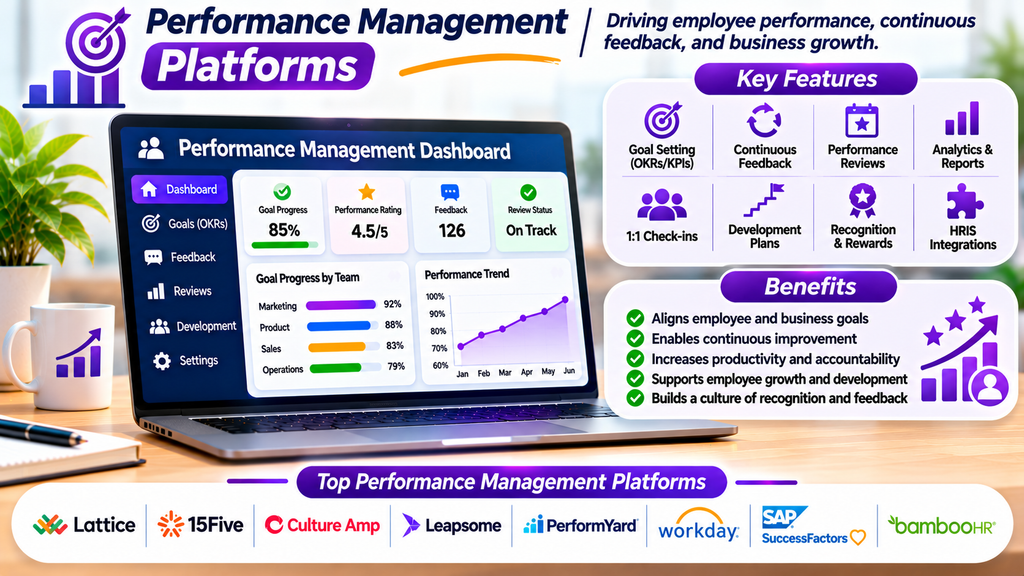
Performance management platforms are software solutions used to set goals, conduct performance reviews, collect feedback, track progress, and document development plans. Depending on the product, they may also support continuous feedback, employee recognition, competency assessments, and performance analytics.
These platforms help replace fragmented spreadsheets and inconsistent appraisal processes with more organized, repeatable workflows.
Top Performance Management Platforms
1. Lattice
Lattice offers performance reviews, goal management, employee engagement, and development-related features.
Best for: Organizations seeking connected performance and employee-development workflows.
2. 15Five
15Five supports performance reviews, regular check-ins, engagement surveys, and manager development.
Best for: Businesses emphasizing continuous feedback and manager-employee conversations.
3. Culture Amp
Culture Amp combines performance management with employee engagement and people analytics capabilities.
Best for: Organizations connecting performance processes with employee experience insights.
4. Betterworks
Betterworks focuses on goal alignment, continuous performance management, and organizational progress tracking.
Best for: Organizations connecting employee goals with broader business priorities.
5. Leapsome
Leapsome offers performance reviews, goals and objectives, feedback, learning, and employee development capabilities.
Best for: Growing organizations seeking an integrated people-development platform.
6. Workday
Workday provides performance and talent-management capabilities within its broader human capital management ecosystem.
Best for: Medium and large organizations with established HR processes.
7. SAP SuccessFactors
SAP SuccessFactors includes performance and goals functionality alongside broader talent-management and core HR applications.
Best for: Enterprises requiring structured performance processes across departments or regions.
8. BambooHR
BambooHR offers performance management features alongside employee records, onboarding, and other core HR capabilities.
Best for: Small and midsize businesses looking to connect performance reviews with HR administration.
Essential Features to Look For
- Goal setting: Define individual, team, and organizational objectives.
- Performance reviews: Schedule and manage structured appraisal cycles.
- Continuous feedback: Encourage regular conversations instead of relying only on annual reviews.
- Progress tracking: Monitor goal completion and performance milestones.
- Self-assessments: Allow employees to reflect on their contributions and development.
- Manager feedback: Provide a structured way to document observations and coaching.
- Development plans: Identify skills to improve and organize learning activities.
- Analytics and reporting: Review performance trends and completion rates.
- Integrations: Connect compatible HRIS, learning, and goal-management systems.
- Permissions and privacy: Protect sensitive performance information and control access.
Benefits of Performance Management Platforms
Clearer expectations: Employees can better understand their objectives and how their work contributes to team priorities.
More consistent reviews: Standardized templates and review cycles can help managers follow a repeatable process.
Regular feedback: Check-ins and feedback workflows encourage ongoing conversations about progress and challenges.
Employee development: Documented development plans help employees and managers identify learning opportunities.
Better visibility: Goal tracking and reporting help leaders monitor progress and identify areas needing attention.
Improved recordkeeping: Centralized review histories make it easier to reference past goals, feedback, and development actions.
How to Choose the Right Platform
Begin by reviewing your current performance process. Determine whether you need annual appraisals, continuous feedback, goal tracking, development planning, or a combination of these capabilities.
Compare pricing, ease of use, customization, reporting, integrations, mobile access, and implementation support. Consider whether the platform supports your company structure and can scale as your workforce grows.
Ask vendors to demonstrate a complete performance cycle, including goal creation, employee self-assessment, manager review, feedback discussion, and development planning.
Best Practices for Implementation
- Define clear and measurable performance expectations.
- Align individual goals with relevant team and business priorities.
- Train managers to provide specific, constructive feedback.
- Encourage regular check-ins throughout the year.
- Apply review criteria consistently across comparable roles.
- Protect confidential employee information.
- Review outcomes for fairness and potential bias.
- Use performance discussions to support development, not only evaluation.
Conclusion
Performance management platforms help organizations organize goals, feedback, appraisals, and employee development in one digital workflow. The right solution depends on company size, management practices, HR requirements, and budget. When supported by clear expectations and meaningful conversations, these tools can help employees grow while keeping teams aligned with organizational objectives.
