Upgrade & Secure Your Future with DevOps, SRE, DevSecOps, MLOps!
We spend hours scrolling social media and waste money on things we forget, but won’t spend 30 minutes a day earning certifications that can change our lives.
Master in DevOps, SRE, DevSecOps & MLOps by DevOps School!
Learn from Guru Rajesh Kumar and double your salary in just one year.
Introduction
Accounting software toolkits are comprehensive platforms designed to help businesses manage financial processes, including bookkeeping, payroll, invoicing, tax management, and reporting. In, these tools are increasingly essential as organizations navigate digital transformation, compliance requirements, and a growing need for automation in financial operations.
Real-world use cases include:
- Automating accounts payable and receivable
- Generating financial statements and reports
- Managing payroll and employee reimbursements
- Tracking expenses and budgets in real time
- Ensuring tax compliance across jurisdictions
When evaluating accounting software, buyers should consider:
- Core accounting functionalities (AP/AR, general ledger)
- Payroll and HR integration
- Tax compliance and reporting features
- Automation and workflow capabilities
- Integration with ERP, CRM, and payment systems
- Real-time dashboards and analytics
- Multi-currency and multi-entity management
- Security and access controls
- Ease of use and mobile accessibility
- Vendor support and training resources
Best for: Finance teams, accountants, small to large businesses, and organizations needing robust financial management and automation.
Not ideal for: Businesses with minimal financial operations or those relying on manual bookkeeping for simple transactions.
Key Trends in Accounting Software Toolkits
- AI-driven bookkeeping: Automated transaction categorization and anomaly detection.
- Cloud-first platforms: Real-time access, collaboration, and scalability.
- Regulatory compliance automation: Automatic tax updates and audit readiness.
- Integrated financial ecosystem: Seamless ERP, CRM, and payment system connections.
- Advanced analytics dashboards: Cash flow forecasting, profit analysis, and KPI tracking.
- Mobile and remote management: Full-featured apps for accountants on the go.
- Automated payroll processing: Timely and accurate employee payment management.
- Subscription-based pricing models: Flexible plans aligned with company size and growth.
- Enhanced security protocols: Multi-factor authentication, encryption, and role-based access.
- Global accounting support: Multi-currency and multi-jurisdiction compliance.
How We Selected These Tools (Methodology)
- Assessed market adoption and credibility among accounting professionals.
- Evaluated completeness of core features: bookkeeping, payroll, reporting, and taxation.
- Considered scalability and performance for small businesses through enterprise organizations.
- Verified security and compliance standards, including SOC 2, ISO 27001, and GDPR adherence.
- Reviewed integration capabilities with ERP, CRM, and payment processors.
- Analyzed vendor support, documentation, and onboarding resources.
- Balanced ease of use against advanced functionality for different business sizes.
- Prioritized modern, cloud-native platforms with mobile accessibility.
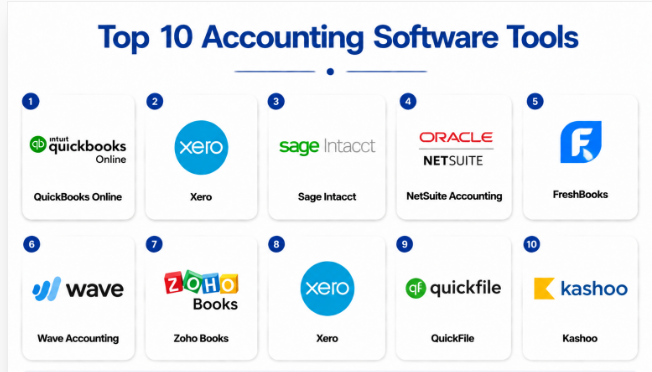
Top 10 Accounting Software Tools
#1 — QuickBooks Online
Short description: QuickBooks Online is a widely used cloud accounting platform suitable for small to medium businesses. It automates bookkeeping, invoicing, payroll, and financial reporting, making it easy for businesses to track financial health.
Key Features
- Automated invoicing and payment reminders
- Expense tracking and categorization
- Payroll management
- Tax compliance and reporting
- Dashboard analytics
- Mobile app for real-time access
Pros
- User-friendly interface
- Large ecosystem of integrations
Cons
- Limited advanced reporting for large enterprises
- Can be expensive for premium features
Platforms / Deployment
- Web / iOS / Android
- Cloud
Security & Compliance
- SOC 2, GDPR, encryption
- Multi-factor authentication
Integrations & Ecosystem
- Payment processors, ERP, and CRM integrations
- API access for custom workflows
- Third-party app marketplace
Support & Community
- Vendor support and knowledge base
- Active online community
#2 — Xero
Short description: Xero is cloud-based accounting software designed for SMBs and growing businesses. It focuses on automated bookkeeping, invoicing, and bank reconciliation, with robust reporting tools.
Key Features
- Automated bank feeds
- Invoice management and recurring billing
- Payroll management
- Multi-currency accounting
- Reporting dashboards
Pros
- Strong automation capabilities
- Scalable for growing businesses
Cons
- Payroll limited to certain regions
- Learning curve for complex accounting features
Platforms / Deployment
- Web / iOS / Android
- Cloud
Security & Compliance
- SOC 2, ISO 27001, GDPR
- Encryption and role-based access
Integrations & Ecosystem
- ERP, CRM, and payment processor integrations
- API support for custom applications
Support & Community
- Vendor support and online help
- Community forums
#3 — Sage Intacct
Short description: Sage Intacct is a cloud financial management platform aimed at mid-market and enterprise businesses. It automates core accounting processes and provides advanced reporting and analytics.
Key Features
- Multi-entity and multi-currency accounting
- Automated AR/AP workflows
- Financial consolidation and reporting
- Audit trail and compliance features
- Analytics dashboards
Pros
- Enterprise scalability
- Robust reporting and dashboards
Cons
- Premium pricing
- Setup can be complex
Platforms / Deployment
- Web / iOS / Android
- Cloud
Security & Compliance
- SOC 2, ISO 27001, GDPR
- Encryption and MFA
Integrations & Ecosystem
- ERP, CRM, and payment integrations
- API support
- Third-party financial apps
Support & Community
- Vendor support and consulting
- Online knowledge base
#4 — NetSuite Accounting
Short description: NetSuite Accounting is part of Oracle’s cloud ERP suite, providing advanced accounting and financial management for enterprises. It automates AR/AP, payroll, and reporting.
Key Features
- AR/AP automation
- Financial consolidation
- Revenue recognition compliance
- Expense management
- Customizable dashboards
Pros
- Comprehensive enterprise solution
- Cloud-native scalability
Cons
- Higher cost for SMBs
- Requires implementation support
Platforms / Deployment
- Web
- Cloud
Security & Compliance
- SOC 2, ISO 27001, GDPR
- Encryption, MFA
Integrations & Ecosystem
- ERP and CRM integration
- API support
Support & Community
- Vendor support and consulting
- Active enterprise community
#5 — FreshBooks
Short description: FreshBooks is an accounting platform designed for freelancers and SMBs. It focuses on invoicing, expense tracking, and basic accounting reporting with a simple user interface.
Key Features
- Invoicing and recurring billing
- Expense tracking
- Time tracking and project management
- Payment reminders
- Analytics dashboards
Pros
- Easy to use
- Affordable for small businesses
Cons
- Limited enterprise features
- Less robust reporting
Platforms / Deployment
- Web / iOS / Android
- Cloud
Security & Compliance
- SOC 2, encryption
- MFA
Integrations & Ecosystem
- Payment gateways
- CRM and project management apps
- API access
Support & Community
- Vendor support
- Knowledge base and tutorials
#6 — Wave Accounting
Short description: Wave Accounting is a free accounting software for small businesses, offering bookkeeping, invoicing, and basic payroll functionality.
Key Features
- Free invoicing and billing
- Expense tracking
- Bank reconciliation
- Basic reporting
- Payroll (paid add-on)
Pros
- Free core accounting features
- Simple and intuitive
Cons
- Limited advanced features
- Payroll requires paid add-on
Platforms / Deployment
- Web / iOS / Android
- Cloud
Security & Compliance
- Encryption, MFA
- SOC 2 (not publicly stated)
Integrations & Ecosystem
- Payment gateways
- API access
Support & Community
- Online support
- Community forums
#7 — Zoho Books
Short description: Zoho Books is an SMB-focused accounting solution that automates billing, invoicing, and expense management, with multi-currency support.
Key Features
- Automated invoicing and billing
- Expense and bank reconciliation
- Tax compliance
- Multi-currency support
- Analytics dashboards
Pros
- Affordable for SMBs
- Strong automation
Cons
- Limited enterprise features
- Learning curve for advanced features
Platforms / Deployment
- Web / iOS / Android
- Cloud
Security & Compliance
- SOC 2, GDPR
- Encryption and MFA
Integrations & Ecosystem
- CRM, ERP, and payment gateway integration
- API support
Support & Community
- Vendor support
- Documentation and forums
#8 — Xero
Short description: Xero is cloud accounting software ideal for SMBs, offering bank reconciliation, invoicing, and payroll automation with a simple interface.
Key Features
- Bank feeds and reconciliation
- Invoice automation
- Payroll management
- Reporting dashboards
- Multi-currency handling
Pros
- User-friendly
- Cloud-native
Cons
- Payroll limited by region
- Less suitable for enterprise complexity
Platforms / Deployment
- Web / iOS / Android
- Cloud
Security & Compliance
- SOC 2, GDPR
- Encryption, MFA
Integrations & Ecosystem
- ERP and CRM integration
- Payment gateways
- API access
Support & Community
- Vendor support
- Online forums
#9 — QuickFile
Short description: QuickFile provides simple cloud accounting for small businesses and freelancers, focusing on bookkeeping, invoicing, and basic reporting.
Key Features
- Invoice creation and recurring billing
- Expense tracking
- Bank reconciliation
- Reporting dashboards
Pros
- Easy setup for small businesses
- Affordable pricing
Cons
- Limited advanced accounting features
- Not suited for enterprises
Platforms / Deployment
- Web
- Cloud
Security & Compliance
- Encryption, MFA
- Not publicly stated
Integrations & Ecosystem
- Payment gateways
- API for custom integrations
Support & Community
- Vendor support
- Knowledge base
#10 — Kashoo
Short description: Kashoo is designed for SMBs and freelancers, providing cloud accounting, invoicing, and expense management with easy-to-use reporting.
Key Features
- Automated invoicing
- Expense tracking and categorization
- Bank reconciliation
- Financial reporting dashboards
Pros
- Simple interface for SMBs
- Affordable subscription plans
Cons
- Limited enterprise capabilities
- Fewer integrations
Platforms / Deployment
- Web / iOS / Android
- Cloud
Security & Compliance
- Encryption, MFA
- SOC 2 (not publicly stated)
Integrations & Ecosystem
- Payment gateways
- API support
Support & Community
- Vendor support
- Knowledge base
Comparison Table (Top 10)
| Tool Name | Best For | Platform(s) Supported | Deployment | Standout Feature | Public Rating |
|---|---|---|---|---|---|
| QuickBooks Online | SMB | Web / iOS / Android | Cloud | Popular SMB accounting | N/A |
| Xero | SMB & Mid-market | Web / iOS / Android | Cloud | Bank feeds & reconciliation | N/A |
| Sage Intacct | Mid-market & Enterprise | Web / iOS / Android | Cloud | Advanced reporting & multi-entity | N/A |
| NetSuite Accounting | Enterprise | Web | Cloud | Enterprise financial management | N/A |
| FreshBooks | SMB & Freelancers | Web / iOS / Android | Cloud | Simple invoicing & time tracking | N/A |
| Wave Accounting | SMB | Web / iOS / Android | Cloud | Free core accounting | N/A |
| Zoho Books | SMB & Mid-market | Web / iOS / Android | Cloud | Multi-currency & automation | N/A |
| QuickFile | SMB | Web | Cloud | Easy cloud bookkeeping | N/A |
| Kashoo | SMB | Web / iOS / Android | Cloud | Simple expense tracking | N/A |
| Xero Payroll | SMB & Mid-market | Web / iOS / Android | Cloud | Payroll management | N/A |
Evaluation & Scoring of Accounting Software
| Tool Name | Core (25%) | Ease (15%) | Integrations (15%) | Security (10%) | Performance (10%) | Support (10%) | Value (15%) | Weighted Total (0–10) |
|---|---|---|---|---|---|---|---|---|
| QuickBooks Online | 9 | 9 | 8 | 8 | 8 | 8 | 8 | 8.4 |
| Xero | 8 | 9 | 8 | 8 | 8 | 8 | 8 | 8.1 |
| Sage Intacct | 9 | 8 | 8 | 9 | 9 | 8 | 8 | 8.5 |
| NetSuite Accounting | 9 | 7 | 8 | 9 | 9 | 8 | 8 | 8.3 |
| FreshBooks | 8 | 9 | 7 | 7 | 8 | 8 | 8 | 7.9 |
| Wave Accounting | 7 | 9 | 6 | 7 | 7 | 7 | 8 | 7.5 |
| Zoho Books | 8 | 8 | 7 | 8 | 8 | 8 | 8 | 7.9 |
| QuickFile | 7 | 8 | 6 | 7 | 7 | 7 | 7 | 7.3 |
| Kashoo | 7 | 8 | 6 | 7 | 7 | 7 | 7 | 7.3 |
| Xero Payroll | 8 | 8 | 7 | 8 | 8 | 8 | 8 | 7.9 |
Interpretation: Higher scores indicate stronger core accounting functionality, ease of use, integrations, and security. Businesses can compare scores to select the best platform based on organizational size, feature needs, and financial complexity.
Which Accounting Software Tool Is Right for You?
Solo / Freelancer
FreshBooks, QuickFile, or Kashoo offer affordable, easy-to-use solutions for freelancers and solo entrepreneurs.
SMB
QuickBooks Online, Xero, Zoho Books provide automation, reporting, and integration for growing small businesses.
Mid-Market
Sage Intacct and Xero Payroll deliver multi-entity support, advanced reporting, and compliance features.
Enterprise
NetSuite Accounting and Sage Intacct handle complex financial workflows, consolidation, and global compliance.
Budget vs Premium
Budget: Wave Accounting, FreshBooks, QuickFile
Premium: Sage Intacct, NetSuite Accounting
Feature Depth vs Ease of Use
Advanced functionality: Sage Intacct, NetSuite Accounting
Ease of adoption: FreshBooks, QuickBooks Online
Integrations & Scalability
Enterprise platforms offer extensive ERP and CRM integrations; SMB-focused platforms prioritize simplicity.
Security & Compliance Needs
SOC 2, ISO 27001, encryption, MFA, and GDPR compliance are essential for sensitive financial data.
Frequently Asked Questions (FAQs)
1. What pricing models are common?
SaaS subscription, modular feature plans, or enterprise licensing based on transaction volume and user seats.
2. How long does onboarding take?
Small businesses can set up within days; enterprise implementations may require weeks with configuration.
3. Can these platforms handle multi-currency accounting?
Yes, most platforms support multi-currency transactions and tax compliance.
4. Are these suitable for global operations?
Enterprise-grade solutions support multi-jurisdiction compliance and international financial reporting.
5. How secure are accounting software platforms?
Leading platforms implement encryption, MFA, SOC 2, ISO 27001, and GDPR compliance.
6. Can these integrate with ERP or CRM systems?
Yes, most offer native connectors and APIs for seamless integration.
7. What support options are available?
Vendor support includes onboarding, email/phone assistance, documentation, and training.
8. Are these tools suitable for startups?
Yes, FreshBooks, QuickFile, and Wave Accounting are ideal for small businesses and startups.
9. How often are updates released?
Cloud platforms provide continuous updates; on-premises or hybrid solutions follow scheduled releases.
10. Do these platforms include reporting and analytics?
Yes, dashboards provide real-time insights into expenses, revenue, profit, and KPIs.
Conclusion
Choosing the right accounting software depends on business size, transaction complexity, and integration needs. Solo entrepreneurs benefit from FreshBooks, QuickFile, or Kashoo for simplicity and affordability. SMBs can leverage QuickBooks Online, Xero, or Zoho Books for automation and analytics. Mid-market companies require Sage Intacct or Xero Payroll for advanced reporting and compliance. Enterprises should consider NetSuite Accounting and Sage Intacct for multi-entity, global operations, and robust integrations. Organizations should shortlist , run pilot programs, and validate integration, security, and scalability before full deployment.
